So… What happened?

THE INTRO

The first thing I want to do is thank all of the participants for taking part in this process, particularly those whose interviews were used in multiple weeks. And secondly I want to say… What an interesting result this has given me. This is so different to anything that I could have imagined in every way possible but I am so glad of that.

This experiment began as a reaction to Thomas Burkhalter’s Seismographic Sounds: Visions of a New World which I found to be an incredibly interesting read. I really enjoyed reading articles by ‘the two hundred and fifty scholars, journalists, bloggers and musicians… from forty-six… countries present and discuss artistic expressions’ (p. 10), yet I couldn’t help but notice how influenced they were from what they already knew. To me, this was the one great flaw. By having only musically educated speaking about World Music that they had studied and watched in great detail, what were we really learning? What were we really achieving? We were doing nothing apart from cementing their already in depth knowledge. And yes – the aim of the book was certainly achieved. But that was not the aim of the blog. I wanted to both inform people of and gauge their reactions to popular global music which they knew nothing about. I wanted to change their outlooks…

And boy, did I change that.

Indian Jazz Music

Maya

Image result for Trilok Gurtu maya

Artist: Trilok Gurtu

 Country:  India 2001

Album: The Beat of Love

A reaction by Frances, Charlie, Gibson and Helen. 

All of these statements are true reactions to Maya by people who don’t consider themselves to be professional musicians or ethnomusicologists.   

So… Who is he?

Trilok Gurtu is a percussionist and composer who was born in Mumbai, India in 1951. Raised as Hindu, Gurtu attended high school but his main focus was always his music as he learnt to play the table under teach Shah Abdul Karim. Moving on from table, Gurtu began to play the drum kit in the early 1970s and from this he developed an interest in jazz. For much of his early career Gurtu would play for other musicians alongside releasing his own solo material, a notable collaboration being with John McLaughlin. Together they created many vocal improvisation techniques as well as oral drumming notations for teaching drum patterns. Gurtu was known for his unsual way of play, this included playing without a stool in a kneeling position on the floor as well as mixing table and western drums. Gurtu joined the band Oregon after the death of their drummer and remained with them for four years, but his solo career was calling him back, so in the early 1990s he resumed this. Gurtu is recognised as being one of the most ground breaking percussionists in this world with his open-mindedness towards all music meaning his inspirations came from all over the world. He is best known for jazz, though, playing behind some of the most famous jazz musicians of the time; Charlie Mariano, John Tchicai, Miles Davis and Don Cherry.

So… What’s the song?

Maya is the first song on Trilok Gurtu’s 2001 Jazz Fusion album The Beat Of Love. The lyrics have not been translated into English but there are small pieces of information that can be gauged about the song. Sang by Indian film singer Roop Kumar, the upbeat groove which is present throughout this song provides a repetitive yet infectious beat which indicates of what is to come on the album.

Further reading:

Review on The Beat Of Love

Review on The Beat Of Love (2)

Spanish Folk Music

Rebels

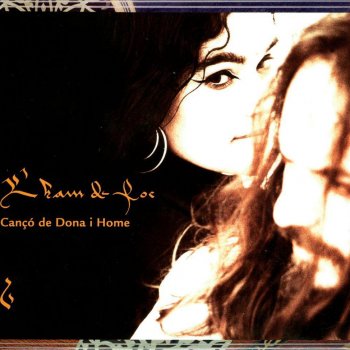
Image result for L'Ham De Foc - Rebels

Artist: L’Ham De Foc

 Country:  Spain 2002

Album: Cançó De Dona

A reaction by Sue, Mark, Alex and Elle.

All of these statements are true reactions to Rebels by people who don’t consider themselves to be professional musicians or ethnomusicologists.   

L’Ham De Foc or The Hook of Fire are a Valencian folk band who were formed in 1998 by traditional Spanish singer Mara Aranda. She formed the group as a project with infleunces from all over the Mediterranean but with a strong Valencian undertone. The band were incredibly successful, becoming one of the most popular bands in Spain at the time as they were seen to bring together people who liked varying musical genres: they weren’t following musical trends. They released three albums, all of which were critically acclaimed, with their first album, U, meaning One, being released in 1999. Although successful they weren’t happy with the sound and felt more could have been done with the record. For that reason they spent two years in Crete researching the sounds behind the Greek Island before releasing their second album Cançó de Dona i Home or Woman and Man’s Song. Their third album was released four years later in 2005 with great success.

Rebels is the 7th track on L’Ham De Foc’s second album Cançó de Dona i Home but there is very little information regarding the track anywhere so one can only make assumptions about the nature of the lyrics. A song particularly inspired by the Medieval music, one must assume the same of the lyrics.

Preface to this entry: Due to the very little information on the song which I have been able to gain (not through want of trying), the interview containing the interviewees reactions will be a lot shorter than in previous entries.

African Electronic Music

Why Go To War

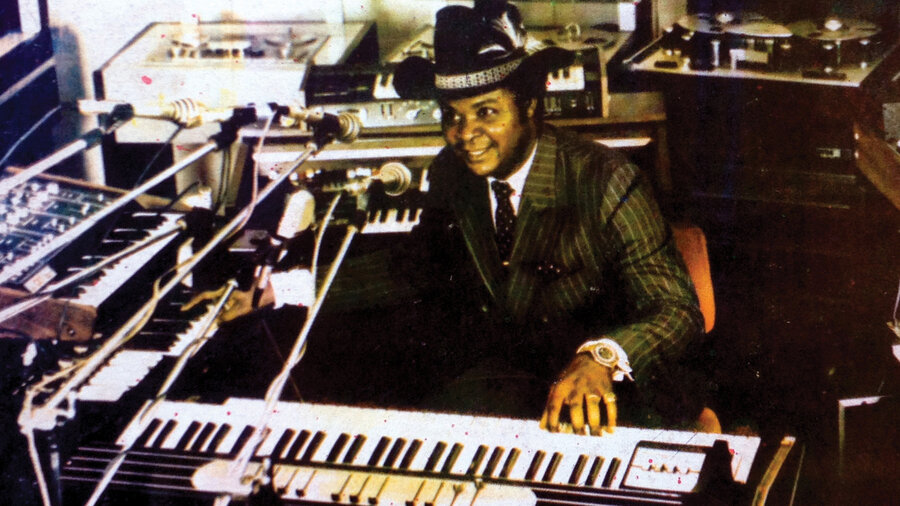
Image result for why go to war william onyeabor

 Artist: William Onyeabor

Country:  Nigeria 1979

Album: Tomorrow

 A reaction by Rachel, Kate, Simon and Alex. 

All of these statements are true reactions to Why Go To War by people who don’t consider themselves to be professional musicians or ethnomusicologists.   

William Onyeabor is a Nigerian Funk musician born in March, 1946. Onyeabor was born into a poor family in Enugu, a city located in the South East of Nigeria and spent all of his childhood there. As his music grew more popular, Onyeabor became financially stable enough to travel to Europe to study record manufacturing but he returned to Nigeria in the 1970s to set up his own music label as well as a recording and production studio. His success made him incredibly popular in Enugu and he was crowned a high chief due to his successful business mentality. Although incredibly successful in all of 8 self-released albums he created between 1977 and 1985, Onyeabor remained an introverted man, who refused to speak about his music making only one broadcast in his career in 2014. In this interview he stated that he didn’t intend to release any more music and he kept to this promise because in early 2017, William Onyeabor passed away at the age of 70. There is very little on Onyeabor as a person or in regards to his music and thus his motivations to write the music he did are relatively unknown but, his politically driven voice lives on is his songs.

Why Go to War is the 2nd song on William Onyeabor’s 1979 album Tomorrow. A song which questions the very choices that both the government and society make – he addresses ‘leaders, all nations, super powers’ and asks them ‘why go to war, why not find peace?’. Very little is known about this song, as Onyeabor never explained his motives behind such, but its generic nature, referring to ‘all blacks and whites all over the world’, suggests he is questioning all of society.

A Preface to these interviews: I chose to show a remastered version of Why Go To War which was accompanied by a video and opening composition which wasn’t part of the original release. I informed the participants of this previous to listening to the song and the interview.

English Grime Music

MALCOLM SAID IT

Artist:  Akala

Country: England 2013

Album: The Thieves Banquet

 A reaction by James, Sam, Kevin and Elle. 

All of these statements are true reactions to Malcolm Said It by people who don’t consider themselves to be professional musicians or ethnomusicologists.   

Kingslee James Daley (known as Akala) is an English grime artist and rapper born in 1983. Born and raised in London, he began his rap career at the age of 20 after choosing the stage name Akala (the Buddhist term for immovable) and began releasing music under his own independent record label: Illa State records. His first mixtape was released in 2004 entitled The War Mixtape to an underwhelming amount of success. In 2006 he released his first album, It’s Not A Rumour and this was his big break. Containing the famous song Shakespeare (a reference to his self-proclaimed title: The Black Shakespeare – which has been incredibly controversial), he was played on BBC Radio 1 and he won a MOBO award for Best Hip Hop Act. Akala has released four more albums, all to varying success with his central focus becoming a political voice for the people. His third album Doublethink underlines George Orwell’s 1984s messages and highlights the governmental control of the people. More than anything, Akala has become a political activist who also writes music, using his songs to put across his messages… In May 2017, during the general election, Akala displayed his support for Jeremy Corbyn stating that  ‘perhaps for the first time in British history, someone I would consider to be a fundamentally decent human being has a chance of being elected’.

Malcolm Said It is the 5th song on Akala’s fourth album The Thieves Banquet which was released in May of 2013. One of the albums most popular songs, it highlights the politically driven themes which are present upon the album. The opening lyrics which repeat with the same beat ‘Malcolm said it, Martin Said it, Marley said it, Ali said it’ use black political activists to underline the overt message of the song: ‘if you ain’t found something to die for, you’ll never live’. The song not only provides a commentary upon the government and their treatment of the black community, but also upon society’s ability to ignore corruption and do nothing about it. He finishes the song accusing the ones with ‘the bigger weapons’ as being ‘the bigger terrorists’, underlining his final message that the Western world are to blame for this view because they do nothing to stop it. 

Argentinian Rock Music

Adonde Esta La Libertad

Artist: Pappo’s Blues

Country:  Argentina 1971

Album: Pappo’s Blues, Vol. 1.


 A reaction by Helen, James, Adam and Alex.

All of these statements are true reactions to Adonde Esta La Libertad by people who don’t consider themselves to be professional musicians or ethnomusicologists.   

So… Who are they?

Pappo’s Blues were an Argentinian rock band headed up by Norberto Napolitano (known as Pappo) between 1970 and 1999. Pappo’s Blues was a heavily dysfunctional band with members who were ever-changing as musicians decided to create solo albums and join other bands, but they were incredibly popular in Argentina no matter the members. Born in 1970 as a ‘power trio’ the band recorded their first album in 1971 – Pappo’s Blues, Vol. 1. They were then ever changing until the release of their fifth album ‘Triangle’ in which they ventured into more progressive rock and heavy metal – the first group to do so in Argentina. The band decided to call it a day in 1978 after they released their seventh album, which consisted of mostly old songs which had been remastered, as their leader – Pappo – chose to move to Europe and leave the band behind. 17 years later, Pappo ‘reunited’ the band (with completely different members) for what was supposed to be the final album ‘Case Closed’… But they just couldn’t help themselves and 4 years later, in 1999, released their final album entitled ‘The Red Car’. A band that prided themselves on forward thinking and speaking for the people, Pappo’s Blues were instrumental in the creation and development of rock and heavy metal in Argentina.

So… What’s the song?

Adonde Esta La Libertad or Where Is The Freedom is the 8th song on Pappo’s Blues first album  simply named Pappo’s Blues Vol. 1. Although not one of the bands most popular songs, it’s feature on their first album immediately set the tone for their musical tone throughout their career. This song was written during a time of huge political unrest in Argentina, with the overthrowing of the government soon to be followed by the ‘Dirty War’ and Adonde Esta La Libertad highlights this political unrest. The opening lyric asks ‘Adónde está la libertad’ (‘where is the freedom’) followed by lines such as El otro día me quisieron matar Ametralladora pa-pa-pa-pa! (‘the other day they wanted to kill me, machine gun pa-pa-pa-pa!’) and ‘Es imposible Aguantar’ (‘it is impossible to endure’). Pappo’s Blues are thus highlighting the terrible state both the government and people were in, using their music as a voice for the people.    

Turkish Rap Music

Sertlik Kanında Var Hayatın

Artist: Sagopa Kajmer

Country: Turkey 2017

A Chelbi Film


 A reaction by Rachel, Helen, Dave and Gill.

All of these statements are true reactions to Sertlik Kanında Var Hayatın by people who don’t consider themselves to be professional musicians or ethnomusicologists.   

So… Who is he?

Yunus Özyavuz or  Sagopa Kajmer (meaning ancient pyramid) was born on 17th August, 1978. He was born and raised in Samsun (a city on the north coast of Turkey) where he graduated from high school. He went on to study Persian Language and Literature in Istanbul but knew that music was his first love, having worked on a local radio station whilst back home in Samsun. Because of this, in 1999, he set up his studio named Kuvvetmira (meaning Strength). Alongside this studio he became part of the rap group ‘Unarmed Force’, releasing five studio albums with the group. After seven years of working with the band, Kajmer decided to split and create his own work, and this has been the case ever since. With albums such as ‘Pesimistine Tears’ and ‘Romantizma’, Kajmer was rapidly becoming a house-hold name… In Turkey at least. As well as releasing his own albums, Kajmer was still producing and collaborating with other artists, with his sound ever-evolving to suit the needs of his audience. Kajmer himself has said that he has always been influenced by traditional Turkish songs, with his early working even including samples from Anatolian melodies and traditional musics. He later admitted that he had to stop using these sounds due to the aggressive, political messages his songs were beginning to portray. Kajmer’s influences fall from many different genres of art: Omer Hayyam , Firdevsî and Mevlana Celâleddîn-i Rûmî ‘s but the genre he considers himself as being part of is rap.

So… What’s the song?

Sertlik Kanında Var Hayatın or There is Hardness In Your Blood is the second song on Sagopa Kajmer’s re-released 2017 version of his 2014 album Ahmak IslatanThe song doesn’t feature on the original 2014 album but is by far the most popular song on the re-released album.  With 25 million hits on Youtube and 4 million streams on Spotify, the song has been incredibly popular not only in Turkey but the world. The song is a politically driven commentary on the street and social inequality in Turkey but uses a boxing ring both in its lyrics and video as a metaphor for such. Kajmer chooses to question society with lyrics such as ‘Ben, kaçıyorum karakterinin yetmediği yerlerden’ (I am running away from places where being good is not enough) and ‘ben bu soğukkanlı fedaiyim’ (I am this cold-blooded federation). He is perhaps underlining the sad reality that everybody is part of the war, whether or not you believe yourself to be. The song provides a commentary alongside a music video which perhaps reflects the failed Turkish uprising which took place in July 2016 using the metaphor of the boxing ring to comment upon the violence and pain that was felt by all.