
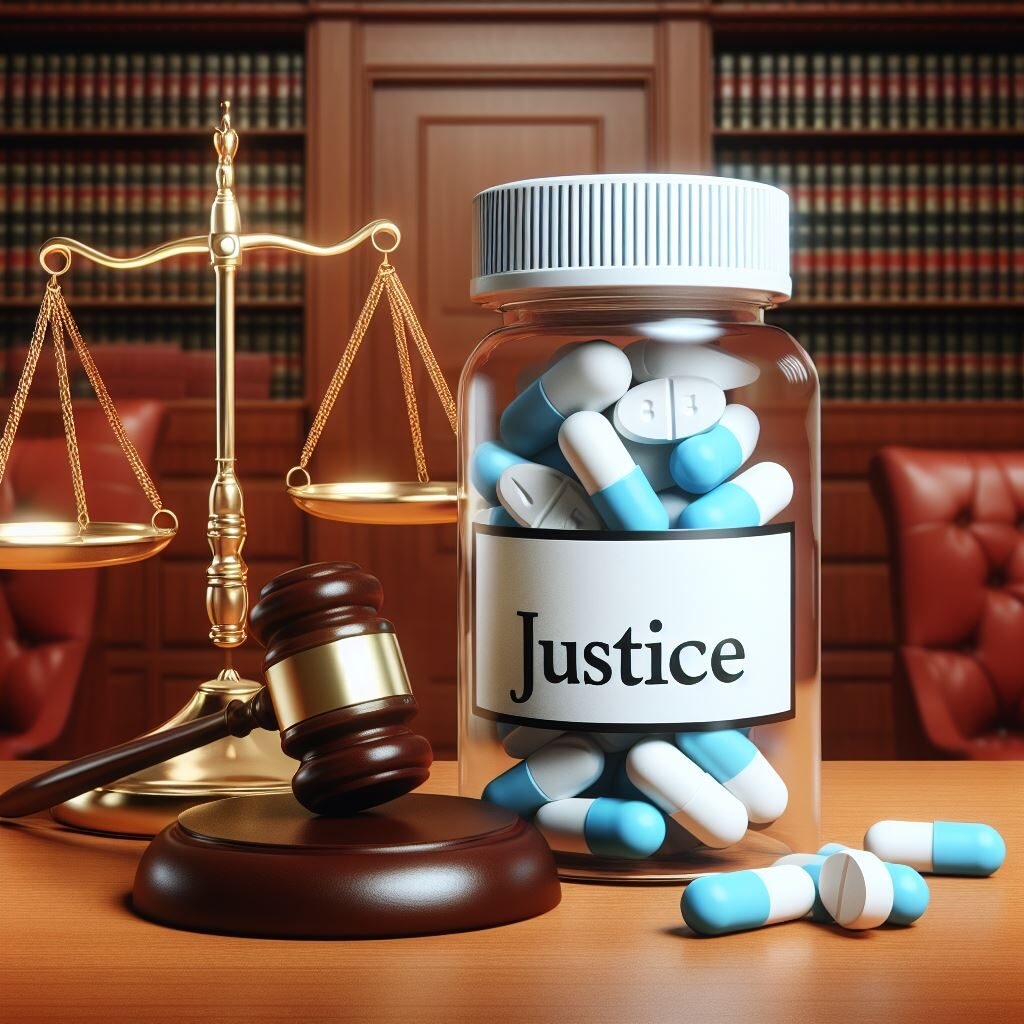
The mainstream media this week has been discussing the use of chemicals in executions in the US.[1, 2] This issue has grown in popularity over the last few decades, as State justice officials have struggled to source the necessary products for exectuions from pharmaceutical and chemical companies.[3] A key thing to understand here is that manufacturers, who also typically make medications to prolong and sustain life for healthcare, do not want to be publically associated with supplying toxic ingredients to end human life in the name of justice.[4]
Naturally, there are multiple factors which have led to manufacturers withdrawing from the justice markets. The public relations have always been managed carefully by ‘Big Pharma’ but over the last half-century, scandals have rocked public trust in the ‘Medicine Machine’. Scandals like thalidomide, the MMR vaccination link to autism and the opioid crisis, have fueled speculation and skeptism about the intentions of pharmaceutical companies – particularly by left-wing commenters, academics and others. In the context of the current ‘cancel culture’ on social media, a scandel linked to executions coould be toxic to a business. However, the balance of power firmly remains in the manufacturers hands. They hold the technology, the know-how and finance to be able to design, develop and deliver pharmaceuticals at scale. For example, during the COVID19 pandemic, the pharmaceutical industry (albeit in collaboration with public bodies like Universities) provided rapid and broad access to vaccinations. These vaccinations enabled people to see their dying relatives, attend weddings and, even, the births of their children. Granted the industry profited, but so did individuals, groups and society. Taking the balance then, whilst their are scandals and wrong-doings, the industry has also contributed to some pretty big wins for the public.
In addition, that pharmaceutical companies have also indicated they do not want to contribute to executions further demonstrates an unlikely, and oft ignored, persuasion to work for the public good. Despite this, public trust in the pharmaceutical industry is still scarce. Indeed, commentators in the media maintain the ‘Big Pharma’, profiteering, trope which plague the industry. Understanding this is important, as the demonisation of the pharmaceutical industry is socially normalised. This perspective is pervasive. An unconcious bias that seeps into everyday life and decision making – of patients deciding which treatment to use, of physicians deciding what to prescribe and regulators which products to authorise. The perception that manufacturers and pharmacies do not want to make or compound drugs used in exections will automatically be understood to be motivated by money, profit and business, not due to a genuine desire to do public good.
The injustice then could be argued to be the socially normalised demonisation of an industry trying to do public good. Further work is needed to expand the sociology of pharmaceutical companies, the state and justice.[5]