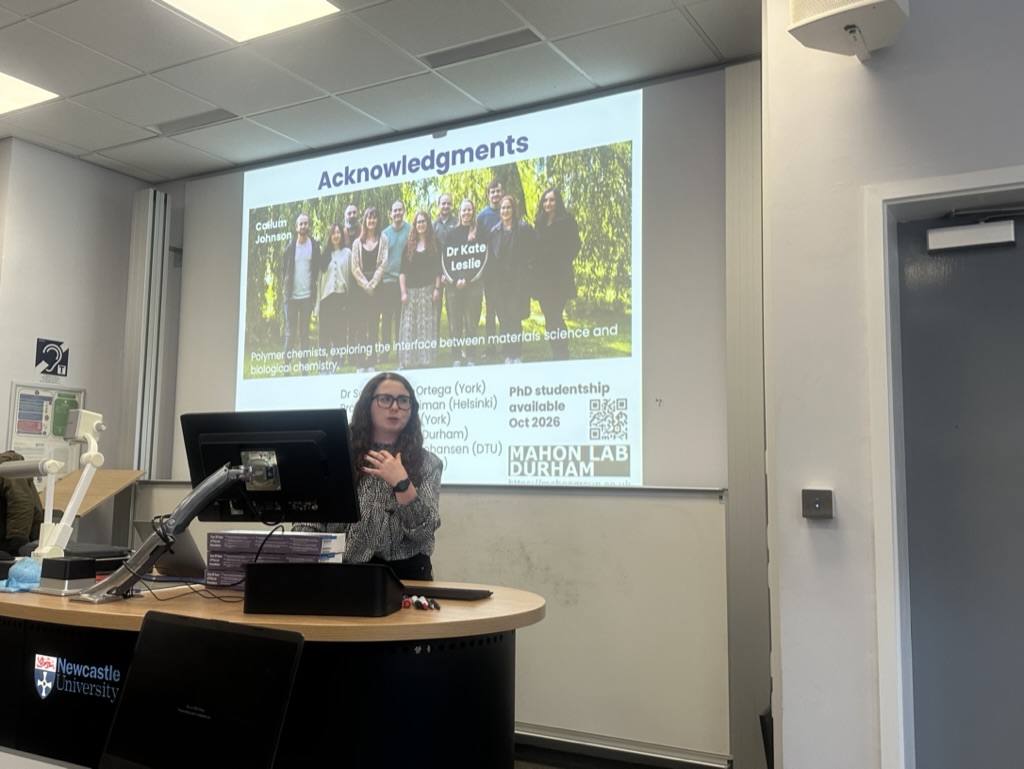
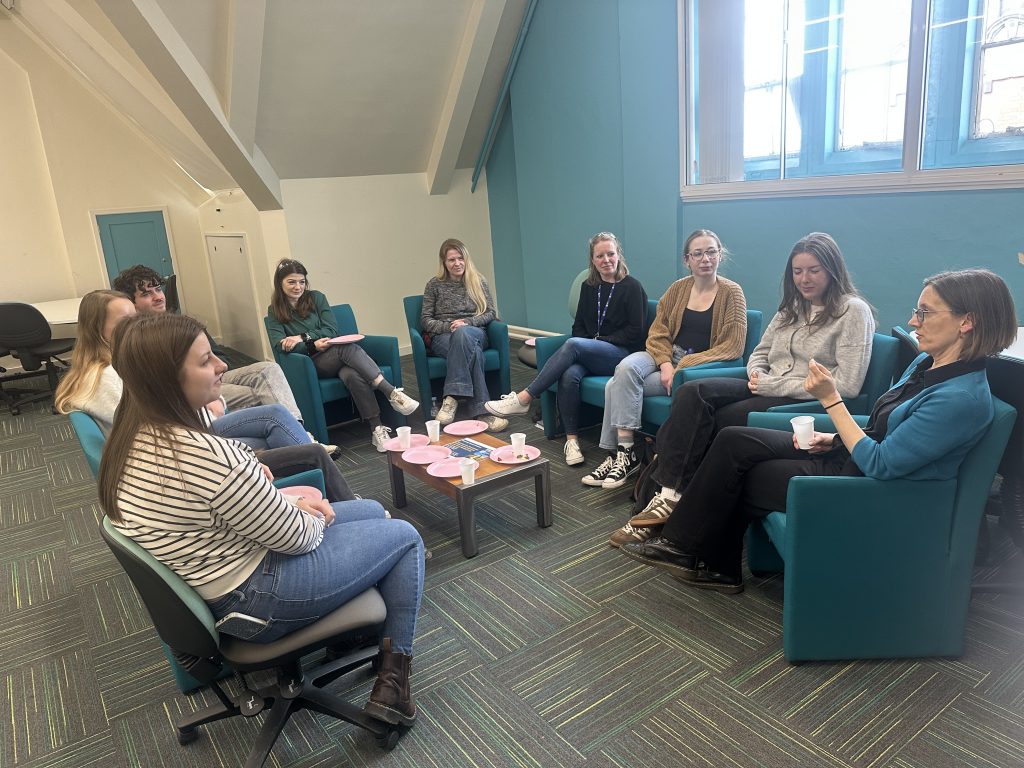
As part of the Inspiring Women in Chemical Biology seminar series, sponsored by the Biochemical Society, Newcastle University recently hosted Prof. Clare Mahon from Durham University, whose work is at the cutting edge of chemical biology and infectious disease diagnostics.
Clare’s talk, titled “Glycopolymer sensor arrays to detect pathoadaptations in Pseudomonas aeruginosa,” explored a critical issue in microbiology: the ability of bacterial pathogens to evolve and diversify within hosts, leading to persistent infections that are notoriously difficult to treat. The implications are profound. By mapping the progress of persistent infections and informing treatment strategies, Clare’s approach could underpin next-generation diagnostic tools for cystic fibrosis and beyond.
We are grateful to Clare for sharing her exciting research with the Chemical Biology teams & Chemistry at Newcastle University.
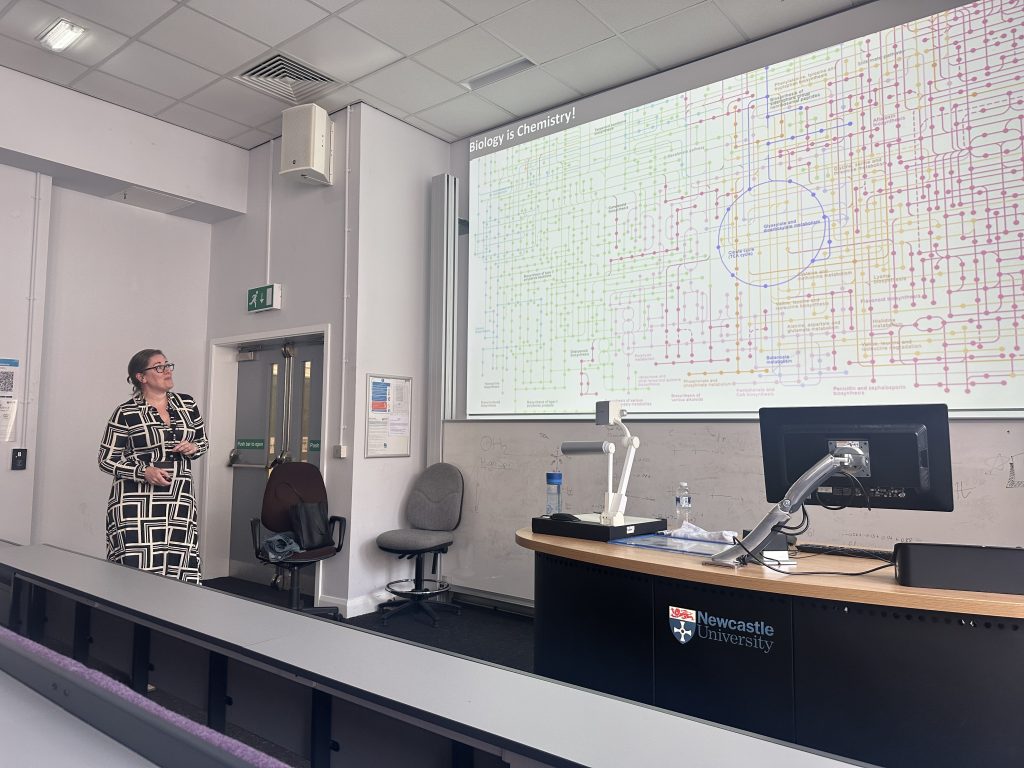
We were thrilled to welcome Professor Angela Russell from the University of Oxford to Newcastle University as part of our Inspiring Women in ChemBio seminar series, generously sponsored by the Biochemical Society.
Prof. Russell delivered an insightful talk titled: “Development of Next Generation Utrophin Modulators for Duchenne Muscular Dystrophy: Learning from Clinical Setbacks.”
Her presentation explored the journey of developing small molecule drugs aimed at increasing utrophin levels in patients with Duchenne muscular dystrophy (DMD) – a progressive muscle-wasting disorder with no current cure. She shared lessons learned from the clinical development of ezutromid, the first-in-class utrophin modulator, and how her team identified its mechanism of action through binding to the arylhydrocarbon receptor (AhR). This discovery has paved the way for new lead compounds with improved efficacy and alternative screening strategies.
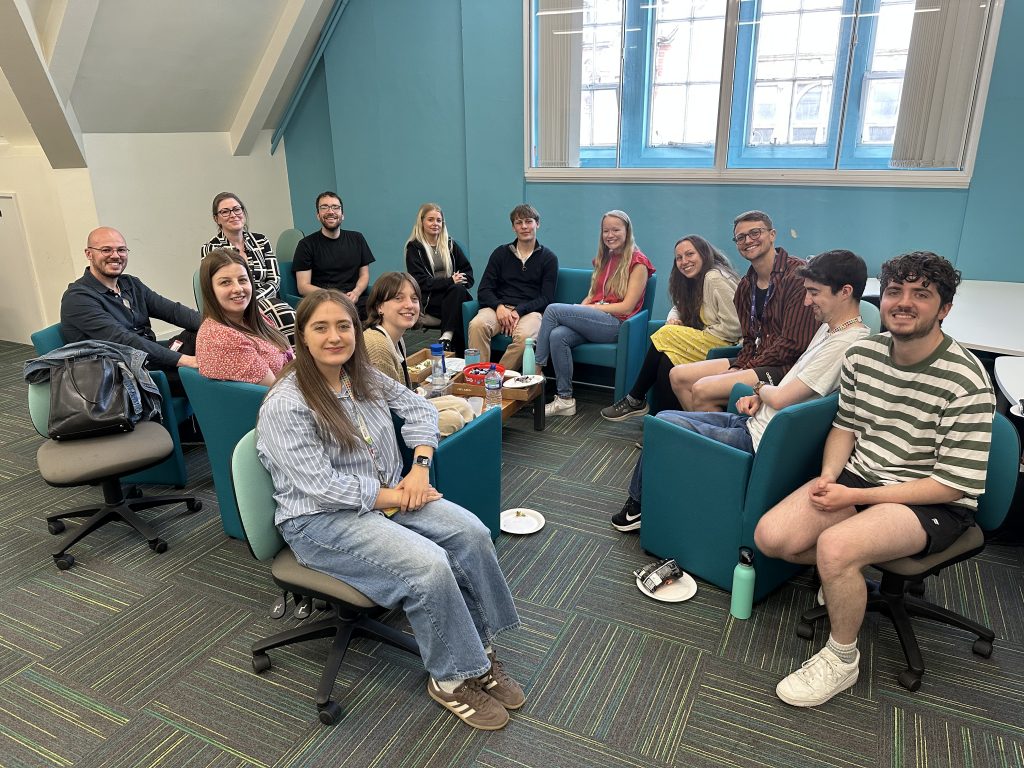
Beyond the science, Prof. Russell offered valuable insights into medicinal chemistry, resilience in research, and constructive ways to navigate setbacks. We were also delighted that she joined our postdoctoral researchers and PhD students for lunch, fostering further discussion and collaboration.
On June 11th, Newcastle University’s Chemical Biology Special Interest Group was delighted to host Dr. Sarah Barry from King’s College London as part of the Inspiring Women in Chemical Biology seminar series, proudly sponsored by the Biochemical Society.
Dr. Barry, who leads an interdisciplinary research group focused on bacterial metabolism and natural product biosynthesis, delivered an engaging seminar titled “Learning from Nature’s Chemists.” Her talk explored how nature’s own chemical strategies can inspire innovative approaches in synthetic biology and drug discovery.
A highlight of the visit was a lunch with early career researchers, offering a valuable opportunity for informal discussion for PhD students, postdocs and fellows. Attendees included members from various research groups across the university, fostering cross-disciplinary connections.
We extend our sincere thanks to Dr. Barry for her inspiring visit and for sharing her insights with Newcastle’s chemical biology community.
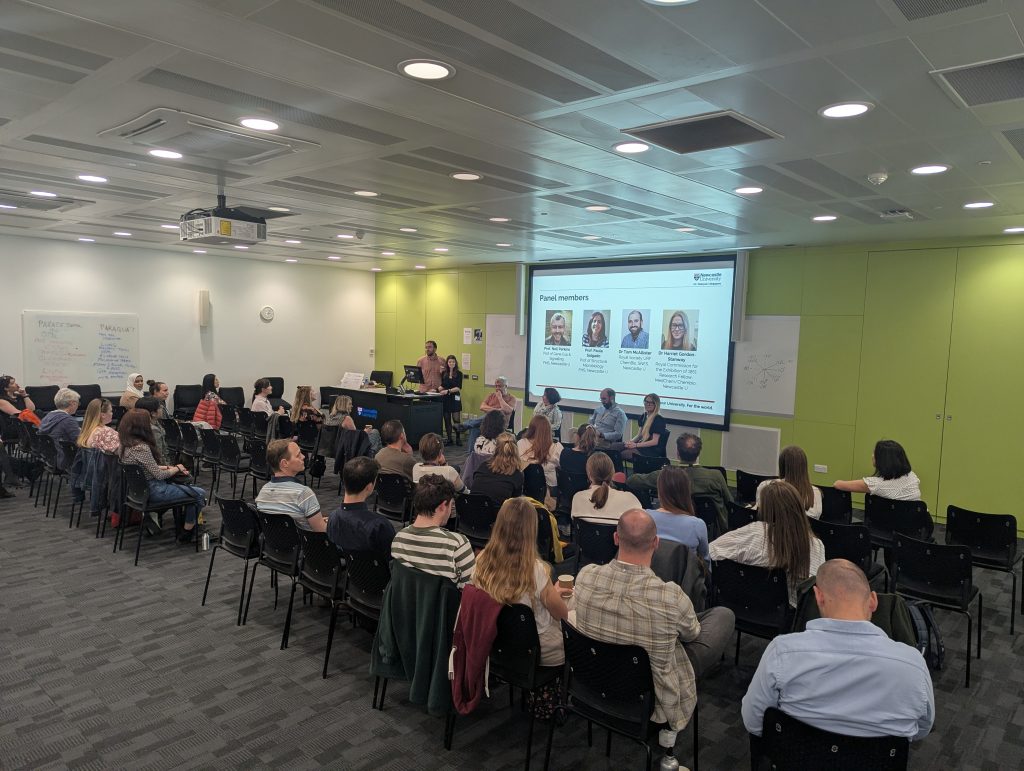
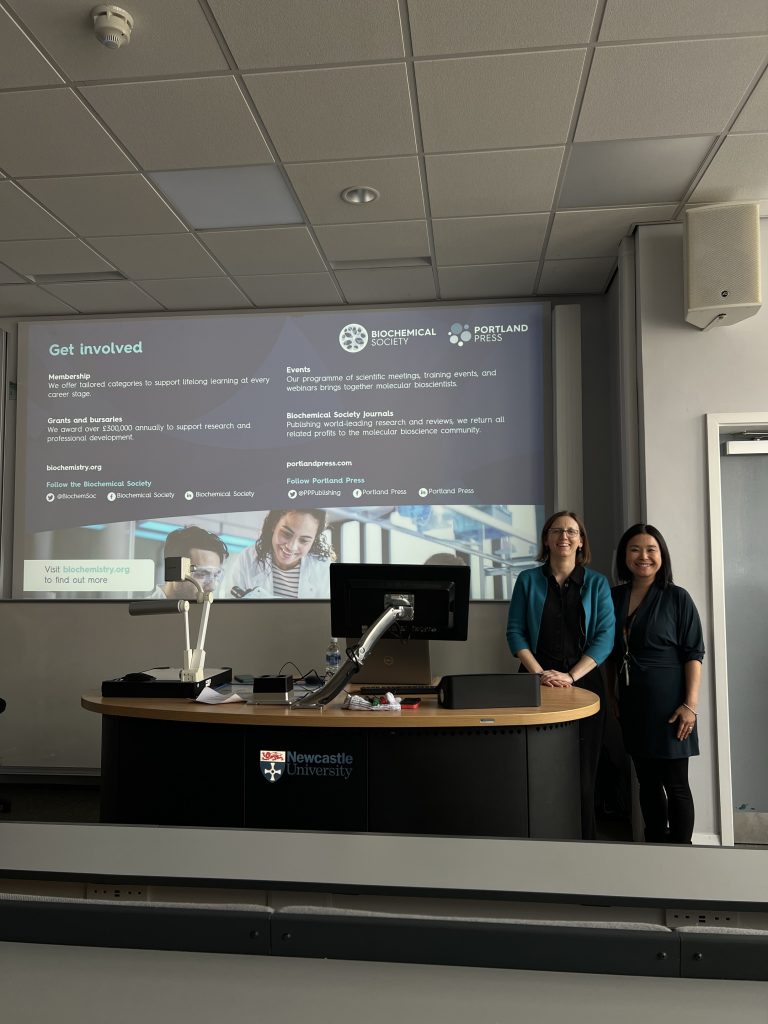
On a bright afternoon in May, researchers gathered in Newcastle University’s Baddiley-Clark Building for the Chemical Biology Symposium: Spotlight on Women in the North-East, a key event in the Inspiring Women in Chemical Biology seminar series, supported by the Biochemical Society.
The symposium was more than just a scientific meeting — it was a celebration of the achievements of women in STEM and a platform for fostering meaningful dialogue and collaboration within the Chemical Biology community in the North East of England.
The event opened with two captivating talks:
Dr Ting-Yu Lin (Durham University) presented “Decoding RNA Modifications: From Molecular Mechanisms to Disease Pathways,” offering a deep dive into the molecular intricacies of RNA biology.
Dr Kate Harris (Newcastle University) followed with “Small Molecules, Shifting States: From Phenotypic Complexity to Microglial Precision,” highlighting innovative approaches in neurochemical research.
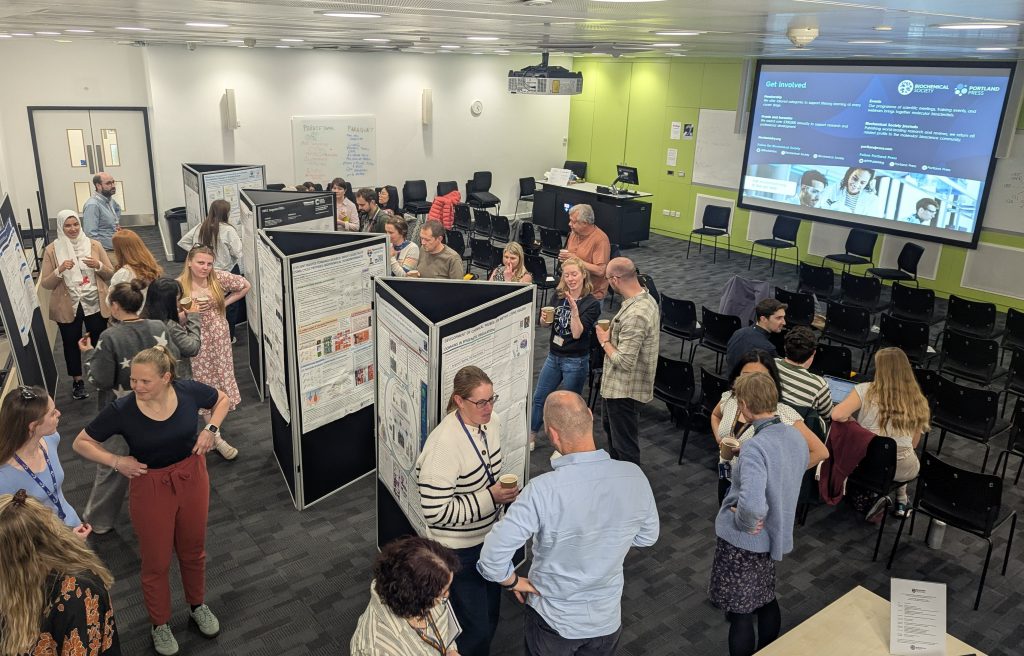
The event included a series of flash presentations from Newcastle University’s ChemBio PhD students and Post-Doctoral Research Associates, as well as a poster session with coffee, giving early-career researchers a chance to showcase their work and engage with attendees.
The final session featured two more engaging talks:
Dr Anna Barwinska-Sendra (Newcastle University) presented “S-layers: The Modular Bacterial Exoskeletons,” exploring the structural biology of bacterial surfaces.
Dr Stephanie Meyers (Sunderland University) concluded with “Chemical Approaches to Combatting Antimicrobial Resistance,” addressing one of the most pressing global health challenges.
The event concluded with the announcement of the poster competition winners:
Ella Sames (McAllister group, Newcastle University) – Best PhD Poster
Zuzanna Pakosz-Stepien (Heddle group, Durham University) – Best PDRA Poster
A heartfelt thank you goes to the organizing team — Filomena Saulino, Kallie Friston, Ella Sames, and Valeria Cobiltean — for their dedication in making the event a success. We look forward to future events that continue to empower and connect scientists across disciplines!
In March 2025, Newcastle University’s Chemistry Biology Special Interest Group had the pleasure of welcoming Prof Emily Flashman from the University of Oxford for the first seminar in a new series of talks focusing on Inspiring Women in Chemical Biology, proudly sponsored by the Biochemical Society.
Prof. Flashman delivered a captivating seminar titled “How plant cysteine oxidases mediate hypoxia and redox stress-signalling during submergence”, offering deep insights into the molecular mechanisms that plants use to respond to low oxygen environments. Her work, which bridges biochemistry and plant physiology, sparked engaging discussions among attendees and highlighted the importance of redox biology in environmental stress responses.
Prof. Flashman’s met with academics from Newcastle University during her visit, and had lunch with our early career researchers where she shared her career journey and offered advice over sandwiches and tea. The informal setting allowed researchers to engage in meaningful conversations about navigating careers in science.
Prof. Flashman’s visit not only enriched the scientific dialogue at Newcastle but also served as a reminder of the impact of mentorship and representation in STEM.