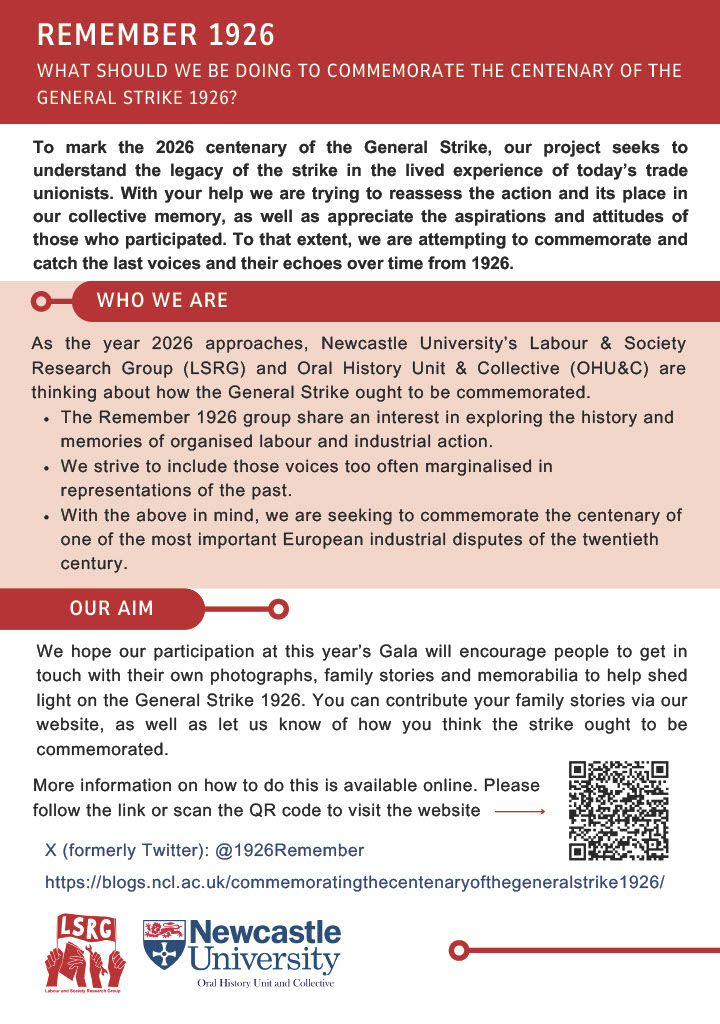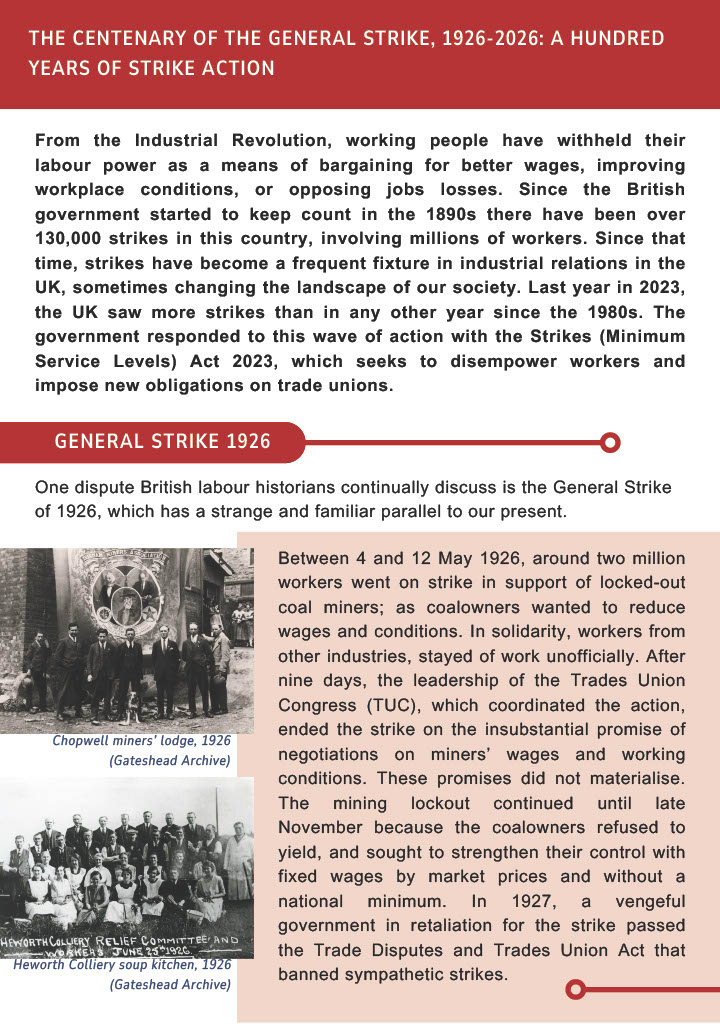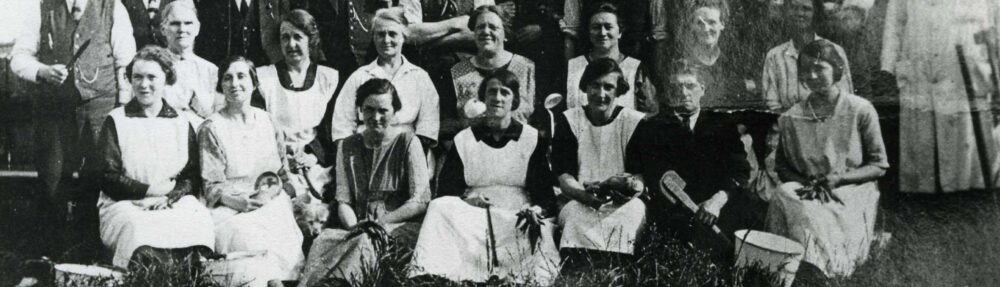
The Remembering 1926 team will be returning to this year’s Durham Miners’ Gala on 12 July 2025. During our pilot launch at last year’s Gala, we realised that many attendees had ancestral stories, family histories and memorabilia related to the General Strike of 1926. Sadly, we did not have our interviewing equipment on the day to capture these memories.
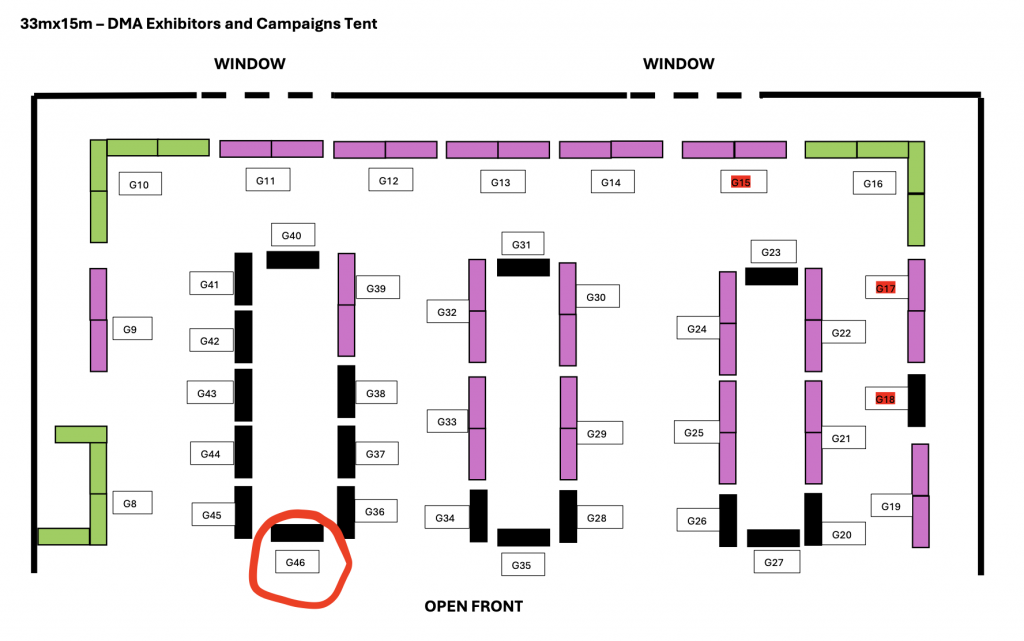
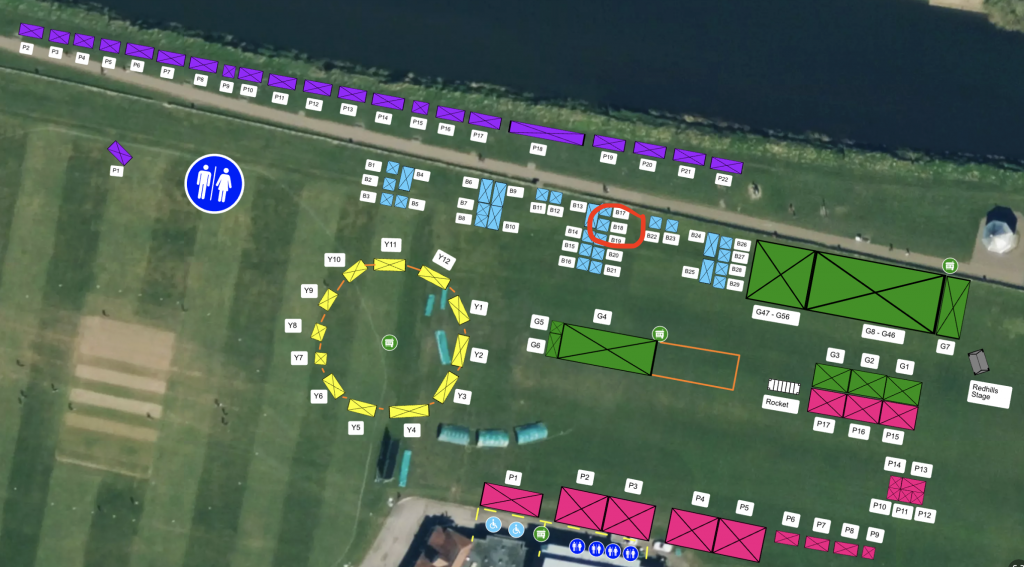
This year, however, we will be attending and will have our recorders at the ready! If you would like to be interviewed for the project, please attend our interview tent at (G18) on the map below. Alternatively, if you would like to learn more about the project, we will have a promotional stall at the big campaigns tent (G46).
PROJECT SUMMARY & PARTICIPANT INFORMATION SHEET (JULY 2025)
You are being invited to take part in the Remembering 1926 Oral History Project, a regional programme of work supported by research funds allocated by Newcastle University.
The project aims to preserve and restore the lasting intangible heritage of the General Strike and the Miners’ Lockout of May-November 1926. This experience that shaped a generation, one which is at odds with the default assumptions of a British past. Remembering 1926 aims for a new commemorative paradigm, suggesting that generational memory transmission (hand-me-down history) can contribute to understanding social change in thought and action over time. It seeks to promote a citizen-led approach to commemoration, creating space for those historically viewed as ‘outsiders’ to engage with, challenge, and help shape the narratives around key moments in national history.
A key part of the project is the creation of a Digital Archive that will preserve and make publicly accessible the stories and memorabilia contributed by participants.
Before you decide, it is important for you to understand why the work is being undertaken and what it will involve. Please take time to read the following information carefully and discuss it with others if you wish. Please ask if there is anything that is not clear or if you would like more information. Take time to decide whether or not you wish to take part. Thank you for taking the time to read this.
Who will conduct the research?
The research is being directed and conducted by a team of Newcastle University researchers from the Oral History Unit (OHU) and Labour & Society Research Group (LSRG).
What is the purpose of the research?
We want to create a more diverse and inclusive history of the General Strike than currently exists. Our overall purpose is not to retell the already well-told history of the Strike but rather to attend to its history of reception and commemoration and, in its retelling, the history of the meaning of the strike to different groups across generations. By making the history of the General Strike more diverse and inclusive we will produce a shared regional story about 1926 for everyone that can be taken into the future and benefit regional, national, and international audiences.
Why have I been chosen?
Your stories, thoughts, memories, and memorabilia of the General Strike 1926 will be an important contribution to the Project.
What would I be asked to do if I took part?
If you decide to take part you will be invited to take part in an vox pop-style interview which will last between 5-10 minutes and be audio-recorded. The interview is an opportunity for you to share your stories and memories of the General Strike 1926. The interview is very flexible and you are free to discuss what seem to you to be the most important issues. With your permission, your recorded interview will become part of the Digital Archive where it will be preserved as a permanent resource for use in research, publications, education, lectures, broadcasting and internet. The interviewer may also ask your permission to take your photograph. If you agree then the photograph will also become part of the Digital Archive where it will be preserved as a permanent resource for use in research, publications, education, lectures, broadcasting and the internet.
What happens to the data collected?
A key part of the project is the creation of a regional Digital Archive that will preserve and make publicly accessible the stories and memorabilia contributed by participants. With your permission, your recorded interview will become part of the Digital Archive where it will be preserved as a permanent resource for use in research, publications, education, lectures, broadcasting and the internet. We will never use your information without your consent, and you can tell us how it should be used on the Remembering 1926 Recording Agreement which you will complete after your interview has been completed.
You have the following options:
- Use my name: You can tell us to credit you by name when we use your contributions on the website, in print, and in public.
- Use a pseudonym: You can choose to use a pseudonym. The pseudonym will be the name used in the Digital Archive and the name attributed to your contributions on the website, in print, and in public.
Occasionally you may wish to request partial or complete closure of your interview to public access.
Once the interview is completed the interviewer will upload the recording using an encrypted Newcastle University computer to the secure Newcastle University server where it will be accessible only by the research team. If you have chosen to use a pseudonym, we will allocate a unique identifier to your interview and all details of your identity will be kept separately to the audio files and the interview summary.
The project team will summarise the interview and review it to ensure compliance with GDPR requirements before uploading it to the Digital Archive on the Remembering 1926 website and we will send you a copy of your interview.
When the project ends in 2028, the website, Digital Archive and all the information that has been contributed by participants will be archived as a permanent record of the project, for use by researchers in the future. All future use of your contributions will adhere to the same access and privacy conditions that you select now.
Your personal data
We are collecting and storing this personal information in accordance with the General Data Protection Regulation (GDPR) and Data Protection Act 2018 which legislate to protect your personal information. The legal basis upon which we are using your personal information is “public interest task” and “for research purposes” if sensitive information is collected. For more information about the way we process your personal information and comply with data protection law please see our privacy notice for research participants: (https://www.ncl.ac.uk/research/research-governance/ethics/gdpr/)
Newcastle University, as Data Controller for this project, takes responsibility for the protection of the personal information that this study is be kept separately to the audio files and summaries. At the end of this project in 2028 all future use of your contributions will adhere to the same access and privacy conditions that you select now.
What happens if I do not want to take part or if I change my mind?
It is up to you to decide whether or not to take part. If you do decide to take part you will be given this information sheet to keep and be asked to sign a Participation Agreement before the interview and a Recording Agreement after the interview. If you decide to take part you are still free to withdraw from the interview at any time without giving a reason and without detriment to yourself.
You will be free to withdraw from the research, even after the interview has finished up until the project finishes in 2028. If you decide to do this then the digital file and any material relating to your interview, eg. summaries/transcripts/photographs will be deleted from the Digital Archive. If your contribution has already been used in any way on the website you can contact us and we will remove it from the website.
Will I be paid for participating in the research?
There will be no payment for participating in the research.
What is the duration of the research?
The interview will last for between 5-10 minutes. If you get tired during the process you can ask to stop and take a break, continue on another date or terminate the interview completely.
Where will the research be conducted?
Interviews will be conducted on site at the Durham Miners’ Gala, Saturday 12 July 2025.
Will the outcomes of the research be published?
The outcomes of the research will be published on the website and used in research, publications, education, lectures, broadcasting and the internet. We will never use your information without your consent, and you can tell us how it should be used on the Recording Agreement.