
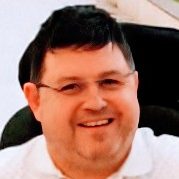
In this blog post, Ian Atkinson, founding Director of Involved and Equal CIC, writes about his life, his experience over almost 30 years of addressing inequalities, and his work to centre the voices of disabled people in health and care research.
“How can we change attitudes, improve services or give disabled people the support that they (we) need and crave, without asking them what needs to change, what needs improving and what do they need as individuals?”
– Ian Atkinson, Founding Director, Involved and Equal CIC
I am the founding Director of Involved and Equal CIC which is a Community Interest Company set up in 2022. I am a disabled person, with Cerebral Palsy – providing me with a lifetime of experiences and stories which may inspire or infuriate, amaze or amuse – but through the work of Involved and Equal CIC my aim is to educate.
Throughout my working life, whether that be as a volunteer or an employee I have gained a wealth of experience in the field of Disability Work. Starting as a volunteer in the late 1990s with Gateshead Access Panel, I quickly became active in Access Focus Groups, where disabled people were being asked by Local Authorities, planners and architects for their opinions on various access plans. Back in that time it really was a novelty to be asked your opinion on anything as a disabled person. I had just joined the Group having failed a job interview elsewhere, but I still, at that time thought to myself “Well I am disabled. I know what is needed to make somewhere accessible”. However, I sharp found that I only knew a little bit about my own needs, but even then, I had much more to learn about Disability Rights and Disability Equality. As well as planning meetings, we carried out loads of site visits where we ensured that we involved as many different impairments as we could, which really changed my own, somewhat blinkered views of that time.
The ethos of Gateshead Access Panel was Service User Involvement, allowing platforms for disabled people to learn from each other through sharing lived experiences. This was to be the steepest learning curve that I’d ever been on, and I still feel that there is always more that I can learn.
In time, I gained employment there as an Involvement Worker and over many years since I held roles including Disability Trainer, Disability Advocate, and Disability Partnership Worker, gaining experience in personalisation, direct payments and health inequalities. I’ve also facilitated the Access Consultation Groups. Professionally, this led to me setting up my own Community Interest Companies, Involved and Equal being my second.
My attitude to life
I want to say that I’m laid back and stress free, but…I once told a manager that I don’t get stressed! She laughed and the rest is history.
I do try to find the funny in any situation, but seriously, once you understand inequality and injustice, the funny side is not always as obvious to see! I used to think that I wasn’t part of the Disability Community, and that I just want to live my life, but now each time I face discrimination I see it as a fight for all disabled people.
Maybe it got more serious because I finally knew that I had rights? A bit like the old Bullseye Line “Look at what you could have won!”. Before then, if a pub didn’t have an accessible toilet, then it must have been acceptable to pee in a Multi-storey Car Park? (Apparently not as it happens).
Because of my working role, I have worked with a lot of disabled people who themselves are not able to fulfil their own potential, which I see as my duty to assist and advise. Yet I find it uncomfortable, strange and amusing when others see me as a role model for other disabled people. I think that is because I genuinely do just see myself as “living my life”.
However, if I break my life down, as a person with Cerebral Palsy, who was advised at the age of 15 that I could go to a Disability Sheltered Workshop, I have achieved a whole load more. I knew from that point that my own ambitions were far bigger than those of my Career Advisor, and to match my ambitions it was going to be down to me, with the support of family and friends.
That attitude led me to sourcing my next steps into education, taking me on a 3 year adventure away from home at a residential college at the age of 16.
Since then, I’ve learnt to drive (again, after being told this was highly unlikely, due to my CP). I’m now due my fourth Wheelchair Accessible Vehicle and have driven an estimated 230,000 miles around the country to date. My own transport gives me so much freedom and independence and contributes so much towards what I am capable of with regards to my employment and social mobility.
Once I started volunteering, I learnt so much about my own rights as a disabled person, including Personal Assistant Support through direct payments via Adult Social Care and via Access to Work. This all made me more ambitious, wanting to have my own home, a relationship, and that led to having my very own wife, Sandra.
Between us, we have travelled the length and breadth of the UK and much of Europe, not to mention separate trips to Florida – yet I seem to be the only Brit to have travelled to Florida and never been to Disney.
Having written this down, I do see why people think I might be a role model. It does show, that through my own ambitions and the correct encouragement and support I’ve seen past the obstacles and barriers to achieve loads.
My point remains in my mind though. IF I were not disabled, then I have been educated, driven a car, held down a job, paid my rent, got married, had some holidays and kept my head down. A fairly bog-standard life in many people’s minds………
However, as a disabled man all of the above could not be achieved without the correct level of support and had I been a decade older, I possibly wouldn’t have had the rights to do most of these things.
My next ambitions
With all that said, my next goals are to see Involved and Equal CIC grow as a company, and to continue to highlight inequalities for disabled people. Knowing that a generation, or even a decade earlier for me would have been so different for me, makes me both grateful for what might have been, but appreciative that it could equally be taken away again if we do not continue to move forward and develop our community.
In the past 2 decades disabled people have found themselves with more rights than ever. Yet, once we experience these rights we expect more. The thought of going backwards from this point terrifies me, but as a disabled person, individually I cannot move forwards without changes in attitude towards disability, in terms of how we support disabled people.
So how can we change attitudes, improve services or give disabled people the support that they (we) need and crave, without asking them what needs to change, what needs improving and what do they need as individuals?
Consulting with disabled people
Being asked what you need as a disabled person can be mindblowing! If “we only know what we know”, then when you’ve never been invited to give your opinion, it is not easy to be confident of what your opinion is?
I once ran a training program aimed at encouraging disabled people to attend their cancer screening invites. However, the participants didn’t want to be trained on the importance of cancer screening. Rather, they wanted to explain why they did not attend their invites. Their reasons. The barriers that were stopping them from attending. Access barriers, personal care barriers. Intrusive procedures created by inaccessible venues or equipment. These were not the same ‘usual reasons’ or ‘expected reasons’ that non disabled people would share, such as shame or fear. These were additional reasons created by environmental barriers or personal restrictions. Because they were not the expected reasons, nobody knew what to do with the responses. Therefore, people again became disengaged.
It is therefore important to me that Involved and Equal CIC can support the understanding of researchers that where disabled people are involved, researchers need to adopt a more flexible approach to their research to allow disabled people to fully explore and explain their own needs, which as demonstrated above, might not follow the planned route or direction that the researchers had envisaged.
Involved and Equal Training Programs (Existing)
We already offer Disability Inclusion Training, which covers medical and social models, language and ettiquette and everyday barriers facing disabled people.
Involved and Equal CIC have also recently developed training sessions about involving disabled people in research and/or consultations. This includes planning your venue for inclusive access, planning and funding your research consultation sessions to include the costs of involving disabled people, teaching about Mend The Gap and co-production, how to make research inclusive for different learning styles and sharing consultation models to assist discussions, break down power balances and to share lived experiences.
Group Facilitation
In addition to our training sessions, due to my background as an Involvement Worker, I see Involved and Equal CIC as providing a support service to researchers by being co-facilitators within research consultations with groups of disabled people. Together, we can work to address health inequalities facing disabled people.
To get in touch with Involved and Equal, please email: Ian.involvedandequal@gmail.com
Written by Ian Atkinson, Involved and Equal CIC. All words and views are the author’s own. Thank you to Ian for writing this post.