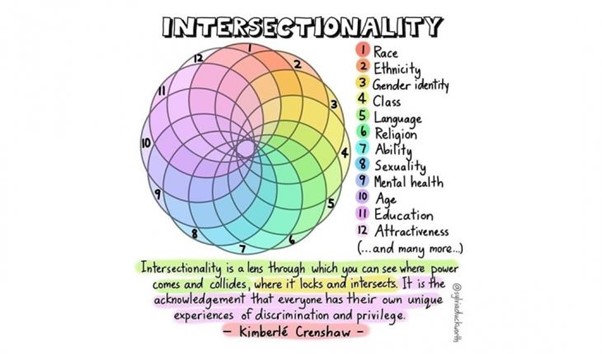
Working with marginalised communities requires approaches that recognise diversity, challenge structural barriers, and create genuinely inclusive spaces for involvement. In Public and Patient Involvement (PPI), this means engaging with people who are often underrepresented, and ensuring their experiences meaningfully shape research and service design. This guide provides practical, strengths-based tips to support researchers, practitioners, and organisations in building trust, reducing barriers, and co-creating environments where marginalised communities can participate with confidence, dignity, and influence.
Intersectionality
Intersectionality is a way of understanding how different parts of a person’s identity, such as gender, sexuality, race, age, disability, or class, interact to shape their experiences in the world. Instead of looking at these characteristics separately, intersectionality recognises that they overlap and can create unique forms of privilege or discrimination. In Public and Patient Involvement (PPI) work with marginalised communities, intersectionality is essential because it helps us move beyond one-size-fits-all approaches. It ensures that we listen to and learn from people whose experiences may be shaped by multiple, interconnected disadvantages. By using an intersectional lens, we can design more inclusive engagement activities, avoid reinforcing existing inequalities, and support communities in ways that genuinely reflect the diversity of their needs and voices.