Introduction

Hello! My name is Dan Adams, and I am a researcher in the School of Education, Communication and Language Science (ECLS) at Newcastle University. This is the first post of the project journey.

This present project aims to explore the sociocultural experiences and adjustments made by new Indonesian (UG, PG, PhD) students during the 1st year of their studies in the UK. I am researching Indonesia because of: a) my great interest (read: love) for the country; b) I was surprised to find there is almost no research to support Indonesians in the UK. The study itself is designed to be simple and anonymous, and the aim is to produce data to support present and future Indonesian students.

I am looking for Indonesian student participants to take part in self-reported, anonymous questionnaires. The questionnaires will be carried out in September and December 2022 respectively (it would be preferable if you could take part at
both times).

If you want to ask any questions or want more information, please feel free to contact me by email: Dan Adams – d.adams2@newcastle.ac.uk

Supervisors: Professor Tony Young / Dr Sara Ganassin

Thank you very much for your time! / Terima kasih banyak atas waktunya!
Indonesian Research Conference

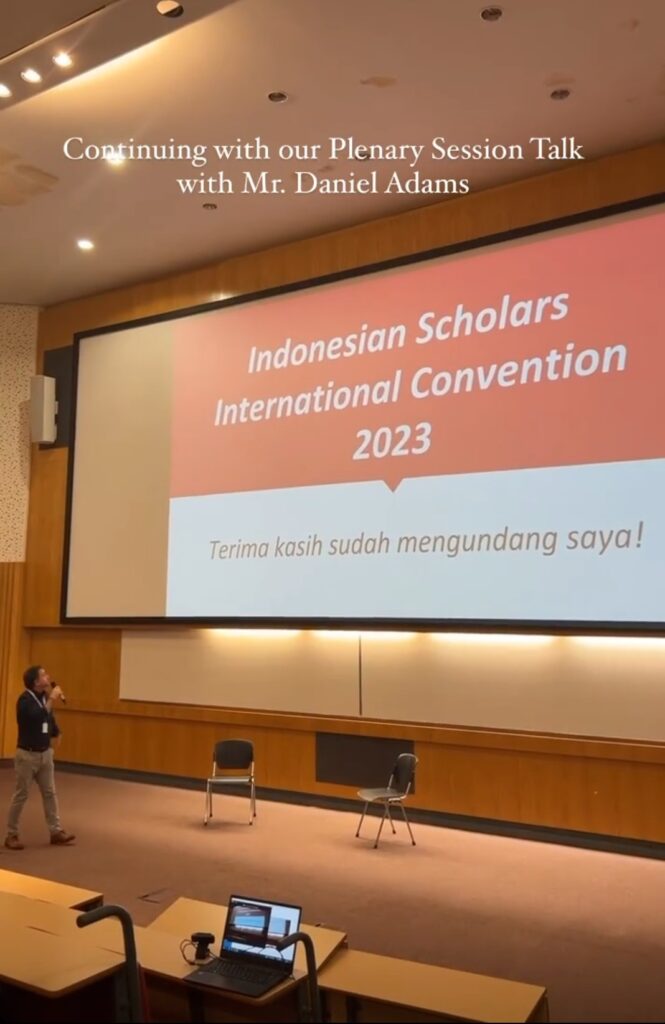
I was very fortunate and indeed honoured to be invited to speak at the Indonesian International Scholars Convention at the University of Nottingham in August this summer. While I felt I should be nervous, in fact I was very excited personally not only to share my research and gain a sense of recognition for what I was doing, but also as a way to integrate and better get to know the community. From a personal standpoint, listening to their impressive presentations, and knowing how far literally and metaphorically they have come, I was proud to have known them and be invited to be part of them.

For this, I need to thank Pak Munadi for his support and help and invitation to the conference, and also for the volunteer students involved in organising such a well-thought out and coordinated conference. For they are all volunteers, focusing on making not only their achievements in life, but also supporting the journey of many other Indonesian students. This is an organisation unlike any I’ve seen at universities. Whereby there is a sense of obligation and duty not on a personal academic level, but also on a cultural community level. Terima kasih!

So why Indonesia?

You may wonder why I am researching Indonesia. It’s a very valid question and one I have had recently. As a cultural outsider, not being Indonesian is indeed challenging for all concerned, and it’s something I wrestle with on a daily basis. Below is what I wrote in my Information Sheet given to participants.

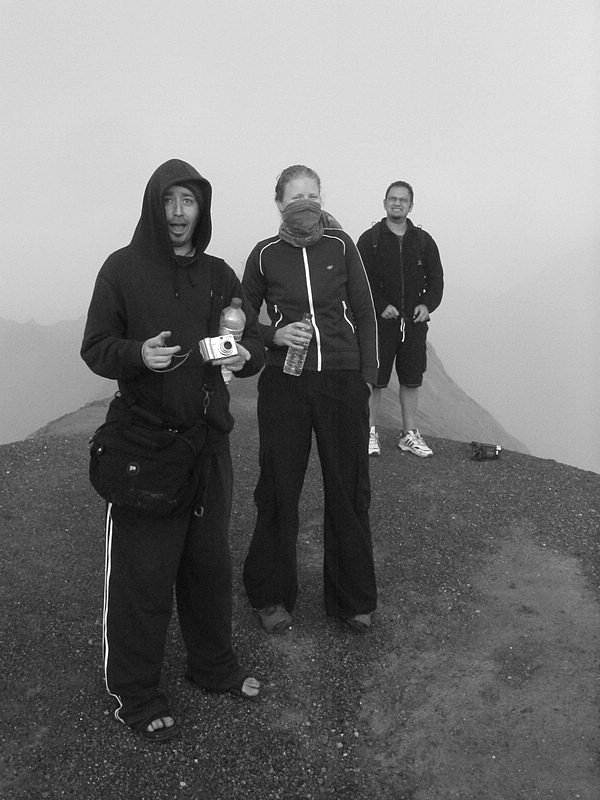
My first time in Indonesia many moons ago

Well firstly, while my model based on social and intercultural capital can be used for other student cohorts, I hope to encourage more Indonesian students to come to the UK to study as a nation of growing importance. Secondly, having been to Indonesia around 20 times from Banda Aceh to Kupang, and Manado to Sumba, I would like to repay Indonesia by supporting their future. Lastly, there is very, very little research on Indonesian students and I hope this will support them. 

Being an outsider involves a two-prong approach. Firstly, I need to build awareness and trust in my project, revealing my ideas and proposals and being open and sociable. This comes easy to me: I feel it’s in my character. I’m a sociable person and am following my genuine interests in Bourdieu, and in particular in Indonesia. However, secondly, I have to maintain an academic distance to not influence the events or comments from the goodwill generated, but at the same time ensuring my genuineness to be entrusted with their stories. Walking this line is actually very challenging for me. I really hope it works out werll.

The interview stage has started now and my previous work know-how from interview practice on both sides of the table to extensive intercultural experience help to support sensitivity and reflexivity in my own actions. Fingers crossed!

Saga Dharma

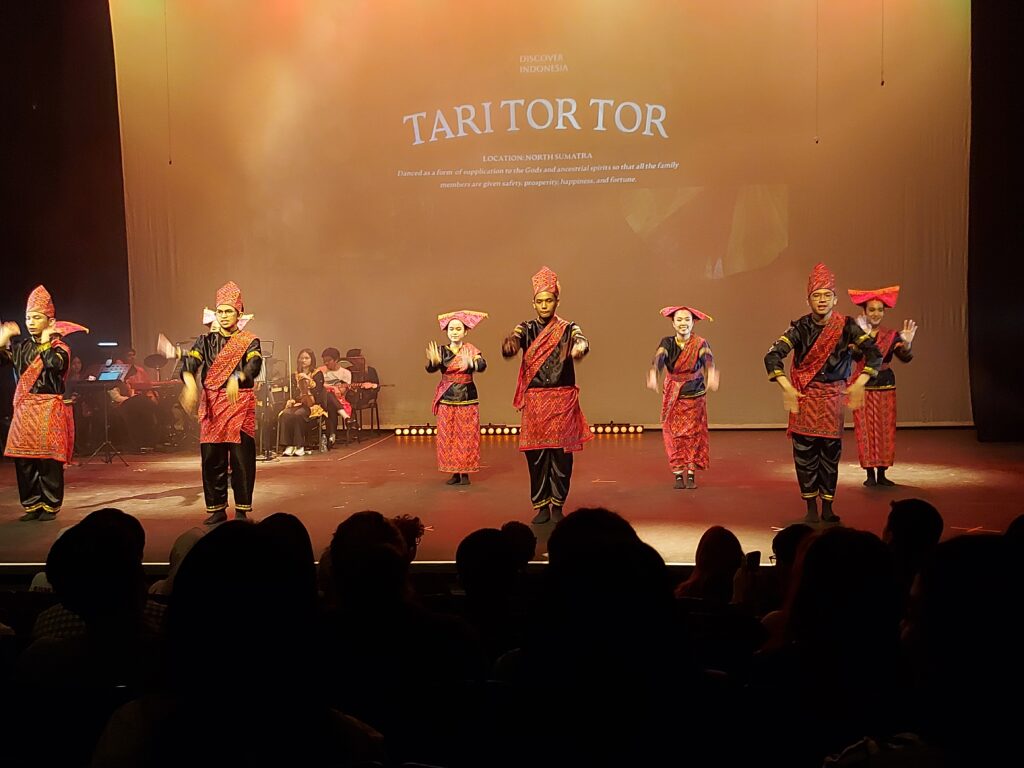
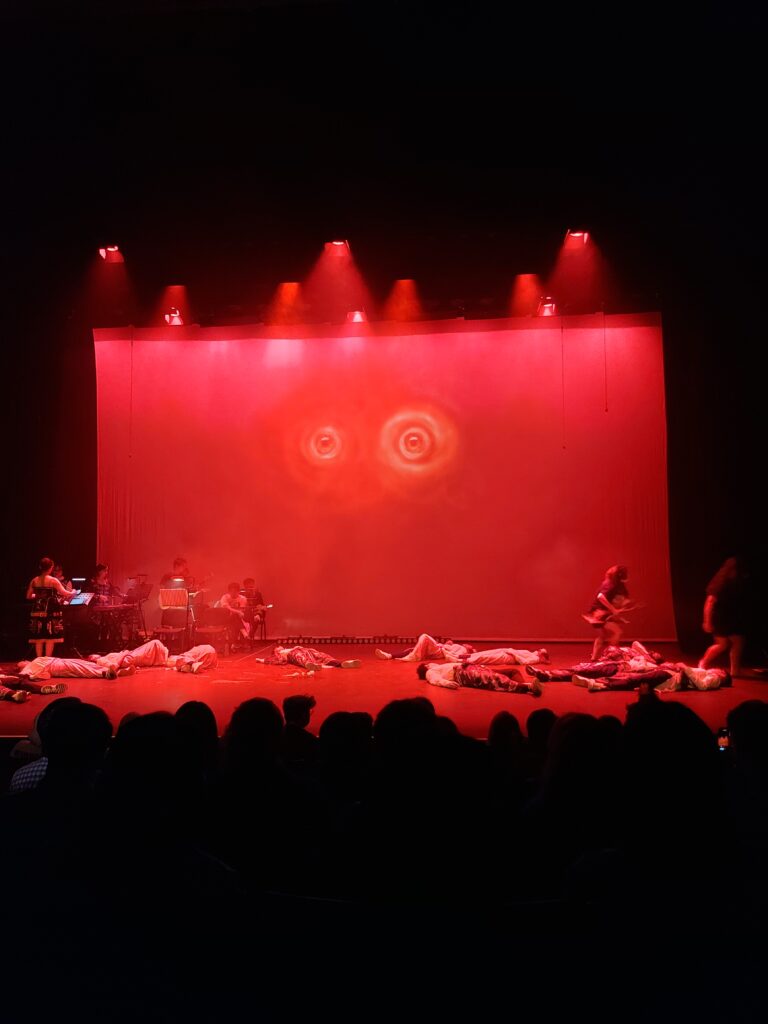
Last night we went to see the Discover Indonesia event called Saga Dharma, a telling of the trials of modernisation on Indonesia interspersed with dances from the length of the archipelago. The sheer energy of the troupe, all students, led by students, was complemented by dramatic effects of music and buckets of goodwill was inspiring to see. The Indonesian students are a real credit to themselves. and their country.

The dances told stories from Aceh to Papua, highlighting mystical and pragmatic challenges. The women’s dance in Aceh was particularly ‘striking’ as the 10 women slapped their hands and chests to build the rhythm, all done in perfectly coordinated unision.

While it could be argued that these dance traditions are a symbolic obstacle to the very modernity the students strive for, and much of the past has been simplified and romanticised (see the book Rainbow Troops), the enthusiasm the students show for their show is genuine, and deeply-held. As a relative new nation, held together by cultural nationalism is no easy feat and the pride shown is genuine.  

Rockstar Truths

Ambassador Percaya and Cultural Attache Mundai visited Newcastle University recently on a visit organised by the local PPI. Education and opportunity were often the topics under discussion. Having read the Rainbow Troops recently, it is clearly an area Indonesia is working on and has much to acheive.

Not only was the visit highly anticipated but also keenly attended and managed. Few (or maybe none) student associations are as active as the PPIs in UK universities. The breadth of activities they organise amongst their cohort and nationally is quite astonishing from national sporting events to cultural shows and down to the smaller pot lucks or movie nights.

Indonesia is well-known as a closely-knit society despite its incredible diversity and that cultural keenness can be clearly noted in the PPIs. They run as a family with a vast number of voluntary roles keeping everyone involved and included. My research focuses on sociocultural adjustment into the UK and I’ve been endlessly impressed by the effort and range of activities which support the students here.

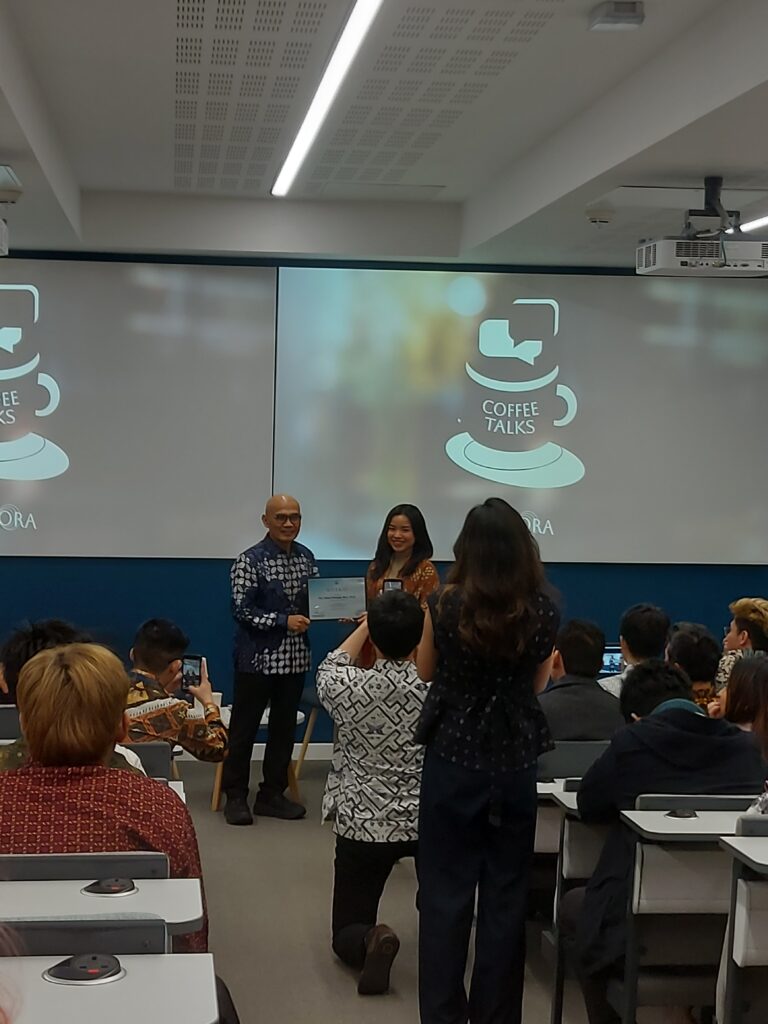
Back to the topic in hand. Pak Percaya is not only seen as a kind of rockstar (he does play the clarinet and saxophone!) by the students, but he is also humble enough to avoid such a tag. His coffee sessions, where he fields questions from an interviewer and the audience, have a relaxed feel, but the encouragement and honest appraisals of what it takes to get to UK university and beyond do not shy away from hard truths.

Indonesia is a country on the rise, and these students are forerunners, but much more needs to be done to ensure these opportunities are accessible to more Indonesians from all the islands of the archipelago.

Indonesia Reading

Research is tricky without background. While literature reviews are meant to resolve this, they merely look at what others have been talking about, rather than delve into the whys and wherefores. That’s what the research is for. Let’s search for the whys even though they are hard to find. Reading, researching and reminiscing should do the job.

Jual INDONESIA 3rd Edition -- J.D Legge di Lapak Arena Buku | Bukalapak

I am reading J.D. Legge’s history of Indonesia right now. I’ve read plenty of Indonesian history, notably the Adrian Vickers book below, and never tire of learning nuggets about the ancient past which shaped how such diversity can hang together.

A History of Modern Indonesia by Adrian Vickers | Goodreads

Elizabeth Pisani’s a woman with plenty of ground experience in Indonesia. Not only did she work as an epidemologist in the Jakarta backstreets, but she then hit the road, boat, plane and train to travel to the remoter parts, talking to the locals on their terms. It’s fascinating.

Indonesia Etc.: Exploring the Improbable Nation: Amazon.co.uk: Pisani,  Elizabeth: 9781847086556: Books

Then we move onto literature. Indonesian literature is very hard to find in English or even outside the region. This is surely something to be addressed. Beyond the ancient Nagarakretagama which is a tough read, Pramoedya, an imprisioned critic of the Suharto regime, wrote this quartet, a true masterful tale of Indonesia from colonial times.

The Buru Quartet' (Pramoedya Ananta Toer): A Portrait of Indonesia's  National Awakening Period | Ghifari's Notebook

Recently I finished The Rainbow Troops, a beautiful tale on the challenges to get an education in rural Indonesia.

The Rainbow Troops: Amazon.co.uk: Hirata, Andrea, Kilbane, Angie:  9780374534448: Books

Lastly, Man Tiger is a great, magical, surrealist read on life in a coastal town.

Man Tiger: A Novel: Amazon.co.uk: Eka Kurniawan, Benedict Anderson:  9781781688595: Books

Indonesia Day

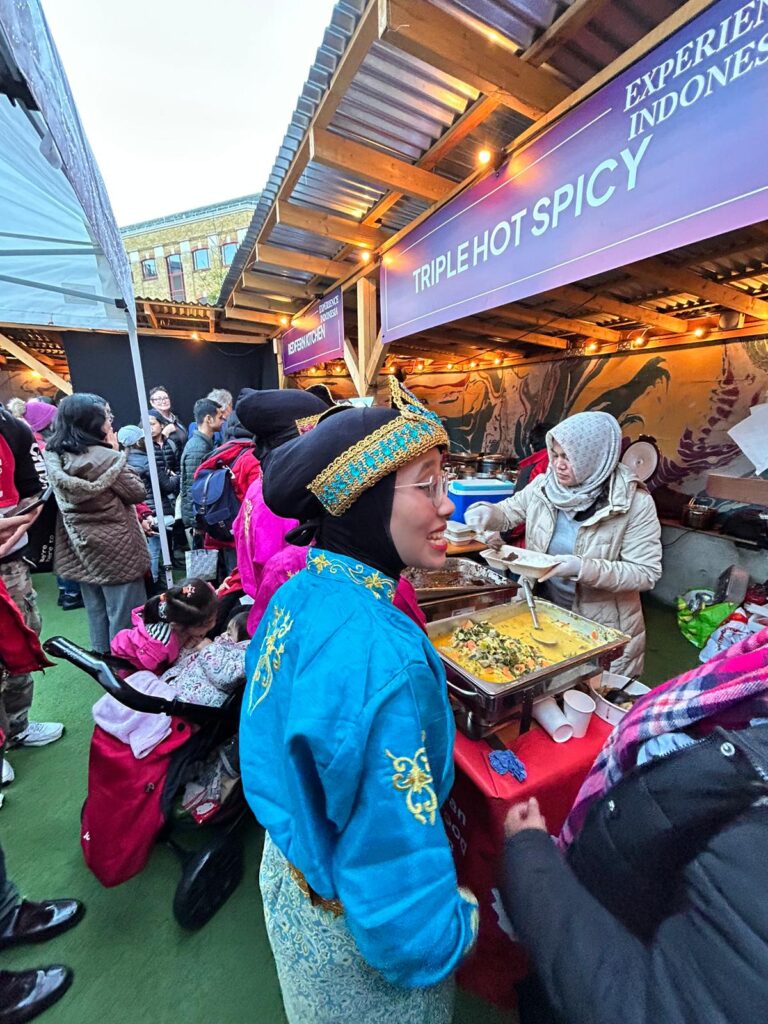
This weekend we had the pleasure of attending the Indonesian cultural extravaganza at Vinger Yard in London. The free festival brought in Indonesians students from around the country, resident Indonesians and Londonders alike to enjoy the music, dance, food and atmosphere.

As part of my deepening engagement with Indonesian culture, it was a pleasure to be there, meeting the people and witnessing their positivity even in the rainy queue. The queue, the product of the event’s popularity, should encourage an even larger event next year (hopefully not in November!).

The overwhelming impression is the sense of community felt within the Indonesian community, quite incredible for such a multicultural country, strung out over 17,000 islands with 400+ languages and 275m (ish) people. Quite an achievement.

Learning Curve

This research has been a great learning curve for me, which I’ve been led to understand is the point. Not only have I had to work in mixed methods (quantitative and qualitative), but I have had to learn on the job how to best deal with a cohort of students who are not only distant from me physically, but to a smaller, but varying degree, culturally. This has been a challenge, but also a remarkably enjoyable journey of self-discovery, self-mastery, and cultural engagement.

When I proposed this research it was suggested to me that I was biting off more than I chew, and that in fact I should really focus on developing a new theoretical framework to support research along a similar vein. While I believe my theoretical approach is philosophically valid, and sociologically intense and consistent, my main aim is to unabashedly shine a light for future Indonesian students in the UK and beyond.

In light of this, I have greatly enjoyed the process, even if I have made naive procedural errors along the way. These I’ve found enlightening, and allowed me to learn from my mistakes, to make my research more vigorous, detailed, understandable, and ultimately satisfied and successful.

Terima kasih murid!

Meeting Ambassador Dr Percaya

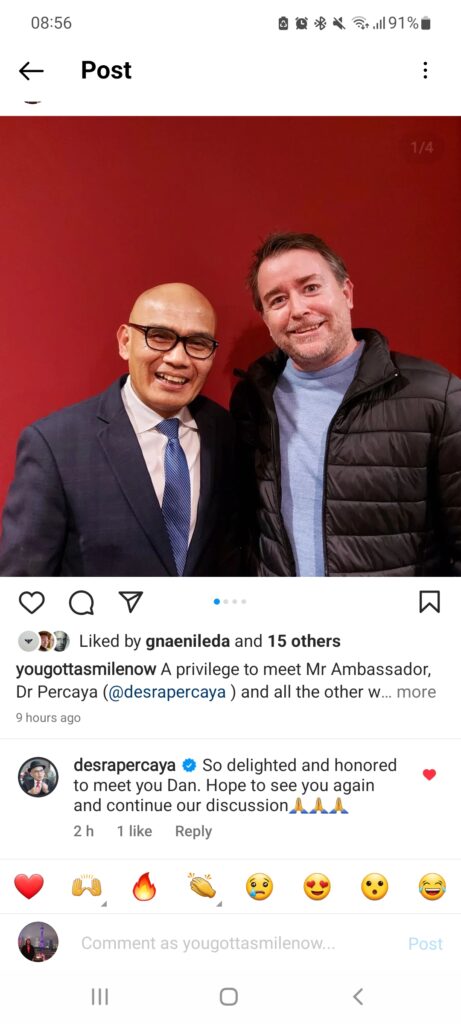
So yesterday I was fortunate enough to meet the Indonesian Ambassador to the UK and Ireland at the University of York where he gave a speech regarding Indonesia in the 21st century. Finding out about this late, I scooted down hopeful there would still be places and got one of the last ones. For this I am highly grateful to the University of York and especially to PPI York (the Indonesian students association) who not only hosted a well-managed event, but importantly managed to generate a welcoming atmosphere full of warmth and excitement.

Of course, the star of the evening was Dr Percaya who spoke clearly and directly about Indonesia and its role in the world, mixing in humour with genuiness about the severity of the world today on topics from Asia to Ukraine and the lack of statesmenship in the present world. I asked a question on the mantra and role of bebas dan aktif (independent, but active) for the Indonesian students in the world today. Dr Percaya explained how having one mouth, but two ears is key. Speaking after knowing the facts and hearing different sides is vital to progress.

After the speech and Q&A, we were serenaded by Indonesia music and the Ambassador on the clarinet playing ‘What a Wonderful World’. I managed to chat to Dr Percaya and we swapped contact details. In top of meeting Abdul and Mohammad from York PPI and Daniel and Chris, two smart Indonesian students from Newcastle University, it was a wonderful evening and actually felt like my research and aims are heading in the right direction. Terima Kasih.

PS. and yes I should have had a shave before!