Indonesian Research Conference

I was very fortunate and indeed honoured to be invited to speak at the Indonesian International Scholars Convention at the University of Nottingham in August this summer. While I felt I should be nervous, in fact I was very excited personally not only to share my research and gain a sense of recognition for what I was doing, but also as a way to integrate and better get to know the community. From a personal standpoint, listening to their impressive presentations, and knowing how far literally and metaphorically they have come, I was proud to have known them and be invited to be part of them.
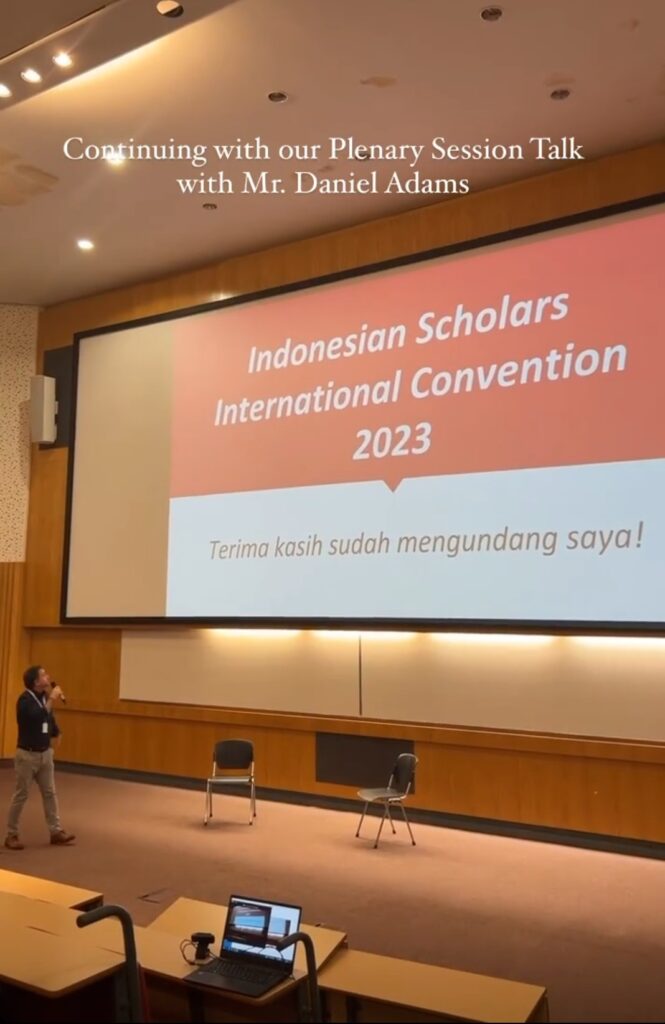
For this, I need to thank Pak Munadi for his support and help and invitation to the conference, and also for the volunteer students involved in organising such a well-thought out and coordinated conference. For they are all volunteers, focusing on making not only their achievements in life, but also supporting the journey of many other Indonesian students. This is an organisation unlike any I’ve seen at universities. Whereby there is a sense of obligation and duty not on a personal academic level, but also on a cultural community level. Terima kasih!
So why Indonesia?

You may wonder why I am researching Indonesia. It’s a very valid question and one I have had recently. As a cultural outsider, not being Indonesian is indeed challenging for all concerned, and it’s something I wrestle with on a daily basis. Below is what I wrote in my Information Sheet given to participants.

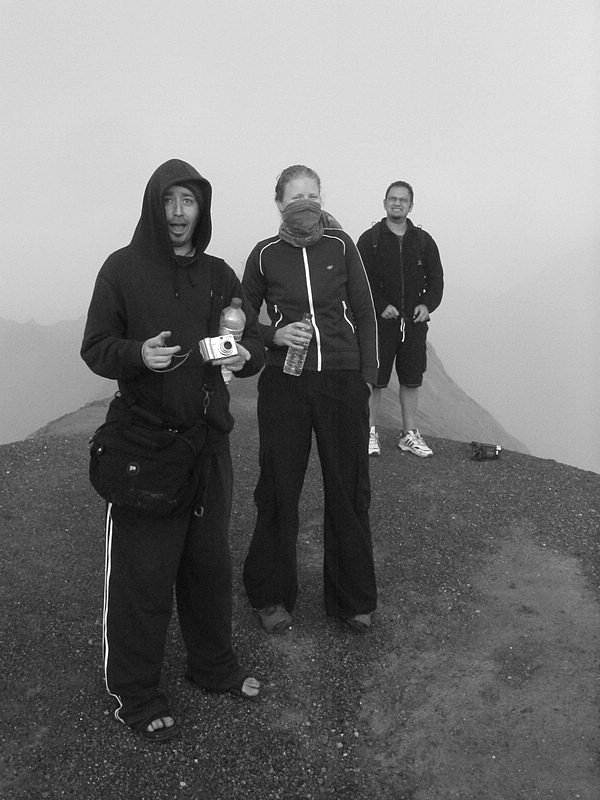
My first time in Indonesia many moons ago

Well firstly, while my model based on social and intercultural capital can be used for other student cohorts, I hope to encourage more Indonesian students to come to the UK to study as a nation of growing importance. Secondly, having been to Indonesia around 20 times from Banda Aceh to Kupang, and Manado to Sumba, I would like to repay Indonesia by supporting their future. Lastly, there is very, very little research on Indonesian students and I hope this will support them. 

Being an outsider involves a two-prong approach. Firstly, I need to build awareness and trust in my project, revealing my ideas and proposals and being open and sociable. This comes easy to me: I feel it’s in my character. I’m a sociable person and am following my genuine interests in Bourdieu, and in particular in Indonesia. However, secondly, I have to maintain an academic distance to not influence the events or comments from the goodwill generated, but at the same time ensuring my genuineness to be entrusted with their stories. Walking this line is actually very challenging for me. I really hope it works out werll.

The interview stage has started now and my previous work know-how from interview practice on both sides of the table to extensive intercultural experience help to support sensitivity and reflexivity in my own actions. Fingers crossed!

Learning Curve

This research has been a great learning curve for me, which I’ve been led to understand is the point. Not only have I had to work in mixed methods (quantitative and qualitative), but I have had to learn on the job how to best deal with a cohort of students who are not only distant from me physically, but to a smaller, but varying degree, culturally. This has been a challenge, but also a remarkably enjoyable journey of self-discovery, self-mastery, and cultural engagement.

When I proposed this research it was suggested to me that I was biting off more than I chew, and that in fact I should really focus on developing a new theoretical framework to support research along a similar vein. While I believe my theoretical approach is philosophically valid, and sociologically intense and consistent, my main aim is to unabashedly shine a light for future Indonesian students in the UK and beyond.

In light of this, I have greatly enjoyed the process, even if I have made naive procedural errors along the way. These I’ve found enlightening, and allowed me to learn from my mistakes, to make my research more vigorous, detailed, understandable, and ultimately satisfied and successful.

Terima kasih murid!

Meeting Ambassador Dr Percaya

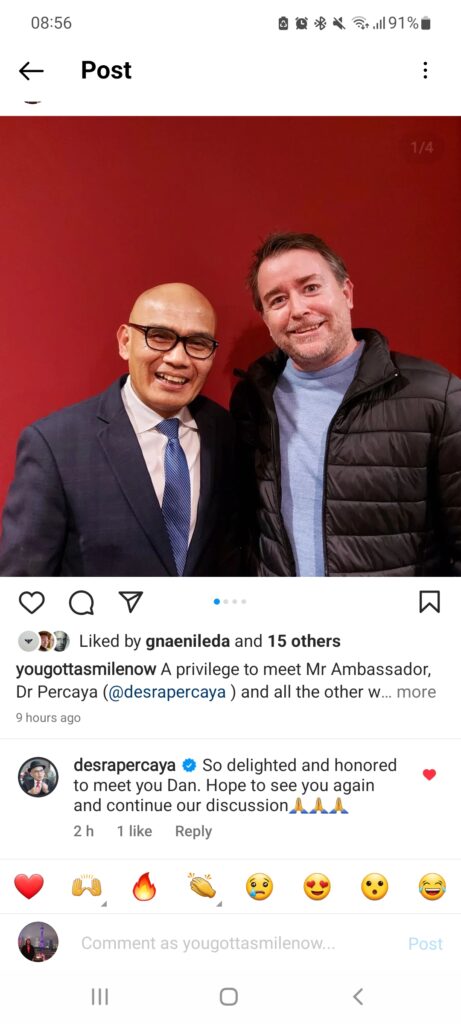
So yesterday I was fortunate enough to meet the Indonesian Ambassador to the UK and Ireland at the University of York where he gave a speech regarding Indonesia in the 21st century. Finding out about this late, I scooted down hopeful there would still be places and got one of the last ones. For this I am highly grateful to the University of York and especially to PPI York (the Indonesian students association) who not only hosted a well-managed event, but importantly managed to generate a welcoming atmosphere full of warmth and excitement.

Of course, the star of the evening was Dr Percaya who spoke clearly and directly about Indonesia and its role in the world, mixing in humour with genuiness about the severity of the world today on topics from Asia to Ukraine and the lack of statesmenship in the present world. I asked a question on the mantra and role of bebas dan aktif (independent, but active) for the Indonesian students in the world today. Dr Percaya explained how having one mouth, but two ears is key. Speaking after knowing the facts and hearing different sides is vital to progress.

After the speech and Q&A, we were serenaded by Indonesia music and the Ambassador on the clarinet playing ‘What a Wonderful World’. I managed to chat to Dr Percaya and we swapped contact details. In top of meeting Abdul and Mohammad from York PPI and Daniel and Chris, two smart Indonesian students from Newcastle University, it was a wonderful evening and actually felt like my research and aims are heading in the right direction. Terima Kasih.

PS. and yes I should have had a shave before!