The sounds are somewhere between electronic and organic. Rhythmic pulses click with metronomic accuracy, hardly wavering for thirty minutes now [audio link]. Between the accents are fuzzes, crunches and hisses; characteristically noisy and suggesting a glitchy groove. But despite sounding synthetic these infectious beats are emerging from my humble garden pond. The pond is a microcosm1 of sonic activity, and a pool of infinite creative inspiration. Which is why I’ve run long cables to stream these underwater sounds directly to my attic studio.
The neighbours are probably rolling their eyes. I’ve run 30m of ethernet cable out of my attic window, down the side of the house, across a small path, and down to the garden, terminating at the small, murky pond. It is an unseasonably hot day; 20ºC in mid-September and I’m fairly certain the aquatic plants will be reaping their fill of sunshine.
Aquatic plants, or macrophytes to use their scientific nomenclature, produce bubbles as they oxygenate water. A hydrophone reveals the release of these gases which can typically be heard as a combination of prominent clicks and elongated buzzes (link to post). When the environmental conditions are right, the results can be astounding – sometimes continuing for hours like an extended club mix. I wanted to be able to improvise with these sounds in real-time, hence the home-based sound installation.
The attic setup reminds me of La Monte Young’s ‘Theatre of Eternal Music’2, which ran in 1960’s New York. His all-night performances had no beginning or end, existing beyond the frame of the session. The soundscape of my pond is similarly perpetual, shaped by environmental factors such as temperature, weather conditions, time of day, and perhaps the lunar cycle – there is still much research to be done in freshwater soundscapes {refs). I am now able to tune into the pond’s incessant improvisations at any moment, contributing to the documentation of pond soundscapes whilst offering the chance for creative collaboration.
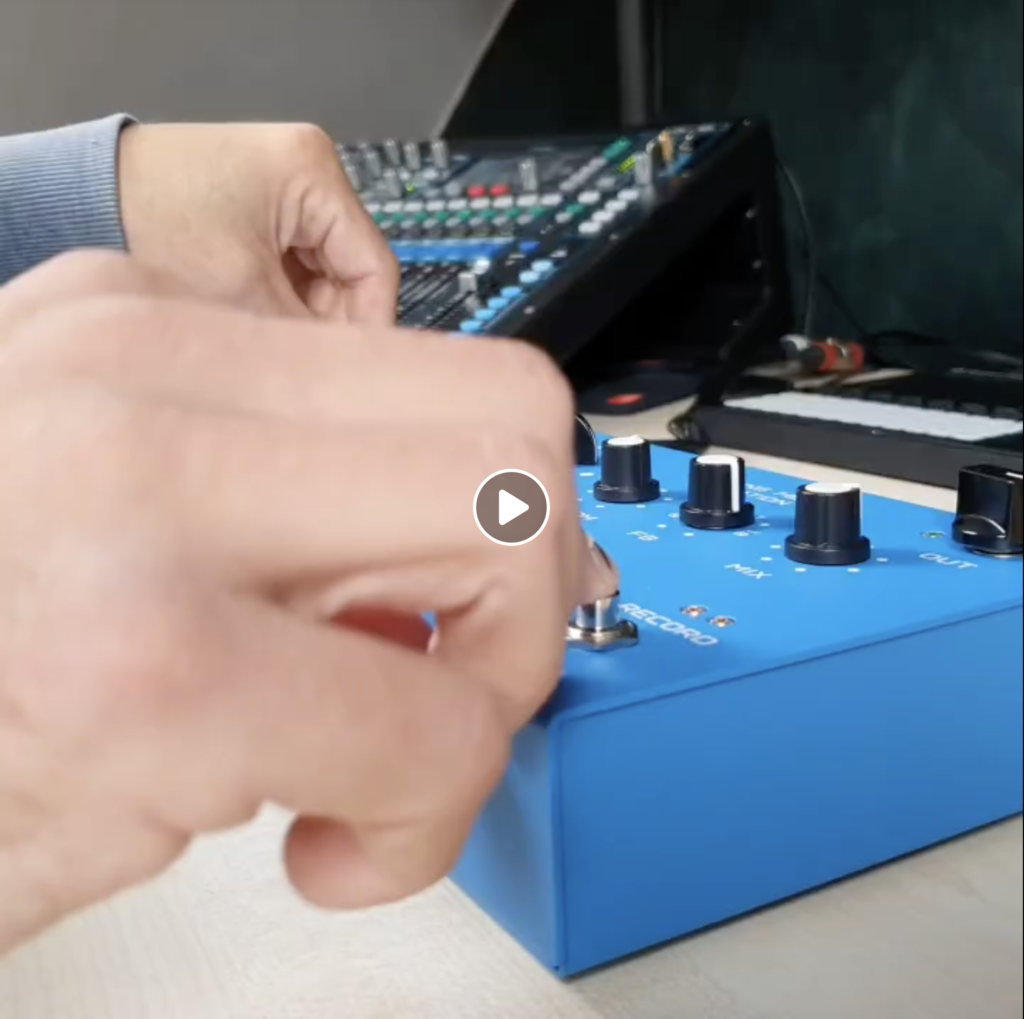
I have spent this week attempting to improvise with the pond using two methods. The first approach involved responding to the pond in real-time, freely improvising with the live-stream by feeding it into various bits of audio hardware. The second approach was impressionistic – creating the sense of listening to macrophytes through improvised electronic performance, based on memories from Sonic Pond Dipping and guided by what I’d heard that day.
Describing sonic timbres in language is difficult3. Listeners trying to describe the tonal quality of freshwater sounds often resort to ‘electronic’ comparison, with some commenting that it sounds like an underwater synthesiser, or even “Techno!” [Geneva session link]. When hydrophones were first deployed for military surveillance the sounds heard were thought to be electrical interference. The persistent clicks and pops were, in fact, the sound of snapping shrimp. Interestingly, during live performances, La Monte Young would sometimes use the mains hum of his home aquarium as the source of a drone, hinting at a reoccurring narrative around ‘interference’ in underwater sound recording (I will develop this thread in a future post). As a response, I have chosen playfully ‘noisy’ and purposefully uncalibrated electronic devices as my modus operandi.
The more I work with pond sounds, the more I realise how vital the element of improvisation is. In contrast, artist and ecologist Francisco López does not accept the idea that nature’s sound is automatically ‘music’ and rejects the spontaneous and accidental5. Pond soundscapes are permanently bound by the physical properties of existing in shallow water (ref: wavelength filtering etc.) and the capacity of their structure. But within the constraints of their environment there has been created a sonic microcosm, a liminal zone between electronic and organic worlds.
- referencing – Forbes, S. (1887) The Lake As A Microcosm ↩︎
- https://en.wikipedia.org/wiki/Theatre_of_Eternal_Music ↩︎
- see Pierre Schaeffer’s typomorphology Also, Kane, B. (2014) Sound Unseen: Acousmatic Sound in Theory and Practice ↩︎
- Rothenberg, D. (2014) Bug Music: How Insects Gave Us Rhythm and Noise New York: Picador, p.165 ↩︎
One reply on “Making music with macrophytes”
This article explores the fascinating intersection of nature and technology, as the author experiments with capturing the sounds of aquatic plants in a garden pond. By using hydrophones to record the unique clicks and buzzes produced by macrophytes, the piece examines the creative potential of underwater soundscapes. The blend of organic and electronic elements, coupled with real-time improvisation, offers a refreshing perspective on how nature can inspire musical innovation. A thought-provoking read for those interested in sound art and the creative possibilities of environmental acoustics.