Categories
More-Than-Human

The Audio Poster

The International Pond Conference was held online during 12-13 November 2024 and my abstract, “Sonic Pond Dipping: Underwater Soundscapes”, was selected as an oral presentation. The full abstract can be read below. This was another chance to bring the arts into what is typically a science-heavy arena.

This piece would be a continuation of the ‘audio-poster’ concept, an original idea I premiered at the 9th EPCN conference in 2021. It uses the science-conference phenomenon of ‘poster presentations’, wherein new research is distilled onto a single, large poster format, but turns it into an AV experience. My intention is make research multi-sensory, and thus more accessible, whilst directly advocating sound as my primary medium.

It was announced that all presentations should be pre-recorded. Personally, I find online meetings impersonal enough without the additional separation introduced by a pre-recorded presentation. Often the presenter isn’t even, well, present! But the requirement to pre-record did offer the chance to get creative.

I produced a new video which introduces the concept giving a voice to nature through the practice of Sonic Pond Dipping. It incorporates B-roll footage from a video shoot from the UKRI’s ‘101 Jobs: Switching Sectors’ campaign [watch the video here] alongside underwater videos made during workshops. Rather than pre-record a standard oral presentation, I provide a voiceover.

As I say at the beginning of the video, the aim was to give much of my allocated ten minute slot over to “the most important delegate of all: the pond. Rather than talk for, or about them, this video offers them a chance to talk for themselves”. It is a deliberate attempt to personify the pond and change our relationship to these small waterbodies. After a short introduction, the bulk of the video is handed over to hydrophone recordings with accompanying underwater camera footage. This is protected time, allowing nature to speak for itself. Ponds are not made of water1 – there are many more interactions happening between the landscape, the aquatic inhabitants, the bacteria, the terrestrial species; and also their sonic fingerprint. Much as people talk about boreal forests of the northern hemisphere, or howling desert dunes, or windswept arctic tundra, ponds have their own sonic identity.

The idea of underwater filming came from early attempts to identify the strange and bewildering array of sounds out of sight but increasingly I find video creation becoming a part of my creative process. It further blurs the line between whether this practice is purely creativity-driven or a form of documentation. In any case, it aims to bridge arts-science communication gap.

Once again, I was surprised by the number of questions, especially as I was in the first session of the day. I usually expect to be on later, and hope that the unusual approach will be a pleasant break from the heavy dose of dialogue, data, and graphs. As has come to be expected, many enquire as to what is making the sound and to what extent the sounds have been processed, but increasingly people comment on the relaxing and meditative quality of the sounds and whether they might be used therapeutically. Blue spaces have much still to offer.

The International Pond Conference was organised by Ponderful and EPCN.
  1. Nicolson, A. (2021). The Sea is Not Made of Water: Life Between the Tides. Collins Press. ↩︎

Categories
Aquatic plants More-Than-Human

Why More-Than-Human Musicking Now?

On 24 and 25 October 2024, the inaugural symposium of the Study-Group-in-the-Making “Multispecies Sound and Movement Studies” took place in the International Council for Traditions of Music and Dance (ICTMD) at Nuremberg University of Music. I was invited to present ‘Sonic Pond Dipping: Collaborating With The Sounds of Aquatic Plants’.

It was delivered using my Sonic Pond Dipping workshops as a template; the idea was to take people on a journey through underwater sounds, starting with common marine recordings and leading, inevitably, to the pond. Scheduled to be the last presentation of the day I was surprised that, despite a varied programme, mine was the first to highlight more-than-human sounds which were distinctly ‘beyond human’ perception. Others tended to focus on communication between canines, cetaceans, and birds.

Sonic Pond Dipping workshops encourage participative intervention. They aim to defamiliarise the landscape, not by aesthetic manipulation, but by close observation [ref]1 . This has become a commonality between my listening and compositional practices. The hydrophone presents a focal point within the water which I have tended to offer ‘as is’ in the form of piece of living music, somewhere between documentation and composition. The audio is only subtly adjusted in EQ to highlight key tones and perhaps spatialised to provide definition. Perhaps it should more accurately be described as ‘arranging’ (flower arranging?!). The pond as a microcosm of sonic inspiration, echoing ecologist Stephen Forbes 1887 seminal paper: “The lake as a microcosm”2

Quantised Landscapes

Musical quantisation is the equivalent of straightening a river, offering a metaphor for disassociation with nature. Focussing on recordings made for the album With Ears Underwater, collected near Sunderland’s Nissan factories, I took Luigi Russolo’s claim that “if we overlook such exceptional movements as earthquakes, hurricanes, storms, avalanches and waterfalls, nature is silent”3 and proposed that his comment is a result of the growing anthropogenic noise and the Industrial Revolution’s desire for humans to separate themselves from nature.

Fast-forward a few decades and we find electronic/urban genres of music (including Industrial, of course) echoing the monotony of factory rhythms, the Kraftwerkian ‘Man-Machine’4 where quantised rhythms shift around grid-like patterns. Erase meanders and we delete a habitat in which species thrive. The fast-flowing waters that are channelled by the removal of ‘imperfections’ (read: ‘less-economical’) are not favoured by all. There is need to slow down. The news today reports flooding in Valencia, Spain5 where narrow streets became these fast-flowing channels resulting in major loss of life. Restoring river bends can help reduce risk of flooding. Does ‘humanising’ beats bring us closer to nature? (Should that be ‘non-humanising’ beats…?)

Listening to the glitchy complex rhythms of aquatic plants brings us back home, to the waters from which we first emerged. Do we have some rhythmic memory that was passed down from the pulsating beats of early macrophytes? Might the excitement people feel during loud rock concerts or overpowered club PA systems be traced right back to how we sensed beats with our body as vibrations passed through water? (To be continued…). Definitely asking more questions than answering them.

Symposium Link: https://www.hfm-nuernberg.de/en/news/detail/why-more-than-human-musicking-now

  1. Knickerbocker, S. (2012). Ecopoetics: The Language of Nature, the Nature of Language (referring to poet Elizabeth Bishop) ↩︎
  2. https://en.wikipedia.org/wiki/Stephen_Alfred_Forbes ↩︎
  3. Art of Noises, (1913) – https://www.italianfuturism.org/manifestos/the-art-of-noise/ ↩︎
  4. Kraftwerk. The Man-Machine – Kling Klang (1978) : https://en.wikipedia.org/wiki/The_Man-Machine ↩︎
  5. https://www.theguardian.com/world/2024/oct/31/spain-floods-valencia-death-toll-three-days-mourning [accessed Oct 31, 2024] ↩︎
Categories
Aquatic plants

Plant Shaman

I have just finished reading Monica Gagliano’s ‘Thus Spoke The Plant’. Through scientific experiments she proves that plants are sensitive beings which are capable of remembering, perception and responding to environmental stimulus, including sound1.

It was Aristotle who differentiated plants, animals and humans in his theory of biology and his ‘structure of the souls’2. By defining plants as insensitive, Gagliano argues that he effectively turned them into objects which to this day “sanctions the human right to use (and abuse) plants”3, rather than treat them as living, sensitive beings. Through a ritual practice which involves dieting on certain roots, she experiences plants in a new light and begins a journey into dialogue with them.

In many of the chapters, Gagliano makes reference to time and rhythm. The first is on page 14; “once dieted, a plant is a teacher that will stay with you forever and keep teaching you in her own plant time”. Later, she recounts an experience of recognising that “time is not out there; real time is, if anything, ‘in here’. In fact, all organisms are innately endowed with an internal sense of time, a body clock regulating circadian rhythms”4.

“We are able to […] keep track of time thanks to a small groups of cells on our brain, which, together with a handful of genes, have the job to keep everything synchronized (and, by the way, these same time-keeping genes are found in all other animals, as well as in plants and microbes)”5. It made me wonder if the rhythms of aquatic plants have a function beyond a byproduct of photosynthesis? Perhaps their sounds act as a sunshine alarm to beetles who may be taking a nap, like the clocktower that alerts factory workers, or the knocker-uppers6 who woke colliery miners for first their first shift?

To tap into this sense of time, Gagliano often employs the use of a drum describing the monotonous rhythm as a “powerful beat [which] pushed me over the threshold and into the unseen underside of reality”. Within shamanic practice she describes using “the repetitive drumming of a large hoop drum to bring myself into an altered state of perception with the idea of learning more about the osha root, my dream, and – perhaps – the connection between the two, if any was to be found”7.

The repetitive and trance-inducing rhythms remind me of time spent listening to the complex click-trains8 of macrophytes. So I plug myself into the pond and begin to improvise. It is a bright midday and the plants are in full voice. As if in a dream-state, I am listening to the voice of a plant who speaks to me directly. The aquatic plants become the shaman, drumming out an ancient beat which resonates with the cilia of my inner ear, sending me back to a time before we stepped foot on dry land. The hydrophone becomes an aural time machine. I play along to scattered pulses, pulling me in and flooding my senses. 

  1. pp.31-35. See the first example of plants (yellow corn kernels, recorded in Bristol) emitting, hearing and responding to external sounds.  ↩︎
  2. https://en.wikipedia.org/wiki/Aristotle%27s_biology ↩︎
  3. p.105 ↩︎
  4. p.116 ↩︎
  5. p.117 ↩︎
  6. Definition: https://www.bbc.co.uk/news/uk-england-35840393 ↩︎
  7. pp.39-40 ↩︎
  8. term borrowed from cetacean terminology, but might also be applicable? ↩︎
Categories
Aquatic plants

Making music with macrophytes

The sounds are somewhere between electronic and organic. Rhythmic pulses click with metronomic accuracy, hardly wavering for thirty minutes now [audio link]. Between the accents are fuzzes, crunches and hisses; characteristically noisy and suggesting a glitchy groove. But despite sounding synthetic these infectious beats are emerging from my humble garden pond. The pond is a microcosm1 of sonic activity, and a pool of infinite creative inspiration. Which is why I’ve run long cables to stream these underwater sounds directly to my attic studio.

The neighbours are probably rolling their eyes. I’ve run 30m of ethernet cable out of my attic window, down the side of the house, across a small path, and down to the garden, terminating at the small, murky pond. It is an unseasonably hot day; 20ºC in mid-September and I’m fairly certain the aquatic plants will be reaping their fill of sunshine.

Aquatic plants, or macrophytes to use their scientific nomenclature, produce bubbles as they oxygenate water. A hydrophone reveals the release of these gases which can typically be heard as a combination of prominent clicks and elongated buzzes (link to post). When the environmental conditions are right, the results can be astounding – sometimes continuing for hours like an extended club mix. I wanted to be able to improvise with these sounds in real-time, hence the home-based sound installation.

The attic setup reminds me of La Monte Young’s ‘Theatre of Eternal Music’2, which ran in 1960’s New York. His all-night performances had no beginning or end, existing beyond the frame of the session. The soundscape of my pond is similarly perpetual, shaped by environmental factors such as temperature, weather conditions, time of day, and perhaps the lunar cycle – there is still much research to be done in freshwater soundscapes {refs). I am now able to tune into the pond’s incessant improvisations at any moment, contributing to the documentation of pond soundscapes whilst offering the chance for creative collaboration.

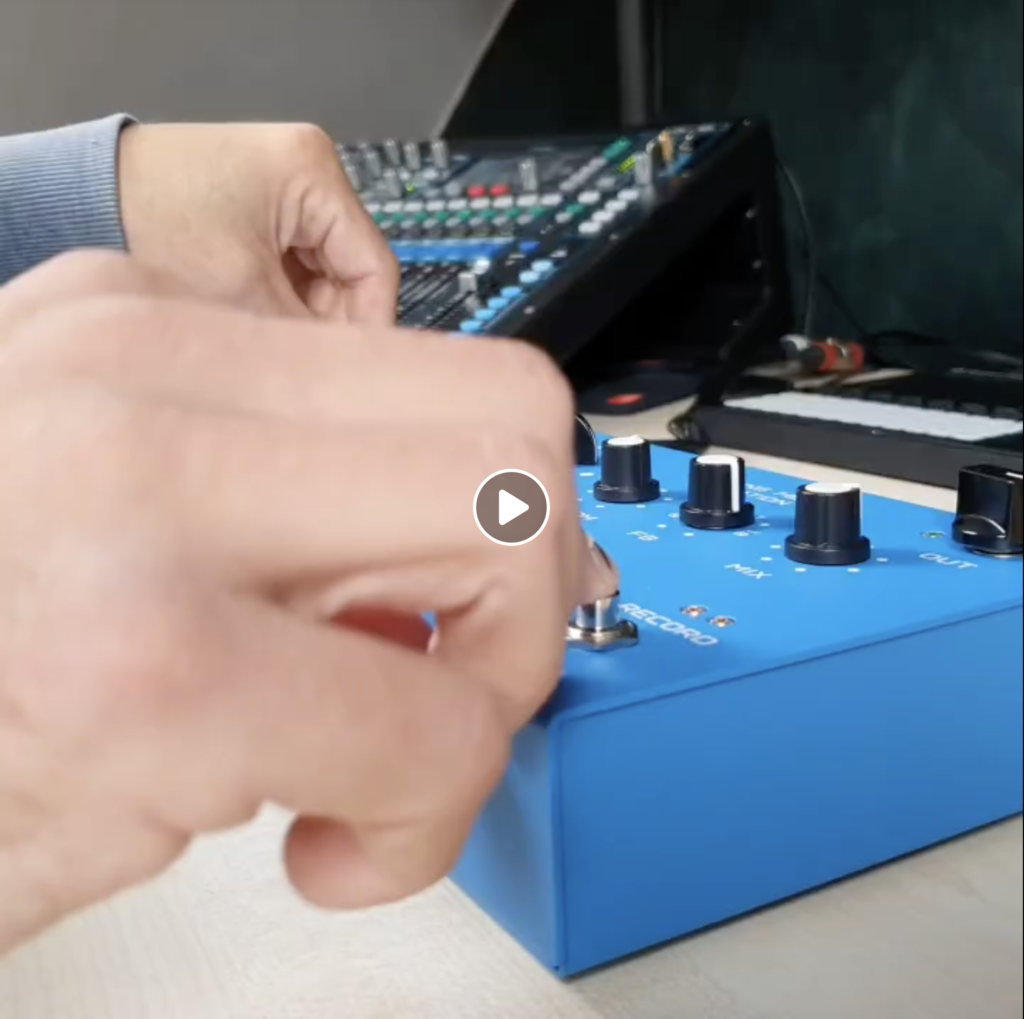
I have spent this week attempting to improvise with the pond using two methods. The first approach involved responding to the pond in real-time, freely improvising with the live-stream by feeding it into various bits of audio hardware. The second approach was impressionistic – creating the sense of listening to macrophytes through improvised electronic performance, based on memories from Sonic Pond Dipping and guided by what I’d heard that day.

Describing sonic timbres in language is difficult3. Listeners trying to describe the tonal quality of freshwater sounds often resort to ‘electronic’ comparison, with some commenting that it sounds like an underwater synthesiser, or even “Techno!” [Geneva session link]. When hydrophones were first deployed for military surveillance the sounds heard were thought to be electrical interference. The persistent clicks and pops were, in fact, the sound of snapping shrimp. Interestingly, during live performances, La Monte Young would sometimes use the mains hum of his home aquarium as the source of a drone, hinting at a reoccurring narrative around ‘interference’ in underwater sound recording (I will develop this thread in a future post). As a response, I have chosen playfully ‘noisy’ and purposefully uncalibrated electronic devices as my modus operandi.

The more I work with pond sounds, the more I realise how vital the element of improvisation is. In contrast, artist and ecologist Francisco López does not accept the idea that nature’s sound is automatically ‘music’ and rejects the spontaneous and accidental5. Pond soundscapes are permanently bound by the physical properties of existing in shallow water (ref: wavelength filtering etc.) and the capacity of their structure. But within the constraints of their environment there has been created a sonic microcosm, a liminal zone between electronic and organic worlds.

Click to watch video
  1. referencing – Forbes, S. (1887) The Lake As A Microcosm ↩︎
  2. https://en.wikipedia.org/wiki/Theatre_of_Eternal_Music ↩︎
  3. see Pierre Schaeffer’s typomorphology Also, Kane, B. (2014) Sound Unseen: Acousmatic Sound in Theory and Practice ↩︎
  4. Rothenberg, D. (2014) Bug Music: How Insects Gave Us Rhythm and Noise New York: Picador, p.165 ↩︎
Categories
Aquatic plants

The beginning of time

My research into underwater soundscapes has revealed an uncomfortable fact. In the estimated half-a-million ponds in the British countryside1 (that’s not including the two million or so small garden ponds), we can listen to sounds that most people can’t explain. And some of these sounds must have existed before humans, or any other creature for that matter, walked the Earth.

Plants first made their appearance on Earth in the Cambrian era circa. 530 million years ago (ref needed). During the process of photosynthesis, gases are released from the stomata of plants. In the case of aquatic plants these gases form discrete bubbles which can be counted to demonstrate plant stress (ref needed). They can also be heard using a hydrophone. It is one of the most distinctive and exciting sounds to hear underwater and never fails to impress participants in my Sonic Pond Dipping sessions. Seemingly passive in our surroundings, plants are instantly revealed to be a living, biotic entity. Our experiences of time become aligned. The school books we’ve read about photosynthesis and the importance of plants for planetary balance becomes part of a lived experience.

I’ve been unable to uncover any research into any rhythmic variations that aquatic plants may produce when exposed to light. Could it be that species of plants have individual ‘voices’? Could future bioacoustic studies allow us to identify a plant simply by listening? These are experiments which I am in the process of setting up through scientific collaborations with laboratory access.

So, what do aquatic plants sound like? To my ears, they are the time-keepers of our ponds, streams, and lakes. During daylight they lay down a persistent beats. Sometimes theses can last for hours, like a ritualistic ceremony to the bringer of light whose rays shine brightly through the watery firmament, not far above. Some species have an arching sound that modulates pitch like a whining oscillator. Others produce a wooden knocking sound that will incrementally slow down or speed up, like a DJ who subtly changes the energy on the dance floor. Sporadically, a burst of gaseous exchange causes an unexpected squeal, punctuating the soundscape (and maybe arousing a snigger…). Each plant seems to be guided by its own inner tempo, resulting in a highly polyrhythmic atmosphere. This is ‘time, no changes2‘ for an aquatic audience. It makes me wonder what role these plants have played in our understanding of rhythms as a fundamental property of human life.

The study of plants detecting and responding to sound has been coined ‘phytoacoustics3‘. These studies also crossover into ideas of plant sentience – new to science but with a long history in arts and cultures (refs needed).

In July 2024 I visited a section of the River Wear in County Durham with movement artist Scarlet Sumagr. Arriving early on a clear, sunny lunchtime, I positioned some hydrophones and assumed my listening position. Almost immediately I was pleasantly surprised to note some ‘new’ sounds – something akin to a bird chirping, although none were around (I removed the headphones on multiple occasions to double-check). Upon Scarlet’s arrival my headphones were passed over and the now familiar look, a cross between bewilderment, awe and excitement, shone across their face. Tuning into the aquatic soundscape, Scarlet almost immediately began to respond through bodily movements. I observed, as an outsider. Scarlet had taken a deep-dive, eyes closed, bare feet dangling in the clear water, headphones providing extra distance from the familiar sounds of our terrestrial soundscape.

After 5 minutes, Scarlet came up for air and described in lucid details the things heard. I’d not been privy to the sounds but hazarded a guess, listening back through the recording I’d made on the Sony PCM-M10. Plants, almost certainly, but also a melodic fragment which reminded me the peal of church bells (upload audio). Had the tolls of Durham Cathedral been ringing out, they’d be audible from where we sat. Could they be heard underwater? Perhaps these underwater percussionists were branching out and beginning to imitate extraneous sounds…

We placed an underwater camera in the shallow water, facing upwards, to view Scarlet’s improvisations from beneath the surface. A reversed aquarium4, the human gazing out. The movements of small fish merge with those of the human to create a multispecies collaboration, dancing to the sound of aquatic plants whose rhythms have gone unnoticed from millennia.


References:

de la Haye, D. Sumagr, S. (2024) In The Flow . URL: https://youtu.be/mkRCVQJIpGU?si=WeS_g1splH83Gfld

  1. Biggs, J. Williams, P. (2024) Ponds, Pools and Puddles. Collins New Naturalist Library, p.42 ↩︎
  2. See Ornette Coleman, Free Jazz ↩︎
  3. de Melo, H.C. (2023) Plants detect and respond to sounds. Planta 257, 55. https://doi.org/10.1007/s00425-023-04088-1 ↩︎
  4. See – Cohen, M. (2022). The Underwater Eye: How the Movie Camera Opened the Depths and Unleashed New Realms of Fantasy. Princeton University Press. https://doi.org/10.2307/j.ctv1nj342q ↩︎