Wow, after nearly a year of fieldwork, the interviews are coming to a close! July ended quietly on the recruitment front, so I knew I would need to push the recruitment stuff forward in August to attempt to secure 5 or so more women for the final batch of interviews. I started with a simple status on my research Facebook page (just while I went away to think of some other methods) and the response was unprecedented! 3 or 4 young women contacted me within an hour, and I had a total of 7 new contacts within 2 days. This may not sound like a lot, but sometimes I wouldn’t even get 7 contacts in a month, let alone a couple of days! So yes, recruitment obviously can be like buses, nothing for ages, then loads come along at once! So far, 4 of these contacts have been interviewed, and the 25th interview is now booked in for this week. As 25 is the approx. number of interviews I initially stated I would undertake, this could mean that by next week the interview stage of the research is completed (leaving me to try to sort out the pesky focus groups – no comment)! I will need to speak to my supervisors in today’s supervision about whether I should keep trying to recruit for further interviews or not. It’s a tricky one, how do you know when to stop? When and how can you say you have ‘enough’ or ‘sufficient’ data? I feel like I’m still getting loads of rich, new data, and I could keep going… but you have to draw the line somewhere I guess. So this could be the end of an era. Or not. Watch this space!
Tag Archives: recruitment
To pay or not to pay?
I was having a chat with a fellow PhD student the other day, and the issue of whether or not you reward participants in some way for their time came up. It reminded me of when I was debating this old classic myself. At first, I was dead set on offering participants some kind of financial incentive/reward for their involvement in the research process, but after working through it, I eventually decided against it.
I considered three main options:
a) Do not mention prior to the interview / focus group, but afterwards reward participants for their time with a small token of appreciation e.g. gift voucher
b) Mention up-front that participants will receive token of appreciation
c) Provide teas, coffees, nibbles etc but do not financially reward participants for their time
Option a has the advantage that it may have helped avoid the risk of participants feeling in any way coerced to take part in the study for the financial gain, which could disproportionately affect those who might appreciate the money the most (e.g. lower income, working part time). It may also have helped avoid participants feeling pressure to give certain ‘right’ answers to the researcher. However, a disadvantage is that the fact of the payment would not be able to be used to aid the recruitment process. Additionally, it may have been difficult to keep the fact of the payment hidden, particularly amongst groups of friends. Some women may have persuaded their friends to take part on the grounds that there was a gift voucher to be had. Option b is more transparent and would have avoided this issue and possibly aided considerably in recruitment. However, there is still a risk that participants may feel ‘coerced’, and possibly the greatest risk is that people may have taken part for the wrong reasons (e.g. the gift voucher) rather than because they have a lot to say or are interested in contributing to the project. This could result in the research process producing less rich data. Considering these pros and cons, I decided not to offer payment or incentive, but to provide refreshments and cover travel costs where relevant. I predicted that the research topic would hopefully be interesting and relevant to young women (well, of course, I would say that!), who would come forward without the offer of additional incentives. Similarly, I was not specifically targeting a particularly hard-to-reach or very narrow group, so had a large pool of potential participants as there were very few limits on who can take part within the gender and age range. I also thought that in this way the decision could always be revisited at a later date if recruitment proved problematic. And as it turned out, I think it was probabaly the right choice. Women have come forward because – so they tell me – they are interested in the topic and want to help out with the research. Having said that, I know every project is different, and for some research – for example with hard-to-reach groups – it may be appropriate to offer some sort of incentive or payment.
Yorkshire Sculpture Park
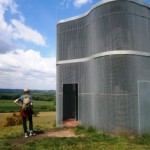
It’s so important to make the most of all the amazing opportunities to do extra activities outside of your own research, and recently I was able to participate in a day trip down to Cambridge to take part in a seminar on Feminist Classics Revisited, discussing Ann Oakley’s Sex, Gender and Society. It was a long but brilliant day out. I have also been lucky enough to attend the Visualities Research Group field trip to the Yorkshire Sculpture Park (see pics), which was a great day out and a good opportunity to reflect on the impact that the visual can have and how powerful it can be in provoking emotions, reactions etc. This can of course be linked back to research methods, where visual prompts might be used to elicit certain emotions and responses. I am still debating whether I am going to use visual methods in my own focus groups, just trying to work through what exactly I want the focus groups to achieve and whether there is a rationale for use of visual materials in this setting.
Can’t be having too much fun though (haha!) and PhD work rumbles on alongside these fun days out. I’ve done a couple of interviews with local women in the last few weeks which has really helped to develop and progress the research and add an interesting new dimension. Hopefully there should be a couple more this month as well. Recruitment is still ongoing, and I’ve managed to get a route in to Newcastle College hairdressing, popping into the salon next week to talk to some of the students, which is great. I’m also developing links with local cinemas with ‘mum and baby screenings’ and with a dance school in the area, so hopefully these will come to fruition too….
Recruiting Non-Students
The preliminary analysis is now complete, and my ‘brief’ summaries of each theme turned into 30 pages and 16,000 words of analysis (predictably, oh how I like to waffle!). Apparently though, there was some good stuff in there, which was great to hear (as I said before, if the data wasn’t rich enough or wasn’t answering the research questions, there may be trouble ahead)… One thing that really came through the analysis was the ways in which students construct a student/local binary and talk about local, working women in particular (often classed and aged) ways. I need to target my remaining recruitment efforts for the second half of the interviews at non-students / locals / women who work in Newcastle. This is proving slightly more challenging than the student recruitment! I’ve almost lost count of the number of high street shops and supermarkets where the staff have kindly agreed to leave some flyers in the staff room for me, plus I’ve left some for the general public in cinemas, cafes and bars, alongside revitalising my Facebook recruitment… However this has only lead to one more interview so far so really going to have to think about what additional mechanisms I can use if these continue to prove relatively unsuccessful.
Recruitment continues…
Well after a nice and relaxing Christmas break it is back and full steam ahead with recruitment. I’ve presented at a couple of Newcastle Uni lectures now, and had a great opportunity today to go and talk to dance students at Newcastle College, laden down with a big stack of flyers! This has been an important step as I’m interested in talking to a wide range of both students and local young women from a broad range of backgrounds and who may be working or undertaking academic or vocational courses.
I have another interview lined up and a couple of expressions of interest, which is great, and I’m trying to make real use of social media to help raise the profile of the research – I really think there are good opportunities to be had here as social media has the potential to reach so many people.
I’ve also managed to secure some good opportunities to talk to geography students at Northumbria University, including 1st, 2nd and 3rd years (this is particularly useful as it would be good to be able to interview a broad range of ages and see how age as a factor comes into the analysis).
Starting the research!
It has been a busy few months but my research project has finally been launched! the fieldwork risk assessment form has been approved, recording equipment all ordered and two pilot interviews transcribed and analysed to refine the process. Recruitment for the interviews is underway and I’ve got the first one lined up for tomorrow.
No time is an ideal time to start research, and this may be particularly true regarding the run-up to end of term / Christmas. However, it seemed worth getting the ball rolling with at least some of the recruitment tools to see if I could get an interview done before Christmas, with a renewed focus in January, and it looks like that paid off!
I’m presenting in two Newcastle University lectures over the next few weeks (law and health). I’ve also made some personal contacts at Newcastle college through a friend undertaking an NVQ in hairdressing and somebody I met at a conference in Hull who actually works for the college (lucky!). I will also start on workplace recruitment and university societies in January.
My website is also up and running, along with a Facebook page.
September
This month I have been starting to think in more detail about the recruitment process and methodology, exploring different potential avenues for recruitment and trying to figure out the types of populations these routes will target. I’m working on a recruitment timeline, trying to make it more strategic so that I have a more coherent approach to the project and can deploy different strategies at different times (thinking, for example, about university term dates and holidays, specific events etc). Some of the early issues I have encountered have been that I have been suggesting a sort of ‘hands-off’ approach, when I need to look in more detail at some of the more face-to-face mechanisms I can utilise. I know I am focusing quite heavily on the use of a dedicated account on Facebook, however I really can see the potential value in this. So many of my target demographic use Facebook that I think it would be a mistake to overlook it, plus it offers a way for me to proactively target different night out pages and events, many of which have over 10,000 subscribers. This makes Facebook a free and low-effort way to reach a huge target population, plus it can be used as an ongoing process (e.g. targeting pages for upcoming events) rather than a one-off, meaning I can be flexible and responsive in how it is used, for example depending on which populations I need to target.
Alongside this, I need to ensure my research documentation (consent forms, information sheets, flyers and posters) are up to date and ready to go when the study is launched (hopefully at the start of November).
And of course, the interview and focus group schedules are constantly being developed and fine-tuned in the background. Obviously I don’t want to start trying to recruit if I am still some way off actually starting the research, as potential participants are more likely to lose interest. On the other hand however, I will need to balance this with ‘putting the feelers out’ for recruitment sufficiently early as there may be some time lag in securing participants.