The case for genetics in conservation…
Written in the DNA of every individual are not just the instructions for building the organism, but also the history of its ancestors. When populations of individuals are analyzed together, their DNA can tell an even larger story of population dynamics, demography and divergences, both recent and ancient. Genetic approaches allow us to interpret the historical information contained in DNA, which can provide insights difficult or otherwise impossible to obtain. The DNA of populations can also influence the future, as it is the genetic variation within populations and the resulting differential fitness that is the raw material on which natural selection acts.
The central goal in our research is to apply the principles of population genetics to provide information that is useful for conserving populations.
Research Themes
Genetic Diversity Change over Time
Monitoring the level of genetic diversity within a population provides critical information about how resilient the population is likely to be in the face of environmental change. But, even more informative is understanding how genetic diversity has changed over the recent past. Historical and ancient DNA samples can be used to provide information on baseline levels of diversity in the past, and measure directly how it has changed. See the publication in TREE highlighting how ancient and historical DNA can be used to inform conservation policy.
Monitoring the Structure of Wildlife Populations
Often there are invisible boundaries between populations within a species, where restricted gene flow or adaptation leads to genetic differentiation. By detecting and monitoring the strength and locations of these boundaries, we can identify factors impacting populations and delineate appropriate conservation units to target actions towards.
Evaluating the Impacts of Conservation Actions
Understanding how populations have responded to conservation interventions is important for justifying the costs and trade-offs associated with such actions. Genetic approaches can allow us to see the evolutionary impact of these initiatives and whether they are achieving their started goals, whether that is the maintenance of genetic diversity, or the restoration of gene flow.
Informing the Scientific Management of Ex Situ Populations
Although it is never the first choice, sometimes populations need to be conserved outside of their natural home. Captive breeding and head-starting can be effective tools for sustaining populations while the cause of their decline is addressed. It is important that ex situ initiatives are scientifically managed to maintain healthy, genetically diverse and representative populations.
Research Highlights
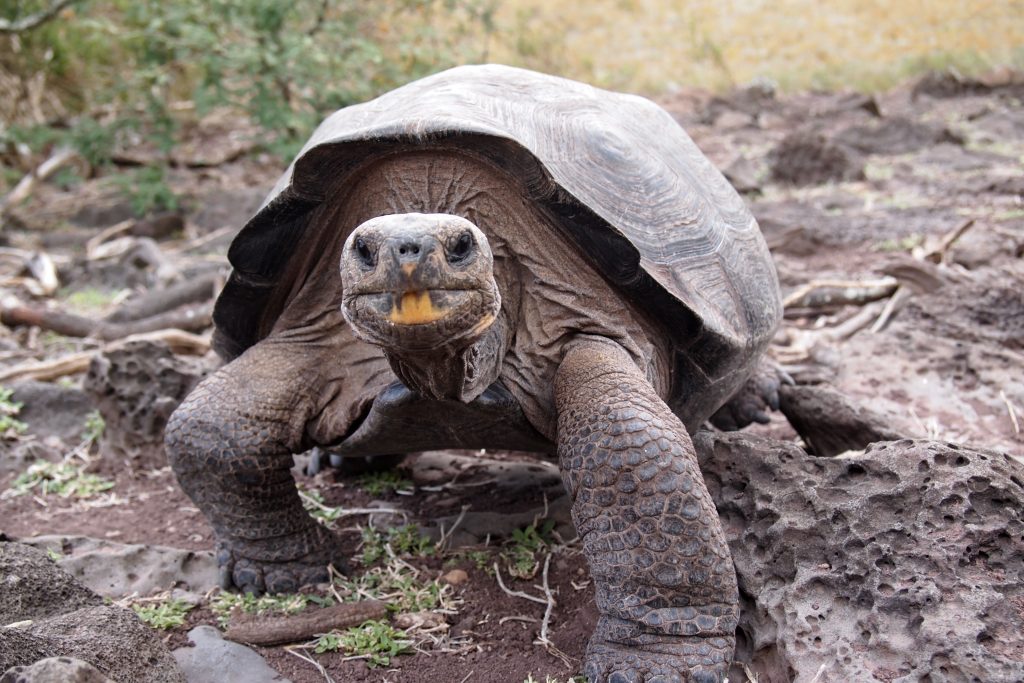
Galapagos giant tortoise evolution and conservation
Galapagos tortoises are iconic emblems of both evolutionary biology and the fight to save species from the brink of extinction, making them a unique study system to study basic questions in ecology and evolution that has applied conservation implications and huge levels of public interest.
Recent projects include the discovery of a new extinct lineage of tortoise on San Cristobal Island (open access publication here, news coverage by Vice, Natural History Museum and the Heredity podcast), and population genomic analyses of whole genomes (publication here).
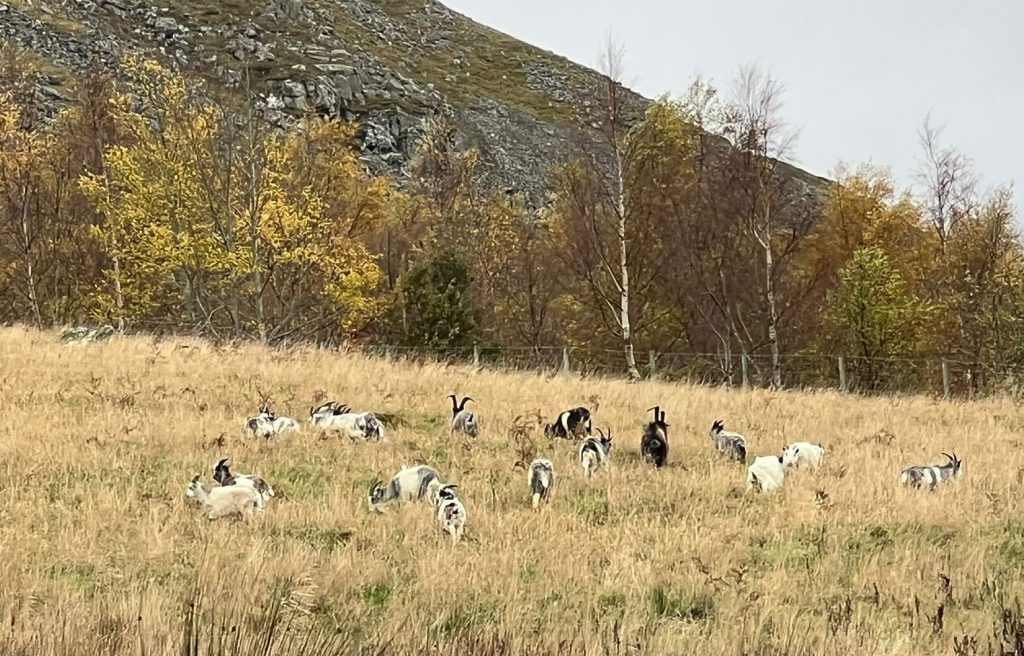
Population genomics of feral goats in the UK
Understanding how traditional landrace breeds have adapted to their environments is increasingly important in the face of climate change, however, the genetic composition of rare breeds especially those only found in feral/wild populations remains poorly understood. Population genomics analyses aim to inform evidence-based management and conservation strategies for these genetically unique and culturally important animals by shedding light into levels of inbreeding, demographic history and the identification of rare genetic variants that may be associated to valuable traits,that could contribute in the mitigation of climate change in future livestock breeding.