Once again I’m here with an update on what has been happening here in Newcastle and at the Department of Sociology. Christmas time has finally arrived (for better or worse) and one can certainly see a change in not only the city and its people but also in the Sociology department itself. Christmas decorations have been put up and people are talking about what they are doing for Christmas. As an Indian I had a very vague idea of what Christmas was as it is not a holiday in India and I only really knew about Santa Clause and that you were supposed to leave a sock hanging on the wall to get your presents, unfortunately Santa never seemed to make it all the way to India throughout my childhood years… The University itself has seemingly changed its atmosphere overnight, with the iconic red brick main building looking like it could fit straight into the next Christmas movie that will grace our cinema screens this winter. The department is organising Student Pot luck lunches where everyone brings a dish so everyone can try something new, this is very popular with international students as we get to try new and exciting dishes we’ve got no familiarity with. Students themselves are also organising Christmas nights out, both to try the traditional Christmas dinners but also nights out to the local bars and clubs, traditional and tacky Christmas sweater has to be worn of course! With this engagement from both students and staff one really feels part of not only the University but the UK too as it provides an opportunity for international students to try Christmas and see its traditions first hand, as well as meeting new people and seeing how they celebrate Christmas. I for example, had no idea that Danes apparently celebrate Christmas on the 24th December while people in the UK celebrate on the 25th December, with yet another difference being the tree and how its decorated. Each European country has their own way of decorating the tree and many discussions have been had amongst students on Christmas nights out as to what is a proper Christmas tree. Many international students may also get a bit homesick during this period, myself included, but with the University, staff and students engaging with each other during Christmas its very easy to feel part of a big family here at Newcastle University.
Oh Newcastle! : The City that Never Stops Moving
Once again I’m back with another entry in my series on Newcastle University. This time I wish to talk a bit more about what sort of city Newcastle is as everyone knows a university degree and the choice of where to study is not just about the university itself, but also about what sort of city you will be living in throughout your academic studies. Newcastle itself is situated in the north of England and is well connected to other cities in the UK, as well as having a reasonable big airport which serves many destinations, including flights to Amsterdam and I’ve found this very useful for those times I wanted to visit my home in India. Newcastle, while a small city in comparison to London or even Glasgow, is probably the most student friendly city I’ve lived in throughout my university career. With its compact size its easy to walk to the university from pretty much anywhere and the public transportation is easy to use, ensuring no matter where you live you will be able to reach the university in 30mins or less. With the city so walkable one of the most fun things to do is simply exploring the city and there is always something new to do, from art galleries to nightlife, this city has a bit of everything to suit all tastes. Leading on from this the nightlife in this city is in one word… insane. There are a ton of bars and clubs, from the complex called the Gate, to the area around the river Tyne this city never seems to sleep and there is no shortage of places to go to on a night out for either dancing in the middle of hundreds of people in a club to enjoying a quiet drink in a back lane. Newcastle also has a very healthy shopping district and there are a shopping opportunity for all tastes and budgets. One of my favourites is Grainger Market in the city centre which has several small shops, butchers and vegetable shops selling all sorts of fresh produce at a reasonable price and at a quality you simply cannot get in a supermarket, ensuring my stomach is well fed during those heavy study sessions. PhD work isn’t always fun and games you can imagine! Right outside Newcastle, and a short train ride away, is one of the biggest shopping malls, Metro Centre and this place is simply outstanding. I’ve yet to avoid getting lost in this mall with both a cinema, hundreds of shops and even a large collection of restaurants it’s hard not to see why. Leading on from this, Newcastle isn’t just a city that never stops moving, it is also a place of immense beauty. The river Tyne snakes its way through the inner city and leads into the Atlantic and you can take the metro all the way out to the coastal town of Tynemouth and walk on the beach, see castle ruins and even take a stroll out to a lighthouse, just be prepared for a strong wind that will rip hats away, not to say I ever lost a hat there… The city also has a beautiful park called Leazes Park that even has a cute duck pond with swans and ducks. On another note, if you feel so inclined, near one of the residences there is a town moor that has grazing cows and to this date this is still one of the weirdest things I’ve seen in this city. The city of Newcastle is a lively city that caters to everyone both young and old and with so many students choosing to come to the university it is not hard to see why this city is so popular (!)
Research is ALSO about ETHICS!
Hello folks!
I hope you all are enjoying summer! And looking forward to your new academic year. For me, I am moving onto my third year of my PhD. It seems just like yesterday when I came to Newcastle to start my degree. Oh how time flies by!… But, anyway, lets get to the real business – the reason why I came here. Well, partly because I am the PG student ambassador for Sociology and partly because it’s my duty to inform you about ‘Sociology’ at Newcastle University. Most of you might already know about the department because you study there and some of you might read it just for fun! If you (indeed) have read my previous blogs (and for sure noted that I am a research student) you might have also realized that I talked quite a bit about doing research in Newcastle (which also involves my research project) and the processes it involves. Let me tell you something, research is not easy and therefore is very difficult, but it is this difficulty that makes you want to achieve the impossible doesn’t it folks? And in social science research the most difficult thing (even more than writing a 100,000 word thesis) is to complete and achieve the pain sticking ethics. That’s right folks – its ethics. Ethical considerations are an integral part of any research that involves the participating of human beings. It allows the researcher to delve much more deeper into their studies to find out whether the project is ethical or not, or in a simpler word – ‘if you’re going to use human participants you have to make sure to respect the participating rights of your respondents without causing any physiological or psychological harm to them’. Now you may say, ‘of-course I will protect the rights of my participants!’, such as help to maintain their anonymity and confidentiality, however, things are not always the same when you are on the field carrying out your research! Research process involves a lot of thinking before hand and it is the ethics that helps the researcher to find out how they can achieve the trust and responsibility of their participants for the study without hampering their and their respondents’ safety. After all, if there are no participants, there won’t be any data and thus no analysis or conclusion! But it is also important to note that research process also keeps on transforming as the research moves on further. So what you have mentioned in your ethical form might not be the same later on while you’re carrying out the study. This change, however, can take place because of different individualities of the participants. You must have heard the saying – not all people are the same, some will be different’. But, nevertheless, the ethics provide a head-start to the researchers to think more deeply about their research process of their study. Believe it or not, I am still working on my ethics even after 1 and a half year! Oh boy! it can sure take some time. But, like I said, I now know (even better than I first started out) what exactly does my research involve and how am I to achieve it with the trust of my participants. It is always important to remember that, no matter how long the ethical process takes, it is the most integral part of your research project without which, no research can be considered as ethical.
Researching Everyday Family Lives
Hi ya folks! I’m back again with my monthly blog article. This time, I will inform you about the ways a PhD research topic develops. This blog article is in relation to my previous article where I explained the process of applying for a PhD in UK universities (hope you enjoyed reading it; although its from my perspective, but you may have a different experience).
When I started off with my program (last year) I already had a project in my mind – a similar project that I worked on for my undergraduate and masters and I thought not much would change, so I prepared a proposal based on my masters dissertation with the hope to improve the research topic further. However I was a bit naive to think so (and that’s not a bad thing). Most research students undergo through this phase of project transformation. My initial project consisted of the ways social networking sites (such as Facebook and Twitter) affect family relationship between young adults and their family members. But after a few days of discussion with my supervisors about how to make the topic much more flexible and open AND read a bunch of books on families (the most important stage for my research transformation), I twisted the topic a bit to the ways family lives are performed in the context of online social networks. One may say that not much has changed with my present research topic and I would say that your almost correct. In my current research project, I am not so much looking at the effects of social networks (a study that has been undertaken by many social researchers and psychologists as well) but I stress more on the ways family lives are performed with or without the use of social networks. As I mentioned earlier, the transformation of research is something most PhD students go through and its not a bad thing. Its to make your research unique and different – something that’s not thought before by anybody. Thats something I take pride in, although there are loads of research done on family, but not much is conducted on family lives within the context of social networking sites. Thus, it’s a challenge that I have undertaken and hopefully be successful in accomplishing it!
I wish to apply for a PhD! But HOW?
Hello folks!
First of all, apologies for such late blog entries, life (i.e. PhD work) gets in the way sometimes…… Nevertheless, in today’s entry, I will narrate you my experiences of applying for a PhD and the reason is because the application for PhD’s are slightly different from other undergraduate or postgraduate courses. Recently, I had a skype conversation with one of my very good friend’s back home (in India) regarding ‘How shall I apply for a PhD course?’ In a very simple answer – ONLINE via the University’s official website or if you want to be traditional via post. Thats right, one must give this as an answer to the above question. But the important thing is to know the requirements and the procedures of the application. At the end of our conversation, it struck me, why don’t I share my application experiences with you guys! (especially for all those readers who wish to apply for a PhD). But, I must tell you, the application was not an easy one and it will never be.
In the year of 2012 while I was writing my MSc dissertation, I wished to do a PhD, but I had no idea how to go about with the application process. I had no PhD friends back then who could guide me. So, like every other person, I took up the sources from the Internet to see how applications for PhD’s are made. To some that may sound silly, but hey, thats why we have Internet – to get information! Now you must be wondering, did it help? Well, I can say, ‘yes’ and ‘no’! ‘YES’ because it helped me to understand what PhD applicant’s need to do to make a successful application and ‘NO’ because different universities have different rules for application. While I did have all the required information regarding what you need to apply for a PhD, I still didn’t have the slightest idea about the procedure. So, I began my own research. First, I prepared my CV; second, I updated my research proposal (which was not more than twenty pages, including the bibliography); thirdly I asked my (then) professors if they were willing to be my referees to provide reference letters for the prospective universities to consider me for a PhD. This is very important if anyone wishes to go for further degrees. Also only two reference letters are enough and finally the most important step, send all these documents to your prospective supervisors of your prospective universities where you wish to pursue your degree. The final stage is a bit hectic one and I shall explain why it is so. Before I had prepared all the documents (as mentioned above) I shortlisted the Universities where I wish to undertake my PhD. I then searched through all the Sociology staff members (of each university), checked each one of their profiles to see if their research interests are similar to mine. If so, I would short list them and send them an email introducing myself as an interested student willing to work with them and at the same time forward them the prepared documents. Now it is important to remember that sometimes you will receive replies and other times you might not and in my case it was similar and it is equally important to remember that at times, it might take weeks for the replies to come in. I remember waiting for 2 whole months for replies but nothing came along and so began my self-brooding. I told my self that I MUST have done something wrong (may be with the application process) for which I was not getting any replies! Checked every single document over and over again (I don’t know why I did that but I did, and at that time it was the only sensible thing I could do) and at the end of those two months I had given up hope. Finally at the end of those two months the replies started coming back. Some with further clarifications in the proposals, some with offers and others with conditional offers. I was happy to get the replies and along side I learned my first PhD lesson – patience (something that I am still learning) and something that is not only important while writing the thesis but also important while making PhD applications. Out of 10 universities at-least seven got back to me and I chose to come to Newcastle. Well, one thing has been finally proved that I was doing something right or more appropriately pointing it out, I now know how to apply for a PhD. There are of-corse different ways of applying for research programs. Some may agree with me and others might not. But usually the process is the same as I have mentioned above. Project related PhDs are relatively simple to apply as they are already promoted by the university and the study is similar/same as the one planned by the researcher. However, it becomes a little difficult if the project is original in its own. In my next blog entry I shall talk about my research project and how it has undergone changes – yet another characteristic of PhDs!
STUDYING SOCIOLOGY
Greetings to all my readers!
I hope all of you are keeping warm and eagerly waiting for the spring to show up at Newcastle’s door-steps. So am I (!!!)
Today, I will tell you a story, a true story about me and how I came to study sociology. It was nearly six years ago, in my hometown – Kolkata (Wes Bengal, India). As every other young person of my age, I need to get into an university to complete my undergraduate degree. However, things are a little different in India. Most universities, especially the reputed ones, often take entrance exams to select the brightest students to be admitted to their university. Subjects of your interest, you chose for yourself. Nearly six years ago, I gave 2 such entrance exams for one of the most reputed institution in my hometown. The first one being English and the second Sociology. To be completely honest with you, I was not interested in Sociology, never! But more in doing English honours. After giving both the exams, I was confident that I would definitely get a chance to do English honours. I was drowned in so much confidence that I never gave a second thought of doing Sociology. But I guess, there were other plans for me. Unfortunately, as fate brings, I got sociology honours rather than English! I was not happy. In-fact, I was very unhappy. When my neighbours heard the news they said: “What will you do by studying sociology? Does this subject have a future?” Most of them made me look like a failure and a silly person who has no intellectual capability. I went to the university of-course and started studying Sociology. My parents supported me, but was sneered by my neighbours. The sneering continued for some time and so did my studies in Sociology, then one day I realized, one should not study subjects just by their market value, rather by what the subject has to offer the person studying it! In India, a great value is given to learning English or Science subjects such as Medicine, Engineering, Biology and so one. In comparison to these, Sociology was a new born baby in India. Very few people studied it. Hence, it was considered a weak and a ‘women’s subject’. However, its true capabilities — of what it has to offer to others were only open to those who wishes to understand and study what Sociology has to offer. It was that day I realized that ignorance towards a particular subject or biasses for one, something that I cannot change. I completed my degree after 3 years in Sociology honours, came second in the state of West Bengal and stood second in the university. In those past 3 years as an undergraduate student, I worked hard to understand the intricacies and complexities of what the subject had to offer. It was not an easy task. But I did it. In 2011 I came to UK to pursue higher education in Sociology and now I am here, at Newcastle University, as a PhD student in Sociology, writing a blog for all you lovely people out there! It so happened that history repeated itself once again! On 5th of February, 2014, the Newcastle University had organised a PG open day for all national and international students to come and pursue their dreams at this prestigious university. I, ofcourse as a PG student ambassador (representing ‘Sociology’) was once again faced with this question from a number of students: “What does Sociology have to offer me to establish my future career?” and here is the honest answer I gave (in a customer friendly way, with a sweet smile on my face): “I can tell you what Sociology consists of – It is not just the study of society, it is the process of understanding the human life and the world they live in – their society. I can answer different questions and complexities of what the subject deals with, but I cannot tell you if it is the right subject to help you build your career. Study the subject that shook your very existence and from there you will build your own career”.
INTRODUCING IPSHITA!
Hello and a warm welcome to all my readers!
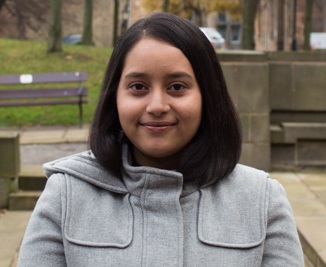
As this is my first post of the year, I will start off by introducing myself. My name is Ipshita Debnath and I am a first year (International) PhD student in Sociology at Newcastle University. I am from India, West Bengal. My educational background consists of a BA (Honours) In Sociology from University of Calcutta and an MSc in Sociology from University of Glasgow. I have been appointed as the new PG student Ambassador for Newcastle University and am also working as a Senior Resident in the Newcastle University Accommodation and Hospitality Services.
Being a Postgraduate student myself, I would like to take this opportunity to share my own academic experiences with you. The major objective for writing this blog, (especially) for you, is to not only provide deeper insights into the world of research in Sociology, but also to discuss about various subject matters related to my research area. I will blogging at least once a month about my research and also other issues that students are likely to face at times during their academic year. I will be also be sharing some of my experiences – my academic journey from BA to an MSc and finally to a PhD student at Newcastle University, and hopefully it will help all potential students who are planning to undertake post-graduate studies at Newcastle University.