Okay it’s a cheesy title. An awful pun.1 But it gets to the heart of the issue: working men’s clubs are closing down, and blaming the smoking ban or increasing fees by an extra £1 a year isn’t working – we must be missing something key. Maybe that thing that brings them to life and gets people through the door is music?
In the renewed interest in social clubs for the twenty-first century, music might take a pretty central role. As part of a campaign to revitalise clubs across the UK, the Centre for Democratic Business has pointed out their importance to live music scenes. Not only do they provide ‘affordable, accessible alternatives to the commercial venues’, but the member-owned format could be a solution to the evictions and closures of grassroots music venues.
Steps are already being made in this direction: Music Venue Properties has kick-started a movement for community ownership with its ‘Own Our Venues’ campaign, while the 21st Century Social Clubs campaign proposes that ‘part of the answer to cultural gentrification is remaking the connection between live music and social clubs.’
But what about the other way round? Clubs might help solve a live music crisis, but is music helping or hindering the club crisis?
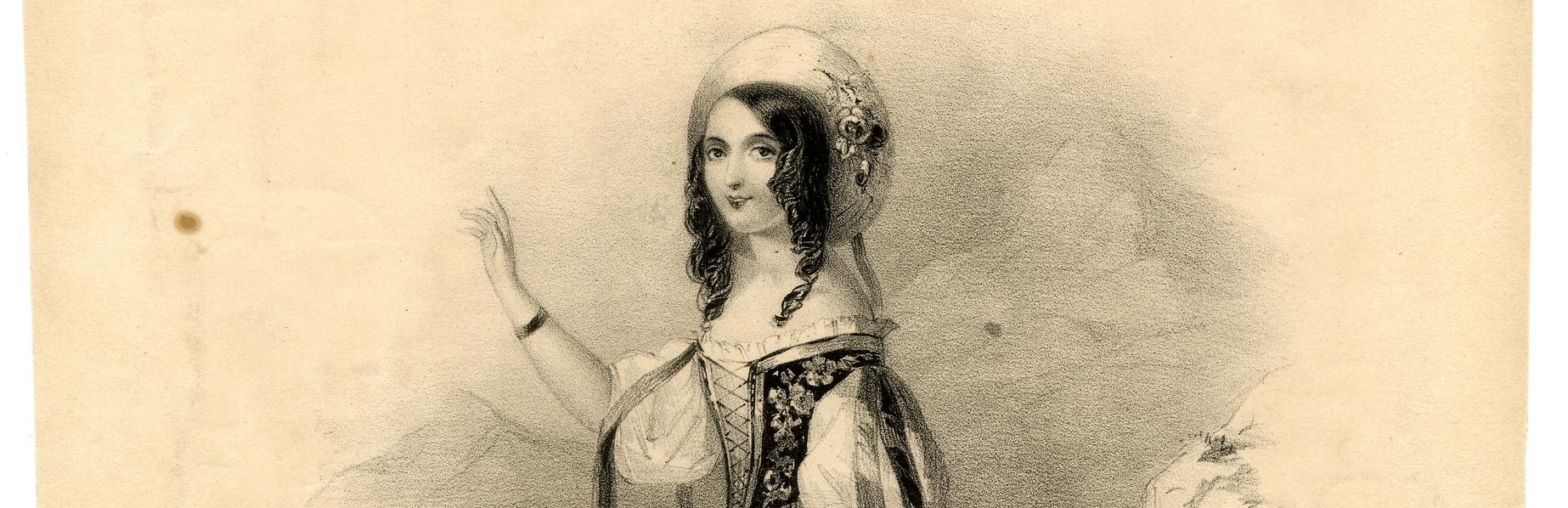
Adeline Cooper, a Quaker reformist and musician with royal connections, is credited with the ‘club’ membership aspect of this movement. Despite no biography, we do know a bit about her and the club she founded in Westminster, but very little about her influence on music in clubs.
For those familiar with a beer-filled night out at Britain’s working men’s clubs, it’s a shock to learn that their early years are attributed to Victorian teetotal minister Reverend Henry Solly. But Solly credited the success of the movement to someone else: a professional musician turned proto-feminist.
Adeline Cooper was not the kind of musician nowadays associated with clubs – neither a dancer, nor comic entertainer nor ballad singer – but an aspiring star of the concert hall and performer for the queen. Cooper’s career began as a young singer whose performances – mostly operatic – were praised by the London press. By the start of the club and institute movement in the 1860s, she had been a music teacher, written her own compositions and ballads, and even gained the unauthorised title ‘Pianiste to the Queen’.
But in 1859, Cooper took a sudden hard turn into improving and reforming the working classes, and never, it seemed, looked back. She set up one of the first ever working men’s clubs and joined the first Council of the Working Men’s Club and Institute Union where she argued for the importance of the ‘club’ element in popularising the movement. But what influence, if any, did she have on the presence of music in clubs and institutes?
There are a series of celebrity names that come up whenever the history of music in working men’s clubs is mentioned.
The obvious ones get trotted out: Vera Lynn, Petula Clark and Tom Jones, for example, all have a hint of showmanship – not to mention that solid, project-to-the-back-of-the-room vocal technique – that gives away their roots as club performers.
Others are shared with the self-satisfaction of either the proud local or the music trivia fan: “Sam Fender started off in that room right there. Cracking voice.” “Did you know Sting used to play at the club down the road?! The members gave him his stage name.”
And then there are the stories that blend fact and fiction into musical mythologies: The Fall regularly got booed off club stages, the Manic Street Preachers cancelled a gig at a workmen’s hall, the Gallagher brothers ruined a snooker table (they definitely did not – I saw the evidence), Shirley Bassey peed in a club sink… (would rather not see the evidence on that one!)
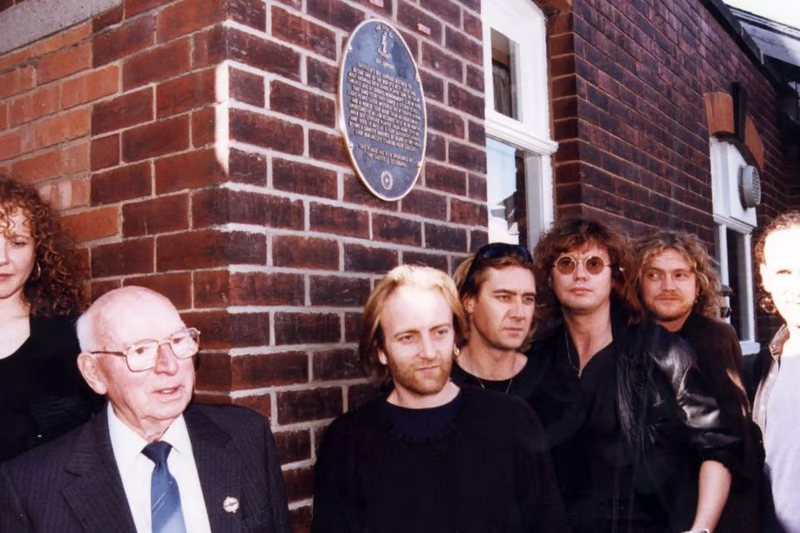
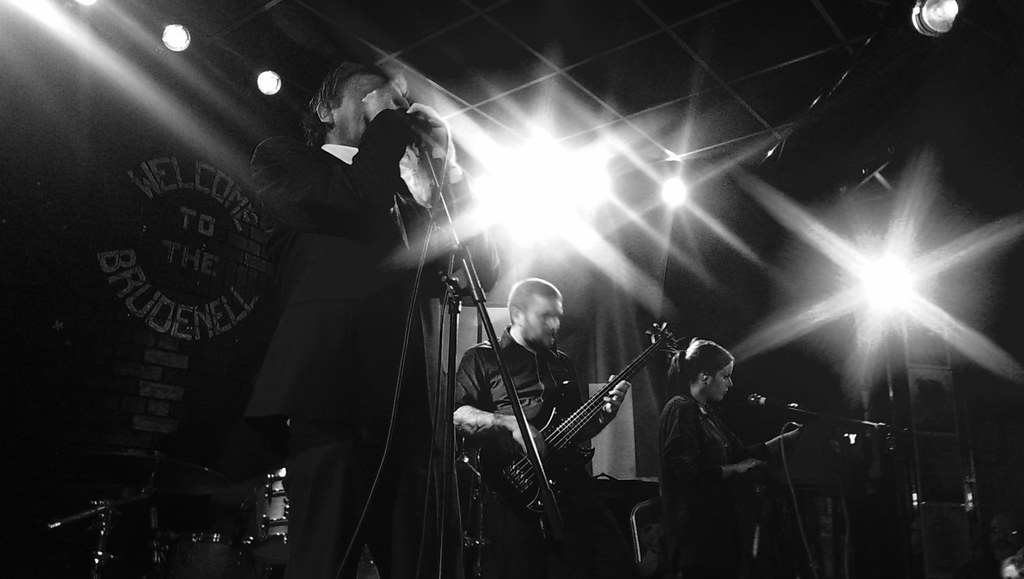
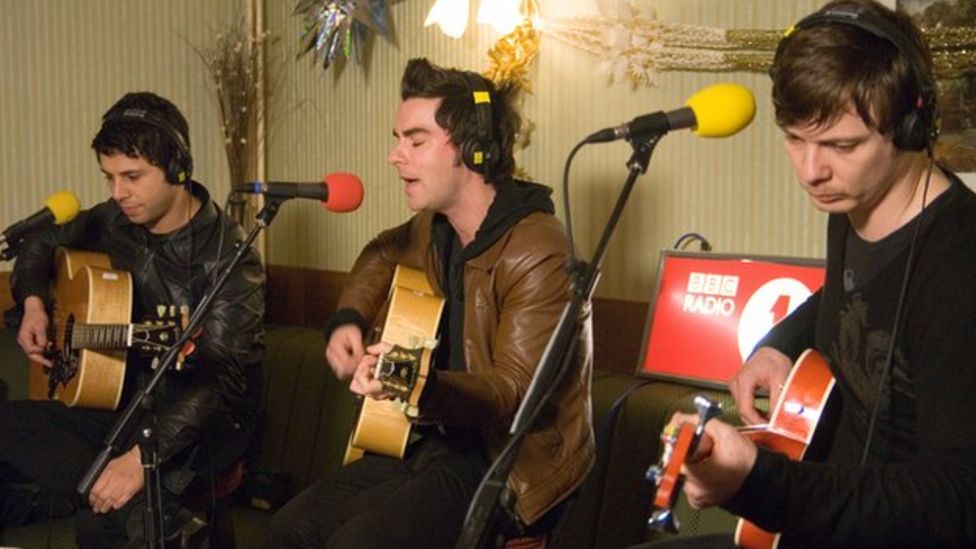
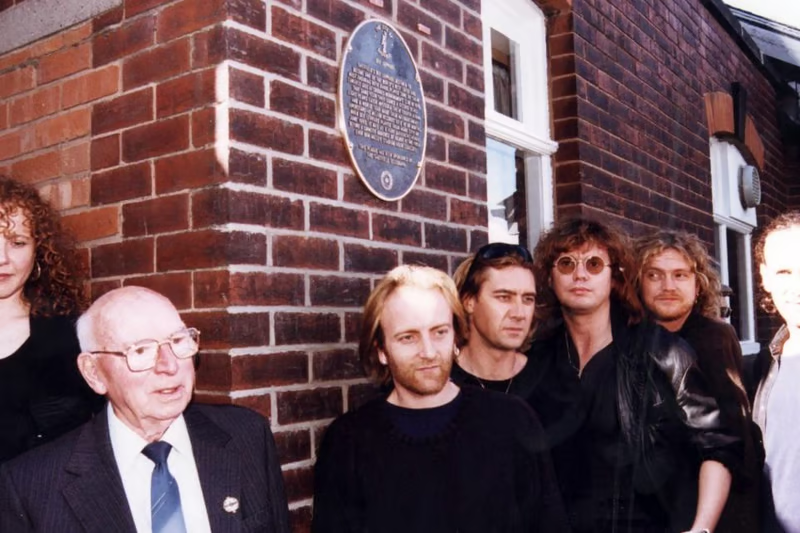
The Fall at Brudenell Social ClubStereophonics at Cwm ClubDef Leppard at Crookes Social Club
Whatever the story, the knowledge that plenty of music stars started out in working men’s clubs is pretty established by now. Clubs are training grounds for talent, providing an opportunity to develop experience locally and a connection to a network of venues. For some musicians, it then becomes a mainstream culture from which to break away towards alternative scenes. Others keep it as a badge of pride, being a marker of authenticity and down-to-earth roots despite their celebrity status.
Everyday Music Scenes: Pubs, Clubs and ’Stutes was an RMA Study Day held over a day and a half on the 14th and 15th April 2025. It was hosted at the International Centre for Music Studies at Newcastle University, with additional locations in Newcastle city centre. The aim was to stimulate interest in studying the history and present situation of music in small, local venues that would not fit the standard criteria of ‘grassroots music venue’, with an emphasis on overlooked but widespread forms of working-class musical culture.
Club music histories can be useful for figuring out the role of music in clubs in the present, and provide stories to assist in change management. These observations are based on my experience growing up in the more conservative outskirts of clubland and playing in bands in adulthood, having eventually formed an attachment to a particular club that closed down.
“How did you get interested in working men’s clubs?”
It’s a question I get asked a lot, often by men at the bar, wondering why on earth they’re sat next to this (comparatively) young woman in glasses on her own, nursing a half-pint of cheap lager with a neutral-sounding accent. Other times it’s from bewildered middle-class friends, colleagues and acquaintances: “aren’t they horrible old racist, sexist places?”
We’re excited to announce that Pete Brown, author of Clubland: How the Working Men’s Club Shaped Britain, will be giving our keynote… with a twist! Pete will give a talk on the cultural history of pubs and clubs through the interactive medium of a ‘beer and music pairing’ session.
A non-alcoholic beer will be included so those who prefer to go without alcohol can take part. Those without a taste for beer are also invited to attend – this talk is entertaining and educational for all.
Our senses are connected: one can have a powerful impact on an other. Advertisers have known this for years, while academic experiments have tended to focus on wine and the power of classical music. Pete Brown, on the other hand, throws away class-based assumptions on taste and explores the connections between beer and a range of musical genres. He’s been delivering his show to festival audiences across the UK, and his upcoming book delves deeper into the science of taste. Lucky for us, Pete is ready to present his more academic findings for the very first time, in an interactive talk that also brings in his vast knowledge of pubs and clubs from Shakespeare’s Local, Man Walks Into A Pub: A Sociable History of Beer and Clubland: How the Working Men’s Club Shaped Britain, BBC Radio 4’s Book of the Week.
Pete Brown – Author, Broadcaster, Consultant, Beer Lover:
“Pete Brown is a British author, journalist, broadcaster and consultant specialising in food and drink. Across twelve books, his broad, fresh approach takes in social history, cultural commentary, travel writing, personal discovery and natural history, and his words are always delivered with the warmth and wit you’d expect from a great night down the pub. He writes for newspapers and magazines around the world, and is a regular contributor to radio and podcasts. He was named British Beer Writer of the Year in 2009, 2012, 2016 and 2021, has won three Fortnum & Mason Food and Drink Awards, been shortlisted twice for the Andre Simon Awards, and in 2020 was named an “Industry Legend” at the Imbibe Hospitality Awards. He was recently accused of being the 31st most important person in the drinks industry. He lives in Norwich and London with his wife Liz, and dog Mildrid.”
Please note this is not a public event. You will need to attend the RMA Study Day ‘Everyday Music Scenes’ in order to take part.
If you are planning to present or attend, please fill out the registration form by following the button below by 15th March. After this, we cannot guarantee there will be space.
International Centre for Music Studies, Newcastle University, 14th-15th April 2025
Back in 1957, Richard Hoggart highlighted ‘sing-songs and concerts in the pubs and clubs’ as the most indicative of working-class music tastes. Yet the everyday music scenes of familiar songs and/or communal singalongs, particularly around working men’s clubs, have been conspicuously absent from the worlds of musicology, ethnomusicology and popular music studies. This study day, supported by the RMA (Royal Musical Association), intends to stimulate challenging conversations about this research gap and explore rich avenues for the study of music in pubs, clubs and similar spaces of everyday, communal music experiences.
Working men’s clubs and institutes were established from the mid-19th century as alcohol-free, educational alternatives to pubs, but eventually morphed into democratic centres of live entertainment. Over the following century and a half, the differences between pubs, clubs and institutes have fluctuated, including their uses of music for bringing in customers/members, stimulating drinking or creating community. They now face rising costs, competition from music-free chains, ageing membership and changes in British leisure. Do music researchers have a responsibility to contribute to knowledge of these historical and contemporary spaces of commonplace music experience – or, even, to advocate for them?
‘Pubs’ may refer to pubs, ale houses, taverns, or even gin palaces. We use ‘clubs’ and ‘’stutes’ (a colloquial term) in this study day to refer to working men’s clubs and institutes, social clubs, labour or other political clubs, and ‘non-pol’ clubs, as well as miners’ institutes or welfare halls that operate in similar ways. We welcome ideas on defining terms and invite discussion on the matter during the study day. For now, we take inspiration from a section of Music Venues Trust’s definition of a Grassroots Music Venue, the elephant test; if it looks and acts like a club, and is recognised by a majority to be one, then it is one. Similar community venues in which performers, audiences and customs cross over with the above are also considered.
20-minute papers are invited on a relevant topic. Postgraduate taught students, postgraduate researchers and post-docs as well as established researchers and those working professionally in the field are invited to take part. Possible disciplinary backgrounds might include popular music studies, musicology, cultural policy, heritage, sociology, anthropology, history or cultural management. Those wishing to attend without presenting are warmly encouraged to join and contribute to discussions.
A portion of the study day will take place in a club in Newcastle which is currently reviving its music programming, with the opportunity to see the space and ask questions to management. It also includes an optional evening visit to ‘the oldest folk club in Britain running in its original venue’ at a restored Victorian pub to watch or perform, socialise with study day participants and talk with its members.
Topics may include but are not limited to (in the context of the above venues, in and beyond the UK):
Rooms, concert halls and bar areas as rehearsal spaces
Background music and ubiquitous listening
Challenges of contacting and collecting research data from private clubs
Working-class spaces for music-making
Audience behaviour and customs
Professionalism and amateurism in ‘artiste’ and cover band circuits
Use of music in Clubland comedy acts
Performances, walls and shelves as spaces for commemoration of local, regional, national and global music heritage
Talent shows and competitions within new talent networks
Traditional, ballroom and swing dancing in ballroom areas
Folk sessions, jams, open mics, singalongs and the meaning of participation
Musicians and DJs at private functions (wedding parties, birthdays etc.)
(In)visibility of everyday music scenes in policymaking
Support for original, subcultural, countercultural, youth or avant-garde scenes
Cross-cultural networks in everyday music scenes
Inclusion/exclusion based on ethnicity, gender, sexual orientation, disability or social status
Group identity based around informal or formal membership
Roundtables and themed sessions are welcome but numbers will be limited due to time constraints. Alternative submissions such as performances and short films are invited if they shed new light on or critique an aspect of music in pubs and clubs. The primary purpose of the study day is to bring people together to meet and discuss shared research interests, both formally and informally. Consequently, it is planned to be in-person only.
Send abstract proposals or expressions of interest in attending to musicinclubs@gmail.com.
Deadline for abstracts: 30th November 2024. Proposals are welcome after this but may be less likely to be accepted, depending on space.
Registration for participants, including those wishing to attend but not present, will be available at a later date.
Participation is free. Three £50 travel bursaries are available based on need; to be considered, when submitting the abstract please submit an additional one-paragraph statement of need, travel length, and how the study day will benefit your research. Lunch on the 15th (full day) and refreshments on both days are provided.