
Click for summary
Club music histories can be useful for figuring out the role of music in clubs in the present, and provide stories to assist in change management. These observations are based on my experience growing up in the more conservative outskirts of clubland and playing in bands in adulthood, having eventually formed an attachment to a particular club that closed down.

“How did you get interested in working men’s clubs?”
It’s a question I get asked a lot, often by men at the bar, wondering why on earth they’re sat next to this (comparatively) young woman in glasses on her own, nursing a half-pint of cheap lager with a neutral-sounding accent. Other times it’s from bewildered middle-class friends, colleagues and acquaintances: “aren’t they horrible old racist, sexist places?”
The implication from the first group is that there’s nothing interesting about clubs. They’re so everyday to members and regulars that they’re not worth commenting on. And sure enough, it’s the same attitude that causes academics, authors, filmmakers – anyone with a strong influence on social and cultural discourse – to completely overlook essential subjects. Of course it’s important to consider things like how we spend our spare time at home, why we like singing pop songs together, or even how a nation came to eat so much fish and chips. This sort of knowledge affects how we live our lives. But paying attention to such things doesn’t seem to gel with our brain wiring. The everyday is easy to overlook.
As for the second group, it could be a issue of long-entrenched cultural snobbery against clubs. Authors Ruth Cherrington and Pete Brown have expressed frustration at their difficulties in getting their social histories of clubs published, and see it as part of a problem going back at least a century.


It’s sometimes snobbery, yes, but it’s also unfamiliarity. What comes across as snobbish dismissiveness can actually be well-meaning. We have a responsibility to improve society and leave the bad things behind, but media narratives and cultural unfamiliarity can twist and distort perceptions of what is good and what is bad. To this oblivious group, clubs are racist, sexist, stuck in the past, and worth forgetting about.
So why am I interested? And why music?
Unlike the authors above, I didn’t grow up around the clubs – not typical working men’s clubs, at least. But I did spend plenty of time in parallel institutions, many of which grew out of the same Victorian and Edwardian movements, belong to the same lobbying groups, and morphed into fairly typical social clubs. The Conservative Club down the hill was a venue for birthday parties, while the British Legion round the corner was a luxurious back-up location for the scout group when the prefab-like community hall was out of use. In adulthood, I’ve found these buildings to be useful community spaces, even when they don’t align with my political beliefs. Friends and family joked that they wouldn’t turn up to my mum’s 60th because they couldn’t bare to walk past a portrait of Margaret Thatcher.
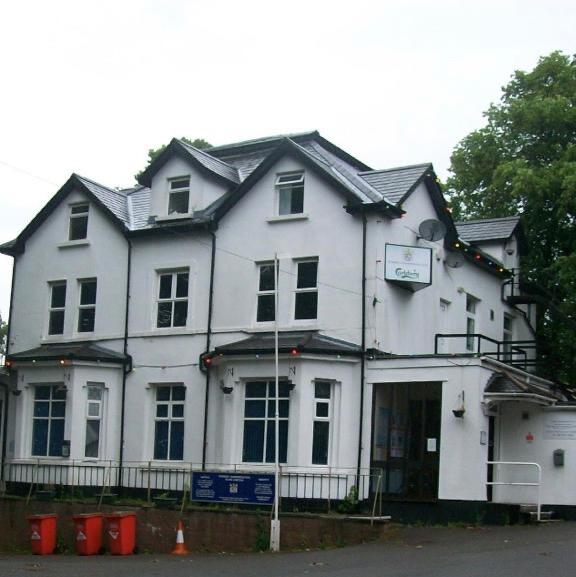

Nobody expressed dissent in 2019 when I booked the legion for a choir concert. The hall was the perfect size to fit the choir on stage and my cover band, providing the accompaniment, on the dance floor in front. It’s hard to object to a reasonably-priced space that allows for most of the ticket sales to go to charity. Then again, conductors don’t catch even a tenth of what actually goes on among their choirs: drama, gossip and arguments are subsumed under a collective smiley face of keen singers. So, if there were any objections to our concert location, I didn’t hear them.
It was a totally different story when, a few weeks later, we got called back to the legion to open for a charity drag show. The banter was indeed sexist and outdated, and my guitarist’s partner was subjected to racist name-calling from the main act. We haven’t been back since.
Later on, at the 60th birthday – a fancy-dress party, as is often the custom in a family of pantomime performers – I dressed as a man dressed as a woman dressed as a man. If the walls had eyes, Thatcher’s would have looked on disapprovingly, but nobody at the cons club batted an eyelid. It became apparent that these spaces are made by the people within them. Unkindness makes them unpleasant places to be. Family gatherings transform them into family spaces. Scout groups make them into scout halls.
Do concerts turn them into music venues?
My interest in working men’s clubs as music venues began a decade ago. I’d started playing in bands, fed up of the anxiety that classical concerts induced. I was musically useless for a long time, but it turned out that you could drink, smoke, lose concentration, sing the same verse twice, just generally cock up, and most of the audiences didn’t care or even notice. These were bars in towns and villages around Cardiff, where the primary role of music was to induce people to get merry and have a dance.
If we played in any clubs in that first year, I was oblivious: the whole process of loading gear, learning to set up PAs, navigating the South Wales valleys and surviving drunken beer garden chats in the Brexit era was a challenge to the senses, and each venue blurred into the next.

But eventually one club began to stand out: as a repeat booking for the twelve-piece function band, we kept going back over and over again, year after year. Half the band hated it. It was underpaid, hard to access, and a long, long night. We were expected to set up and soundcheck hours in advance, without disturbing the members, and either sit silently through the bingo, or wait in the car and sneak in a minute before it was time to begin. This was achieved by reaching the stage via a rickety iron staircase that scaled the side of the the large red stone building, the steps chipped away by time, wear and rust. If any part of it had collapsed under the weight of twelve people and their heavy gear, we would have all fallen three stories down into a maze of substructures. It always seemed to be raining, too. And there always seemed to be dog shit at the bottom of the stairs. But I was enamoured: local history was framed on every wall, I’d never seen such coiffed and bejewelled women of retirement age, and – my god – they really bloody loved us when we played Tina Turner.
One evening, when set-up was complete, my keyboard stood next to the meat raffle (a raw chicken in cling film that had been sat under the stage lights for a good few hours) I decided to do a little exploring. Next to the stage, hidden behind the curtain, I’d noticed another iron staircase, spiral, leading up to a mysterious top floor. This time, I felt compelled to climb it. I found myself in a small dressing room of Hollywood vanity mirrors plastered with stickers, posters and business cards of the club’s previous acts. They appeared to date back to the ’90s and early ’00s, but only a few were identifiable by date. The rest, using the basic word processor clip art designs that continue to live through club promotional aesthetics, could have been from any time in the last twenty years. I wondered: was this room a time capsule, or were clubs themselves stuck in time?
I opened another door from the dressing room and found a dark corridor leading to any number of long-unused rooms. But the floorboards creaked, strange sounds gave me an uneasy feeling, and, worrying I’d find my foot stuck in a mousetrap, I scurried back down the corridor, through the dressing room, down the stairs, and back to the safety of the stage.
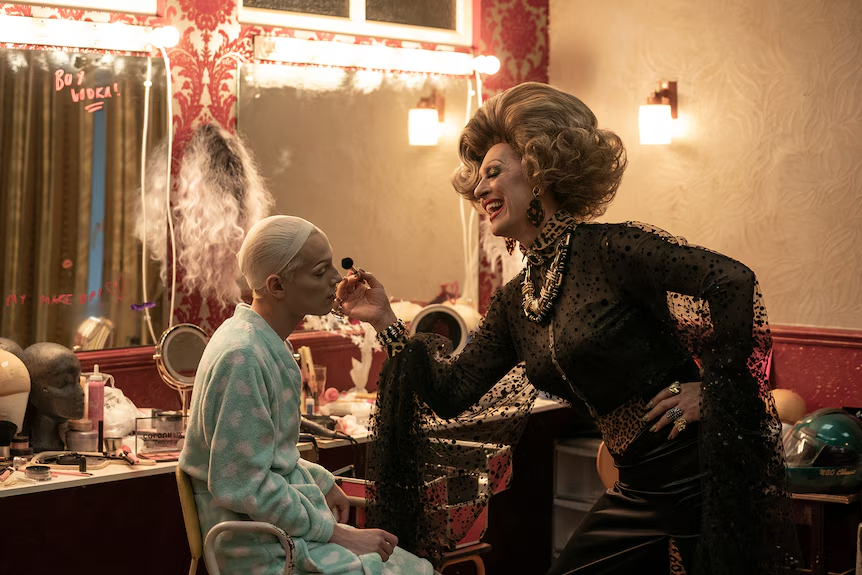
I excitedly told the band of my finds. Suddenly I wanted to become a hyperlocal historian. I wanted to learn photography and come back and do artsy shots of the place. I wanted to call the folks from Most Haunted. I wanted to rally a crew of heritage nerds and raid the dark rooms together looking for clues to the building’s past.
Before I could explore any of those options – or even become minimally qualified to do so – the building closed down, to be converted into flats, its members dispersed across the town’s pubs. Whatever was left to be discovered in that top floor is likely in a skip somewhere.
That curiosity, confusion and enthusiasm remained. And I seem to be part of a wave of interest, alongside think tanks using social clubs as models of community ownership, film crews needing affordable retro locations, and Gen Zs looking for community. Thanks to projects and press releases across the country, it’s already crashing into the lives of many who dismiss clubs as uninteresting or unpleasant, saying: look, these places are important.
How important is the music? I believe this is a vital question, and the history of music in clubs reveals a wealth of stories to learn from. Does professional and semi-professional live music have a role to play in ensuring clubs survive and flourish, or is it a burdensome extra cost? Are cover bands and DJs a loud bother to people looking for a nice place to chat over a pint, or, as an opportunity to sing and dance along, an essential part of building community in a club? Do clubs have a responsibility to support young talent with rehearsal spaces and performance opportunities, or are youth cultures better off looking elsewhere? All of these questions have already been answered in specific geographical and historical context as individual cases in the histories of clubs. Account books hint at stories, and committee minute books bring some of them to light.
What’s more, such stories can be useful resources in change management. It’s natural for long-running groups to be somewhat resistant to change, even when their continued existence is at stake. But maybe their ancestors pushed hard for the introduction of new ideas at the club that are now tradition, or previous committees supported activities that would be useful to revive. The enjoyment of music in the present can be used to connect to the past, and stories of music in the past can provide a grounding for changes to music provision in the present.
Why am I interested in working men’s clubs, and why music?
Because, as neatly summarised by one musician I interviewed in a thick, emphatic valleys accent, “They’re a goldmine”. When you start digging, there’s a whole world of untold and overlooked histories. In and of themselves, they’re fascinating, but they may also be useful for decision-makers at this very moment planning for the future of working men’s clubs and the role of music in that future.