
Okay it’s a cheesy title. An awful pun.1 But it gets to the heart of the issue: working men’s clubs are closing down, and blaming the smoking ban or increasing fees by an extra £1 a year isn’t working – we must be missing something key. Maybe that thing that brings them to life and gets people through the door is music?
In the renewed interest in social clubs for the twenty-first century, music might take a pretty central role. As part of a campaign to revitalise clubs across the UK, the Centre for Democratic Business has pointed out their importance to live music scenes. Not only do they provide ‘affordable, accessible alternatives to the commercial venues’, but the member-owned format could be a solution to the evictions and closures of grassroots music venues.
Steps are already being made in this direction: Music Venue Properties has kick-started a movement for community ownership with its ‘Own Our Venues’ campaign, while the 21st Century Social Clubs campaign proposes that ‘part of the answer to cultural gentrification is remaking the connection between live music and social clubs.’
But what about the other way round? Clubs might help solve a live music crisis, but is music helping or hindering the club crisis?

The situation in Stokeville
To start tackling these questions, I decided to do a case study of one town – let’s call it Stokeville.2
Stokeville is one of many ex-mining towns in the county, a corner of the UK where the club movement really took off – simply because of the number and proportion of industrial workers, the core target audience. When the mines closed down without significant investment in jobs to replace them, much of the town’s infrastructure followed, including the clubs.
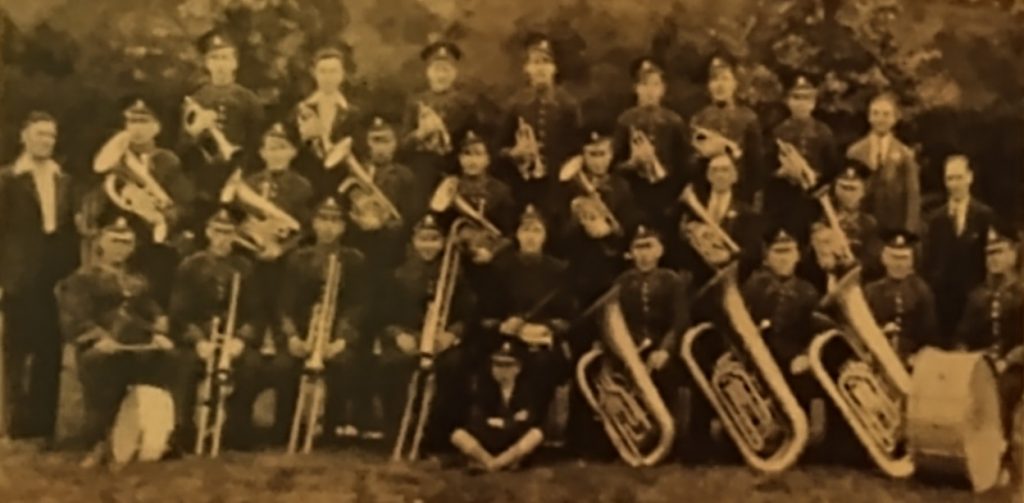
Like the other nearby towns, it has plenty of industrial heritage, commemorated in monuments and memorials, and preserved in the names of its key buildings and institutions. But there’s also a good amount of music heritage: not only does it have a history of brass bands and choral singing, but it famously gave birth to an international rock band. Nowadays, though, transport in and out of Stokeville is limited, restricting its ability to connect with other cultural scenes in the nearby towns and cities.
Temporarily stuck in mainland Europe, I used online reviews to get a sense of which clubs were still open, whether they’d had any recent changes, what people in the area thought about them, and what kind of music, if any, they tended to put on. I then called up and requested to speak with someone from the committee or management, to ask them about the social and financial status of music at their club now and in the past.
It was easier said than done: ‘Oh, you won’t get the chairman on the phone – he doesn’t have one,’ came one reply. But eventually, miraculously, I got through to a good cross-section of the working men’s clubs, workmen’s institutes and social clubs in the town. It wouldn’t speak for the situation across the UK, but I could piece together a meaningful picture of the current role of music in clubs in one corner of the country, that could illuminate observations elsewhere.
Where is the music history?
The clubs seemed to have very little sense of their own histories, let alone music histories. Each time, I was put through to the person who would supposedly be able to offer the most information, but the history questions hit a blank wall. They weren’t sure when and why the club started, or whether any archival records existed.
Those that did know about their histories leaned more towards the Hall & Institute variety, which had once been assisted by the lofty idealism of the Miners’ Welfare Fund, and had retained or revived some of their initial sense of duty to the knowledge and identity of the town. Even these, though, had a very limited sense of their own music histories, despite plenty of huge purpose-built halls.
Lesson learned: if there’s any historical awareness to uncover, especially musical, it’s not necessarily to be found by talking to a club spokesperson. There are a few exceptions; the archive team at the Mildmay Radical Club, for example, have transformed abandoned piles of sooty paper into a fabulous archive. Amazingly, there are old concert playbills, tickets, artist payslips, photos and oral histories of past performers. But most of the time, it’s in the fabric of the building, the photos on the walls, the anecdotes of old regulars at the bar, and the continuing traditions of hosting live music.

Same as it ever was
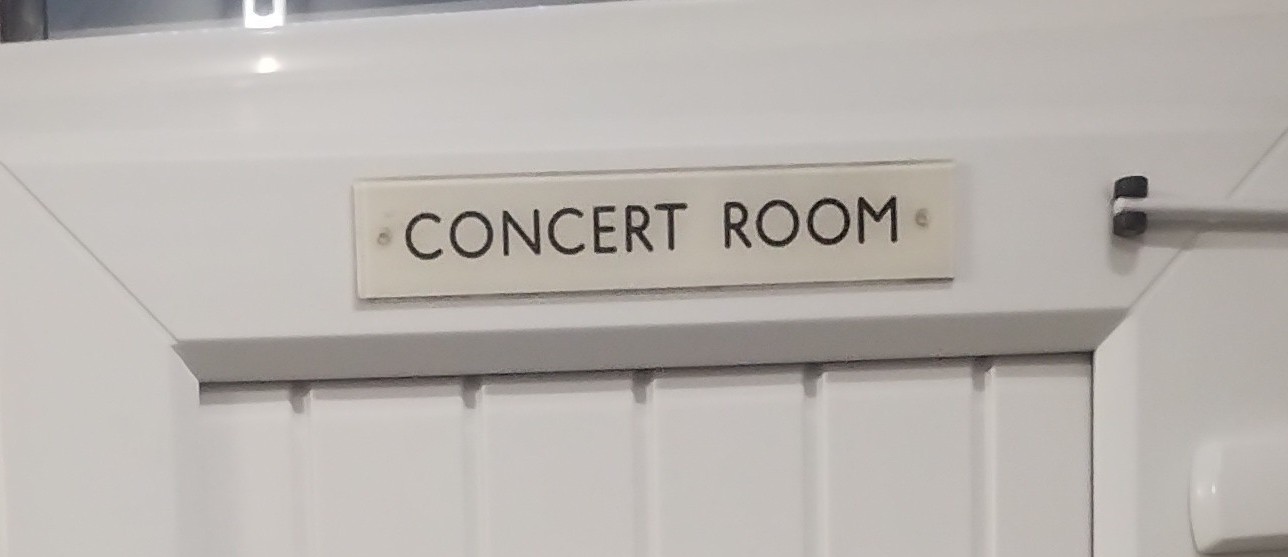
In the Baby Boomer era, clubs started to develop a reputation as places to go for affordable entertainment. Concert room extensions, often funded by breweries, enabled them to put on amplified forms of entertainment, including full bands and cabaret shows, with in-house PAs, lighting and backstage ‘artiste’ rooms. The ‘Clubland’ phenomena depicted on television during these decades and afterwards was a rich – and sometimes bawdy – world of comedians, dancers, singers, duos and bands, facing a sold-out room from a shimmery tinsel backdrop.
Across the country, dancers, comedians and other diverse forms of entertainment have all but disappeared from clubs, with overstretched and aging committees keeping things simple (and affordable) by booking one act per night.
‘Honestly, if we didn’t have our entertainment on the Saturday, it would be shut, because the rest of it wouldn’t bring in enough income.’
Although Stokeville residents have far less disposable income nowadays to spend on their leisure time, one club has continued to dedicate huge portions of its budget to hosting bands. They told me, ‘Honestly, if we didn’t have our entertainment on the Saturday, it would be shut, because the rest of it wouldn’t bring in enough income.’ The bands vary from local musicians to popular touring tribute acts which bring in a wider age range because of the wide fanbase of, for example, Queen. Costs are recuperated from bar and ticket sales, which keeps the club ticking over for the rest of the week.

What happens, though, when audiences dwindle and the balance between bar income, ticket sales and artist fees tips unfavourably? Some clubs respond by scaling back and reducing the expenditure of live events. A while ago, that meant booking one or two artists per night rather than hosting multiple acts cabaret-style. Nowadays, though, agents supply a steady stream of duos and soloists with acoustic guitar or backing tracks instead of bands. Others scrap live music entirely, but in Stokedale, this is the absolute last resort; after a long history of clubs acting as the grassroots of up-and-coming performers, many see it as their duty to continue supporting live music, even when the balance sheet suffers.
A symbol of embarrassment
The Stokeville club above might still find good use for its concert room, but in another, this whole section of the building has been pretty much abandoned, and live music is confined to the lounge and bar area. With diminishing audiences, the once lavish extension becomes a symbol of embarrassment: those hanging out with a pint might enjoy hearing a bit of entertainment, but if the artist was moved to the concert room, they’d be performing to an empty space. Speaking from limited – but memorable – experience, it’s a horrible ordeal, and that artist is unlikely to come back.
In the more casual environment of the bar room, singers with backing tracks have the edge over other acts. They can set up in a corner with a small speaker system, and there are far fewer performers to pay. Best of all, with no acoustic bass drum and cymbals to compete with, the volume levels can be kept low to placate any non-music-loving bar staff, regulars who want to concentrate on Sky Sports, and the inevitable grumpy neighbours.
For the Stokeville club that has abandoned its concert room, it’s a model that’s worked for them for the last fifteen years. Rather than be expected to set aside a whole evening, regulars can enjoy the 5-7pm bar slot before heading home for dinner, having done their bit to support live music.
Familiarity versus originality
Despite the clueless optimism of the artsy types I’ve initiated into the world of working men’s clubs, the vast majority of clubs are putting on cover bands, tribute bands, singers with backing tracks, and karaoke – not folk singers or bands playing their own material. Many expect club culture to reflect their idealised image of working-class heritage: the noble (ex-)miner and his family sat around singing industrial folk songs. And those who are happily convinced by newer arguments that clubs are grassroots venues can nevertheless struggle to come to terms with the idea that live music might be meaningful without being original.
In fact, when it comes to community cohesion, cover bands might be more valuable, providing a shared cultural reference in which multiple generations can participate, by listening, singing, dancing, or even sharing trivia.
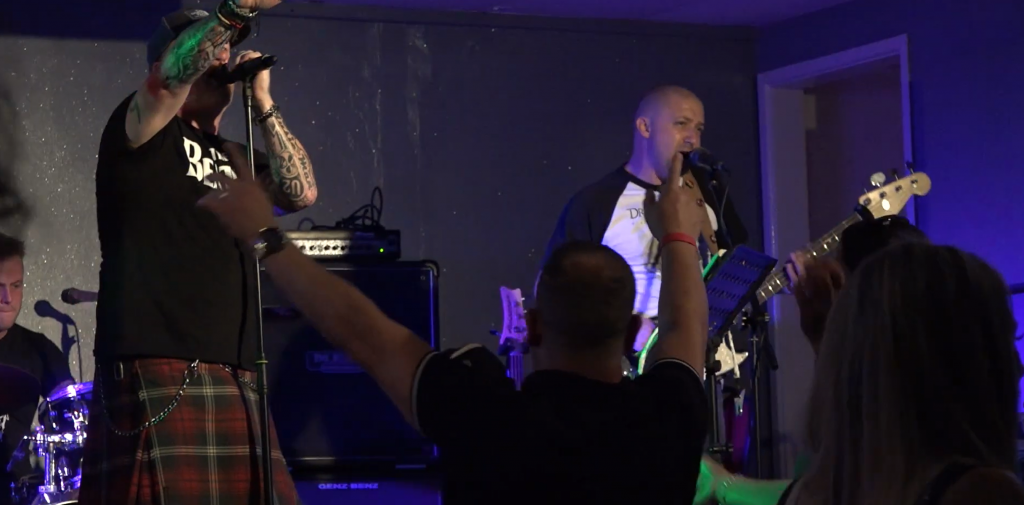
Cover and tribute acts currently dominate the cultural landscape of Stokeville. At one club, solo singers can be seen each weekend performing pop ballads and rock classics. At another, soloists, duos and bands are booked to play covers every Saturday, and the more costly tribute bands make a special appearance three to four times a year. The common assumption is that a well-chosen tribute act is guaranteed to bring in audiences: one newly-renovated club planned a Meatloaf tribute for their relaunch night, expecting to attract loyal members and newcomers alike.
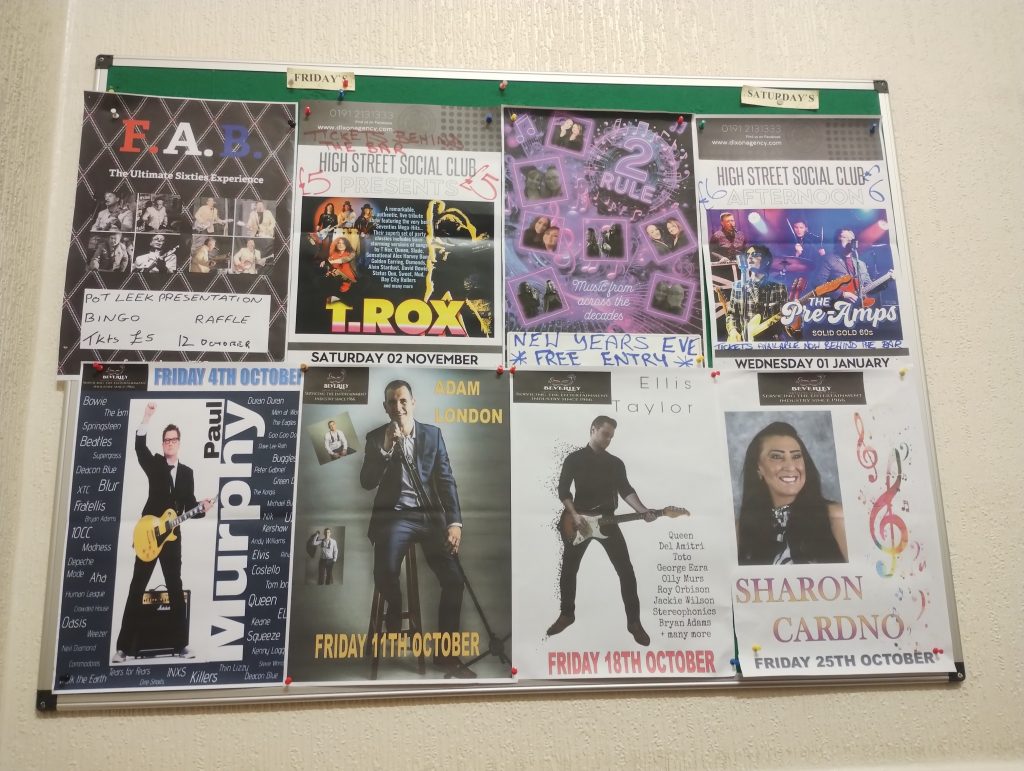
Not everyone is happy about this. A committee member of one of Stokeville’s workmen’s institutes complained that cover and tribute acts ‘squeeze new talent’, and described soloists with backing tracks as ‘basically karaoke’.
The reality is that original and cover artists usually occupy completely different spheres. Cover bands are not directly responsible for the closure of small indie venues, many of which won’t even allow cover bands to play. Pubs and city-centre bars are a middle-ground, and I won’t claim to have the answers there. But working men’s clubs have always been a space for enjoying familiar music together. Apart from the (mostly unsuccessful) efforts of the Club and Institute Union to appeal to youth audiences in the 1960s and ’70s by supporting new rock n roll bands, original music has been contained to a few outliers.
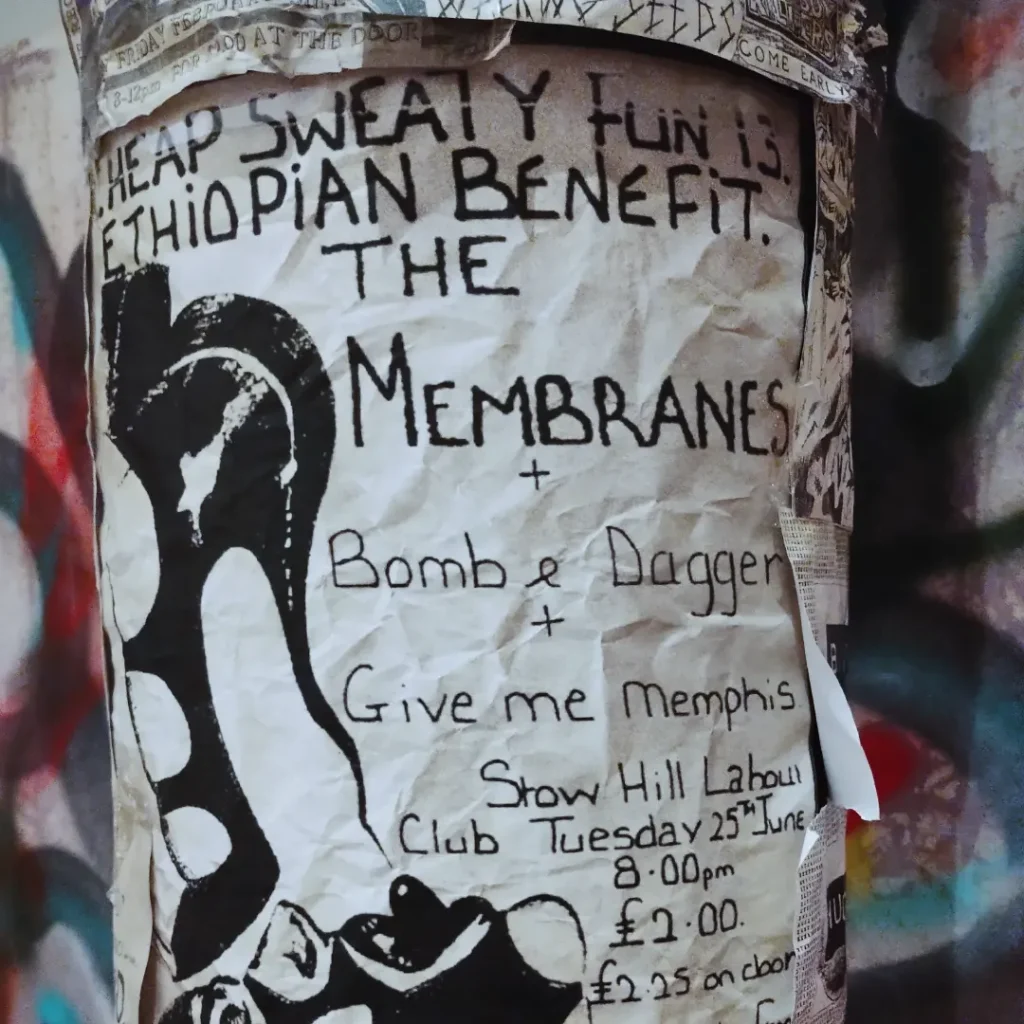
This doesn’t mean the status quo must stay the same forever. Grassroots venues dedicated to supporting new music are closing under economic pressures. Meanwhile, clubs often have the same infrastructure – stages, PA systems, dressing rooms – in concert rooms that remain empty most days of the year. If club members can withstand sharing a building with crust punks and hip hop collectives every now and then, both parties can benefit financially.
There are examples across the country where this has worked. When managed very carefully (aging club members can be very suspicious of change), it can even improve the image of working men’s clubs among new audiences, and, in some cases, increase membership. Covers and originals can coexist, if not competing for space, and one musician can belong to both worlds, developing their craft through the songs of others. A club drummer I interviewed hammered home this point:
‘Cover bands open the door for original bands really, ‘cos they keep the music scene going. The covers sort of help the originals and vice versa.’
Closing time
In a 1989 study of community music in Milton Keynes, anthropologist Ruth Finnegan remarked that clubs were keen to keep live music going even when the finances got tough: interviewees told her ‘we have to have it to keep the club running.’
Using the case study of Stokeville, I’ve dipped my toes into some of the financial reasons for and against this, and shown that they depend on circumstance. But there’s another possible interpretation of this 1989 quote: music, in so many cases, makes clubs what they are. For Finnegan, the demand for music and the responsibility to put it on was a key feature that distinguished social clubs in the working-men’s-club cultural traditions from similar groups such as workplace clubs. Paying more attention to this should be an important part of figuring out how to keep them going into the future.
There are some out there that are successfully championing the musically avant-garde or positioning themselves at the centre of the grassroots music industry. There are plenty others that are continuing in much the same way as before, but with an ever-diminishing financial capacity to put on live music. Varying in degrees from one building to the next, music is used to retain members, bring in new audiences, transform into new types of venue, or even to retain a familiar identity of clubs as the world around them changes.
Ninety years before Finnegan’s club secretary interview, a CIU Journal correspondant lamented the fact that members dropped out of their club each summer to find leisure elsewhere, but accepted that, despite the drop in finances, the show must go on. After all, in the 1890s, it was the shows that were keeping the members of the newly large clubs together. ‘But the shows must be kept going, even if they do not pay their way, and so keep the members together’, the journalist wrote.3 Music is not only something done to make a club appealing, it’s part of the fabric of club-ness, bringing members together in a shared pastime.
‘music […] we have to have it to keep the club running’
‘the shows must be kept going, even if they do not pay their way, and so keep the members together’
Footnotes
- Academics like to spice up their writing with these two-part sort of headings; a chance to play around with words before the main text, where precision rather than poetry is king. Music comes in keys, I guess (unless it’s atonal music, and you’re not likely to hear that in one of these clubs, except maybe some incredibly out-of-key karaoke.) But when I came up with this title for an MA thesis, there were a few minutes left until midnight, the caretaker was getting annoyed, and I needed to press the submit button on two years of work. Besides, I was at an international university and nobody who would read it would be a native English speaker. Maybe they’d find it funny, or even creative, rather than cringe? ↩︎
- The real name of the town and the names of some of its clubs can be found in the MA thesis The Key to Survival? Music Management of Post-Industrial Working Men’s Clubs in the South Wales Valleys. Technically this work was not part of the current PhD project at Newcastle University, which had to pass a strict ethics procedure, so we’ll use pseudonyms for the purpose of this Ncl Uni blog. ↩︎
- Quoted in T.G. Ashplant’s chapter in Popular Culture and Class Conflict, 1590-1914: Explorations in the History of Labour and Leisure, p.259. ↩︎