Welcome!
Here I will be investigating the concept of Sacred Spaces in Medieval Japan, in particular I will be focusing on the Heian period and the expansion of Sacred Spaces from initial sites of divine connection to the notion of Japan as a Sacred Nation.
I shall be tracking the development of Sacred Spaces within the religious framework of Medieval Shinto and Esoteric Buddhism; the interweaving of these two religions produced an abundance of sacred spaces around Japan which came to include not just static shrines and temples but landscape features such as mountains, and eventually the entirety of the Japanese nation. Through Shinto and Buddhist practices, these spaces became transformative places, used in rituals to summon the deities that resided there and achieve enlightenment within oneself, or the awakening known as Buddhahood.
Use the tabs above to navigate your way through these pages as I explore sacred spaces within medieval Japan and explain the complex nature of their significance!
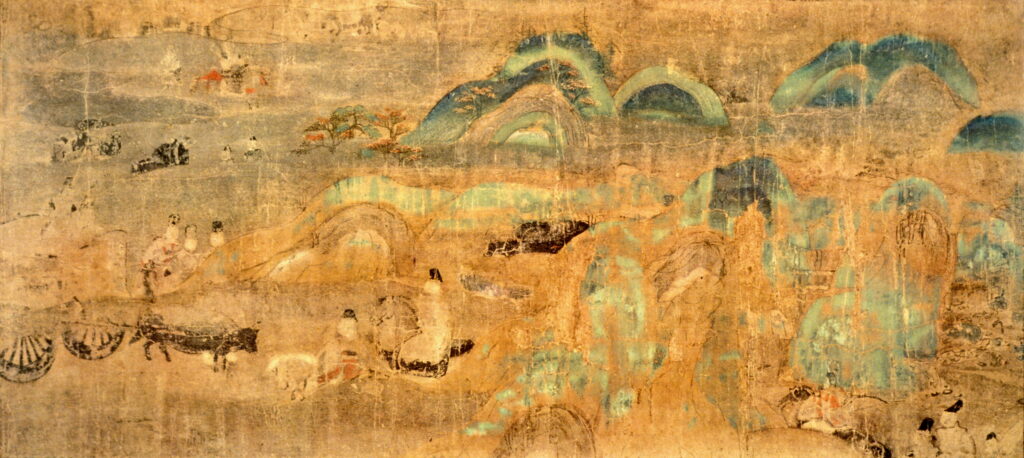
Fig 2. Iconographic drawings of the five kings of wisdom (Godai Myōō), Heian Period. (The Met Museum, New York. https://www.metmuseum.org/art/collection/search/44911)
“Who is within illusion resides in a polluted space; he who awakens resides in a pure space, which is also called Pure Land.”
KUKAI, “Issaikyo kaidai”, Zenshu, 2:446