
INTRO –
Over the course of hundreds of years of religious and political development, the linking of Shinto shrines and temples created this idea of Japan as a sacred nation. This concept came about mostly in the Kamakura period and gained momentum due to the threat from invasion by Mongols.
- During this time the term Shinkoku meaning ‘divine nation’ became popular.
- The spread of Shinto and Esoteric Buddhist thought, supported by the imperial house and its vast protection rituals constructed Japan as a sacred nation.
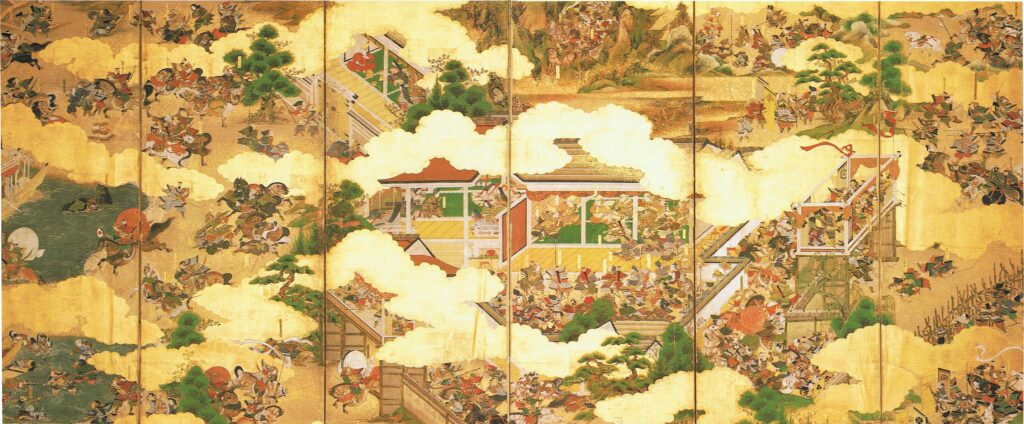
David Bialock notes, “Throughout much of the Heian period, illnesses, destructive plagues, and the assorted phenomena associated with spirits (Mononoke) had been viewed essentially as malign influences brought in from the outside.”8 Here we can see the sacred nation paradigm coming into play, as popular belief held that harmful or malevolent forces often came from other lands. Japan as a nation could be protected through Buddhist rituals and sacred practices, Buddhism as being an endorsed and practiced religion by the Imperial family also gave this concept significant agency, the expansion of Buddhism throughout Japan from the Heian period onwards meant the religion came to be practiced not exclusively by monks and the ruling elite but by normal citizens also.
|||||||||||||||||||||||||||||||||||||||||||||||||||||||||||||||||||||||||||||||||||||||||||||||||||||||||||||||||||||||||||||||||||||||||||||||||||||||||||||
8. Bialock, “Reimagining Late Heian and Early Medieval Space”, 227.