NU-CUSP is an interdisciplinary research cluster at Newcastle University.
Bringing together researchers from across Sociology, English Literature and Law, NU-CUSP explores how utopian-thinking, speculation and prefiguration enhance our understanding of and approaches to contemporary challenges.
Researchers within the group deploy utopian-thinking and creative, speculative practice and methods to investigate themes that include climate change and the environment, global governance, constitutional change, gender (in)equality, and social exclusion.
Our members host literary reading groups, run zine making workshops, teach together, and meet up regularly to discuss our research aims.
Contact
If you are working on ideas of utopia, speculative literature, or prefigurative politics, then please do get in touch. We would love to hear from you. Please contact Ruth Houghton – ruth.houghton[@][newcastle].ac.uk
People
Ruth Houghton
Newcastle Law School
ruth.houghton[@][newcastle].ac.uk
Ruth Houghton’s work spans constitutional law and international law. She uses feminist utopias and theories of utopianism to interrogate questions of constitutional change. This includes, work on feminist utopias, feminist manifestos, and work that utilises utopia as a method in legal scholarship. She is a co-lead on the AHRC network with Davina Cooper and Mathias Thaler, and alongside Aoife O’Donoghue she runs the Utopias Online Reading Group.
AHRC Utopia and Failure: https://failingbetter.sps.ed.ac.uk/
Utopias Reading Group:
Lisa Garforth
School of Geography, Politics and Sociology
Lisa.garforth[@][Newcastle].ac.uk
Lisa examines green utopian imaginaries in theory, literature and politics. She asks what resources we have for imagining better, greener societies, especially as the climate crisis intensifies. With Miranda Iossifidis and colleagues at Manchester Metropolitan University, she has just published a book looking at science fiction reading practices. Lisa is currently working on a book about utopia and society. She co-convenes NU Sociology’s Imagining Pasts and Futures research cluster.
Imagining Pasts and Futures | School of Geography, Politics and Sociology | Newcastle University
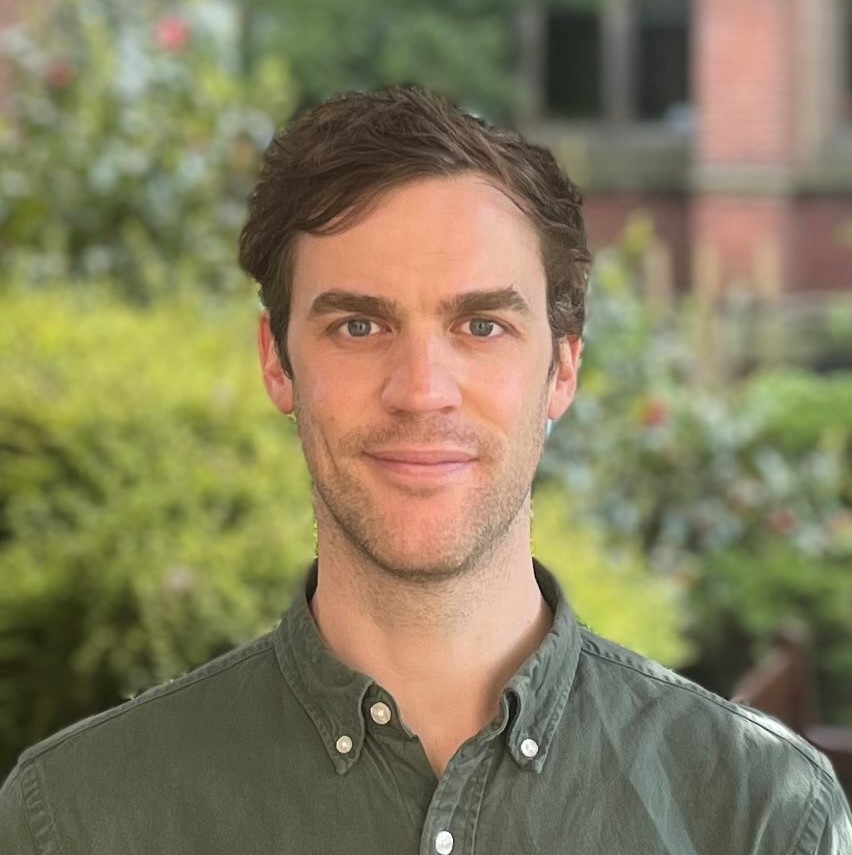
Emily Jones
Newcastle Law School
Emily.jones3[@][newcastle].ac.uk
Emily is interested in reworlding and the pre-figurative in relation to international law and environmental law. Her work applies critical theory including feminist, queer, posthuman, postcolonial and critical disability studies, in that aim. She is currently working on projects focusing on intergenerational equity and the rights of future generations, the nonhuman in international law, the right to a healthy environment and reparations in international law.
Jon Quayle
School of English Literature, Language and Linguistics
Jon.quayle[@][newcastle].ac.uk
Jon’s work is largely focussed on Romantic-period utopianism, with an emphasis on the utopian poetry of Percy Bysshe Shelley. More broadly, he is interested in the idea of ‘utopian poetry’ and the relationship between utopianism and form. He teaches widely on Romanticism and utopianism, including the Stage 3 modules ‘Unbinding Utopia: 1750-1832’ and ‘Utopian Dreams, Dystopian Nightmares: The Forms of Science Fiction’. He is currently guest editing, with Dr Stacy Gillis, a Special Issue of Utopian Studies: Video Game Utopianism: Form, Narrative, Representation.
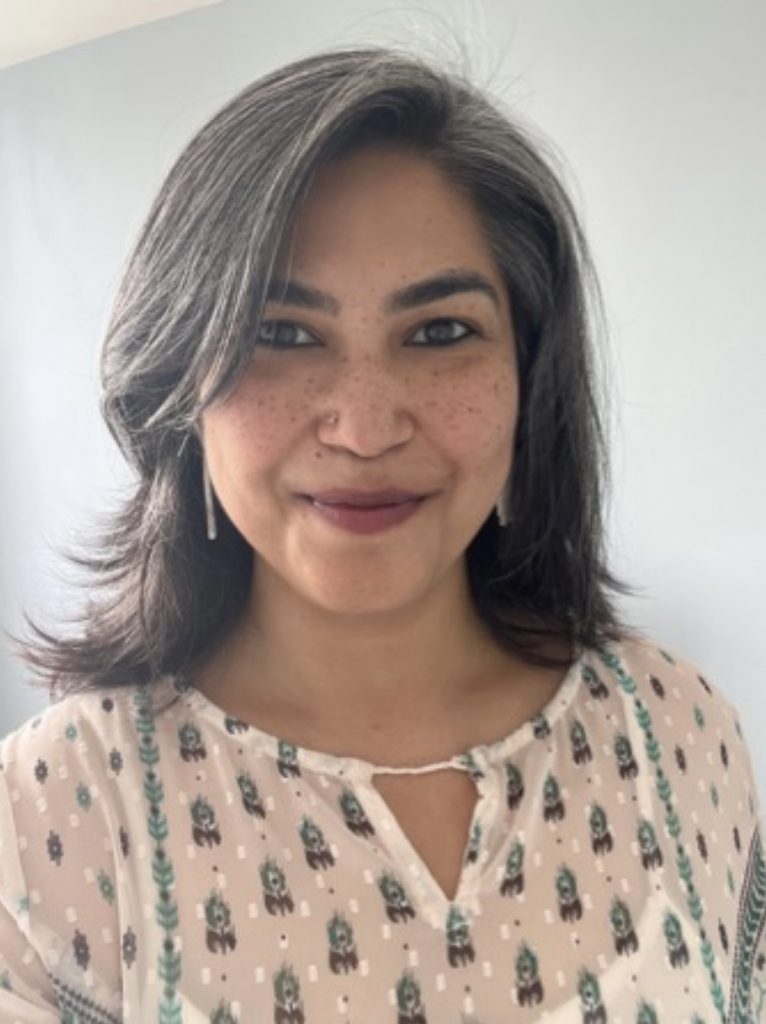
Aparna Sivasankar
School of English Literature, Language, and Linguistics
aparna.sivasankar[@][newcastle].ac.uk
Aparna is a creative writing PhD student, writing speculative fiction that interrogates society, culture and the climate crisis. Her project, ‘Fantasies of the Anthropocene’ is a series of novellas that radically reimagine what society could look like if we give voice and agency to landscape, treating humanity as part of nature rather than something above or beyond it. She runs the Newcastle University Science Fiction and Fantasy reading group and teaches creative writing.

Charlie Toogood
Newcastle School of English Literature, Language and Linguistics
C.Toogood1[@][newcastle].ac.uk
Charlie is interested in green utopianism, with a particular emphasis on what utopian literature from an earlier stage of industrial capitalism can say to our contemporary moment of climate breakdown. He is currently working on his PhD project entitled ‘Looking Back into the Future: Environmentalism in the Victorian Utopian Imaginary’, which introduces a cluster of fin de siècle utopias to recent Anthropocene and ecocritical debates.
Stacy Gillis
School of English Literature, Language, and Linguistics
stacy.gillis[@][newcastle].ac.uk
Stacy is broadly interested in the complexities of gender and genre in popular culture; her interests in utopias are driven by these interests, with a focus on feminist and queer frameworks. Her published work stretches across the long twentieth century, with a particular interest in detective fiction. She has recently returned to an earlier interest in cybertheory to think about the form of video games, and is co-editing a SI for Utopian Studies on video game utopianism. She also has a burgeoning interest in critical university studies, which touches upon the utopian and the ideal. Gillis co-convenes the Faculty’s Gender Research Group, and is the Managing Editorial Lead for Feminist Theory.

Oscar Horton Chandler
School of Geography, Politics, & Sociology
o.horton-chandler2[@][newcastle].ac.uk
Oscar’s work explores the intersections of utopian theory and everyday political praxis, with an emphasis on how ‘imagining things otherwise’ forms the basis for a constant, semi-conscious, experimental process, central to progressive organising and campaigning. He is currently writing up his PhD thesis, which combines empirical and theoretical work to investigate the experience of those swept up in the ‘Jeremy Corbyn’ phenomenon through a utopian lens. The aim is to explore how this moment opened up space for new and better worlds to be collectively imagined.

Miranda Iossifidis
School of Geography, Politics and Sociology
miranda.iossifidis[@][newcastle].ac.ukmiranda.iossifidis@ncl.ac.uk
Miranda’s research explores questions of how environmental and reproductive futures are mobilised in the present, drawing on feminist approaches and creative methods. Her current research projects focus on (1) the nexus of reactionary reproductive and environmental futures, in particular populationism in relation to ecofascism; (2) histories of resistance to populationism; (3) and using creative participatory methods to explore speculative climate justice futures. She also looks at the creative and collective negotiation of environmental presents and futures through speculative fiction, engaging with online methods to work with reading groups.