
Research at Newcastle – Some Reflections

Earlier this month (September 16th to be precise) my twitter feed was abuzz with the news that Newcastle University has been ranked in the world’s top 1% for research impact. I must confess that I had no idea the university was ranked so highly – even when applying for my BA I paid very little attention to league tables – but having spent the last year within an extremely productive research department I’m certainly not surprised.


When writing this blog over the last year or so I’ve touched on all sorts of reasons as to why Newcastle (and Geography in particular) stands as such a vibrant center for research. The MA course that I have undertaken, alongside similar courses in other social science disciplines, entails a substantial aspect of inter-disciplinary research training. This leaves young researchers trained at the university with a cross-disciplinary appreciation of research practice or, to put it another way, able to work effectively outside of their comfort zone. This teaching structure is complemented by all of the things I’ve discussed in recent months, from postgraduate social life to management of workload (via dubious Christmas dinner metaphors).


In particular young researchers are urged to consider the impact or contribution of what they are doing. Will it push the boundaries of the discipline? Does it seek to understand current and developing events or processes? Is there potential to better inform policy decisions as a result? If you are struggling to answer ‘yes’ to any of these you will be advised and supported in developing your work to achieve these lofty but (within the aforementioned teaching structures) extremely achievable goals.


Naturally a ranking in the world’s top 1% for research impact is down to far more than effective training of young researchers or structuring of postgraduate programs within social science. That said, these things emerge from an excellent research culture pervading Newcastle University.


As for myself, I am regrettably hanging up my researcher’s boots this month – temporarily I hope! If the university will have me I may be back in the not too distant future, an option I was not so open to a year ago. This in itself I think says an awful lot for the prospect of postgraduate study in geography here. Anyway, that’s me for now – who knows, perhaps I’ll be allowed to return to this little corner of questionable metaphors and tangential ramblings if I’m here in 12 months’ time!

Student-led Activism in Syria

Continuing where I left off last time I would like this month to briefly discuss the UFSS (Union of Free Syrian Students), a student political body active in Damascus, Syria since 2011. For those of you who have not read the previous post I stated my desire therein to air some such more human stories of the Syrian conflict as well as using these to write my dissertation. The insights below are drawn from a post on Syria Untold, linked at the foot of this page.


Formed in April 2011, the UFSS evolved initially as a body seeking to voice students’ political opposition to the repressive regime of President Bashar al-Assad*. The UFSS emerged in no small part for the purpose of providing students with a more representative outlet than the government-sanctioned Syrian Student Union, labeled by some as “the regime’s fifth column”. Early activities of the UFSS included online activism (largely in terms of dissemination of information rather than organization), sit-ins and boycotts of examinations – tried and tested means of civil political activism.


As conflict worsened in Syria thanks in no small part to a ‘militarization’ of opposition bemoaned by groups such as the UFSS a new purpose for the union quickly became apparent – that of assisting in the humanitarian processes increasingly vital in Damascus and beyond. Using skills gained at the Damascus College of Science students aided field hospitals by producing supplies running desperately short, for instance manufacturing the chemical additives required in blood bags. They also produced chemicals that would burn for a long time in order to temporarily block streets and allow peaceful protesters time to escape from regime security forces.


The efforts of the UFSS have certainly made a difference to many Syrians; their impact upon the wider situation in the country are less certain. The union does, however, serve as a timely reminder of what student activism can accomplish in a time at home seeing dwindling political participation among younger sectors of the population. Might politics in this country pay more attention to the demands of the young if they represented a greater proportion of the de factoelectorate? Food for thought!


*Since my last post Assad has reportedly been re-elected as President of Syria for a term lasting until 2021, achieving and 89% vote with 73% turnout. I will leave you to make your own opinions as to the extent to which this represents democracy!


http://www.syriauntold.com/en/story/2014/01/02/7671

Activism in Syria

When embarking upon a research project using solely secondary data – newspapers and blogs – as its source material the last thing I expected was to encounter ethical conundrums. Nonetheless, here I sit about to write 500 words or so about exactly that.


To clarify, the dissertation in question seeks to produce a geopolitical appreciation of the ongoing conflict and peace process in Syria. As you might expect given the secondary nature of data collection the issues I am encountering are not associated with the practicalities of research but with the subject matter. Many of the blogs I mentioned above have been produced inside Syria, attempting to communicate the human side of the conflict. Some eyewitness accounts therein are troubling to say the least, telling of individual loss in the context of a conflict viewed in increasingly global and strategic terms. I hesitate to use these experiences purely for the purpose of producing a dissertation which, putting aside its aims at intellectual contribution, exists first and foremost to further my personal qualifications. As such I would like to use a couple of blogs here (and indeed elsewhere) to attempt to address an imbalance I see in reporting of the Syrian crisis.


Alongside themes of violence many of the reports I have read tell of the efforts of ordinary Syrians toward peaceful activism and homegrown (as opposed to internationally led) humanitarianism. In my encounters with reporting of the conflict in this country these narratives are almost entirely absent. One such example is the creativity of many Syrians in using their own skills for the benefit of those affected by violence in the country. For instance, Syria Untold reports efforts of chemistry students in Damascus to produce items required by desperately under-equipped medical personnel in the city. In the absence of access to hopelessly unevenly spread external aid (an inevitability given the confusion of the situation in Syria) these students provided a vital service.


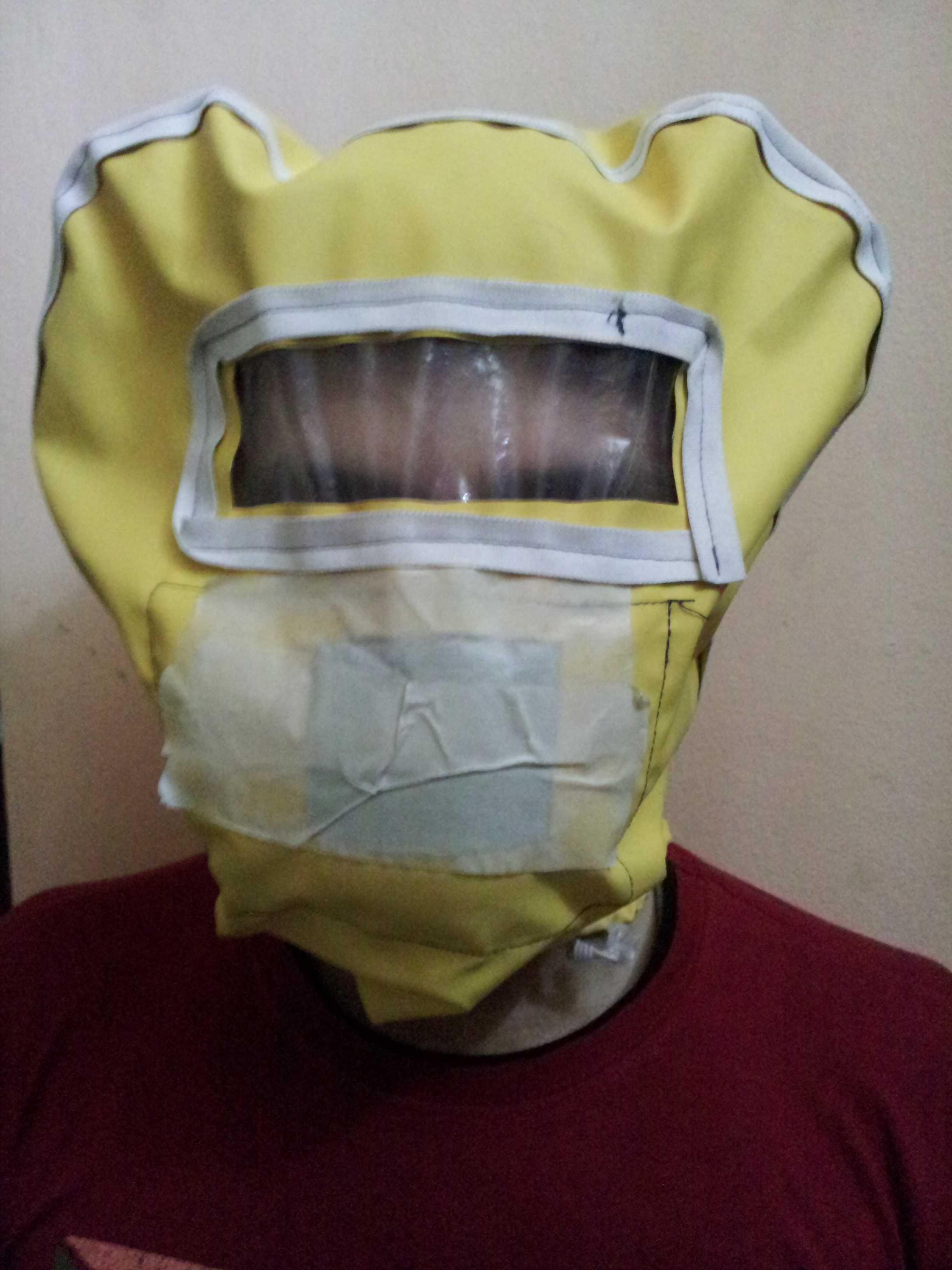
Damascus Bureau, another agency reporting within the country, provides another touching tale. In the context of chemical attacks within Damascus in 2013 they report the efforts of a former toy salesman by the name of Abu Wael. Seeing that children were scared by the black gas masks provided to neighborhoods in the capital Wael endeavored to make thousands in the color of yellow, such that they reminded the children of the popular cartoon character SpongeBob Squarepants. The result is pictured below – hardly a perfect likeness but the essential aim was achieved.


One of Abu Wael's SpongeBob masks.

One of Abu Wael’s SpongeBob masks.

'SpongeBob Squarepants'.

‘SpongeBob Squarepants’.

Hopefully this has acted as a taster of a very human side to something I feel has become little more than a foreign policy issue in this country’s press. I have provided links to the blogs quoted below, and hope to provide some more examples next month.


http://www.damascusbureau.org/


http://www.syriauntold.com/


Semester 3 Looms!

I began this blog by talking about differences between postgraduate and undergraduate study in fairly general terms. If I recall correctly there was an ungainly Christmas dinner metaphor forced in there somewhere. I’d like to return to the subject, though I’m lacking a culinary angle this time. Some would call that a blessing…


Anyway, because of the weight of content taught most Masters programmes are taught across a full year (as opposed to the Sept-June academic year) and this leaves me and my colleagues on the brink of unchartered territory – the mysterious 3rd semester. The key difference in semester 3 is a complete lack of contact hours, aside from meetings with dissertation supervisors. Rather, the next 3 ½ months are entirely bound up in the research process and ultimate submission of the 15000-word dissertation on August 29th. In this sense the last semester plays out very similarly to a PhD student’s work schedule, something I can only see as a positive given that the research MA aims primarily to prepare students for that level of study.


That, in a nutshell, is the bare bones of the third semester, but what does this mean on a more personal level? Speaking for myself, it entails a summer where I actually have to pay attention to something other than the fortunes of Yorkshire County Cricket Club (come on you tykes), though I suspect this won’t be a concern for the majority of prospective MA student. More relevant are the adjustments in approach this semester requires. While I can’t speak for everyone I work best with a string of targets laid out in front of me. Ever since first year (2010 – I’m old.) I’ve lived with a table of deadlines on my bedroom wall, quietly enjoying the satisfaction of periodically scribbling one out and heading to the pub. With over 3 months on a single task however progress is not quite as measurable, so dividing the work into chunks and making sure you have targets and ways to measure progress is a must for me. This could equally be said of an undergraduate dissertation, though those do sit alongside other commitments and lend themselves to timetabling a little more easily. There’s also a role for the aforementioned social aspect of the MA here (see earlier posts). Without contact hours it’s easy to lose context on what you’re doing – while I usually don’t tend to measure my progress against other people it is reassuring to talk about the deadlines you share and generally keep things in perspective, rather than driving yourself up the same four walls day in and day out.


I’m trying to come up with a more appropriate message than “never underestimate the value of a trip to the pub” but I’m struggling a little….


Current Affairs and PG Geography – Part 2!

Last month I wrote about the situation on Ukraine, discussing its various facets from a political geographer’s point of view. Essentially this was my first attempt at a bit of current affairs blogging, something that I will concede bears minimal obvious relevance to my position as postgraduate ambassador for geography. Since that point, however, the exercise has had me thinking about the wider connections between my subject, university and such discussion.


Needless to say, the Ukrainian situation is very much ongoing and I could quite happily put together another 500 words or so regarding recent, increasingly concerning developments. I’ll leave that to a geographer far more accomplished than myself for now however – link below should I have tickled your interest. I could also do exactly the same for a multitude of subjects – the EU debates between Nick Clegg and Nigel Farage last week, Scottish independence, developments in Syria and the recent twitter embargo in Turkey are but a few that come to mind. Any of the above could produce a fascinating and productive postgraduate dissertation in geography – should you be a political geographer thinking of applying, you can have those for free!


There are few places better to consider these potential topics than Newcastle, with its strength in (among numerous other areas) political and economic geographies. If your interest is in the latter CURDS should be an invaluable resource to you; the Centre for Urban and Regional Development Studies based at Newcastle is an internationally renowned research institute in such areas. A key measure of their work is the impact they have been able to have in local policy. Impact is something of a buzzword around postgraduate study here at present, and such can only be a feather in the cap of anyone job-seeking with a postgraduate qualification from Newcastle.


At the other end of the scale the postgraduate community in geography also provides ample space for engaging discussions around current affairs issues – whether this be in seminars or simply down the pub – and this has to be one of the most enjoyable aspects of postgraduate study for me so far.


I have to finish this month by congratulating my coursemates Jenny, Maddy and Jade on achieving PhD funding to continue at Newcastle for the next three years – well done chaps!


A leading political geographer’s perspective on the annexation of Crimea:


http://toal.org/2014/03/18/putins-annexation-of-crimea-speech-annotated/

Postgraduate Geography vs. Current Affairs

One of the snags with being a student of geopolitics is that there can be far too much too study and far little time to do so. My dissertation (as I mentioned last month) discusses Syria, a situation that is fast evolving and difficult to keep up with given the relative sloth of social research alongside current affairs. More difficult still then would be to alter the study to focus on Ukraine, a situation which fascinates me but for now sits beyond my reach. Always the pragmatist I decided to scratch this itch by trying my hand at current affairs blogging here, with a political geographer’s perspective.


Ukraine can be perceived as a classic case of diplomatic binaries obscuring empirical realities. A vast spectrum of discussion hinges upon big issues such as the inviolability of international boundaries and the legal status of Putin’s Crimean incursion, with accusations of hypocrisy abound. Russia is accused of violating the terms it pushed so strongly for in the 1975 Helsinki Accords for Europe (“The participating States will likewise refrain from making each other’s territory the object of military occupation”, for example). Indeed, any Russian recognition of Crimea would call into serious question its refusal to offer the same diplomatic courtesy to Kosovo. Meanwhile, the USA and NATO are accused of denouncing an incursion that is qualitatively no more or less legal than their own invasion of Iraq in 2003. In the latter case this is only partially fair – after all, Barack Obama won the democrat nomination in 2008 in no small part due to his opposing war in Iraq.


In more grounded terms, are the EU/USAs aims really any more favourable than those of Moscow? The new right-wing authorities in Kiev contain considerable neo-Nazi elements, the more extreme (for example the Svoboda party) declaring Ukraine under threat from organised Jewish (0.15% of the population) ‘plots’. Is this an uprising we really ought to be supporting, and is this any less desirable than a separatist, pro-Russian movement in Crimea?


The likely outcome of these diplomatic and local political complications is a stalemate situation wherein Crimea takes on an ambiguous, quasi-state existence not unlike that of the Kurdistan region of Turkey/Syria/Iraq/Iran or the Republika Srpska zone of Bosnia-Hercegovina. Given the decades of diplomatic and economic difficulties this situation has been demonstrated to create it is difficult to see it outcome that any side would desire.


I naturally make no pretence that this comment is as polished or authoritative as those of writers with decades of experience in the area. What I do hope is that it makes apparent the sort of thinking around a subject that one is encouraged to engage in as a postgraduate geographer at Newcastle, as well as the role history/geography play in world affairs.


(A final note – I should probably add that none of the above in any way represents the views of anyone at Newcastle University other than myself.)

Broadening Horizons

February has been one of my favourite months since I began higher education all the way back in (gulp) 2010. Seems odd. Wet, cold, miserable, wet and cold. Especially bad in the South West this year – hope you’ve not been too badly affected if you’re reading this from down there, my sympathy goes out to all those afflicted by the awful floods. Anyway, students such as myself hold February in fond regard because it represents a lull in hostilities. Assessment deadlines are as rare as rocking horse doings and this allows a little more freedom in terms of how we use our time. The show must of course go on – those who completely down tools will suffer further down the line – but it can do so at a more relaxed pace, and in different forms.


One thing this does allow is engagement with the issues we study in forms other than sitting behind a desk. Last week I was fortunate enough to be invited by my supervisor -Dr Nick Megoran – to join a lunch meeting with young people from the School of Reconciliation and Justice, a group that seeks to train and empower young people to a life of reconciliation that flows into peace-making and justice ministries. Many of the people at the school are young people who have lived in conflict situations, be this in recognisable scenarios prominent in current affairs (for example the current conflict in Syria) or in equally important but oft-overlooked scenarios such as highly criminalised neighbourhoods in Zimbabwe.


I found this experience particularly inspiring, not least because it provided me an outlet to discuss these issues aside from boring my housemates. Moreover though this has to do with the nature of my work. My research focus this year is Syria (as I may have mentioned before) and in this context fieldwork is distinctly problematic. I suspect the risk assessors over at Kings Gate would take a dim view of any proposal of ethnographic work in Damascus at present, for example. This has been a problem for me given developments within my sub-discipline (Critical Geopolitics) which call for more embodied, locally grounded research. My work attempts to circumvent this by producing as broad a textual engagement as possible – from United Nations resolutions to social media – but the opportunity to take my head out of the books and speak to real people (for want of a less clumsy phrase) was nevertheless extremely refreshing. These were not specifically refugees of the Syrian conflict but young people of very diverse backgrounds who brought to the table perceptions of the issues of peace, violence and geopolitics that do not always come out in the classroom. The value of such opportunities cannot be overstated in producing a balanced academic outlook, and happily they are readily available to a postgraduate geographer at Newcastle.


Don’t worry about the absence of irrelevant drivel this month – I’m sure I’ll be back on form next time.


Here’s the School of Reconciliation and Justice’s website in case anyone would like to find out more: http://ywamharpenden.org/training/sorj/

DRP Blues

As any student will tell you the Christmas holiday can be a dilemma-laden fortnight. You know you’ve got a job lot of assignments to hand in/exams to sit in January, and yet there are so many pleasant distractions doing the rounds. Still, despite these minor issues this has been an unusually productive winter period for yours truly, and thanks are due largely to the England and Wales Cricket Board (ECB). If they hadn’t sent such a lamentable excuse for a team to Australia for the Ashes I’d probably have lost an awful lot of sleep to the cricket, as was the fate of my January revision over the winter of 2010-11 when England won down under. This year, along with thousands of other disgruntled cricket nuts up and down the country, I usually gave up long before my sleep pattern took any real damage. I imagine bedrooms up and down the nation bore witness to a chorus of “forget it, I’m going to bed” (or various more vulgar and less publishable alternatives) at around 1am GMT every day of the test series.


Anyway, as seems to be a habit I’m quickly developing on this blog none of this has an awful lot to do with an MA in Human Geography. There isn’t even a tortured metaphor or tenuous link to suffer through this time, I just felt like having a good moan and with a measly 42 Twitter followers (@okemp1889) this seemed a decent extra outlet. Still, back to business.


The order of the day at present is the Dissertation Research Proposal (DRP), arguably the most stressful submission of the whole year as it requires one to compress an idea which has taken months to formulate and intends to spawn a 15,000 word paper into a measly 2500. This year the process is more interesting than last time around at undergraduate level because, unlike that often ill-informed 2nd year assessment this one has to be watertight. More challenging still, it has to be marked outside of the discipline of geography at Humanities and Social Sciences (HASS) faculty level. This means the writer has to be absolutely clear when expressing ideas and define terms in very clear ways such as to be sure that the right message is communicated. Being a bit of an old cynic I initially saw this as a way to make things more difficult for me (A. Einstein – “The only thing that interferes with my learning is my education”) but it does encourage better, clearer writing, and this will certainly be an advantage to you going forward, whether this is to further study or the world of work. Perhaps another morsel of wisdom from old Albert is more appropriate then; “If you can’t explain it simply, you don’t understand it well enough.”


That’s all from me. See you next month for more borderline-relevant musings.

Undergraduate to Postgraduate – Making the step up

After an unusually productive morning in the library I have an unexpected open hour to reflect upon my transition from under- to postgraduate study at Newcastle, and I thought given the time of year I’d apply a suitable tortured festive metaphor. Sit back and bear with me – it gets relevant eventually, I promise.


Last night was spent decorating the living room at my house, putting up the ‘tree’ (a dubious label for a small branch borrowed from a conifer) and mulling what can only be described as a vat of wine. At least, my housemates engaged in these fun-filled seasonal activities. Not me. What, I hear you cry, was the life and soul of the party up to? Timetabling. Having made the mistake of proficiently throwing together a few passable meals for the house this term I have been designated the chef this year, and with a house largely empty of assistance until a short time before serving I will be soloing Christmas dinner. So, last night was spent shopping and drawing up a meticulous plan, right down to my own nervous breakdown scheduled shortly after serving.


The veg will be prepared at 18.00. The stuffing goes in at 18.25. Oh, and heaven forbid that the bird should get a minute more than planned – that would probably see the world end. Indeed, the further I waded into the process the more I realised how much I – veteran of a few half-decent one-pot curry efforts – had taken on. Only time will tell whether this experience will take me to new heights of both cooking and admiration from my housemates or eternally extinguish my hopes of attaining either. I will certainly have a darkened room on standby.


By now I imagine – assuming you’re still reading – that you’re beginning to wonder if there will ever be a point to all these meandering culinary ramblings. Well, there just may be. You see, while sat on the sofa last night considering eloping with the mince pies and eschewing responsibility I suddenly realised I had negotiated this process before. On a Masters course there is no more friendly spacing out of deadlines after discussions between lecturers, everything is just plonked in one place. In my case, this means nearly 10,000 words to submit in a very short time in January. Just like tonight’s culinary adventure this was more than a little daunting back in September, but as time has gone by I’ve learned to work with it. So, then, here lies the biggest difference thus far between my under- and postgraduate study at Newcastle; time management. It is an excellent way of demonstrating the value of a postgraduate degree. Such a course does not just teach you more about your subject and how it may be studied but leaves you with skills beyond those you could attain during normal undergraduate study. I can only hope I’ll be able to say the same after this evening.


I’ll leave the novella there for now and finish by wishing a Merry Christmas to one and all!