Porous Archives 2 – registration open (12th December 2025)

The Historical Geography Research Group (HGRG) of the Royal Geographical Society warmly invite you to take part in Porous Archives 2, the 2025 Practising Historical Geography conference now in its 31st year. This free, one-day conference takes place at Newcastle University and online on the 12th December.

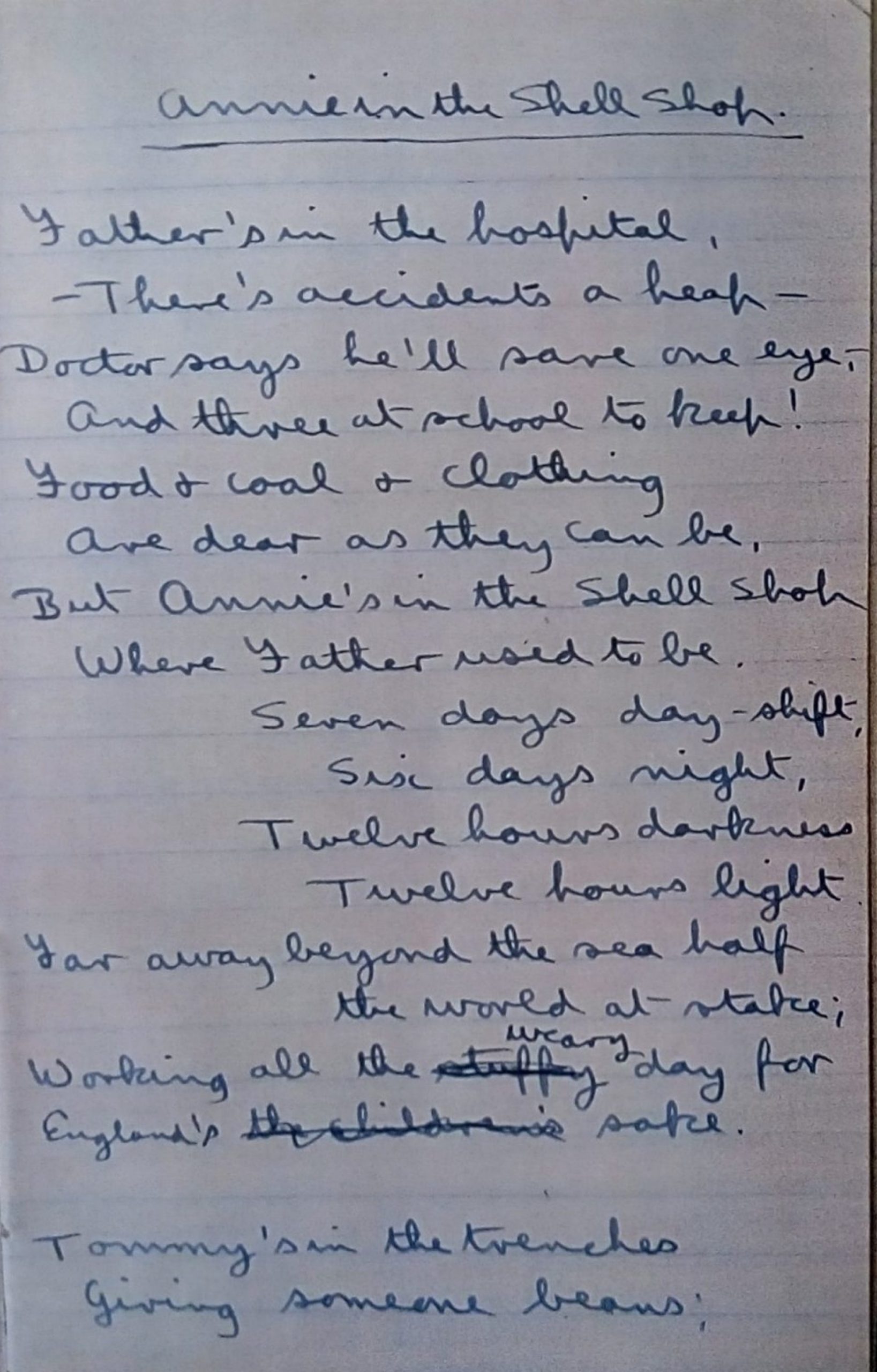
During this conference, Ben Newman and Colin Lorne (Open University) will present a workshop where they will share a small collection of (scanned) materials from the Stories-so-far: Doreen Massey archive project. This is a significant privilege, and a brilliant opportunity to actively practise some of the emerging tenets of Porous Archives by directly engaging with the papers of a truly public intellectual and deeply political geographical scholar.

Please register here – if you prefer to attend online, please note that the Doreen Massey archive workshop session will be in person only and the Teams meeting will pause for this.

  • Cost: free – see registration details for additional support options for postgraduates.
  • Date: Friday 12th December, expected to start at 11.00.
  • Location: Armstrong Building Room 2.49 (provisional – exact room may change), Newcastle University, Tyne and Wear, United Kingdom.
  • Registration deadline – in person: 8th December 11.00 (places are limited – be quick!).
  • Registration deadline – online: 10th December 23.59 (Teams, places are unlimited).
  • The same deadlines apply if presenting – the different presentation options are detailed in the registration form and you are welcome to present in person or over teams.
  • For the provisional programme, see here. The conference program will be added to regularly as further abstracts are received. We also propose a lower-key series of events in 2026 here.

HGRG are very pleased to provide this event for free. The conference series has always provided a safe and nurturing space to support the practice of historical geographical research, enquiry and writing, so it’s the perfect place to trial ideas and gain friendly, supportive feedback on (e.g.) methods, theories, findings, collaborations, ethics, draft material, funding proposals and etcetera. It is intended to be especially accessible for students (whilst also welcoming more established scholars).

We ask that established scholars presenting on their work align with the Porous Archives theme (see below): postgraduate attendees are encouraged to do so but have more flexibility and are welcome to present more broadly on their research, although you may be asked more archive-y questions about your work.

What is Porous Archives? In 100 words: Porous Archives is our ongoing critical exploration of approaches which do more than consulting archives, and instead creatively turn archived things to face onto contemporary worlds in porous, unfinished ways. We avoid treating archives as places/collections of immutable, finished, time-stilled things, and seek alternative understandings of how archived things are (or become) porous, so that they affect and are affected by more than the pocket of time they originated in, and are treated as unfinished again. For more on this idea, see here.

For information on visiting Newcastle upon Tyne, see here.

Find out more about Doreen Massey here. The Kilburn Manifesto can be downloaded for free from Lawrence Wishart here.

Find out more about the HGRG and the Practising Historical Geography conference series.

Porous Archives (the idea)

Porous Archives is how I’m referring to critical research practices that allow archive content to become less “finished”, which go further than consulting archives, and creatively turn archived things to face onto contemporary worlds in a porous, unfinished way.

A Porous Archives approach may describe what you do already. These approaches – there are many (see below) hope to do more than consult archives for research. Their aim is different – to extend and turn archived things to face onto and fold into contemporary worlds in “porous” ways. This starts with a theoretical-ethical move: to avoiding thinking about archives and their content as immutable, finished, time-stilled things. It then seeks to grow – to make alternative understandings of how archived things are (or become) porous, meaning that they affect and are affected by more than the pocket of time they originated in, or the repository they are held in, so they are treated as unfinished again.

Admittedly, it’s easy to rest upon a notion that archive content is immutable, impermeable and implicitly finished because that content is considered fixed when it arrives at the archive. Aside from the interpretations applied to that content by archivists and readers in turn (which can often matter – greatly), being archived means being removed from authoring, editing, deleting, and/or replacing. Or at least, it means believing that this removal is possible and/or likely. The authors are not returning to edit it, the reader isn’t invited to rework it, the effects it might have had are firmly in the past tense (even if the consequences still echo) and the setting aims to preserve the thing as it was when it arrived, available only in a consulted state.

We’re interested in how we can unfinish archives from their consulted states, and return archived things to a porous state. We want to hear about those methodological and critical moves of seeing and/or creating gaps and opportunities (pores) in archived things so that that they can be more meaningfully drawn into and, in turn, altered by continuing, contemporary worlds full of interests, intentions and positions. Making archives less finished and more porous means they can potentially say more, mean more, grow, and roam. What might these methodological moves by historical geographers and others look like? They could include the following…

Exporting archive content – allowing it to be read and engaged with elsewhere rather than only in the reading room. What porosities are created when archives are de-located at kitchen tables, on public transport (etc) and positioned so that their content can be more easily portioned, spliced, and annotated?

Peopling archive content – enabling people to research and understand archive content who are different and perhaps more diverse than the “usual” people who conduct archive research. What porosities are created by the diverse thinking they bring with them from their places and experiences? What enablers could we put in place for them?

Extending archive content – venturing to think about what happened after the archive narrative stopped. What else would a person have done, how else would a situation have developed? And how (if at all?) do we scaffold these imaginaries with other historical/geographical knowledges?

Emplacing archive content – laying archival narratives over the places those narratives happened in (or refer to), perhaps as a GIS layer, perhaps as the narrative in a walking route, or simply the researcher visiting the place with the archive narratives in mind? When we emplace in this way,  how are the original narratives expanded (or limited)? Does an utterance from an archive make more sense, less sense, or sense of a different kind, when researchers emplace it? And vice versa, does places make sense of a different kind for having archive narratives woven into them?

Resuming archive content – acting on the (arguably inevitable) uncertainty that archival content belongs securely in the past at all, what happens when we seek ways of connecting archival narratives to still-happening events in the present? What happens to the presents that newly unfinished archived things enter into and roam through, and can those archived things ever simply return to their consulted state? How do we create and maintain those porosities?

And, importantly, this is an unfinished list. Porous Archives will happen in many other ways too, and we hope to use Practising Historical Geography 2024 and 2025 to better understand these approaches (including the extent to which they’re agreeable, as these approaches contain the potentials to be problematic and should receive robust critical attention). Some of these approaches are familiar to us already: the HGRG’s research series includes, from 2007, “Practising the Archive” and again in 2013, “Collaborative Geographies…” both of which visit ideas that align with Porous Archives. A special issue of the Journal of Historical Geography, “Archives as worldmaking” has a few points of commonality with Porous Archives despite a different (but compelling) focus, and these all build on the now established “archival turn“.

Porous Archives 2 – provisional programme

If you have submitted to present at Porous Archives 2, it will be added to this programme within 48 hours of your registration. Presenters can choose morsels, vignettes, or papers and these different formats are explained when you register. Please register here.

Venue: Armstrong Building Room 2.49 (provisional – exact room may change) Newcastle University.

Note: the Doreen Massey archive workshop session provisionally scheduled for 13.00 to 14.45 is in-person only and the Teams meeting will pause for this.

11:30-11:40: Welcome

11:40-12:10: The Nautical Turn: The Birth of the Renaissance as found in it’s Cartographic History and it’s Shift to a Maritime Focus. (Seb Willis, University of Hull)

Abstract: The junction between the Mediaeval and Early Modern eras has, frustratingly for some, always been divided by the Renaissance. A period often defined by humanist philosophy, classical romanticism, blossoming republics and mercantilism, the Renaissance is elusive in its origins. A stark juxtaposition between Mediaeval and Renaissance culture is found in the cartographic traditions of both. The mappamundi of mediaeval Europe, characterised by its religious allegory and moral teaching, was pushed abruptly aside by the Portolan Charts of mercantile republics. This shift in cartographic expression coincided with, and this paper will explore if it created, a changing world view that saw the sea not as a border separating the Earth from the rest of the cosmos, but as a vector of opportunity to be explored and exploited. Rejecting its capitalist resolution, this paper will lean into Edgar Zilsel’s thesis on the artisanal origins of modern science. Thus, reframing Renaissance cartography as something born from the personal relationship with, and the many knowledges of, the maritime world as held by the people living and operating upon it.)

12:10-12:30: Cruising the Cut: Lesbian histories of mobility and queer futures of boat-dwelling on the UK’s canals. (Georgia Dimdore-Miles, Royal Holloway)

Abstract: My work takes a multi-methods approach including oral history, mobile interviewing, archival work, ethnography and experimental archiving. In this vignette I will present ideas about this project’s experimental archive, a response to Cvetkovich’s (2003) call to queer historians to create “unusual archives” as “sites of recovery” to record lives that have been too fleeting, or in this case mobile, to exist within traditional collections (Lee, 2021; Orr, 2021). During ‘floating interviews’, which will take place upon queer houseboats cruising through varied landscapes, narrators will donate material culture to the projects’ community mobile archive. I coin this an ‘archive in motion’ – a portable but powerful small-scale collection of material culture that will travel with me on ethnographic fieldtrips on queer houseboats. Temporarily situating this archive on the houseboats will contribute to its unique character, the quotidien fabric of these mobile worlds will be woven into the collection; photographs, letters and licenses, flags, signs, badges and boat tools. In this watery world of flows and freedom, the ‘archive in motion’ will radically contest the archive as a static site that fixes queer identities (Lee, 2021).

12:30-13:00: Lunch and morsel (Jenny Brown, University of Glasgow: My morsel will map archival narratives that challenge a dominant contemporary interpretation of ‘The Highland Society models’. This collection of models of agricultural implements and machines in National Museums Scotland were first acquired by the Highland and Agricultural Society of Scotland from 1790 and gifted to the Museum in 1855. That association currently dominates current institutional understanding and presentation to the public. Can a visual representation of the original artisans alter this perception?

13:00-14:45: Stories-so-far: Doreen Massey archive (Ben Newman and Colin Lorne, Open University).

Abstract: during this workshop Ben and Colin will share a small collection of (scanned) materials from the Stories-so-far: Doreen Massey archive project. This is a significant privilege, and a brilliant opportunity to actively practise some of the emerging tenets of Porous Archives by directly engaging with the papers of a truly public intellectual and deeply political geographical scholar.

14:45-15:00: Refreshments and morsels.

15:00-15:30: Nuclear perpetrations in the thoughtful landscapes of Eryri National Park (Paul Wright, Newcastle University).

Abstract: National Parks are created to preserve natural, beautiful landscapes, so you probably shouldn’t build a nuclear power station in the middle of one.  But starting in 1953, this actually happened, and archival holdings can offer insights into the thinking that enabled this. Damaged landscapes might be labelled as “spoiled”, “scarred” or “ruined”: the scholarly terminology is “encroachment” or “disturbance”, with “coherence” as the opposite with an understanding of landscape damage as an outgrowth of thoughtlessness, when a feature is conceived and built with scant (or no) thought to its coherence with the landscape (Davoudi and Brooks 2019, 9). Thoughtless features may end up too large, or mis-oriented, or an inappropriate shape, or texture, or colour. In short, for landscapes to fare well, additions to them need to practice a kind of mimicry – they need to adopt (to some extent) the look, scale, and orientation of the landscape receiving them. Using this definition, Trawsfynydd Nuclear Power Station may appear to be one of the UK’s more significant acts of thoughtlessness and damage. Eryri National Park – formerly Snowdonia National Park – was created in 1951 to protect the natural beauty of, and public access to, the landscapes of North Wales. Just two years later, a public enquiry concluded that a nuclear power station should be built in a relatively prominent location within Eryri, and between 1959 and 1965 the two reactor halls and ancillary buildings of Trawsfynydd Nuclear Power Station were completed. But Trawsfynydd may not actually be thoughtless – and it may provide a chance to critically rethink how landscape damage is conceived. The archived text of the public enquiry is a valuable starting point because it appears to feature care, hesitation, a degree of affection, and a particular articulation of what we now call “coherence”. Arguably the public enquiry was also wishful, and possibly naive and evasive at points, but it wasn’t simply thoughtless in landscape terms. What the archived public enquiry offers (and what this paper analyses) is an insight to the question of how landscapes can be damaged by caring hands, and additionally, to ask whether landscapes are experienced differently if people know that the damage arose from errant care, rather than thoughtlessness.

15:30-16:00: The evolution of Central Asia’s geospatial structure: interactions between nomads and sedentary populations (Qiran Song, University of Warwick)

Abstract: The evolution of Central Asia’s geospatial structure is closely associated to livelihoods, migration, trade, and political and military affairs. The South-North Tie (S-N Tie), underpinned by interactions between nomads and sedentary populations, played a significant role during the early stages of this evolution. Even as nomads gained military-political dominance, the S-N Tie fostered their trend toward sedentarisation. While the S-N Tie remained influential, the East-West Tie (E-W Tie) emerged as nomadic groups entered Central Asia in succession from the East Eurasian Steppes. The E-W Tie arose from tensions between China (Han-Di) and the steppe-forest regions of Mongolia and the watersheds of the Songhua and Liao Rivers, as well as the conflicts between Sassanian and Byzantine, demonstrating the feature that interdependent rise-and-fall dynamics among Eurasian nomadic groups and reciprocity between nomads and peasants interwove. After the 15th century, Central Asia’s geospatial structure was increasingly shaped by maritime powers, which integrated Central Asia into a new geospatial structure that the influence of the Eurasian Continent and the ocean intersected.

16:00-16:15: Refreshments and morsels.

16:15-16:45: Presentation(s) to be confirmed.

16:45-17:00: Outline of 2026 events, and close.

2025/6 events (and publication opportunities)

Porous Archives is a continuing exploration of critical historical geographies (for more on this idea, please see here) and whilst Porous Archives 2 will be the last conference-type event we hold as part of this exploration, there will be other events following

Reading/writing groups and publication opportunities: throughout 2026 we’re running a series of hybrid events with participants at these events encouraged to share and develop the ideas presented at Porous Archives 1 and 2 into chapters/papers for an edited collection as part of the HGRG research series and/or a themed issue of a suitable journal.

If you’d like to take part in any of these events, please e-mail Paul at paul.wright3@ncl.ac.uk for initial information or check back here…

February 2026: “Porous Archives” reading group and half-day writing retreat – please check back in early January for more details.

March and onward: recurring reading group and half-day writing retreat – please check back in early January for more details.

November/December 2026: The 32nd Practising Historical Geography conference is provisionally expected to move to Edinburgh.

Past events:

December 2024: “Porous Archives 1”, the 2024 Practising Historical Geography conference, Newcastle upon Tyne.

Visiting Newcastle upon Tyne

Porous Archives 2 will be held in Newcastle upon Tyne at the City Centre campus of Newcastle University, with the precise location to follow. It will also be held online via Teams, but for those who want to attend in person, here’s a potted guide to getting here and getting around. Scroll down for travel advice. HGRG postgraduate members, please refer to the registration form here for financial support details).

Newcastle is a city which serves its history in hefty, many layered portions, and offers up interesting preferences for remembering it. It’s a smallish, big-hearted town (think a little smaller than Nottingham, a little bigger than Brighton) with some outstanding streetscapes and urban features, a vibrant social life, and a pleasing willingness to dispense with accepted tastes or restraint when it suits. It’s famously convivial with a lovely selection of informal dining and drinking holes both in the city centre and in inner suburbs such as Ouseburn, Byker, Heaton, Sandyford, Gosforth and – if you must – Jesmond.

Austerity continues to brutalise Newcastle, and many places and features are clearly held together with gaffer tape and hope, but they’re still there, still welcoming folks, and still fun. It has some of the finest and most dramatic green spaces of any city in the country, with Jesmond Dene and Town Moor the best known of them.

Within Newcastle are four free museums (Hancock, Discovery, Seven Stories and Farrell) four free or part-free galleries (Hatton, Laing, Biscuit Factory and (in Gateshead), Baltic), four theatres (Northern Stage, Royal, Tyne, and Live) a much-loved market (Grainger), a much-loved department store (Fenwicks), and a very special quasi-public library (the Lit and Phil – open to all for reading and gawping, lending available to members only).

It can and will get cold. According to the Met Office Newcastle is colder, on average, than Glasgow or Edinburgh, but warmer than Aberdeen or Bradford. It’s also windier than many urban locations in the UK. I recall I have the actual data for that… somewhere…

Newcastle University’s main campus is at the north end of the city centre and is served by Haymarket Metro station. Porous Archives 2 will be held in the Armstrong Building (which in itself has a complex history), with precise details to follow in terms of the exact room.

A map of suggested things to see and places to eat (if you need to kill time before of after the event) is being put together… here.

What to expect – travel by rail: assuming punctual services (!) rail is easiest and will leave the smallest carbon footprint, and approximate rail travel times to Newcastle are…

30 min to 1 hour – Durham, York, Teesside
1 to 2 hours – Carlisle, Edinburgh, Leeds
2 to 3 hours – Sheffield, Glasgow, Manchester, London fast services, Stirling
3 to 4 hours – Nottingham, Liverpool, Cambridge, Birmingham, Leicester, Dundee, London stopping services
4 to 5 hours – Reading, Oxford, Bristol, Aberdeen, Canterbury, Brighton
5 to 6 hours – Cardiff, Inverness, Bangor
6-7 hours – Exeter, Portsmouth
7 or more hours – Swansea, Aberystwyth, Plymouth, Falmouth, Scotland north/west of the Great Glen

In all cases, advance fares can be tracked using this handy tool (https://www.thetrainline.com/ticketalert) which will alert you when advance tickets become available for your journey. LNER and Lumo generally run good-ish services – if you can accept their schedule and luggage restrictions Lumo can be genuinely cheap. Transpennine might run a good-ish service, and CrossCountry will be pure blind luck. There is one principal railway station in Newcastle – Newcastle Central, and it’s served by Central Metro station.

What to expect – travel by car: if travelling up the east side of the UK, including London, or if travelling from pretty much anywhere in Scotland (not islands), you should assume the train is quickest. The further you have to travel the greater the speed advantage of train travel will be. If travelling from the west of the Pennines, or from Wales or the West Country, car travel might be about as quick as using the train.

Using a car in Newcastle can be challenging unless you know you have parking or you have a permit badge. Driving into and parking in the city centre is generally best avoided – it’s a little bewildering and it’s easy to pick up a bus lane fine or get very stuck in traffic. Newcastle City Council car parks and street parking allow stays between 30 minutes and five hours, generally free overnight (between 19.00 and 07.00) with payment by PayByPhone app or contactless ticketing machines. Private car parks in and around the edge of the city centre do offer all day parking.

If driving, you should note that NE1 and NE2 postcodes fall partially or wholly within a CAZ, also also note that the Tyne Tunnel crossing (A19) is tolled. Tyne Bridge and Tyne Tunnel are both currently undergoing maintenance works. Regrettably there is relatively meagre public charging availability across Tyneside in general. Within the city centre, expect 7kw, or 22kw if you’re lucky. There are some larger charging stations with 150kw or over in some of the inner suburbs, Gateshead, and off the A1/A19 ( some in established petrol stations).

Blue badge holders: providing you’re displaying your badge clearly you can park for free in any on-street “disabled badge holders only” bay without time limits applying, even if the adjacent street parking is charged. Some street parking in Newcastle is free but time restricted according to kerbside signage – these time limits don’t apply to blue badge holders either.  It’s different for off-street parking: you will need to pay to park in off-street and multi-storey car parks at the normal rate using PayByPhone or ticketing machines. However, an extra free hour is added to your ticket expiry time (not actually shown on the ticket or PayByPhone app) providing you park in blue badge bays and have your blue badge displayed. Finally, you can park on single or double yellow lines for three hours providing you set the clock on your badge, the badge is clearly visible, and there are no yellow kerb markings.

What to expect – travel by bus: likely the cheapest option, even compared to Lumo rail services, but also the slowest. Flixbus and Megabus services operate to Newcastle from pretty much all UK towns and cities, and direct from larger cities – both firms pick up and drop off from outside the City Library in the centre of town (Metro – Monument). Always check websites carefully, what looks like a four hour journey may actually be a twenty eight hour journey – is the arrival date the same as the departure date?

National Express services are more expensive, they pick up and drop off from a slightly more awkward location nearer the railway station. In some cases they are marginally quicker though.

What to expect – travel by air: Newcastle Airport connects to most other large and small regional airports in the UK and NI – Schengen and international flights will generally hub at Schiphol, Heathrow, or Frankfurt. The airport is served by Metro (green line). As this is only a single day conference we would hope that colleagues who might otherwise fly can save a lot of carbon by joining on Teams.

What to expect – travelling when you’re here: Tyneside has an outstanding, modern, intermittently clean and relatively affordable Metro system, serving the university campus (Haymarket) and all the other areas of town that are likely to interest attendees. All stations have step free access to the platforms without exception (ramps, lifts, or both) and level access from the platform to train with generally small, manageable height and width gaps. The sole limitation is that mobility scooters are not allowed at present – only wheelchairs (this may change as more new Metrocars are introduced).

Buses are also equipped with ramps or kneelers – the bus network is extensive and services are frequent, but buses often get snarled in city centre traffic. Mobility scooters are sometimes allowed, wheelchair spaces are provided on all buses. I’ve observed that all small/medium cities have at least one bus service that appears to go to almost every suburb and estate – in Newcastle, it’s the 32A.

Neuron e-scooters can be picked up around the city: they can only be used with the Neuron app and only by proving you have a driving licence. If this appeals, then you can enjoy all the fractured collarbones and wrists you could ever hope for. Note: Neurons are geofenced from being powered through certain areas including all the pedestrianised city centre streets, and they’re speed limited in others. Surprisingly, they do work well in ice and snow.

Cycle provision: most rail providers offer bike spaces for free but only if you reserve one in advance. When you’re here, Metro has space for bikes, but only off peak and not in tunnelled sections (unless it’s a folding bike), buses do not have bike spaces at all except for folders. There is a decent network of recently upgraded cycle routes which use minor roads or cycle exclusive paths around and beyond the city. Unfortunately, Newcastle’s PAYG bike hire scheme folded some years ago.

As mentioned above, Newcastle city centre is not always an easy place to drive: it is better to walk, cycle, bus or Metro into town if possible

What to expect – accommodation: as a one day event, we hope that most, if not all attendees can travel to and from Newcastle in the same day, but please do contact paul.wright3@ncl.ac.uk for further advice if you’re stuck (for searching purposes, the campus postcode is NE1 7RU).
2024 Conference program (and invited contributions).

This post refers to the first event in the Porous Archives series which took place in December 2024 – for the 2025 Practising Historical Geography conference (Porous Archives 2025) see here to register and the 2025 draft program is here.

11.50-12.10: Welcome and refreshments.

12.10-12:20: Introduction.

12:20-13.00: First speaker, Dr Ana Laura Zavala Guillen (Northumbria University Newcastle).

13:00-13:15: Postgraduate voices – Jason Irving (University of Kent)

13:15-13:50: Lunch break

13:50-14:30: Second speaker, Dr Paul Griffin (Northumbria University Newcastle)

14:30-14:45: Postgraduate voices – Farhan Anshary (Newcastle University)

14:45-15:00: Refreshments

15.00-15:40: Third speaker workshop – Dr Paul Wright (Newcastle University)

15:40-15:55: Postgraduate voices – slot still available

15:55-16:35: Fourth speaker, Dr Ivan Markovich (Durham University)

16:35-16:45: Porous Archives in 2025 and close.

Evening from 17:00: Social event off campus

Speaking slots at Porous Archives take the form of “postgraduate voices” (note: both postgraduates and early career colleagues are welcome to contribute postgraduate voices) – these 15 minute speaking slots are 5-10 minute vignettes where you describe an aspect of your research (which ideally intersects with the conference theme in some way – even if only tangentially), followed by a further 5-10 minutes of questions. You can use your vignette in different ways: to reflect on an interesting research experience, to ask for insights/ideas from the other attendees, to offer insights based on what you’ve been doing, to appeal for collaborators, a combination of these, or in a different way entirely. It is worth remembering that the purpose of the Practising Historical Geography conference series has always been to provide “a safe and nurturing space to support the practice of historical geographical research, enquiry and writing” and we warmly invite you to contribute your postgraduate voice in this spirit.

Reminder: This post refers to the first event in the Porous Archives series which took place in December 2024 – for the 2025 Practising Historical Geography conference (Porous Archives 2025) see here to register and the 2025 draft program is here.

Porous Archives 1: the 2024 Practising Historical Geography conference

16th December 2024, 12.00-17.00

This post refers to the first event in the Porous Archives series which took place in December 2024.

Up to 11th December 2024 for in person attendance (Armstrong Building, Newcastle University).

Up to 15th December 2024 for online attendance (Teams).

The Historical Geography Research Group warmly invite you to take part in Porous Archives, the Practising Historical Geography conference 2024. Taking place at Newcastle University and online, you can register using the link above. Recognising the challenging circumstances of Higher Education in 2024, we are very pleased to say there will be no charge for this event.

Why Porous Archives “1”? Because it’s possible we’ll theme some more events around Porous Archives: it’s an idea which has the potential to extend in many different ways (see below).

Find out more about the conference theme, Porous Archives.

Find out more about the program and options for you to present your work.

Find out more about the key speakers (content to follow).

Find out more about how to get to, and afford, a visit to Newcastle upon Tyne.

Find out more about the HGRG and the Practising Historical Geography conference series.