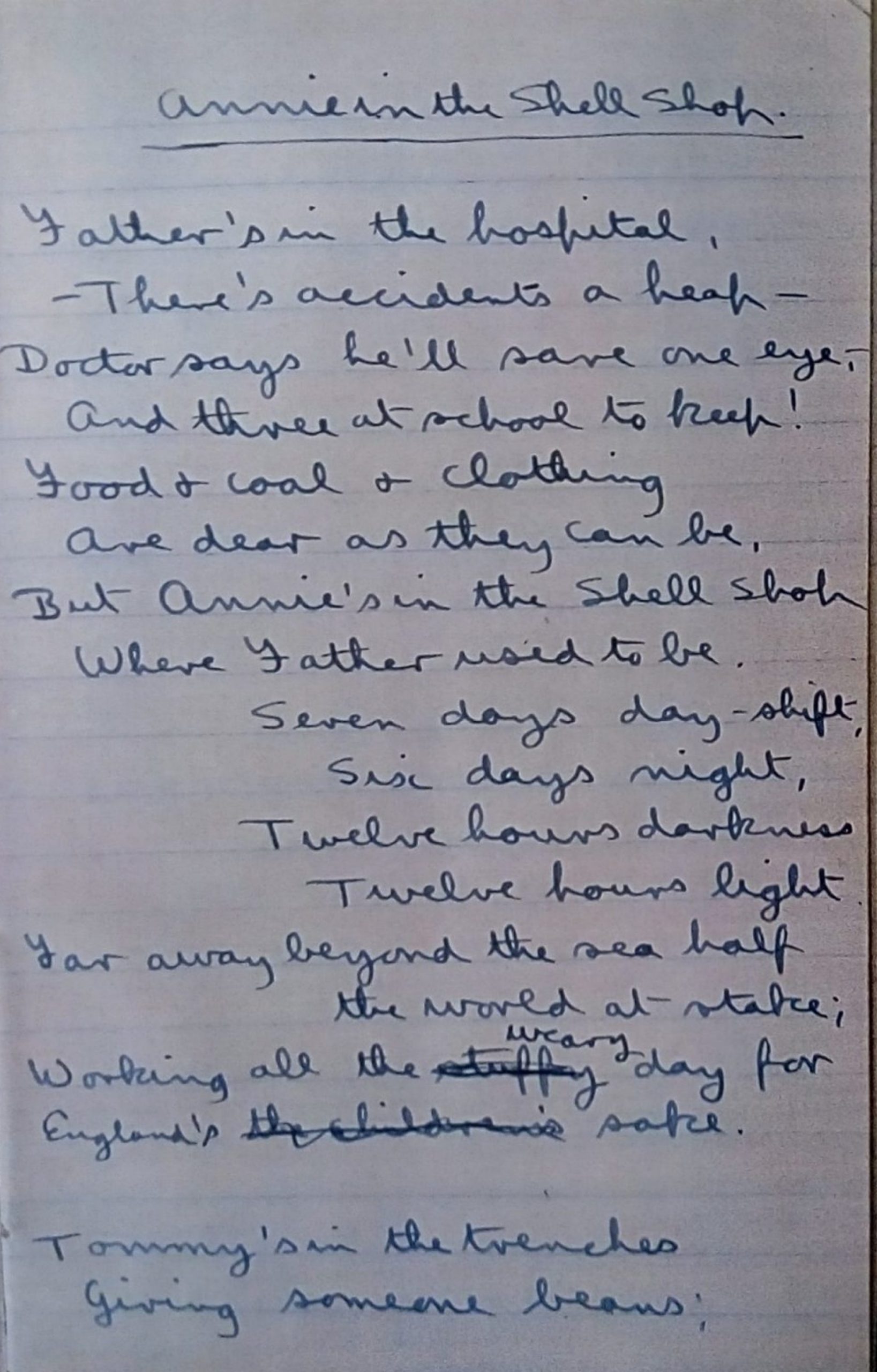
Porous Archives is how I’m referring to critical research practices that allow archive content to become less “finished”, which go further than consulting archives, and creatively turn archived things to face onto contemporary worlds in a porous, unfinished way.
A Porous Archives approach may describe what you do already. These approaches – there are many (see below) hope to do more than consult archives for research. Their aim is different – to extend and turn archived things to face onto and fold into contemporary worlds in “porous” ways. This starts with a theoretical-ethical move: to avoiding thinking about archives and their content as immutable, finished, time-stilled things. It then seeks to grow – to make alternative understandings of how archived things are (or become) porous, meaning that they affect and are affected by more than the pocket of time they originated in, or the repository they are held in, so they are treated as unfinished again.
Admittedly, it’s easy to rest upon a notion that archive content is immutable, impermeable and implicitly finished because that content is considered fixed when it arrives at the archive. Aside from the interpretations applied to that content by archivists and readers in turn (which can often matter – greatly), being archived means being removed from authoring, editing, deleting, and/or replacing. Or at least, it means believing that this removal is possible and/or likely. The authors are not returning to edit it, the reader isn’t invited to rework it, the effects it might have had are firmly in the past tense (even if the consequences still echo) and the setting aims to preserve the thing as it was when it arrived, available only in a consulted state.
We’re interested in how we can unfinish archives from their consulted states, and return archived things to a porous state. We want to hear about those methodological and critical moves of seeing and/or creating gaps and opportunities (pores) in archived things so that that they can be more meaningfully drawn into and, in turn, altered by continuing, contemporary worlds full of interests, intentions and positions. Making archives less finished and more porous means they can potentially say more, mean more, grow, and roam. What might these methodological moves by historical geographers and others look like? They could include the following…
Exporting archive content – allowing it to be read and engaged with elsewhere rather than only in the reading room. What porosities are created when archives are de-located at kitchen tables, on public transport (etc) and positioned so that their content can be more easily portioned, spliced, and annotated?
Peopling archive content – enabling people to research and understand archive content who are different and perhaps more diverse than the “usual” people who conduct archive research. What porosities are created by the diverse thinking they bring with them from their places and experiences? What enablers could we put in place for them?
Extending archive content – venturing to think about what happened after the archive narrative stopped. What else would a person have done, how else would a situation have developed? And how (if at all?) do we scaffold these imaginaries with other historical/geographical knowledges?
Emplacing archive content – laying archival narratives over the places those narratives happened in (or refer to), perhaps as a GIS layer, perhaps as the narrative in a walking route, or simply the researcher visiting the place with the archive narratives in mind? When we emplace in this way, how are the original narratives expanded (or limited)? Does an utterance from an archive make more sense, less sense, or sense of a different kind, when researchers emplace it? And vice versa, does places make sense of a different kind for having archive narratives woven into them?
Resuming archive content – acting on the (arguably inevitable) uncertainty that archival content belongs securely in the past at all, what happens when we seek ways of connecting archival narratives to still-happening events in the present? What happens to the presents that newly unfinished archived things enter into and roam through, and can those archived things ever simply return to their consulted state? How do we create and maintain those porosities?
And, importantly, this is an unfinished list. Porous Archives will happen in many other ways too, and we hope to use Practising Historical Geography 2024 and 2025 to better understand these approaches (including the extent to which they’re agreeable, as these approaches contain the potentials to be problematic and should receive robust critical attention). Some of these approaches are familiar to us already: the HGRG’s research series includes, from 2007, “Practising the Archive” and again in 2013, “Collaborative Geographies…” both of which visit ideas that align with Porous Archives. A special issue of the Journal of Historical Geography, “Archives as worldmaking” has a few points of commonality with Porous Archives despite a different (but compelling) focus, and these all build on the now established “archival turn“.