
By Emma Atkinson
The character of Amadea and the impact of her first entering the play disguised ‘in boy’s clothes’ (Haywood, 9), provides an interesting analysis to open up discussion on the gender politics of A Wife to be Lett. The first purpose she serves in her male disguise is to warn Mrs Graspall to stay away from Harry Beaumont in order to protect her virtue in the court of public opinion. Amadea claims ‘tis your good genius warns thro’ my lips’ (11), implying that she has some form of control over, or knowledge of, Mrs Graspall’s conscience. This is where the impact of the actress being in male drag alters the sentiment and raises the question; if Amadea was presenting as her own female gender, would she be afforded the same authority and agency? As the character of the virtuous wife is hearing these words through the mouth of a patriarchal figure, it brings to light the gendered interests within both the public and private spheres. Women being expected to be virtuous not just for the sake of their husband in private, but also for the sake of their appearance to other men in the public sphere.
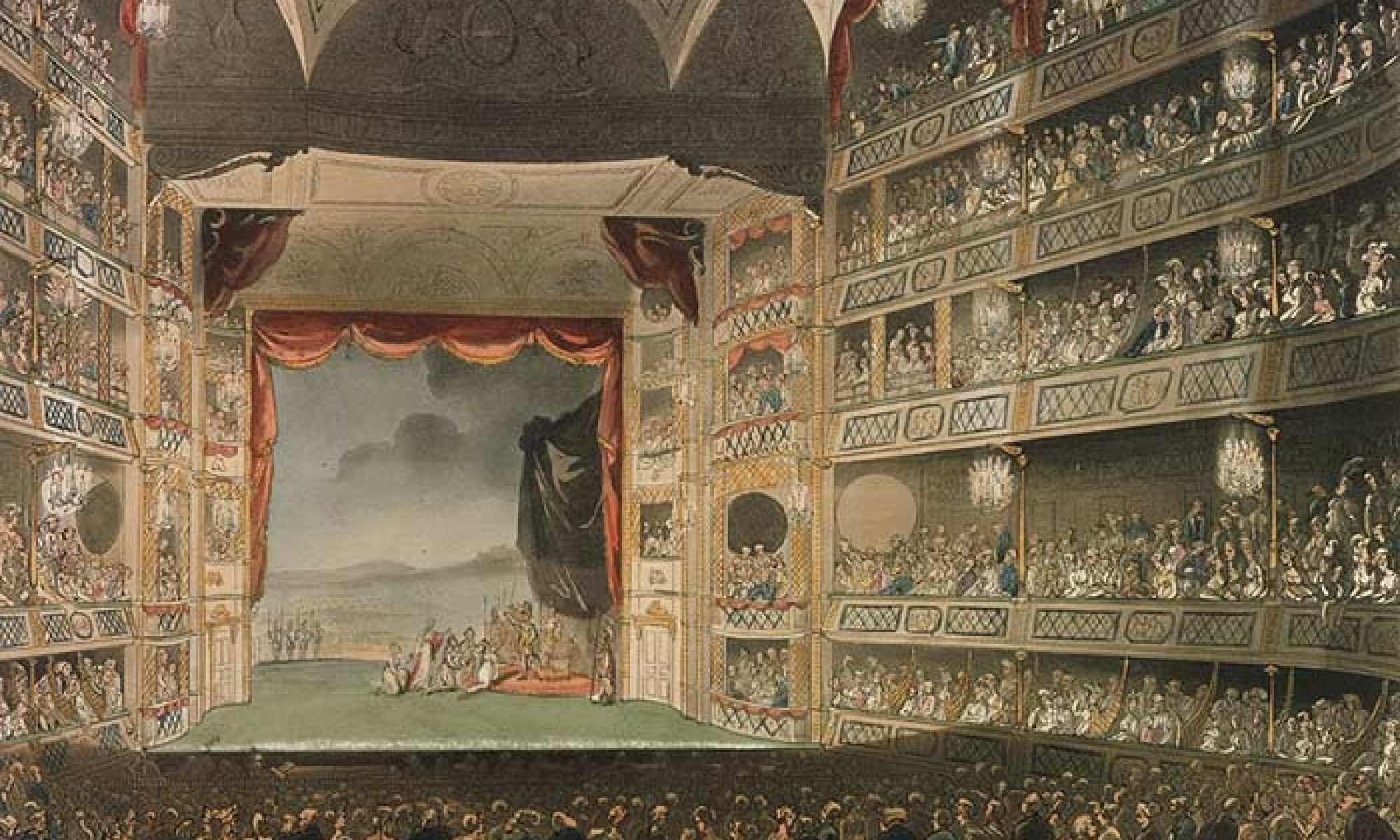
Theatre spectators of the period would have been used to watching male actors playing the role of the female characters, women having only just been legally allowed to perform on stage in 1660 following the Restoration of Charles II. Therefore, to have a female actress on stage in any capacity was fairly new, never mind imitating a masculine figure. However, Amadea is playing the ‘breeches role’ which was actually a staple of the eighteenth-century stage, the part is typically where a ‘woman assumes a male disguise as part of the narrative structure of the play, usually in order to propel a marriage plot’ (Friedman-Romell, 464). However, in this case, rather than propelling a marriage plot, she is wishing to prevent the wife’s infidelity, with a hidden motive to claim the lover Harry Beaumont for herself. The breeches role was also further used on the eighteenth-century stage for comedy, becoming ‘the comic love object of another woman’ (Freidman-Romell, 464), which is seen later in this play as it is part of their revenge plot to make it appear as if her and Mrs Graspall have slept together.
The concept of the ‘knowing audience’ is significant in the discussion of this façade of masculinity; we must consider whether or not we assume the audience is in on the joke and subsequently hold a position of power. As with Amadea’s first appearance, depending on the way the play is performed could leave it up for debate as to whether the audience is viewing her as a female character in disguise or whether they are viewing her as her masculine appearance at that moment. It could be argued that ‘at least some audience members willingly and pleasurably gave themselves over to the illusion’ (Freidman-Romwell 467-468), although they are actually aware of the performance’s reality, they give themselves over to the fantasy. It has been questioned by some academics regarding cross-dressing in theatre whether ‘at some point during the production, does the spectator stop seeing the female body and see only the male role?” (Klett, 169). When the audience is listening to Amadea in disguise giving Mrs Graspall advice on her virtue, are they too falling into the trap of taking this advice more seriously due to seeing it coming from a male presenting figure? Or are they in on the joke, and they are laughing at the expense of Mrs Graspall for believing that this woman is in fact her patriarchal conscience.
This gender-bending disguise could also be providing the audience with a challenge to gendered structures, a woman holding the freedom, power and influence of the patriarchal man. Audience members could see themselves within this character, particularly a ‘lesbian audience member could both enjoy looking and recognise herself in the character’ (Friedman-Romell, 470), and women more broadly being able to gain enjoyment from seeing a lift in the restrictive nature of gender roles. There is an element of imaginative nature that comes with this, a world of female agency in which women can have the power to do the things that they can when they assume this male identity.
Whilst the actresses like Mrs Brett, who played Amadea at the theatre royal in Drury Lane, were dressed in male costume, the novelty of the disguise held the most importance over the character, the actress portraying only a stylised masculinity to keep a distance from the real men she was imitating (Rogers, 249). These women still held onto their ‘sex appeal’ (Rodgers, 249), and were actually still largely sexualised despite the male costume. Yet this could be used to the actress’ advantage, the transgression of gender boundaries, yet still having an obviously feminine form, becoming an empowering way to embrace sexual and social freedom whilst it still is, to the majority of the audience at least, coming from a woman. Women can therefore break and violate rules that govern their nature and dress within the safe space of make-believe. This escape from the gender binary whilst having its empowering aspects is palatable to the public as they are still ultimately presented as over-sexualised women, using masculine disguise and power for a comedic effect that, in The Wife to be Lett, ultimately drives the plot towards the play ending with a happily obedient and subservient wife.
Unfortunately, women, even dressed as men, can’t escape from the patriarchal power that has a hold over them with suppression and over-sexualisation. However, despite this, actresses in breeches roles, and female playwrights, can use this to their advantage and create subtle female empowerment. In A Wife to be Lett, the female character is able to use the masculine persona to gain the power to have influence over other women and to have the situational upper hand to create her own fate with her lover.