
Theophilus Cibber was born in London during the Great Storm of 1703. He was the son of the actor and theatre manager Colley Cibber and his wife, singer and actress, Catherine Cibber.
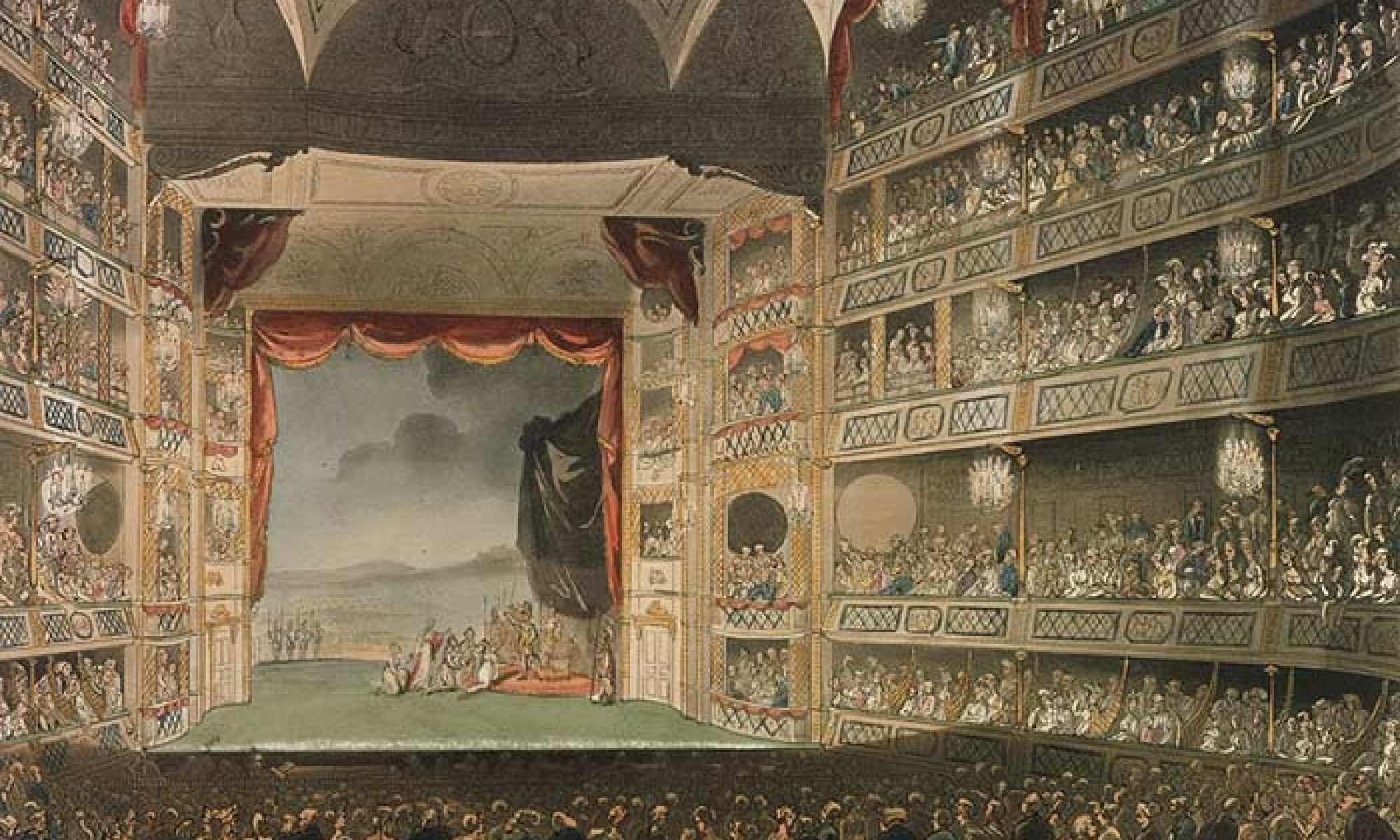
Colley Cibber was one third of the shareholders, and a theatre manager, at Drury Lane Theatre, allowing the opportunity for Theophilus to join the company at age 17. From there, he had a very successful acting career; claiming to have performed 160 characters – but he was most noted for his performance of Pistol in Henry IV.
Despite being renowned for having a hot-headed temper and a certain arrogance about him, his seniors recognised the management talent that Cibber had and, at age 19, he ran Drury Lane’s summer season; in which he introduced dozens of new plays to the theatre, including his own adaptation of Shakespeare’s Henry VI. After the success of his debut management season, Cibber ran the summer season for 12 years, with his most successful introduction, The London Merchant, outliving him in notability.
In May 1725 he married his first wife, Jane Johnson, an actress in the Drury Lane Company. It is reported that their marriage was not a smooth one: although Jane remained faithful to her husband through their years of marriage, the same cannot be said for Theophilus, who was a serial adulterer. They had a period of separation in 1730 and, upon reconciliation, Cibber penned a play titled The Lover. According to the London Stage Database, it ran for 8 performances at the Drury Lane Theatre between 20th – 29th January 1731 and was revived for only one more performance in April 1731. The pair had four children together, Colley George, Catherine, Jane, and Elizabeth. Jane senior died shortly after Elizabeth’s birth, leaving the two surviving Cibber children, Jane and Elizabeth, to be raised by Colley Cibber.
Meanwhile, Theophilus Cibber’s attitude at Drury Lane had caused disruptions and the principal patentee, John Highmore, banned him from any management role. Cibber left the theatre for a year, until Highmore claimed bankruptcy and the theatre changed hands, welcoming Cibber back for a six-year run in management once again.
Theophilus claimed he would never look at another woman again after the death of Jane, but two years after her passing, he married another actress – Susannah Maria Arne – in April 1734. Cibber’s second marriage was even more turbulent than his first and was shrouded in scandal. After discovering he would inherit none of Susannah’s personal wealth, Cibber began stealing from his wife, withdrawing her wages directly from Drury Lane Theatre and selling her belongings to make a profit.
To further these profits, Theophilus and Susannah opened their marriage to what in modern terms would be labelled a ‘throuple’ for financial gain from the third party. Susannah left Theophilus for said ‘third party’- a man named Sloper.
After many scandalous events, and numerous lawsuits following Cibber’s stealing, Theophilus and Susannah’s separation was finalised. This had repercussions for Cibber as he was forced to leave Drury Lane in 1739, he was barred from performing in any theatre where Susannah was working, and he began to lose popularity in the theatrical trade. Distaste for his outdated acting style was demonstrated when his Lord Foppington was pelted by rotten fruit and rubbish during a performance of The Relapse.
Cibber struggled to find theatrical employment, so instead rented the Little Theatre in Hay-Market and set up his own acting academy. This was later discovered as a ruse for him to perform a version of Romeo and Juliet, with himself – questionably – playing Romeo opposite his fourteen-year-old daughter as Juliet. It was not long before the Lord Chamberlain revoked Cibber’s licence to perform, and his ‘academy’ closed.
Cibber’s employment struggles continued until Thomas Sheridan offered him a role at the Smock Alley Theatre in Dublin, which was accepted. Unfortunately, Cibber never made it to Ireland as the ship he was travelling on was shipwrecked in a storm.
Theophilus Cibber died at sea in October 1758. He lived for, and died by, the theatre.
CIBBER AND A WIFE TO BE LETT
In our play, Cibber plays the role of Toywell, as well as performing the prologue. A Wife to be Lett was first performed in the summer season of 1722-1723 – one of Cibber’s management years; so, it is very likely that he introduced this play to audiences, and indeed to Drury Lane Theatre. It is also interesting to note that, in this run of A Wife to be Lett, the afterpiece was an adaptation of Apollo and Daphne by Cibber. His influence on the night’s entertainment is therefore precisely controlled not only by his management role, but by placing an element of himself at the beginning of the night in the prologue, at the middle in the main piece as Toywell, and at the end in his adaptation of the afterpiece.
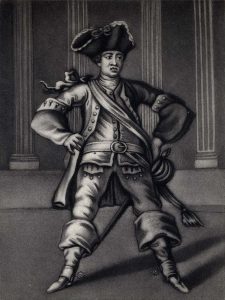
Cibber was known for playing the line of a fop, so his casting as Toywell would have been an expected character for him, and one that he would perform successfully – we would hope. However, sources note that Theophilus was ‘not physically prepossessing’ and ‘less than average height’, which are the physical attributes you would associate with the ‘fop’.
As a character, Toywell is particularly dislikeable. He is arrogant, rude, self-obsessed, and over-obsessed with the women in the play – especially Mrs. Graspall who, rightfully, firmly rejects all of his advances. His status in the patriarchal society leads him to think he can treat women like an object that he is entitled to, which is what I believe makes Toywell so insufferable – not only to the 18th-century audience, but to contemporary audiences too. For more information on how Cibber’s Toywell is situated in the play and his relationships with other characters, check out the play’s plot summary here.
It is also documented that Cibber had great comic sense and a good understanding of comic timing, lending himself further to the role of Toywell. Throughout the play, the comic balance with other characters, and therefore players, is crucial to the flow of the narrative and the drive to entertain audiences. A closer look at a particular scene that brings the question of comic superiority to the fore can be found here.
Although Cibber played Toywell in A Wife to be Lett, the actual plot of the play strangely prefigures his personal life. During his financial struggles, Cibber ‘let’ out Susannah, just like Mr. Graspall does with Mrs. Graspall – making the real-life Sir Harry Beaumont, Sloper. This bizarre prefiguring is an example of life imitating art – only confirming that Cibber’s life revolved around the theatre, knowingly or not.