CMA appeal rulings show regulation of electricity market is changing for the better

Professor Phil Taylor, Director of the Newcastle University Institute for Sustainability, considers the impact of the recent ruling by the Competition and Markets Authority (CMA) on the Northern Powergrid appeal against Ofgem’s 2015-2023 electricity distribution price control. 

A new era of regulation has dawned in the energy market, following the recent CMA ruling on appeals against Ofgem’s recent price controls. The Northern Powergrid appeal is the first time a distribution network operator has appealed a judgement by Ofgem, and the CMA ruling is hugely significant. From now on, network operators and suppliers will feel more able to challenge the regulator to justify its decisions and demonstrate a strong evidence base for the approach it takes.

What is more, the judgement also demonstrates the need for a technically competent regulator. The ground for complaint that was upheld by the CMA, relates to Ofgem’s calculations of the potential savings available to Northern Powergrid and other distribution network operators through the use of smart grids and other technological innovations. At present, this remains something that is not well understood outside academia.

Continue reading

Similar to the MDGs, the Sustainable Development Goals are at risk of becoming political toys

Darren Shako

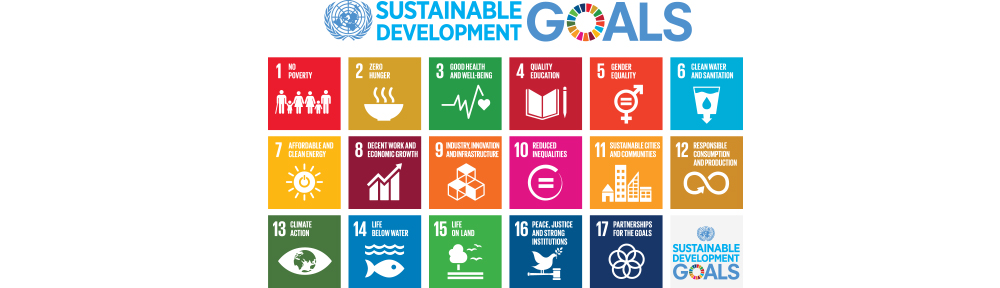
The SDGs should require governments to firmly outline their targeted standards, and create policies that will inform potential funding for development. This would be necessary for not only ending world poverty (Goal 1), but ensuring the respective goals are reflected in the improvement services on the ground. This includes securing availability and sustainable management of water and sanitation for all (Goal 6), which is necessary for good public health (Goal 3).

Part of a blog series from Newcastle University Societal Challenge Theme Institutes giving recommendations for targets and indicators of the UN Sustainable Development Goals.

Continue reading

Reducing inequality…in national wealth

Andrew Walton

In the current proposal for the Sustainable Development Goals, Goal 10 states the aim to ‘reduce inequality within and among countries’.  For many (good) reasons, much articulation of this goal has focused on its first component – reducing inequality between co-citizens within countries.  But it is important also to consider what should be the appropriate target for the second component.  What should be our aim and measure in reducing inequality amongst countries? My suggestion is to lessen the gap in per capita national wealth – the value of each country’s financial and physical assets.

Download policy brief on these SDGs: What does it mean to reduce inequality between countries

Part of a blog series from Newcastle University Societal Challenge Theme Institutes giving recommendations for targets and indicators of the UN Sustainable Development Goals.

Continue reading

SDGs need to align with global policies for biodiversity

Philip McGowan

Goal 15 requires the protection of the terrestrial environment by stopping the deterioration of biodiversity, using resources wisely and restoring ecosystems where needed. Goal 14 has similar requirements for the oceans. These join a plethora of global commitments and processes intended to promote conservation and ensure a sustainable environment, and lessons suggest that they are hard to address. To avoid the SDGs becoming just another set of commitments to be met, clever thinking would help chart the course for policies and action to fill a range of these commitments and lead to genuine protection for our planet.

Download policy brief on these SDGs: Aligning the SDGs with global policies for biodiversity

Part of a blog series from Newcastle University Societal Challenge Theme Institutes giving recommendations for targets and indicators of the UN Sustainable Development Goals.

Continue reading

A healthy diet for sustainable development

Wendy Wrieden

The United Nations proposed Sustainable Development Goals include ending hunger, improved nutrition and sustainable agriculture (Goal 2), healthy lives and well-being (Goal 3) and sustainable consumption and production patterns (Goal 12).  To achieve these goals we need to move towards a diet that is adequate, healthy and sustainable for all.

Part of a blog series from Newcastle University Societal Challenge Theme Institutes giving recommendations for targets and indicators of the UN Sustainable Development Goals.

Continue reading

Universal access to water is about democracy

José Esteban Castro

Goal 6 is on ensuring ‘availability and sustainable management of water and sanitation for all’. This is in line with the notion that access to water is a human right, which was approved in resolutions by the UN General Assembly and UN Human Rights Council in 2010. Ensuring that access to water and sanitation is provided for all is not merely a question of technical accessibility, but about democratic politics. However, if this is to be achieved, especially in the developing world, we need to critically examine the dominant international trends that treat water as a commodity as this is a major impediment for achieving Goal 6.

Download policy brief on these SDGs: Creating universal access to clean water and sanitation is about democracy and human rights

Part of a blog series from Newcastle University Societal Challenge Theme Institutes giving recommendations for targets and indicators of the UN Sustainable Development Goals. This post is also available in Spanish.

Continue reading