Tag Archives: Digital archives

OHD_BLG_0042 What do you mean not digital?

Whenever I mention my ideas for analogue archiving solutions to anyone the reaction I get is a blank stare shifty follow by a change in subject. When I was venting about this recurring experience to my mother, she did not seem surprised; “what do you except people see the digital as the future?” She is correct this is what people believe but the ‘future’ is a rather nebulous concept and it is important to manage expectations – how far is the ‘future’? If you take what is written in The shock of the old: technology and global history since 1900 then you will quickly understand how far off we are from the future and how slow technology actually moves. The writer approaches the history of technology not through the lens of innovation but from use – a use-based history of technology. This quickly reveals the pace at which humanity really adopts technology through examples like horses being more important in Nazi Germany’s advances than the V2 and the fact that we have never used as much coal as now. We are slow at technology, which is fine but we need to be aware of it. The digital divide is a real thing and it needs to be considered. Note that the digital divide is not across generational lines, yes older people cannot use TikTok, but I have seen children struggle to use a keyboard and a mouse because they are so used to touch screens. The digital divide also means that there is an exclusive group of people who do know how to use this tech and they are in high demand, to the extend that there is little incentive for workers to lend their services to the GLAM sector. Why would you work for less money in a library when you can earn a hundred times more somewhere else. Heritage sites and the wider GLAM sector can in many instance not afford to develop their own technologies mostly because they are unable to maintain them. But they also sometimes struggle to update their bought in systems because moving all their data on their collection round is too much work and effort. And in some cases the software producers are aware of this and shut down the feedback loop because they know their customers can’t leave them. To summaries saying “digital is the future” is an unproductive lie that we tell ourselves to make us feel better and trendy.

Here comes my suggestion otherwise we would be left hanging in a rather sad place. The National Trust is undoubtedly a large organisation and they already run several digital platforms which they have their own maintenance team for. What I suggest is that if people want to create cool snazzy digital interfaces they have to do this at Trust, because the Trust already have the infrastructure in place (to certain extent) to cope with the difficulties of running a digital system. E.G. https://www.rijksmuseum.nl/en/rijksstudio On individual site level however digital platforms cannot be made or maintain and the only option in my eyes is to either to keep it analogue (better for the environment) or DIY digital. By DIY digital I mean word docs and spreadsheets and softwares that are a little more accessible to a wider group of people. These option are more accessible and more maintainable but they are less sexy. When it comes to working with digital you have to know your limits and the people around you and the people who will come after you. It is not exciting but it might just solve your problem.

OHD_BLG_0052 It’s all about the cleaners

I always get frustrated when I clean my fridge. There are so many little ridges that stuff gets into. I even have to have the door of my fridge open a certain way, which is not logical in the day-to-day of opening it but is the only way I can make sure that I am able to take out the shelves to clean them properly. This is an example of people designing a product without thinking about maintenance. The designers were not thinking about the cleaners they were thinking about the users. In a capitalistic and consumer driven world this is not surprising. We want to sell products to the users and cleaners are not important. Cleaning is after all a women’s job and who gives a shit about them. However cleaners are extremely powerful. If cleaners go on strike you have a big problem.

Waste disposal strike during the winter of discontent

However, cleaners do not generally go on strike. They are often women, who are most likely from a minority background and need the money. Striking is a privilege.

But cleaners are extremely powerful and this is proven by the new types of cleaners and maintenance workers. The computer guys. The IT department. The software developers. However unlike domestic cleaners our digital cleaners are mostly privilege educated men. This in combination with the fact the we view digital as our new god, means that we view these new, digital cleaners in a very different light. These types of digital cleaners are a luxury. Don’t get me wrong being able to employ a cleaner to clean your house is also extremely privileged, but this is a whole new level.

Now some might point out that the digital cleaners need way more training but then I would invite them to clean a university building. To be able to clean fast and well, while simultaneously being completely ignored by your fellow humans and having to deal with the disgusting things that come out of these humans, you need to be really good and have a lot of experience. The most elite cleaners, those who work in very fancy hotels, have to under go extreme training. They are different jobs but one is not harder than the other and the difference in pay a shameful.

But what does this have to do with archives, because that is what I am normally talking about. Well, in this article by archivist Charlie Morgan he talks about Mierle Laderman Ukeles’ Manifesto for Maintenance Art 1969!, which is one of my favourite art pieces. With her work Ukeles brings to light the people to who have to maintain the work after it has been created. Morgan writes that as a society we are focused on creation and under value maintenance (not surprising as this is either done by women, or the working class.) This focus has led everyone including archives to become obsessed with collection. GIMME ALL THE STUFF! This is like my fridge completely ignores the maintenance staff. How are we going to look after all this? WHO CARES I WANT IT!

Not helpful. Especially when people are handling sensitive informative which many archives do (so does most of Silicone Valley, but that’s another issue.)

My work is about getting people to reuse oral history, to give purpose to the storing of recordings, but I must NEVER forget about the cleaners. I cannot design any thing extremely complicated because most archives cannot afford the luxury digital cleaners. They have to do all the cleaning themselves. Heck, I was talking to an archivist who said the they currently were not doing any archiving they were doing building maintenance. Archiving is not the job you think it is. Archiving is cleaning. Cleaning up the world’s information.

OHD_BLG_0065 New words among other things

Readings:

Community archives and the health of the internet by Andrew Prescott

Steering Clear of the Rocks: A Look at the Current State of Oral History Ethics in the Digital Age by Mary Larson


Sometimes I feel like we are in the trenches with our machine guns and old military tactics…

This ain’t for you

People live their lives in very specific ways. They have certain rituals and values that they hold very close to their hearts. However it is very unlikely that everyone else in the world has the same approach to life as you do. Some people do not use the right tea towel in my opinion, some people think it is perfectly fine to wear socks in sandals, and some people a zero problems with eating meat everyday. In the case of Prescott’s paper on community archives/Facebook groups we have an academic freaking out because a community is not archiving properly something which he considers to be a great sin, and yes, in a certain way it is a great shame that a community archive is not sustainable because of the platform used or the limited funding. This is especially the case when you come from an oral history angle where one really wants to preserve the voices of those who current fall outside of history. However, maybe we need to remove the academic lens in these situations, maybe these archives just aren’t for you. They have a different, more temporary, function to bring people together over a shared history. They are about sharing history not preserving history like archives do.

This is where I think I (as an academic 🤢) feel that my role is not to impose my beliefs onto these make-do archives but instead build better tools to support them. A community archive on Facebook is a different beast to the university backed oral history project. Truly it is a shame that this knowledge might go missing, but then I suggest that we get more minorities to work in academia rather than dictate what we think they should do.

It’s a power thing.

Anonymity is anti-oral history ?

…, anonymity is antithetical to the goals of oral history if there are no exacerbating risk factors.

Mary Larson

Anonymity, accountability, freedom of speech, privacy, welcome to the 21st century. There is the opinion within the field of oral history that anonymity is against the principles of oral history. This is mostly because oral history demands a high level of context in its reuse, which makes complete sense. However does that mean that all information should be available? Is it impossible to have different levels of anonymity?

It seems odd that currently when it comes to privacy we have to work in such absolutes. You can get a certain level of privacy on the internet but that often requires lots of digging around and downloading plugins that send out white noise. You basically have to spend time fending off those who run the platforms you use, which when put in a AFK context would be the equivalent of the shop keeper pickpocketing you while you were shopping. Currently privacy and anonymity equals not using either the internet or archives, which defeats the point.

Why is this our only option?

Well, in my opinion it is not. We just need to get a bit more creative for example:

  • Use pseudonyms
  • Use other identifiers e.g. White, young adult, middle class, female (that’s me)
  • Use identifiers + 𝓲𝓶𝓪𝓰𝓲𝓷𝓪𝓽𝓲𝓸𝓷. There are loads of researchers who have to use their imagination because history has not been good at recording their subject
  • Only allow access to certain information if you either visit the BAM archive or ask for permission
  • Generally encourage more thorough and ethical reuse and research

New words

To elaborate on that last point we currently approach the ethics around archiving from the donating angle; if everything is correctly archived now there will definitely be no more problems in the future. This attitude I do not find very sustainable because attitudes towards ethics change all the time. So instead I purpose a different angle: ethical reuse of archival material lies predominantly with the reuser not the donator. This is where I would also like to insert the ‘new’ words. Instead of using the terms ethical and ethics we instead use responsibility and care, because the former is so slippery so ‘high-level’ thinking that it loses its meaning while the latter are more human words. Responsibility and care are concepts that you teach your children. They are more instinctive. So what I wish for is more care and responsibility from those who reuse oral histories. I want the reuser to remember the human-ness of the archive and the responsibility they have to care for their other humans.

NOTE: this is why I love the idea of archival ghosts so much because it gives the oral histories a face.

OHD_BLG_0074 Archival Discoveries and Discussions – 25/02/21

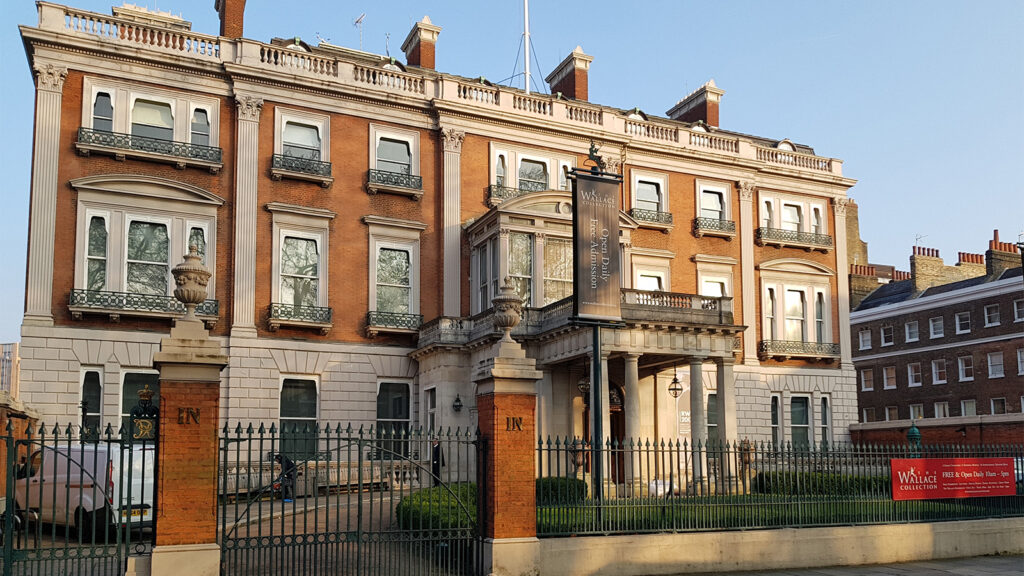
People mentioned the Wallace Collections recent archival antics

I zoomed into a “workshop” with PGR and professional archiving people. I say “workshop” with speech marks because people are becoming very liberal with this word. Workshops produce outcomes and involve interactions, presentations and panels do not do this. Stop using this word. Anyway it was very interesting and helpful because I could actually talk to people using archives and archivist. So with further ado lets get reviewing…

One of the big issues currently is that people cannot get into archives, this happens at different levels. Some researchers have access to digital archives, but then they can’t read the photos, some only have access to the catalogue and some have zero access. This is due to the fact that all archives work in different ways and many are at different levels of digitisation. This can be due to money but also different laws and regulations of the country the archive is situated in. This limited or complete lack of access is very annoying if you are doing a PhD that only has a certain amount of funding. Over the various Zooms I have part taken in I see that it causes a lot of frustration but I have also observed that people are getting more creative in the ways they get hold of documents. For example one person mentioned that eBay is a great source of archival images. Another person mentioned that they had started to use their network to gain access to artefacts. They were doing a project that involved using German archives, which turns out are not good when it comes to digitising, so they got people they know to send them photographs. This was not the first someone had told me about this. It seems that in some cases it is better to rely on humans to find stuff in the archives than computers. Which brings me to my point:

STOP REPLACING PEOPLE WITH ROBOTS

I asked a question to the PGR panel about what they thought about digital archives verses the physical archive (aka Brick and Mortar Archives). They gave some great answers around missing the materiality of documents, how you lose the serendipity of archiving in digital archives and how online catalogues do help setting up before going into a brick and mortar archive. They also mentioned the common problem of tags and keyword searches not being good enough. One of the archivists that works in the University of Nottingham archives responded to this by saying that people should always ask the archivists what they are looking because they know the archive. This in combination with the people using their networks in order to access archives got me thinking that our drive to digitisation in archives is having the same effect as it is having in different places. It is replacing people with computers that definitely cannot do the job in the same way. For example I have a dislike for the self check outs because it clearly does not work as well as a human cashier, which is evident by the staff member who has to stand next to the machine.

Do not get me wrong I am not against digitisation nor do I believe that archivists’ current job outline does not need updating. But I believe that relying heavily on digitisation will not solve our archive problem nor will employing more of the same archivists. We need something in between. Something that has the similar flavour to people using their international network to send archives across borders, which would not be possible without both technology and humans.

OK second note…

As I am currently exploring a lot right now the existence of an archive also creates the ‘existence’ of histories lost. What was interesting about this panel is that the majority were doing work with minority histories BAME and LGBTQ+ etc. Because of this many of them talked extensively about how they managed and handled the gaps that are found in archives that represent the neglected histories. One person talked about counter-reading which is the method on examining the gaps in an archive, the reasons these gaps might exist and then combining this with the contextual knowledge in order to create a history.

One of the speakers was using social media as an alternative archive and I asked her how she felt about the ethics of having an archive on a social media:

We continued the conversation and started to talk about the principle of counter archives; archives that are created by those not represented in brick and mortar archives, often using a more DIY attitude. By DIY attitude I mean only using the resources you have access to, so in many contemporary cases this means they do end up only.

I believe that further investigation into these counter archives and methods like counter reading could hold some interesting ideas on how we might approach the SDH archive.

OHD_BLG_0076 ʇǝɹɔǝs ʞɹɐp ǝɥʇ

In Frisch’s ‘Three dimensions and more’ he discusses the idea of the deep dark secret of oral history being like the unopened shoe box of homemade videos – unwatched. After digesting this idea for the last two years I suddenly realised something. Oral history as a field exists because of technological advancements. The field is completely intertwine with technology: the recording devices used to make the first recordings, the internet now allowing for international zoom interviews, it all depends on technology. This made me think that maybe the deep dark secret is not an oral history problem but in fact a technology problem. It’s not oral history’s fault that much of technology is not particularly focused on sustainable storage. There is focus on speedy communication; phones, text messages, social media and trading; online shopping and targeted advertising. Even accessing knowledge (aka googling) is not based on accuracy but more speed and attention.

Digital storage is a minefield from ‘things that exist on the internet forever’ to link rot and from the now unreadable mini-disc to hard drives that can store two terabytes of data. It is so extreme that it is clear that no has really thought about beyond uploading it. Technology, like many things in capitalist society live solely in the present, so the way it views time extremely 2-dimensional. There is no thought about how this attitude towards storage affects the past or the future. The amount of time and money that is required to keep archives up to date with their digitisation is not covered by the amount of money and time archives actually have. Beyond the archive our day to day interaction and documentation has an unknown future. What are your next of kin going to do with your Facebook page when you die? Or your instagram? Your Snapchat? Your emails? Your iCloud? Your laptop, smart phone, hard drivers and tablets? Currently it is likely that it will either disappear or be inaccessible.

The way we store our data in this blasé way has the potential to create a black hole of information in the timeline of human history. This attitude is completely inefficient when it comes to accessing and reusing. Unless of course you are Facebook, Google or Apple. These mega gods of information are able to mine astronomical amounts of data and use it. But in order to use it they strip every single bit of humanity from the process. The only way to use the truly insane amounts of data is by reducing the human producer so much that literally become zeros and ones. No feelings, no aura, just nothing. Oral history cannot do this because oral history is fundamentally human. Just like home videos that are filled with nostalgia and memory, they take time to watch or listen to because there is so much emotion and memory that needs to be digested while viewing. But the data that is used by big tech is void of this emotion.

In conclusion, due to oral history’s long term yet slightly abusive relationship with technology it has got this deep dark secret of unused archives. But in truth technology does not support what archives are trying to do. The creators of this technology just do not give a shit because that’s the nature of the capitalistic beast. I suggest therefore that we take a reverse attitude towards this relationship. Oral history needs to inform tech what they need in order to make archives work better because clearly tech has no idea what it is doing.

OHD_BLG_0081 The History of Ideas:

An Introduction to the United Nations Intellectual History Project

by Louis Emmerij

First published in 2005 this article briefly explains the United Nations Intellectual History Project which involved documenting the history of ideas at the UN through archival work and oral history.

The project took a broad approach to ideas looking to “explain the origins of ideas; trace their trajectories within the institutions, scholarship, or discourse; and, in some cases, certainly in ours, evaluate the impact of ideas on policy and action.” I find this great because what they have done is explore the process of ideas instead of just the final idea. In this project they put value on process because as they say “ideas are rarely totally new. They do not come out of the blue.”

Absolutely 10 out of out 10 on the project front however this project, like many, stumbles over the archive. The UN archives sound like a total mess which is not surprising but simultaneously terrifying. And considering they claimed this project to be about “forward-looking history” their outputs were a series of books and 75 oral history testimonies which are meant to be found at www.unhistory.org (which as you might have guessed does not work).

OHD_BLG_0102 DIGITAL FORAYS: ARCHIVES & ACTIVATION // ARTISTS AND ACCESS

with Asunción Molinos Gordo (Artist), Mohammad Shawky Hassan (Artist), Diana Allan (McGill University), & Discussant Helga Tawil-Souri (NYU).
In partnership with ArteEast & the Arab American National Museum)
15/10/20

At the start of the talk someone mentioned that they missed the mingling after a talks. Like the coffee houses Steven Johnson talks about.

Then I thought about whether it would be interesting to map these post talk chats by mic-ing people up and tracking their movements and interactions. \

Re-mixing

Just like the previous talk this was mainly about archival work concerning the middle east. Because of this everything (understandably) is coated in this layer of reclaiming ones history. This in combination with artists leads to a re-mixing of archives, putting a new lens on it. In some circumstances this means creating a whole new story. Using bits from the archive and remixing them to such a degree that a (maybe not completely factual) story is created. However the factual accuracy of the story does not really matter. These works are made in the freedom of the artistic space and their main aim is to become some thing that stands against the state archive and tell the story of a minority.

In one particular case during the talk the person was using archive footage from the British Library that had such strict copyright laws that she had to do extensive manipulation in order to even be able to make a film. This brought a lot of frustration since the footage is British colonial propaganda.

This re-mixing and manipulating of state archives in order to create something for a minority reminded me of the streetwear exhibition that I went to in Rotterdam. I see parallels between the practice of mixing and matching clothing the belonged to an elite with tracksuits and sportswear (among other things) order to create this own culture and what these artists create using archival footage. (Especially when you look at issues of copyright.)

In addition to streetwear the discussant Helga Tawil-Souri brought up Dada and how they used collage in order to make sense of a world increasingly filled with information. What the Dada-ist would have made of this age I do not know.

The “dead” .v. “alive”

There was a lot of discussion around resolute-ness of archiving something. By archiving something are you saying that it’s over? Then when do you start archiving a revolution? And when you archive something are you then also “creating” things to not be archived? Is it dead when you archive something? Should it be dead? Do we kill it when we archive it? Does an archive work best when it is alive? When the stories live in the people? Does an archive need a community? Even if they are subject to legend and myth? Why do consider an object truth when some one still has to label the object?

Decentralised Archives

The questions asked in “dead” .v. “alive” are nearly all subject to power structures. Whoever is in charge of the archive can allow new stories to be created or they can kill it, keeping it in its hibernated state. Like copyright. After all “history is written by the winners”.

But how do we break down these power structures?

A lot of people are using social media and other digital platforms but as we slowly realising now that just moves the power over the archive from the state to unelected billionaires (not ideal).

Diana Allan mentioned the idea of exiled archives. Archives created by refugees and those that move around the globe. This might allow the creation of archives that aren’t chained to any state. However this then brings up the issue with copyright and privacy.

Obviously the artists taking part in this talk also challenge the power structures by remixing. But the archives need to be open to this happening. Maybe having regular artist in residence.

OHD_BLG_0107 DIGITAL FORAYS: ARCHIVES & ACTIVATION // PLATFORMS AND PUBLICS

With Kristine Khouri (Arab Image Foundation), Yazan Kopty (Imagining the Holy), Sana Yazigi (Creative Memory of the Syrian Revolution) & Discussant Laila Shereen Sakr (UCSB). 08/10/20

This talk was recommend to me by Joe because he is on the mailing list for talks at NYU. He joined me for the zoom (obviously it had to be a zoom).

The talk was interesting and generally it was nice to attend a talk again even though it was in my living room. Many different topics were discussed but there was less discussion around digital archives and the consequences of digitising. This was a little disappointing although not surprising, because as you often get with talks the speakers will always bring the conversation to their research. And who can blame them, we all suffer from ‘the researcher’s lens’ where you view the world completely through what you are thinking about. However, during this talk it meant less talking about the digital and more talking about post colonialism and decolonising archives, which is still very interesting. And not surprising as the talk was organised by middle eastern studies at NYU.

Anyway what follows is some of the things I picked up on during the talk.

Archive as collateral

Something that was briefly brought up in the talk was the idea of a collateral archive. In other words, an archive that exist because at the end of a project you realised that you had enough stuff to make an archive. If you take this term in its broadest sense everyone has a collateral archive: diaries, planners, notes, shopping lists etc. All of these can make up an archive of your life. The same can be said for any project. If we take the Hand Of school summer project, NTSW then you could very easily create an archive from the kids sketchbooks to the notes of the planning meetings. Every thing can be archived. 

But there are some questions to be asked, one: should it archive in the first place, and two, if so how should it be archived? Now the first question is a big one and one I will probably revisit several times. The second question was triggered because in the talk one of the speakers had set up a completely new archive because they looked at all the stuff they had collected for their project and decided that they might as well make a archive, hence collateral archive. So should they have made a completely new archive? Or should they have added to an existing one? Or should have created it but then have it live in a network of other collateral archives?

Another big question is whether people should think about their collateral archive before they start a project or after? Should there be a software that allows for easy archiving as a project progresses? I guess it is often the case that you don’t know what you are going to collect until it has been collected. But then again the internet has led to an increase in document production, so maybe we need to start preparing more for an influx of stuff in order to avoid a desktop soup of documents.

The ‘home’ of History

As I previously said the talk was arranged by the school of middle eastern studies, hence the steering of the conversation towards decolonisation. Unsurprisingly the topic of where documents should be stored came up. This was mostly concerning Yazan Kopfy work on Palestine. He is working on gaining more information on photos of Palestine that are stored in the national geographic archive (one hell of a collateral archive by the way, as they were not initially stored there for archiving proposes but as leftover stuff from articles. Which they were thinking of throwing away somewhere in the 1980s as a clearing out exercise.) Many of these photos only state who took the photo and not who is in the picture or any wider cultural information. So he has started to flesh out this information. What was interesting was his comment that people outside of Palestine view it as the holy land when in Palestine it is first and foremost viewed as home. So where do you store photographs taken through the (literal) lens of a coloniser? And how does this work in the digital context? Because even if there is a digital copy there is also a physical copy somewhere.

EXTRA NOTE: this is also where Joe mentioned ‘Nice White Parents’ and how this might be another case where diversity and decolonising is in fact benefiting the white-western academic world more than the people of Palestine.

The Scale of the Digital

There were three main speakers Kristine Khouri, Yazan Kopfy and Sana Yazigi. All three had a very different approach to digital archiving.

On side of the scale I am going to put Khouri, whose project was ‘Past Disquiet’, which she described to be like a website in an exhibition space. She seemed to be slightly fearful of algorithms and digital space. On the other end of the scale Kopfy, who used instagram to collect information on his pictures. Interestingly he struggled to get information on images from the 1920s and 30s, but got lots on photos from the 1970s. I feel this really shows the age of instagram users. And in the middle of the scale I will place Yazigi, who created the Creative Memory of the Syrian Revolution, a rather epic website, which is kept update. The only thing I worry about is the actual user friendliness of it.

To me this wide range of approaches to the digital is typical of our time. There are those who embrace it and those who are fearful of it. Either way there are questions to be asked around big data, data rot and the environment. Because all these digital things are stored on servers which use a lot of energy. Sadly this was not fully disgusted which I do wish they had done.

Hauntings

Nearer to the end of the talk Kristine Khouri started talking about hauntings in the archive. An idea that Joe could get behind if it was art but not necessarily if it was academic. But the idea of ghost and hauntings I do not think is too much of a far fetch idea since going through an archive can be like going through someone’s knicker drawer. I think this is especially true with oral histories because you are listening to the person’s voice. There is a responsibility attached to going through people’s archives. Maybe an increased awareness of people’s presence when researching will deliver a more ethical research or an awareness of their intentions or maybe even warnings about the future.