By Dr. Yashvee Dunneram
Food has always played a big role in my life. Growing up, I had a close relationship with it — I enjoyed exploring new flavours, helping in the kitchen, and discovering how small changes in preparation could completely transform a meal. As a teenager, I began experimenting in the kitchen myself, and my curiosity quickly evolved into a passion.
Choosing Food and Nutrition at A-level felt like a natural step, followed by a degree in Nutritional Sciences. Throughout my early studies, I was fascinated by the science behind food — how cooking transforms nutrients, how dietary needs evolve throughout life, and how what we eat can influence our health over time. Cooking for me has never just been about taste; it’s about understanding what lies behind every meal.
That curiosity led me to research the complex relationship between diet and cancer risk and survival — a topic that continues to inspire me every day. Diet might seem simple, but it’s one of the most powerful, modifiable factors influencing our long-term health.
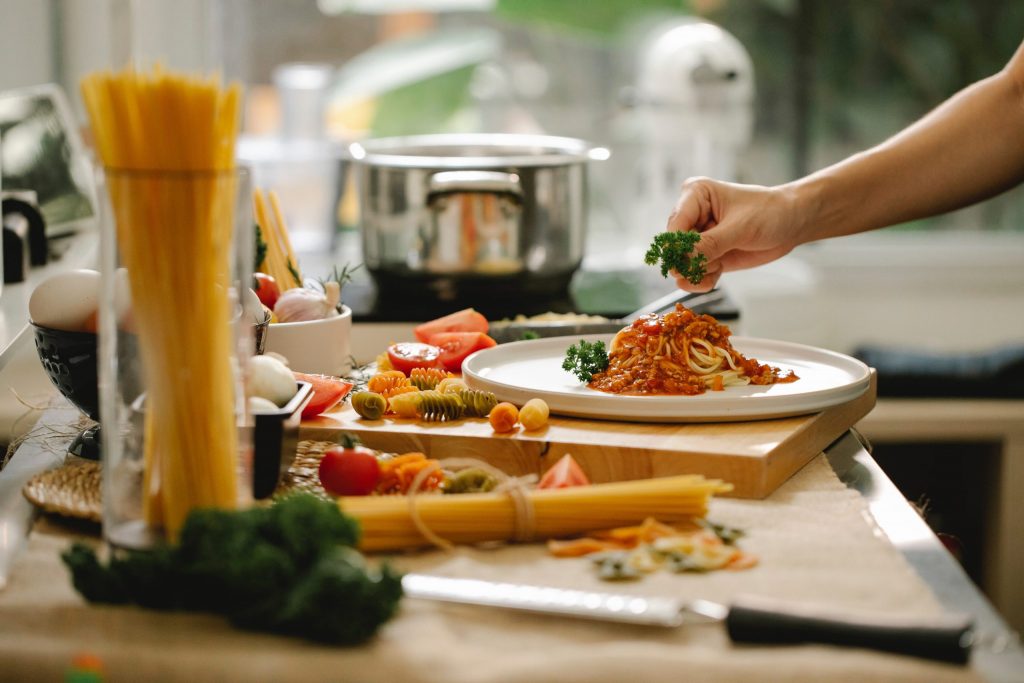
Exploring diet and cancer risk
During my time at the University of Oxford as a postdoctoral epidemiologist, I worked on large-scale collaborative studies exploring diet and cancer risk, including the Vegetarian Pooling Project. This international collaboration brings together data from more than two million participants across multiple cohorts worldwide to explore how different dietary patterns — such as vegetarian, pescatarian, and meat-eating — relate to site-specific cancer risk.
Our first publication from this work focused on sociodemographic, lifestyle, and health characteristics of participants with different diet groups across the participating cohorts.1 The study highlighted substantial variation between diet groups, underlining the importance of considering these factors when examining links between diet and disease. A second paper, examining diet and cancer risk, is currently under review.
Earlier in my career, I also examined the associations between specific foods and the risk of breast, endometrial, and ovarian cancers in the UK Women’s Cohort Study. The research found that higher intakes of processed and total meat were linked with increased cancer risk, while higher intakes of tomatoes and dried fruit were associated with a lower risk.2
My current research at Newcastle
Now, as a Faculty Fellow at Newcastle University, my work focuses on understanding the relationship between diet and colorectal polyps as part of the COLO-COHORT study — an ongoing project aiming to improve the early detection and prevention of colorectal cancer.
Cancer continues to affect millions of people worldwide and can often appear without warning, profoundly impacting individuals and families. This unpredictability reinforces the importance of identifying modifiable factors — such as diet — that could help prevent cancer or improve outcomes after diagnosis.
In recent years, there has also been growing interest in the gut microbiome — the community of microorganisms living in our intestines — and its potential role in cancer development and prevention. What we eat can influence the composition and function of these microbes, which in turn may affect disease risk.
Alongside my current work, I recently co-authored a systematic review examining the relationship between the faecal microbiome and colorectal neoplasia in shotgun metagenomic studies.3 The review highlighted consistent alterations in microbial composition between individuals with colorectal neoplasia and healthy controls, supporting growing evidence that the gut microbiome may play a role in early detection and prevention. This work complements my ongoing research in COLO-COHORT, where we are exploring how dietary factors might interact with the gut microbiome to influence colorectal polyp risk.
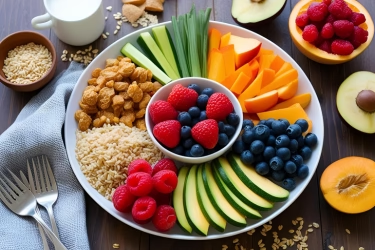
I’m also developing grant and fellowship proposals to further explore how diet might influence colorectal cancer survival, an area that remains under-researched but holds great potential for improving patient outcomes. Through this research, I hope to contribute to clearer, evidence-based guidance on how everyday dietary choices can help prevent cancer or improve outcomes after diagnosis.
Away from my desk
Outside of research, I still find joy in food — especially in trying new recipes and sharing meals with friends and family. It’s my creative outlet and a reminder of why I do what I do: because food connects us all, shapes our health, and continues to fascinate me just as much as it did when I first stepped into a kitchen.
References
- Dunneram, Y. et al. (2024). Methods and participant characteristics in the Cancer Risk in Vegetarians Consortium: a cross-sectional analysis across 11 prospective studies. BMC Public Health, 24(1):2095. https://doi.org/10.1186/s12889-024-19209-y
- Dunneram, Y. et al. (2019). Diet and risk of breast, endometrial and ovarian cancer: UK Women’s Cohort Study. British Journal of Nutrition, 122(5):564-574. https://doi.org/10.1017/S0007114518003665
- Manning, S. et al. (2025). Systematic Review: The Relationship Between the Faecal Microbiome and Colorectal Neoplasia in Shotgun Metagenomic Studies. Alimentary pharmacology & therapeutics, 62(6):568-584. https://doi.org/10.1111/apt.70252