Categories
Uncategorised

What have I learned?: Student reflections of Work Integrated Learning

Sarah Carnegie, Senior Lecturer, Newcastle University Business School

The 40-credit capstone module, BUS3053, Management Consultancy Project is available as an option to students on Business Management, Marketing and Management and Accountancy and Finance undergraduate programmes.  The module can be characterised as an example of work integrated learning (WIL) as it is “embedding learning activities and assessment that involves students in meaningful industry and / or community engagement” (Jackson and Bridgstock, 2021, p.726).  In each academic year the students from these programmes are allocated to small teams, ideally 8 in each team, to engage with an external client.  Each client is assessed by the School as having a suitable business issue or problem for the students to tackle and therefore provides an authentic, live work experience (Dollinger and Brown, 2019). 

The value of WIL is widely appreciated in existing research with positive outcomes including, supporting student capacity to take responsibility for their work (Caldicott et al., 2022), fostering work values and human capital (Ng et al., 2022), and developing a range of skills such as teamworking, communication and critical thinking (Jackson and Bridgstock, 2021).  Additionally, the importance of developing professional readiness has been noted (Jackson and Bridgstock, 2020, Jackson and Tomlinson, 2022).  Whist definitions of such readiness will vary depending on career direction, it is acknowledged that students require certain common skills, so they can “emerge as professionals; navigate relationships with others; and build their sense of self” (Caldicott at al., 2022, p. 388).

However, are modules such as BUS3053 truly offering opportunities for students to achieve these positive outcomes?  In May 2024 the Institute of Student Employers (ISE) highlighted that the gap between employer expectations and graduate behaviours is widening.  Just under half (49%) of employers reported that graduates were career ready at the point of hire (a decrease from 54% in 2023).  Whilst there may also be an extent to which employers lack understanding of the student experience, concerns about how well students understand what life beyond university will be like and have developed the necessary career skills to navigate this, have been voiced for some time (Bridgstock, 2009).  What impact can such modules have in helping students apply their learning and development of skills in workplace environments?

This module includes a 2-hour ‘celebration and reflection’ event is scheduled for the week following the submission of the outcomes of their group work; the Client Report (40%) and Client Presentation (10%).  This event is designed to encourage active reflection and support the remaining 50% of the module; an individual reflective assignment.  This assignment asks the students to discuss the learning gained from the module.  As Ryan (2013, p.144) states ‘learners are not often taught how to reflect’, so the intention of the event is to provide a relaxed and informal opportunity to think and talk about what they have experienced working on the module.

During the ‘celebration and reflection’ event the students sit with their team colleagues and are provided with roughly divided sheets of flip chart paper and a range of coloured pens, markers and highlighters.  They are asked to draw or comment, however they wish to, in response a series of questions about what they have learnt, with at least 10 – 15 minutes being allowed for chatting and sharing of thoughts.  As Lengelle et al., 2016, p. 106) comment good reflection should be “stimulating a playful, creative process that fosters a sense of fun and competence”.

At the event held in March 2025, students were asked to reflect on various elements of their experience on the module including two specific questions,

  • ‘what skills have I learnt or developed further (during the project)?
  • ‘what have I learnt about being a professional (during the project)?

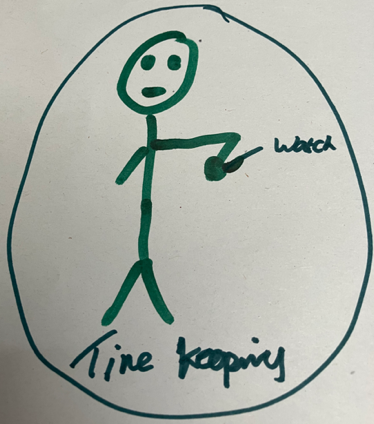
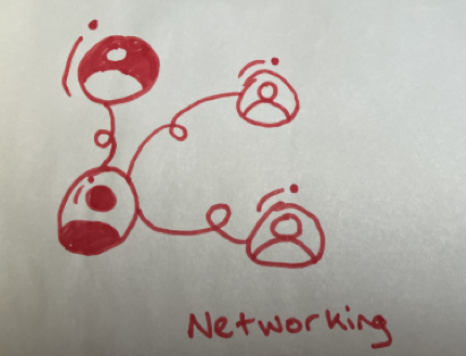
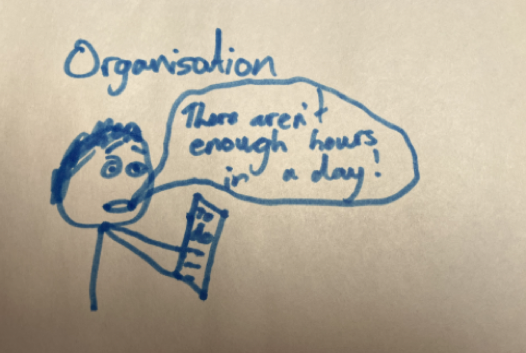
Student self-identified, in pictures or words, particular skills and learning points. 

The results from the 30 students who attended to the question ‘what skills have I learnt or developed further’ were:
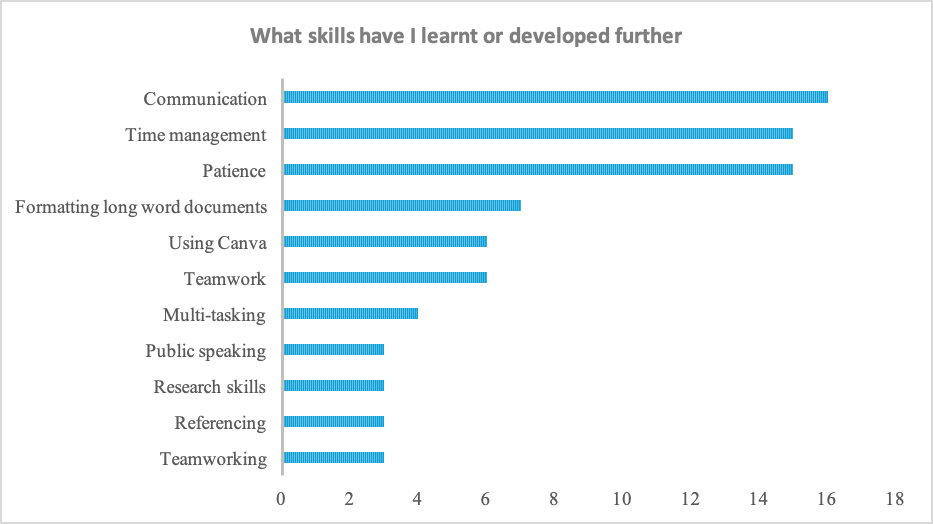
Figure 1 – Skills mentioned more than 2 times

Figure 1 – Skills mentioned more than 2 times

The responses from the 30 students who attended to the question ‘what have I learnt about being a professional’ were more wide-ranging.  The responses have been categorised as follows.

Responses focusing on specific practical skills,

  • Email – 16 mentions related to setting up email signatures, email etiquette, drafting professional emails and learning email ‘dialect’
  • Planning – 6 mentions related to project planning, drafting plans and schedules, and setting up invites for meetings using Teams

Responses focusing on workplace behaviours,

  • Attending meetings – 10 mentions related to being punctual, preparing for and attending meetings

  • Personal attributes – 9 mentions of personal attributes such as taking initiative, resilience, respect for others, leadership and perseverance

  • Managing work – 8 mentions related to delegating, taking responsibility, problem solving and managing deadlines

  • Developing social capital – 4 mentions of networking
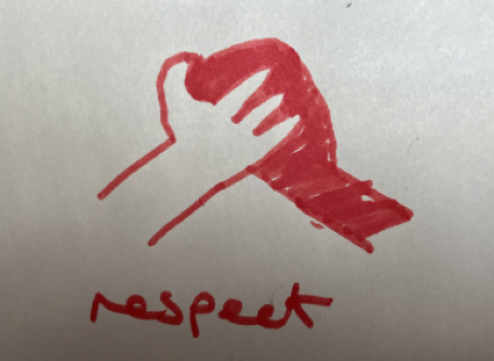
Figure 2 – Student representations of skills and attributes

Figure 2 – Student representations of skills and attributes

The responses provide insights into how the students understand ‘skills’ and ‘being professional’, with both practical functional skills and personal attributes and behaviours being described for both.  It is interesting that ‘patience’ has been reported as one of the main behaviours learnt, ranging to what could be considered an everyday practicality of how to ‘email’, also highlighted by a significant number of the students.

The reflections illustrate that the module is helping students to become career ready in a holistic way.  They can recognise specific skills they have learnt and have gained an awareness of what will be required of them in a professional work environment.  The module provides a relatively ‘safe’ space where they have to quickly learn relevant skills and appropriate professional behaviours to be able to engage with their clients.  However, we can also consider how some of the skills highlighted could be integrated earlier into their learning and assessment, so that some of the more everyday practices could be embedded earlier, so they can focus on developing their deeper workplace interactions with clients with more confidence.

Reference List

Bridgstock, R. (2009) The graduate attributes we’ve overlooked: enhancing graduate employability through career management skills, Higher Education Research & Development, 28:1, 31-44,

Caldicott, J., Wilson, E., Donnelly, J. F., & Edelheim, J. R. (2022). Beyond employability: Work-integrated learning and self-authorship development. International Journal of Work-Integrated Learning, 23(3), 375.

Cunliffe, A.L. (2016) Republication of ‘On Becoming a Critically Reflexive Practitioner’, in Journal of Management Education, Vol 40(6), pp 747 – 768.

Dollinger, M., and Brown, J. (2019). An institutional framework to guide the comparison of work-integrated learning types. Journal of Teaching and Learning for Graduate Employability, 10(1), 88–100.

Institute of Student Employers (2024) Is career readiness in decline?https://ise.org.uk/knowledge/insights/195/is_career_readiness_in_decline Accessed 30/05/25

Jackson, D., and Bridgstock, R. (2021). What actually works to enhance graduate employability? The relative value of curricular, co-curricular, and extra-curricular learning and paid work. Higher Education, 81(4), 723–739.

Jackson, D., and Tomlinson, M. (2022). The relative importance of work experience, extra-curricular and university-based activities on student employability. Higher Education Research and Development, 41(4), 1119–1135.

Lengelle, R., Luken, T. & Meijers, F. (2016) ‘Is self-reflection dangerous? Preventing rumination in career learning’, Australian journal of career development, 25(3), pp. 99–109.

Ng, P.M.L., Wut, T. M., and Chan, J. K. Y. (2022). Enhancing perceived employability through work-integrated learning. Education & Training (London), 64(4), 559–576.

Ryan, M. (2013) The pedagogical balancing act: teaching reflection in higher education, in Teaching in Higher Education, Vol. 18, No. 2, 144-155.

Categories
Uncategorised

Rethinking the Newcastle University Business School (NUBS) Approach to Professional Body Relationships: A Critical Examination of Student Value

Dr Kirk Dodds, Senior Lecturer, Newcastle University Business School

Phil Morey, Senior Lecturer, Newcastle University Business School

Dr Kirsty Munroe, Lecturer in Accounting, Newcastle University Business School

Overview, Context and Literature

Universities often collaborate with professional bodies to secure accreditations for a range of business degrees. While these accreditations and their associated “badges” are valuable for marketing purposes, the potential for such partnerships to contribute long-term value to the curriculum and student experience remains an underexplored area (Johnson & Ulseth, 2017; Izuegbu, 2007).

For instance, our relationship with the Direct Marketing Association (DMA) exemplifies how professional body partnerships can transcend basic accreditation (Pepple et al. 2025). Through initiatives such as professional boot camps, inclusive standards addressing hidden disabilities, exam exemptions, and industry engagement opportunities like judging panels, the DMA collaboration has enriched the student experience in tangible ways.

The significance of this partnership lies in its ability to go beyond the mere acquisition of a badge (Dražeta, 2023). It raises a critical question: How can relationships with professional bodies meaningfully enhance the student experience? This paper explores the transformative impact of such collaborations, offering a critical examination of MSc Digital Marketing students’ perspectives on their engagement with the Data & Marketing Association (DMA).

Methods and Thematic Data Analysis

A focus group was conducted in April 2025 with 12 of our MSc Digital Marketing students, taking part in April 2025. The session followed a semi-structured approach (Ruslin, et al 2022), with themes drawn from existing literature to guide the questions (Ruslin, et al 2022). The focus group lasted 1.5 hours, and the data was analysed using template analysis (King, 1998) to identify key themes from the student perspectives on relationships with professional bodies.

Through thematic analysis, six major themes emerged:

  1. The role of university ranking in student decision-making.
  2. The alignment of professional qualifications with academic degree content.
  3. The value students place on practical learning opportunities provided by professional bodies.
  4. Student desire for more practice-based digital marketing content.
  5. Opportunities for increased face-to-face engagement between students and the professional body.
  6. The importance of assessments being aligned with industry-relevant practices.

Each theme drawn from the focus groups revealed key insights and conclusions:

1. The Role of University Ranking in Student Decision-Making

Contrary to some findings in the literature (Johnson & Ulseth, 2017; Izuegbu, 2007), students indicated that professional body accreditation was not a key factor in their decision-making during university selection. Instead, significant emphasis was placed on university rankings, particularly the league tables and membership in the Russell Group. Most students admitted they were unaware of the professional body at the application stage and only became aware of it after commencing their studies.

2. The Alignment of Professional Qualifications with Academic Degree Content

A small number of students expressed interest in undertaking professional qualifications, noting the transferable benefits after graduation. However, they also highlighted a disconnect between the level of the qualifications (typically Level 4) and their postgraduate degree (Level 7). Half of the focus group stressed the importance of qualifications being aligned with the academic level of their degree, while the other half felt the level itself was less relevant, focusing instead on industry applicability.

3. The Value Students Place on Practical Learning Opportunities Provided by Professional Bodies

Hands-on learning and real-world problem-solving were highly valued by students. They expressed strong interest in applying their knowledge to authentic business contexts, such as running live social media campaigns or analysing and using real data to make marketing decisions.

4. Desire for More Practice-Based Digital Marketing Content

Although university rankings influenced their decision to enrol, students voiced a strong desire for more practical content throughout their studies. While some modules were praised for incorporating practical elements effectively, students felt this was inconsistent across the programme. They suggested clearer signposting of how modules align with the activities and standards of the DMA. Currently, they felt this alignment was disjointed and not clearly integrated into the curriculum.

5. Opportunities for Increased Face-to-Face Engagement with the Professional Body

Students expressed a strong preference for meeting representatives from the professional body in person. Due to resource and scheduling constraints, current engagement primarily includes pre-recorded videos and university tutor updates. While students appreciated these efforts, they strongly preferred live interaction, either through in-person sessions or live webinars, believing this would significantly enhance their experience and connection with the professional body.

6. The Importance of Assessments Being Aligned with Industry-Relevant Practices

Students emphasised that their primary focus during their studies is on assessments. While they acknowledged the existence of extracurricular activities, their priority remains academic achievement. This highlights the need to design assessments that incorporate practical, real-world elements in ways that also align with academic objectives. Ensuring industry relevance within assessments is key to maximising student engagement and employability outcomes.

Conclusion

Taking this research forward has led to the dissemination of findings with the professional body, and it will also be shared with other university tutors via DMA. To improve our MSc Digital Marketing programme, the following steps are recommended:

Internal Programme Improvements

  • Create a student-friendly roadmap for the MSc Digital Marketing programme that clearly signposts where and how professional skills are integrated across the course.
  • Host an annual visit from the DMA at the start of each academic year, ideally face-to-face, to aid student engagement and awareness.

Recommendations for the Professional Body

  • Introduce a student-led session, where alumni share their experiences of working with the DMA (e.g., via Creative Data Studio, summer schools, or student competitions). This could be delivered cost-effectively through an online format and opened to all universities.
  • Develop an annual hands-on session with Creative Data Studio in the North East, facilitated by the DMA. This would offer students across North East universities the opportunity to work directly with data and a real-life organisation.
  • Enhance the DMA Student Competition (a national level) by including additional data in the case study brief. For example, insights from previous campaigns or data on tools such as social media platforms.

References

Dražeta, L. (2023). Education reimagined: ey badges and degrees. FINIZ 2023-Sustainable development as a measure of modern business success, 109-113.

Izuegbu, V. E. (2007). Students as designers of their own life curricula: reconstruction of experience in education through thoughtful deliberative action. Journal of Thought42(3-4), 39-53.

King, N. (1998). Template analysis.

Pepple, D. G., Akaighe, G. O., Sambo, A., George-Aremu, O., Bosah, G., & Trollman, H. (2025). Using guest lectures to enhance student employability: pedagogical considerations. Cogent Education12(1), 2452076.

Ruslin, R., Mashuri, S., Rasak, M. S. A., Alhabsyi, F., & Syam, H. (2022). Semi-structured Interview: A methodological reflection on the development of a qualitative research instrument in educational studies. IOSR Journal of Research & Method in Education (IOSR-JRME)12(1), 22-29.

Ulseth, R. R., & Johnson, B. (2017). Self-directed learning development in PBL engineering students. International Journal of Engineering Education33(3), 1018–1030.