This article explores the implications of learning from failure and student resilience within the context of a postgraduate practice-based group dissertation project on the International Business MSc. The failure of the project raises questions about how learning from failure be embedded in pedagogic design and how it can used to promote student resilience.
A group of nine students, under my supervision, were assigned a client brief requiring them to explore strategic finance options for a SME. The project proved to be a frustrating experience due to a perceived lack of client commitment, which is common on student-client projects (Fitch, 2011). The relationship between students and client broke down, with the client withdrawing from the project. This situation was stress inducing for the students, myself, and the module leader. The module leader and I, in conjunction with the head of department, developed three assessment contingencies. Each one required the students to reflect on their experiences. The purpose of the contingencies was to turn the collapse of the project into a generative failure; a formative process in which students would view the setback of the client withdrawal as a crucial element of their learning (Feigenbaum, 2021). The contingencies and briefing notes were issued to the students and a two-hour meeting was held to discuss and to clarify expectations and to address student questions. The students expressed strong emotional responses to the client withdrawal, and they were unhappy with the situation. After the meeting, the students focussed on their tasks at hand. The eventual dissertations showed that most students had reacted positively to the situation by generating insightful reflections on the experience.
Employing the ideas of reflective pedagogy (Schon, 1987) specifically refection in-action (during the events) and reflection on-action (after the events), I reflected on my experience as the group supervisor and the meeting and the notes I made. It occurred to me that, although not by design, the experience was indicative of a situation where students had to embrace failure and to learn from it. Although failure can be understood as a formative element of teaching and learning it is often difficult for students to accept the productive aspects of learning from failure (Feigenbaum, 2021). It also occurred to me that the learning experience was more aligned with the uncertainties and complexities of the world the students face, and therefore, was a more meaningful learning experience. I found this implication to be quite troubling. What did the failure and the learning from it imply about the intended pedagogic design and learning outcomes, and can we recreate failure beyond this experience? Learning from failure can be a productive and meaningful experience (French, 2018), but it is also an emotional one for students (Hargreaves, 2004). Irrespective of the emotional nature of the experience, the experience was vastly different from the spoon-feeding and regurgitation critique of business education (Dehler and Walsh, 2014). Exposure to failure in this case stimulated many of the students to a demonstrate a capacity for deep learning.
The turbulent nature of the client withdrawal meant that the students had to be resilient in order to move forward. Resilience is understood as the ability to bounce back from adversity and to cope with stress (Southwick and Charney 2018). Student resilience is an interesting issue because a degree of adversity is required in order to promote resilience (Nicklin et al., 2019), but this is less likely in spoon feeding approaches. Adversity was generated by the client withdrawal in this case. However, this begs further questions. Can such pedagogy be implemented in an institutional environment that is not well oriented to pedagogic risk? (Kinchin et al., 2016), and how can we create safe learning environments for students to learn from failure and to develop resilience?
In conclusion, this learning experience was an unexpected one for both students and staff and has opened up questions about the possibilities for embedding learning from failure in pedagogic design and also a degree of adversity as a trigger for the development of student resilience.
References
Dehler, G.E. and Welsh, M.A., (2014) Against spoon-feeding. For learning. Reflections on students’ claims to knowledge. Journal of Management Education, 38(6), pp.875-893.
Feigenbaum, P. (2021) Telling students it’s O.K. To fail, but showing them it isn’t: Dissonant paradigms of failure in higher education. Teaching and Learning Inquiry, 9(1), 13–26
Fitch, K., (2011) Developing professionals: Student experiences of a real-client project. Higher Education Research & Development, 30(4), pp.491-503.
French, A. (2018). Fail better’: Reconsidering the role of struggle and failure in academic writing development in higher education. Innovations in Education and Teaching International, 55(4), 408–416.
Hargreaves, A., (2004) Distinction and disgust: The emotional politics of school failure. International Journal of Leadership in education, 7(1), pp.27-41.
Kinchin IM, Alpay ES, Curtis K, Franklin J.O., Rivers C, Winstone N.E. (2016) Charting the elements of pedagogic frailty. Educational Research, 58(1):1-23.
Nicklin, J.M., Meachon, E.J. and McNall, L.A., (2019) Balancing work, school, and personal life among graduate students: A positive psychology approach. Applied Research in Quality of Life, 14(5), pp.1265-1286.
Rawle, F., Laliberté, N. and Guadagnolo, D., (2025) An interdisciplinary review of learning through failure in higher education. Educational Review, pp.1-24.
Schon, D. A. (1987) Educating the reflective practitioner: Toward a new design for teaching and learning in the professions. San Francisco: Jossey-Bass.
Southwick, S.M. and Charney, D.S., (2018) Resilience: The science of mastering life’s greatest challenges. Cambridge University Press.
Author: Dr Lucy Hatt, Reader in Entrepreneurial Education
Introduction
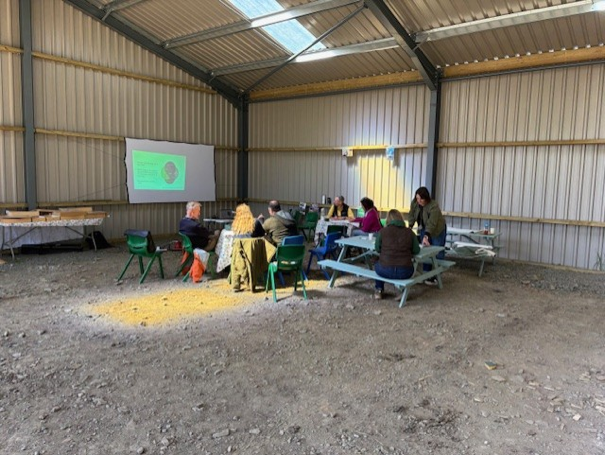
In May 2025, a quiet Northumberland valley became the unlikely setting for a bold experiment in rethinking value, leadership, and land. This one-day event brought together academics and farmers to use a Design Thinking approach to reshape farming practice.
Figure 1 The “Farming for Good” Workshop in progress
The story of John, one of our post-experience Executive MBA learners, who left traditional farming behind, rediscovered his purpose through international work, and founded a land-based social enterprise, became the catalyst for a day-long exploration of how Design Thinking connects with place, people, and purpose.
This article sets out how design thinking, as a pedagogical practice, can be applied in diverse contexts outside the classroom to build collaborative, human centred and innovative communities in practice.
It all started one evening, at a university event in Autumn 2024, when John Harrison (Executive MBA (EMBA) Graduate) asked Lucy Hatt, “Fancy doing something on Design Thinking with Farmers?”
Design Thinking
Design thinking is commonly used as an umbrella term for a human-centred, iterative and solutions-based approach to innovation and problem solving that draws on how professional designers work. It emphasises empathy with users, collaboration across disciplines, and cycles of exploration and experimentation deliberately iterating between divergent and convergent styles of thinking rather than linear analysis alone (Brown, 2008, PlattnerMeinel and Leifer, 2010).
It is often positioned as a response to ill-structured or “wicked” problems, where neither the problem definition nor the criteria for a “good” solution are stable, and where progress depends on the co-evolution of problem and solution through ongoing inquiry (Cross, 2023).
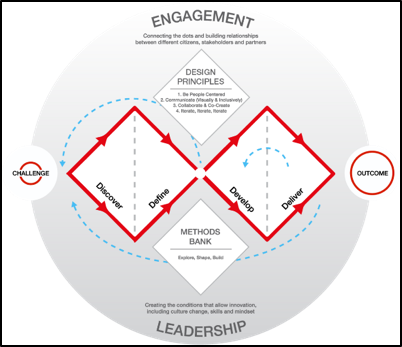
Figure 1 Framework for Innovation, The Design Council (2023)
There are numerous popular models such as those of IDEO (2015), IBM (2021) and The Design Council (2023) (see Fig. 2) which help communicate the approach. However, scholars of design practice caution that such representations can be reductionist, masking the messy, non-linear nature of design practice and inviting overconfident claims about its universality (Kimbell, 2015, Cross, 2023).
When using a Design Thinking approach, progress comes through an iterative cycle of building empathy with users and affected groups, reframing the problem based on insights from field engagement, generating and comparing multiple possibilities, and making ideas tangible through prototypes. The approach is typically collaborative and interdisciplinary, valuing abductive reasoning (“what might be?”) alongside analytic reasoning (“what is?”), and it is often described less as a single method than as a family of principles and tools that together support experimentation under uncertainty.
Accordingly, for applications outside the design discipline, it is helpful to specify which tools and techniques and which intended outcomes are meant when invoking “Design Thinking” (Kolko, 2018, Liedtka, 2018) especially as the term is used not used consistently.
Operational Context
Jenny Davidson, (Visiting Fellow) who had been the co-Director of the EMBA with Lucy at the time John was on the programme was swiftly brought on board, and together they successfully applied for some ESRC IAA [1]funding, having helpfully been pointed in that direction by NUBS Director of Impact, Fiona Whitehurst.
Gina Segrt, a final year Biology undergraduate student at Newcastle was recruited through SEOC (Student Employment on Campus) to record activities, and the funding paid for catering, the venue and Gina’s time.
NUBS Alumnus, John Harrison hosted the day on his farm together with his partner, Katie Wheatley. Lucy and Jenny acted as facilitators and process navigators. Gina acted as journalist, photographer, videographer and interviewer. Attendees included Tom Burston (Alwinton Farm), Mary Gough (Hepple Estate), Bridie Melkerts (College Valley), Rachel Henry (Westhills Farm) and Angus Nelless (Thistleyhaugh Farm). Other Newcastle University staff attending were Jeremy Franks and Toby Price (SaGE; Faculty of Science, Agriculture and Engineering) and Melanie Thompson-Glen (NICRE; National Innovation Centre for Rural Enterprise). John was responsible for developing the initial list of invitees, and we all used our conversations with prospective participants to expand the participant list similar to a snowball sampling approach. Melanie Thompson-Glen was particularly helpful, and Gina brought some useful contacts too.
At the heart of the event was the story of Solidarity Farm CIC, founded by John while on the Executive MBA programme and which is based on his 200-acre organic family farm, Coldside Farm. Fully integrated with the day-to-day activities of a regular livestock farm, John offers alternative education and therapeutic support for young people excluded from mainstream education and delivers commissioned services such as 1:1 learning sessions, holiday programmes, alternative education provision such as Forest School, and curriculum-linked visits, funded through local authority contracts and grants.
Solidarity Farm now operates as both a working agricultural space and a therapeutic learning environment for young people struggling with traditional education. John’s mission is to create a psychologically safe space where young people can find meaning, confidence, and connection through nature and responsibility.
The focus for the event was, “Doing Good Though The Land”, and the intended aim was, “To create a space for farmers of Northumbrian family farms and their stakeholders to network, share best practice and collaborate using the principles of Design Thinking to realise the many types of value in their land.”
What Happened on the Day
The day itself was structured as a dynamic and participatory workshop, guided by the principles of Design Thinking and co-creation. The morning opened with introductions and a welcome from Jenny and Lucy; a contextual overview of Design Thinking and the story of how the day had been conceived.
We shared our aims and objectives and our hope that a community or network would form from the participants as a result of the day. Our intention was to support John in getting liked-minded people together to start a conversation around reframing value creation in farming.
We emphasised that we (Jenny and Lucy) were not positioning ourselves as the experts and certainly didn’t have the answers. We weren’t even sure we had the right questions. However, we were excited to use the principles of generative thinking, ideation, and paradigms of abundance, collaboration, opportunity creation and discovery drawn from Design Thinking to start the ball rolling. We were seeking to communicate a message of inter-connected natural resources, and the mutual benefit of thinking in a joined-up way.
Following the general scene setting and wider introductions, John shared his personal and professional journey, grounding the session in his own real-world case study that connected identity, education, and rural enterprise.
Design Thinking approaches were selected for the day to help the group move from a shared understanding to new possibilities. Following John’s presentation of his story, participants were invited to reflect on it in small groups using guided reflection prompts. We were seeking to understand which parts of the story had most resonated with the participants and what it had made them think, how it had made them feel.
“What did you notice? What resonated? What are your stories of doing things differently?”
Rather than driving toward fixed solutions, this activity helped attendees reframe challenges in farming and community engagement, encouraging divergent thinking.
After a shared lunch from the ever-popular Running Fox John took us on farm tour. Taking a ride in his new trailer (a safe and accessibly way to get close to cows and sheep), walking around his Forest School and experiencing the beauty of the landscape, brought the work of Solidarity Farm to life and helped participants understand the new value that was being created though the land.
The afternoon shifted into a more exploratory conceptual space. Participants in small groups worked through themes such as redefining value, reimagining rural networks, and fostering belonging on farms. Facilitated conversations were interspersed with unstructured moments for connection and informal exchange. We encouraged participants to explore ideas and develop tangible next steps from their reflections, connections and conversations.
We structured this exercise using the 5W+H framework (Who/What/When/Where/Why/How) (LewrickLink and Leifer, 2018) as a disciplined way to deepen understanding and gather context.
To broaden how value was being conceived, we introduced a “more than one kind of value” framing (Lackéus, 2018) and a purpose/Ikigai-style circles sketch activity to help individuals and tables articulate different forms of value and purpose connected to land and identity.
Finally, idea generation was made explicit through the “How Might We…?” technique (LewrickLink and Leifer, 2018) to open multiple possible pathways (“How”), creating permission and psychological safety (“Might”), and emphasising collective problem-solving (“We”).
The event culminated in a full group reflection session, surfacing emerging themes, ideas and action steps for the future.
Capturing the Day: Scholarship Meets Storytelling
A vital part of the event’s success was the deliberate integration of documentation and dissemination activities. Gina took video footage and photographs throughout, as well as periodically inviting individual participants to step away from the group activities to be interviewed and have their own reflections recorded on camera.
These materials were not only valuable for memory and reflection but formed the foundation of a short film and case study destined for the NICRE Innovation Portal Farming for Good – NICRE. This multimedia output serves as an accessible resource for others interested in rural social innovation, Design Thinking in practice, and community-led enterprise models. The presence of a dedicated intern allowed the Jenny and Lucy to maintain the intimacy and spontaneity of the event while ensuring that key learnings were recorded and curated professionally.
Discussion
Learning for Participants
Several themes emerged from the conversations on the day. One was the importance of identity in shaping leadership. John was described as an “un-farmer-y farmer,” and many attendees reflected on the courage it takes to choose differently from the roles that society or heritage assign. His journey prompted a collective re-evaluation of professional identity, particularly in rural contexts where multiple roles (farmer, carer, educator, entrepreneur) often overlap.
Another was the tension between capital investment and operational sustainability. While many rural enterprises can access grants for infrastructure, there remains a gap in revenue funding and support for human capital. John’s creative approach to funding, blending commercial, charitable, and public streams, demonstrated the kind of hybrid thinking we seek to foster in all our learners.
The day resulted in a deeper appreciation among the local community of John’s work on Solidarity Farm. For us, it was more evidence that Design Thinking methodologies can be used in a context far from that of a design studio, to enable a re-framing what farming can be and to create new opportunities for the University in interdisciplinary and partnership working.
Many of the participants commented on the value they felt in the role of the workshop in creating an inclusive sense of community among the farmers in the Coquet Valley and had been surprised by their own willingness to share their thoughts and feelings with each other. By giving people time and space in a facilitated structure to share help, expertise, ideas and support within the group, a network was established, and new contacts were made between those who want to do more than “just farm their farm” and were prepared to re-conceptualise the nature of the value that could be created.
As one participant observed, “He’s not doing this instead of farming. He’s doing farming differently.”
Learning for business school scholars
For business school scholars, the Farming for Good initiative offers several important insights about the nature of scholarship, pedagogy, and impact when academic ideas are enacted through practice. It demonstrates how design thinking can function as a scholarly practice that shapes how academics partner with external stakeholders. The absence of a fixed blueprint for the day allowed the event to remain responsive to participants, place, and emerging insights. It demonstrates how effective practice-based work can be grounded in attentiveness, reflexivity, and intentional facilitation.
The event also provides a concrete illustration of effectual logic (Read et al., 2010) in action. Rather than beginning with predefined outcomes, metrics, or theories to be tested, the initiative started with available means: John’s lived experience, his land, existing relationships, and the curiosity of academics and practitioners willing to explore together.
It also shows academics in the roles of facilitators and process navigators, rather than expert problem-solvers. We explicitly positioned ourselves as co-learners, creating psychological safety for participants and enabling honest discussion of uncertainty, vulnerability, and values. For business school scholars, particularly those working in engaged or impact-oriented research, this raises important questions about academic authority, humility, and the skills required to design and hold spaces where learning emerges relationally rather than transactionally.
The initiative also foregrounds the importance of place-based scholarship. The farm was not a neutral backdrop but an active participant in the learning process. Walking the land, seeing the animals, and experiencing the Forest School setting fundamentally shaped how participants understood value, education, and enterprise.
Conclusions
Scholarship in the Soil
The Farming for Good event was not designed to be a showcase or an educational event in a transactional didactic sense. Instead, it was a working session, serving as an invitation to collectively make sense of a farming and education model that doesn’t fit neatly into existing categories. John’s Executive MBA inspired project was cultivated into a community asset. It is proof that executive education can translate into meaningful rural impact as responsive, embedded practice.
For Newcastle University Business School, this day was an example of scholarship in action. Using Design Thinking approaches, it brought the principles of responsible business and civic leadership directly into the field, demonstrating that innovation does not always require disruption and sometimes it begins by simply listening, digging in, and growing something new.
For Newcastle University Business School, Farming for Good demonstrated how teaching, scholarship and lived practice can coalesce into something quietly radical. It underscored the power of narrative, the value of being embedded in place, and for John, the importance of listening not just to stakeholders, but to the land itself.
IDEO.ORG 2015. The Field Guide to Human-Centered Design, San Francisco, USA, IDEO.org.
KIMBELL, L. 2015. Applying design approaches to policy making: discovering policy lab. Brighton: University of Brighton.
KOLKO, J. 2018. The divisiveness of design thinking. Interactions, 25, 28-34.
LACKÉUS, M. 2018. “What is Value?”–A framework for analyzing and facilitating entrepreneurial value creation. Uniped, 41, 10-28.
LEWRICK, M., LINK, P. & LEIFER, L. 2018. The Design Thinking Toolbox: A guide to mastering the most popular and valuable innovation methods (Design Thinking Series), John Wiley & Sons.
LIEDTKA, J. 2018. Why design thinking works. Harvard Business Review, 96, 72-79.
PLATTNER, H., MEINEL, C. & LEIFER, L. 2010. Design thinking: understand–improve–apply, Springer Science & Business Media.
READ, S., SARASVATHY, S. D., DEW, N., WILTBANK, R. & OHLSSON, A. 2010. Effectual entrepreneurship, Taylor & Francis.
THE DESIGN COUNCIL. 2023. The Double Diamond, a universally accepted depiction of the design process [Online]. [Accessed 26_06_2023].
[1] The Economic and Social Research Council (ESRC) offers Impact Acceleration Accounts (IAAs) to UK research organisations of which Newcastle University is one.
We’ve all been there, sitting in front of a stack of coursework essays with that sinking feeling that we are marking a ghost. A couple of years ago, the tell-tale signs of generative AI were easy to spot: the hallucinated references, the ‘off-topic’ content and the oddly robotic narrative. Now, however, AI-produced content has become virtually indistinguishable from high-quality, student-sourced work. Even when our suspicions are raised, the difficulty in proving a case of academic malpractice remains a significant hurdle for staff.
At the same time, the Newcastle University Education Strategy (2024) is driving us toward making our students more ‘work-ready.’ Students are increasingly choosing universities based on how well they bridge the gap between a degree and a graduate job. So, we are left with a fundamental question: How do we achieve the sort of educational development in our students that they and we increasingly demand, whilst maintaining the integrity and security of our assessments?
The Solution: The ‘Pre-Seen’ Hybrid Exam
The solution I implemented for the PG Corporate Finance module (NBS8335) was a move away from the traditional take-home essay and toward a 50/50 hybrid exam. This wasn’t just about moving the essay into an exam hall; it was about redesigning the preparation for it. The assessment on this module needed to change, partly due to increasing use of AI generated content but also to ensure that the assessment tested the breadth of knowledge contained in the course alongside depth in a particular area of focus.
The assessment was split into two distinct sections for the new hybrid exam:
Section A (The Breadth): 50 marks of unseen, general knowledge questions to ensure a solid grasp of the entire syllabus.
Section B (The Depth): A 50-mark essay where the titles and three specific Financial Times (FT) articles were pre-released to students four weeks in advance.
This model relies on what I call the ‘Invigilated Filter’. It allows students the space to research and brainstorm – even using AI as a tutor – but requires them to walk into a room and perform that synthesis by hand, from memory, under the watchful eye of an invigilator. As Dawson (2020) argued with respect to essay ‘mills’, in a world where assessment fraud can bypass many of our traditional assessment methods, securing the environment where the final performance occurs becomes paramount.
The ‘Fuzzy Mix’ of Pedagogies
Critics of traditional exams often point to them being overly didactic or mere tests of memory (Race, 2014). However, in a content-heavy module like Corporate Finance, there is a necessary level of didactic pedagogy – you cannot analyse a capital structure if you don’t know the formulas.
The module employs a multi-modal pedagogical framework, recognising that no single teaching mode is sufficient to bridge the gap between complex financial theory and professional practice (Archer and Breuer, 2016). This involves a didactic approach to lectures, ensuring the students navigated a content-heavy syllabus, coupled with active and authentic pedagogies through the pre-release of essay titles and FT articles and the encouragement to use generative AI as part of the preparation phase.
This approach is a ‘fuzzy mix’ whereby we use the lecture to transmit the rules of the game and the assessment to encourage active learning, placing the students in the middle ground between these different pedagogical approaches (Peseta et al, 2016). By pre-releasing the materials, we require students to act as practitioners using ‘live’ data. This is constructive alignment (Biggs and Tang, 2011) at its most practical: if we want students to think like professionals, we must provide professional ‘boundary objects’ like the FT to work with. Helliar et al. (2000) have long championed the use of ‘live’ news projects in finance, noting that they increase student engagement by making theoretical messiness tangible.
Data Gathering
To gain a comprehensive understanding of the student experience, a mixed methods approach was adopted, following an explanatory sequential design (Creswell and Creswell, 2018). The use of both questionnaires and focus groups allowed for data triangulation, increasing the reliability and depth of the findings (Saunders, Lewis and Thornhill, 2019). Data gathering was conducted after students had sat the exam and before exam results were released, in order to understand the ‘raw’ feeling of the students’ experience, untainted by their final grade (Robson and McCartan, 2016).
Initial Findings: Control, Inclusivity, and AI
The feedback from our post-exam student questionnaire (n=12) and two focus groups provided a fascinating look at the human side of this transition.
The questionnaire was designed to identify how closely students associated with specific statements about the assessment, their skills development and their use of generative AI. The outputs from the questionnaire were then used to help shape the focus group questions, following an explanatory sequential design where the quantitative findings inform the qualitative instrument development (Ivankova, Creswell and Stick, 2006).
1. The “Control” Factor
The questionnaire showed that students felt remarkably more in control of their performance (score of 4.45/5) compared to traditional exams. However, the focus groups revealed an initial shock regarding transparency.
“Initial feelings were….confused a bit because it took me a while to get my head around the fact that like we were getting given what was actually being put in the written exam.” (Focus Group 1, participant 3)
Once this feeling of disbelief subsided, preparation shifted from guessing to refining. As one student noted, the pre-seen format encouraged a deeper, more iterative engagement with the material:
“It took me a minute to read and relate the article to the syllabus but as I spent more time….it all began to relate and make sense. It definitely helped me to understand concepts….having to apply it to the real world FT article.” (Questionnaire, respondent 3)
2. Inclusivity and the International Experience
A profound benefit emerged regarding our international cohort. For non-native speakers, an unseen exam is often a test of reading and processing speed as much as financial acumen. By pre-releasing the FT articles, we removed the ‘linguistic load’ (Abedi, 2006) One student explained how the UK marking system and the unseen tradition for exams were barriers they could now navigate with more confidence.
“Knowing how the exams are here, because we’re international and all that….I had that feeling that if I’m preparing for this, I have something in my hand that I can actually go and write.” (Focus Group 2, participant 1)
This extra time allowed students to move past the translation phase and into the analysis phase, aligning with the goals of inclusive assessment (Boud and Falchikov, 2007),
3. AI as a Scaffold: The Brainstorming Partner
The data confirmed our hope: students used AI to scaffold their learning rather than bypass it. They used it to clarify complex concept links within the FT articles (score of 4.09/5), but the invigilated closed book exam ensured the final work was their own.
“I read….the FT article, and then I… asked AI to….give me a summary…. so I could…get an overall kind of understanding of what was happening. And then…. went back and forth with AI, just making sure I was understanding things in the right way.” (Focus Group 1, participant 3)
The Friction: ‘Synthesis Anxiety’
It wasn’t a perfect transition. We identified a novel type of stress, ‘synthesis anxiety’. Because students prepared so thoroughly, they struggled to fit their vast research into a 60-minute handwriting window.
“I definitely liked this exam the most….but I think I would have probably benefitted more with more preparation [time] as well…. because I had so much I wanted to say.” (Focus group 1, participant 1)
Reflections for the Future
This format isn’t a ‘cure-all’, but it is a powerful tool in our academic toolkit. It preserves the integrity we need for professional accreditation while giving the students space to behave like professionals during their revision.
Perhaps the biggest takeaway is that there are ways to engage with AI that provide positive outcomes for both students and academics. By changing the format of the assessment, we allow students the freedom to use modern tools during private study while ensuring that what they produce in their summative assessment is a true reflection of their own hard-won knowledge.
References
Abedi, J. (2006) ‘Psychometric issues in the accessibility of assessments for students with limited English proficiency’, Educational Assessment, 11(3-4), pp. 227-246.
Archer, A. and Breuer, E.O. (2016) Multimodality in Higher Education: Showcasing Creative and Scholarly Works. Leiden: Brill.
Biggs, J. and Tang, C. (2011) Teaching for Quality Learning at University. 5th edn. Maidenhead: Open University Press/McGraw-Hill.
Boud, D. and Falchikov, N. (2007) Rethinking Assessment in Higher Education. London: Routledge.
Creswell, J.W. and Creswell, J.D. (2018) Research Design: Qualitative, Quantitative and Mixed Methods Approaches. 5th edn. Los Angeles: SAGE.
Dawson, P. (2020) Defending Assessment Security in a Digital World. London: Routledge.
Helliar, C.V., Michaelson, R., Power, D.M. and Sinclair, C.D. (2000) ‘The use of live projects in finance teaching’, Accounting Education, 9(4), pp. 367-376.
Ivankova, N.V., Creswell, J.W. and Stick, S.L. (2006) ‘Using mixed-methods sequential explanatory design: From theory to practice’, Field Methods, 18(1), pp. 3-20.
Author: Dr Elaine Tan, Senior Lecturer in Innovation (Reflections on assessment in Combined Honours)
The viva voce has long been a fixture of the doctoral defence and of professional examinations in fields such as medicine, yet it remains an uncommon way to assess undergraduates (Pearce and Lee, 2009). Given the pressures now reshaping how universities assess, not least the impact of generative AI, that under-use may be worth reconsidering (Fenton, 2025). Concerns about the practicality of such an approach are well founded, with rising student numbers causing organisational headaches (Perkins, 2026), and the idea is often quickly dismissed as expensive and unworkable. This, however, is a reflection on practice where it has been implemented: an account of running the viva as the oral component of an undergraduate capstone module (Combined Honours’ Final Year projects) with a cohort of 60 and a team of five markers. It examines how a live conversation tests the researcher rather than the research: whether a student can justify their choices, explain their process, and communicate what they have learned. It also discusses the potential payoffs of this resource-intensive activity: opportunities for authentic and inclusive assessment, meaningful engagement with feedback, and active reflection on learning.
Format of the review
The format was a 20-minute “professional and personal review” with two markers present: the supervisor leading and the second marker following up. Framing the viva as a review rather than an examination signalled a dialogue (Fenton, 2025) rather than an interrogation. Students prepared three questions in advance: to share their main findings, to reflect on their learning, and to consider how the project might shape their future plans. They then faced unseen follow-ups probing why they had reached certain conclusions, which areas mattered most, and how ideas related. They could bring a single side of A4 notes for support.
The module had two separate assessment components. The first, already submitted, was a “final output”. Its format was self-determined: students chose their own audience and medium, which ranged from dissertation-style essays to a video documentary with reflective commentary, amounting to 6,000 words or equivalent. The module was also designed so that students could collectively determine the weighting of the components. This was settled by a class vote: offered a range from 15% to 50%, the majority chose a modest 30%, reflecting their greater comfort with writing and their wariness of an unfamiliar format. That figure proved well judged: high enough to make the review worth taking seriously, low enough to keep anxiety in check.
Redistributing attainment
As with previous explorations of such assessment methods, there was potential for a redistribution of attainment. Weaker writers often perform better when allowed to speak, and oral formats tend to lift overall attainment (Huxham, Campbell and Westwood, 2012). Some students whose natural strengths lie outside writing reflected with genuine insight during the review and raised their overall mark as a result. Conversely, a polished final output did not reliably predict a strong review: a small number of students communicated their findings well but offered limited reflection. This also aligns with the case for assessment for inclusion, which resists treating underperformance as a student deficit when the assessment design may itself be the barrier (Tai et al., 2023; O’Neill and Padden, 2022).
AI deterrent, not “AI-proofing”
The format predates current concerns about generative AI, but it answers them neatly. In itself, it is a deterrent, not AI-proofing. There is no way to stop a student using AI to produce a written submission (Kofinas et al., 2025), and detection tools are an unreliable basis for judging the integrity of submitted work (Bassett et al., 2026; Grundy, 2025). What a live review does is diminish the appeal of complete cognitive offloading: a student who has outsourced the thinking still has to account for their decisions aloud, grasp their own process, and extend their findings under questioning they have not seen. The path of least resistance shifts back towards doing the work well enough to talk about it. This aligns with evidence that authentic, scenario-aligned oral tasks discourage misconduct precisely because they are difficult to outsource (Sotiriadou et al., 2020). It is not a complete solution, but for vulnerable capstone assessments still submitted as extended writing, it is a potentially effective one.
Feedback that students actually used
One significant detail of how the reviews were organised: students received their written marks and feedback on the final output before the review, and prepared for the oral assessment by reflecting on them. The marks and feedback were returned within the standard 20-day turnaround period for the final-output component. This meant that, while many students had completed the work some time before the review, they also had space to reflect on it. A two-week gap between the release of feedback on the written component and the review allowed students to prepare. One issue, however, was the number of extensions students had requested (nearly 50% of the cohort), which compressed this preparation window.
This relationship to the feedback on the final output meant that, rather than treating the oral as a threat, students approached it as a chance to pick up further marks on work already submitted. The written feedback included points to consider for the review, giving students the opportunity to respond to the questions and comments raised on their earlier submission. The effect on feedback engagement was marked: comments that might otherwise have been skimmed and filed (or left unread, as is common with summative capstone feedback) were read closely and used in preparation. Students now had an immediate, concrete reason to act on the feedback, and the review created a meaningful opportunity for feedforward and reflection. Feedback became something to use rather than merely receive.
What would change next time
Predictably, with 60 students requiring 40 minutes each (a 20-minute review plus 20 minutes of feedback and moderation) and two markers present throughout, the exercise required 80 hours of staff time in total. Offering students a wide choice of booking slots stretched the exercise out, with some days holding only a handful of reviews; a little less flexibility would serve staff considerably better and make the process more efficient. Marking with two assessors and moderating immediately after each review, however, kept the load manageable. Recorded verbal feedback (carrying both markers’ comments) replaced written reports, which meant the whole process was accomplished comfortably within the 40 minutes per student, end to end. It should also be noted that the capstone process itself was streamlined compared with a conventional dissertation to accommodate the review: students received three rather than four hours of supervision meetings, and the written component was capped at 6,000 words rather than the usual 10,000, to reduce marking time.
There was also a tension between interrogating students’ knowledge and understanding of the project and the broader prompts intended to elicit reflection on their learning. Students’ use of feedback in preparation was also mixed: given the chance to respond, some did no more than restate the comments provided, while others offered more considered responses, reflecting on how they might apply and develop them. Marker disagreement surfaced occasionally, usually where examiners approached a project from different angles, and was generally resolved by the supervisor supplying context.
Many students had never been assessed by interview and did experience some anxiety. To address this, an optional workshop was held to support their preparation, but it drew thin attendance in a crowded assessment period, a reminder that scaffolding must be timed as carefully as it is designed. As earlier studies have found (Pearce and Lee, 2009), students in the cohort judged the viva surprisingly user-friendly, and almost all valued the chance to talk at length about projects they had chosen and cared about. For a capstone, letting students articulate their learning aloud encouraged engagement with feedback and supported meaningful dialogue.
References
Bassett, M. A., Bradshaw, W., Bornsztejn, H., Hogg, A., Murdoch, K., Pearce, B., & Webber, C. (2026). Heads we win, tails you lose: AI detectors in education. Journal of Higher Education Policy and Management.https://doi.org/10.1080/1360080X.2026.2622146
Fenton, A. (2025). Reconsidering the use of oral exams and assessments: an old way to move into a new future. Educational Researcher, 54(7), 430–436. https://doi.org/10.3102/0013189X251333638
Huxham, M., Campbell, F., & Westwood, J. (2012). Oral versus written assessments: a test of student performance and attitudes. Assessment & Evaluation in Higher Education, 37(1), 125–136. https://doi.org/10.1080/02602938.2010.515012
Kofinas, A., et al. (2025). The impact of generative AI on academic integrity of authentic assessments within a higher education context. British Journal of Educational Technology.https://doi.org/10.1111/bjet.13585
O’Neill, G., & Padden, L. (2022). Diversifying assessment methods: barriers, benefits and enablers. Innovations in Education and Teaching International, 59(4), 398–409. https://doi.org/10.1080/14703297.2021.1880462
Pearce, G., & Lee, G. (2009). Viva voce (oral examination) as an assessment method: insights from marketing students. Journal of Marketing Education, 31(2), 120–130. https://doi.org/10.1177/0273475309334050
Perkins, G. (2026). Resilient assessment in the age of AI: authentic design and the case for verbal examinations in business education. Assessment & Evaluation in Higher Education.https://doi.org/10.1080/02602938.2026.2644516
Sotiriadou, P., Logan, D., Daly, A., & Guest, R. (2020). The role of authentic assessment to preserve academic integrity and promote skill development and employability. Studies in Higher Education, 45(11), 2132–2148. https://doi.org/10.1080/03075079.2019.1582015
Tai, J., Ajjawi, R., Bearman, M., Boud, D., Dawson, P., & Jorre de St Jorre, T. (2023). Assessment for inclusion: rethinking contemporary strategies in assessment design. Higher Education Research & Development, 42(2), 483–497. https://doi.org/10.1080/07294360.2022.2057451