

What is biofeedback?
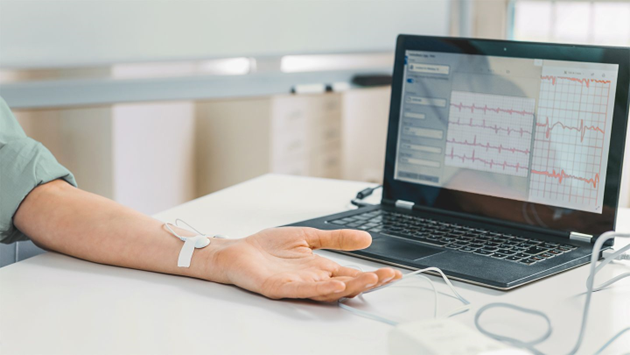
Biofeedback is the process of connecting your body to electrical sensors, to receive live information about your bodily functions, e.g., your heart rate and sweat response.
What is HRV biofeedback?
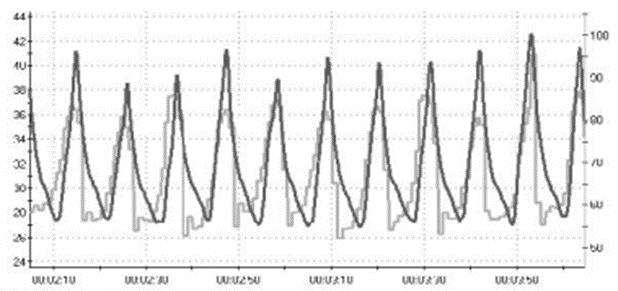
Heart rate variability (HRV) biofeedback involves attaching sensors to the subject’s body and observing both their respiration rate and heart rate on a monitor, to try to synchronise the two graphs. This synchronisation signifies that the person is breathing at their resonant frequency. This is a specific breathing pace (usually about 6 breaths per minute) which can increase HRV.
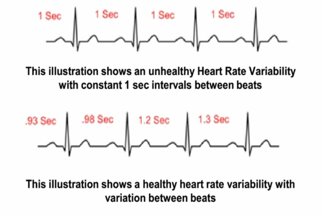
HRV is a measure of the variation in time between each heartbeat. High HRV is associated with calmness and better general health, as it indicates a greater ability for the body to regulate itself.
How does HRV biofeedback work?
Resonant frequency breathing increases heart rate variability because when we breathe in, our heart rate slightly increases, and when we breathe out, our heart rate slightly decreases. By finding an athlete’s specific resonant frequency, we can cause large increases and decreases in heart rate, to maximise HRV.
Following this clinic, athletes may be able to use the resonant breathing technique to regulate their arousal when faced with stressors or high-pressure situations, so helping them perform to the best of their ability.
For more information
Please see the attached PowerPoint, which will be sent to participating athletes before the clinic. It aims to inform them about what biofeedback is, what the clinic procedure will be, and how it can help them improve their performance.