
Page in progress
Research Group Lead
Emily Jones
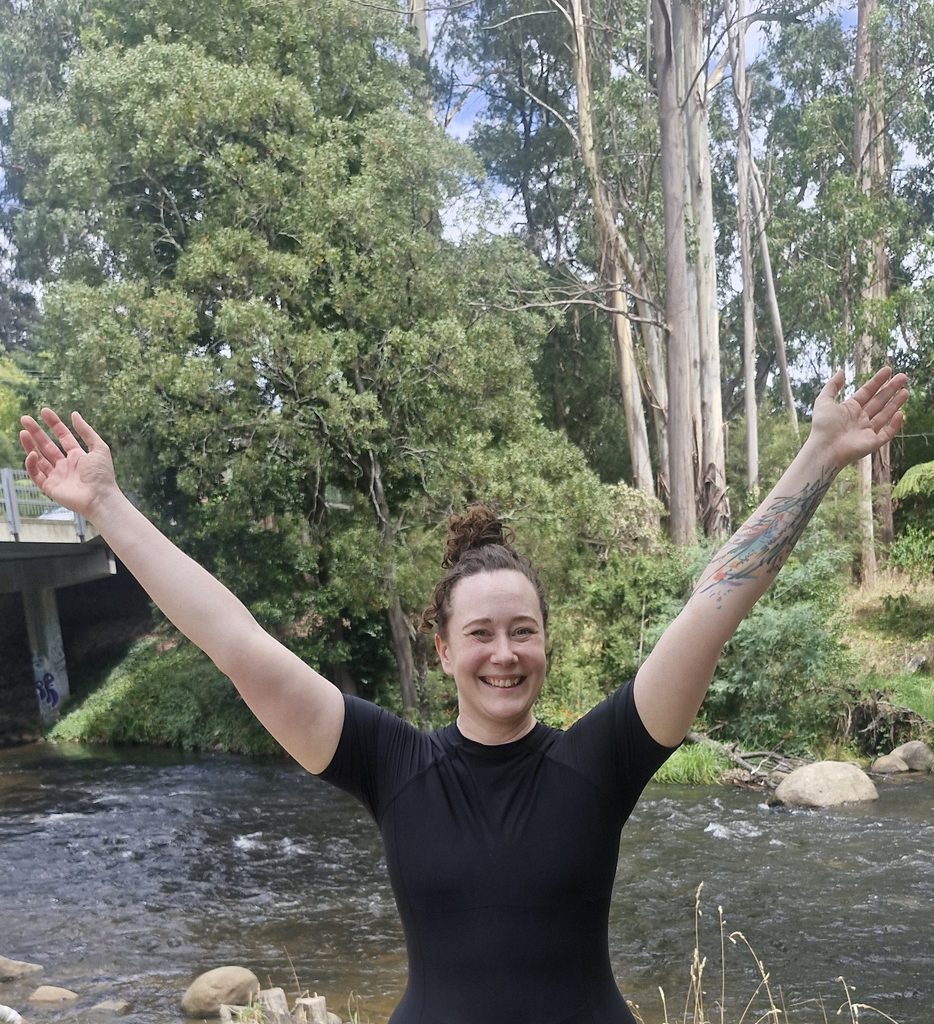
Photo: Emily Jones, Wurundjeri Country, Australia. She is standing alongside Birrarung, a river system that is legally alive. See here for more info.
Dr Emily Jones’ interdisciplinary research applies critical theory to analyse and re-imagine international and environmental law. Emily is currently working on projects focusing on intergenerational equity and the rights of future generations, nonhuman animal legal personhood and the rights of nature – especially in ocean law, temporailtiy and climate law, feminist and queer analyses of environmental law and reparations in international law.
Emily’s monograph, Feminist Theory and International Law: Posthuman Perspectives, was published with Routledge’s GlassHouse series in 2023. Emily is the co-author of both The Law of War and Peace: A Gender Analysis Volume One (Bloomsbury 2021) and Volume Two (Bloomsbury 2026) and has co-edited three volumes: the More Posthuman Glossary (Bloomsbury 2022), International Law and Posthuman Theory (Routledge 2024) and Posthuman Convergences: Transdisciplinary Methods and Practices (Edinburgh University Press 2025). Emily is Co-Editor in Chief of the Journal of Human Rights and the Environment.
For more info and to contact Emily, please see here
Research Group Members
Godswill Agbaitoro
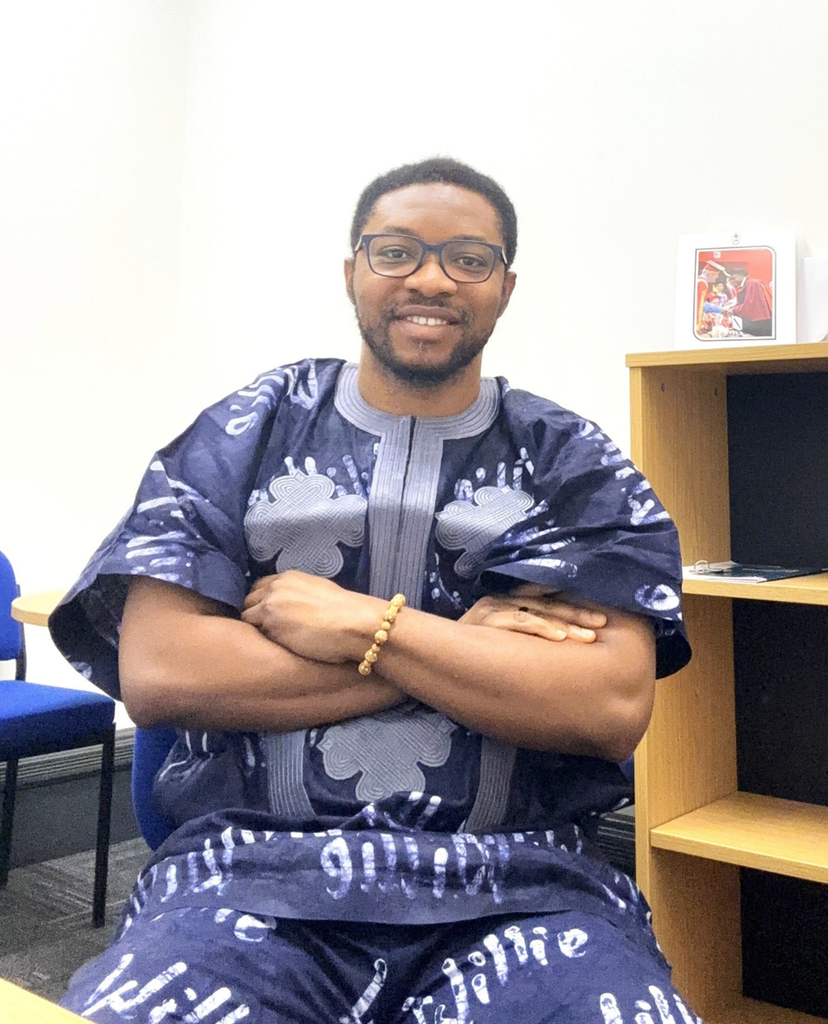
Godswill is a legal scholar specializing in energy justice, environmental law, and sustainable development. His research broadly seeks to understand and apply justice principles to energy and environmental issues. He is currently working on projects focusing on the transformative effect of energy justice, in particular how the principles embedded in the concept can be applied to energy transitions in the developing world. He is also looking at tools that can be used to move the concept from theory to practice, in particular examining the role of litigation in the realisation of justice in energy systems.
Godswill is the co-editor of ‘Energy Justice Litigation: International and Domestic Perspectives’ with Dr Chitzi Ogbumgbada, under contract with Springer (forthcoming 2027). He is also an editor for the Journal of Human Rights and the Environment.
Louisa Dassow
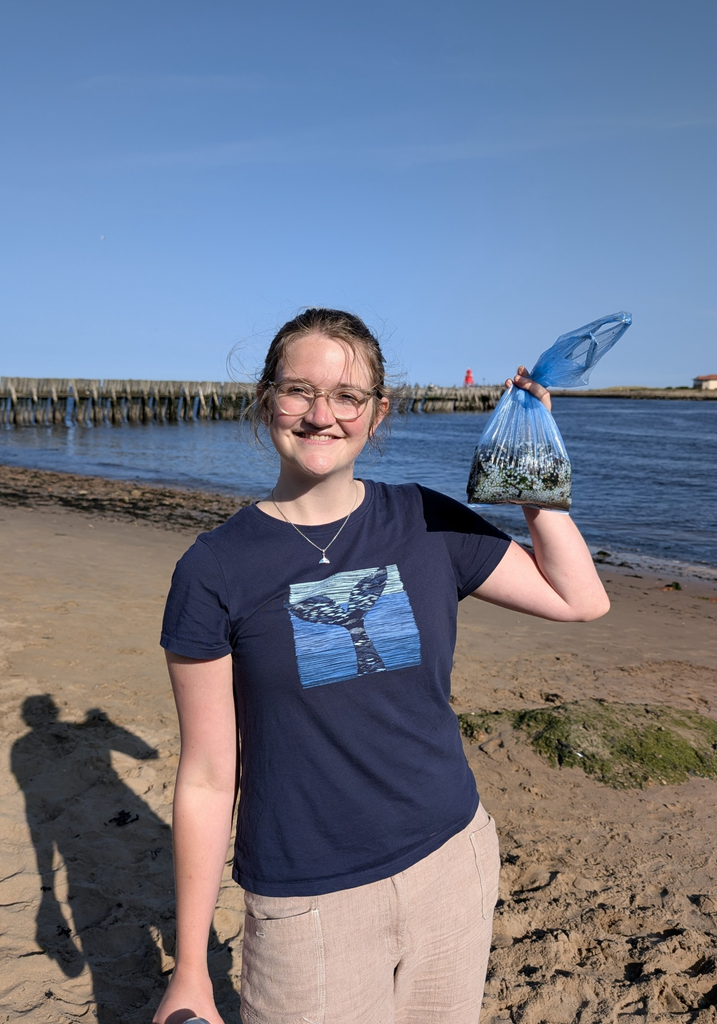
My legal research interests are broadly international environmental law and law of the sea, with my PhD specifically focussing on the Biodiversity Beyond National Jurisdiction (BBNJ) Agreement (also known as the new Global Ocean Biodiversity treaty). My approach is critical posthuman feminism, which particularly draws on decolonial, queer, intersectional feminist theory and is oriented towards multispecies justice. The emphasis lies in problematising the distinctions made between the human/nonhuman and instead highlights relationality and the material interconnections that defy these narratives. Within international law, deriving from its colonial and capitalist underpinnings, this binary is made apparent through its extractive logics and exclusionary humanism. Posthuman feminism perceives a continuum of extraction including excluded or othered humans and the treatment of ‘nonhumans’ and, in recognition of our interconnection, demands an orientation towards affirmative ethical action.

Photo: Clownfish (and scuba diver) in its preferred habitat in Jemeluk Bay in Amed, Bali, in February 2022, Photo and Photo-shop colour play by Louisa and her beloved Olympus TG6 setup.
For more info and to contact Louisa, please see here
Myriam Gicquello

Dr Myriam Gicquello considers the influence of “extra-legal factors” on the decision-making of courts and tribunals, with a focus on climate litigation and arbitration. She addresses how influences beyond the law – such as a judge’s or arbitrator’s psychology as well as the system within which they adjudicate – bear upon the outcome of cases.
Dr Gicquello is the co-editor of ‘Adjudicating Climate Change: Exploring Extra-Legal Factors’ with Dr Melanie Jean Murcott and Dr Emily Webster (posthumously), with Bloomsbury (forthcoming 2027).
For more info and to contact Myriam, please see here
Gina Heathcote
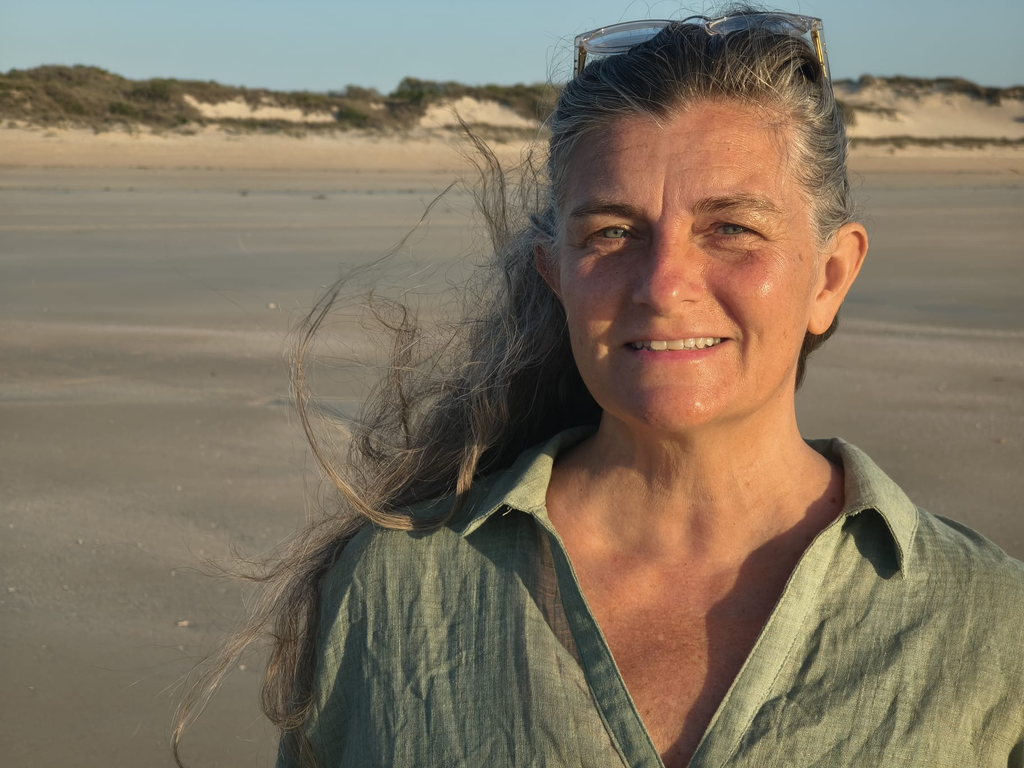
Gina’s research examines the ways in which legal relations assume and embed a model of human-nonhuman relations that are premised on difference and ownership. Through listening to and working with Indigenous researchers in the northwest of the Australian continent, Gina encounters alternative models of law for maritime governance, drawn from the world’s longest continuous ecological and maritime models. Aboriginal Peoples in the Kimberley maintain cultural governance structures for saltwater including through co-designed marine protected areas and marine sanctuaries. Gina’s wider research expands across international legal methodologies, collective security, ocean governance and feminist and queer legal possibilities.

Photo: Footprints on Sea Country – taken on Bardi land in the West Kimberley, where the red earth, or Pindan, features in stories and songs of the coast, as do stories of ancient footprints.
For more info and to contact Gina, please see here
Josh Jowitt

Dr Josh Jowitt is a legal theorist whose work challenges the dominant legal-positivist position in Anglo-American legal theory. His PhD was awarded the European Award for Legal Theory and published as Agency, Morality and Law in 2023, and this monograph was shortlisted for the 2023 Peter Birks Prize for Outstanding Legal Scholarship.
His present research uses this method to explore the theoretical underpinning of legal rights for nonhuman entities. He is presently in receipt of a Leverhulme Research Fellowship to develop an ethics-led approach to legal personality, which draws his time as a visiting researcher at the Max Planck Centre for Comparative Public and International Law in Heidelberg, the Cambridge Centre for Animal Rights Law and the Library of Congress in Washington DC.
Beyond Newcastle, Josh was a member of the Nuffield Council on Bioethics’ working group on neural organoids and contributes to Animal Law courses at institutions across the UK and Europe.
For more info and to contact Josh, please see here
Darren McCauley
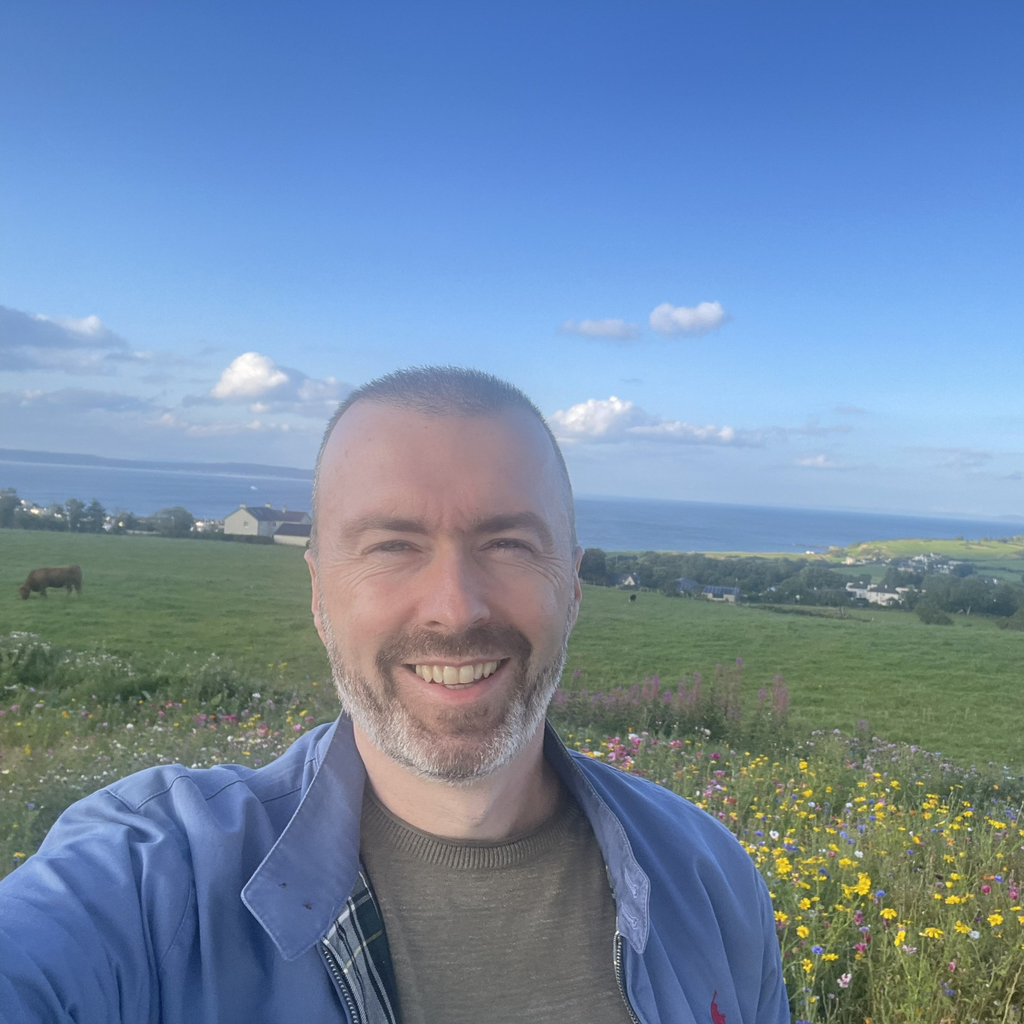
I study the justice questions hidden within complex technological developments. My approach is ‘more than technical’. It examines how technical development such as modularity in nuclear energy or infrastructural developments in artificial intelligence affect people, communities and the nonhuman world. Technical systems depend on legal choices that distribute risk, power and environmental harm, but often remain hidden on the most technical of issues. My research makes these choices visible. It explores how states and corporations frame new technologies and how law recognises, or could recognise, such impacts and new forms of agency. This work connects with the group’s focus on human and nonhuman inequalities. It also supports dialogue across legal fields about how technical change can deepen existing forms of exclusion when unchallenged and reshape our relationship with the environment.
For more info and to contact Darren, please see here