Categories
Annie Derry

Epigenetics: How the environment can affect inheritance

by Annie Derry

Since the dawn of genetics, it has been well established that characteristics are passed from parent to offspring through DNA sequences. It was thought until recently that there were rigid rules to which inheritance abided: that traits could only be passed onto offspring if they, themselves, were caused by changes to the amino acid sequence making up DNA.

This was a perfectly rational conclusion based on what we observe in nature, as phenotypes we acquire over our lifetime due to our environment do not usually affect our DNA. How would these be passed on? It seemed sort of impossible.

Enter: Epigenetics.

What had not been realised until (relatively) recently is that the DNA sequence can be altered in more ways than a change to the underlying amino acid (and nucleotide base) sequence.

Epigenetic changes are chemical alterations to the genome that result in the switching ‘on’ or ‘off’ of genes. These chemical modifications can include DNA methylation of certain areas, as well as histone modification. They essentially change how easy or hard it is for that region of DNA to be unravelled, transcribed and translated into a protein (in other words, expressed). Many factors have been found that could potentially cause epigenetic changes in the body, such as stress, physical activity and diet, and it is now thought that these changes can be inherited.
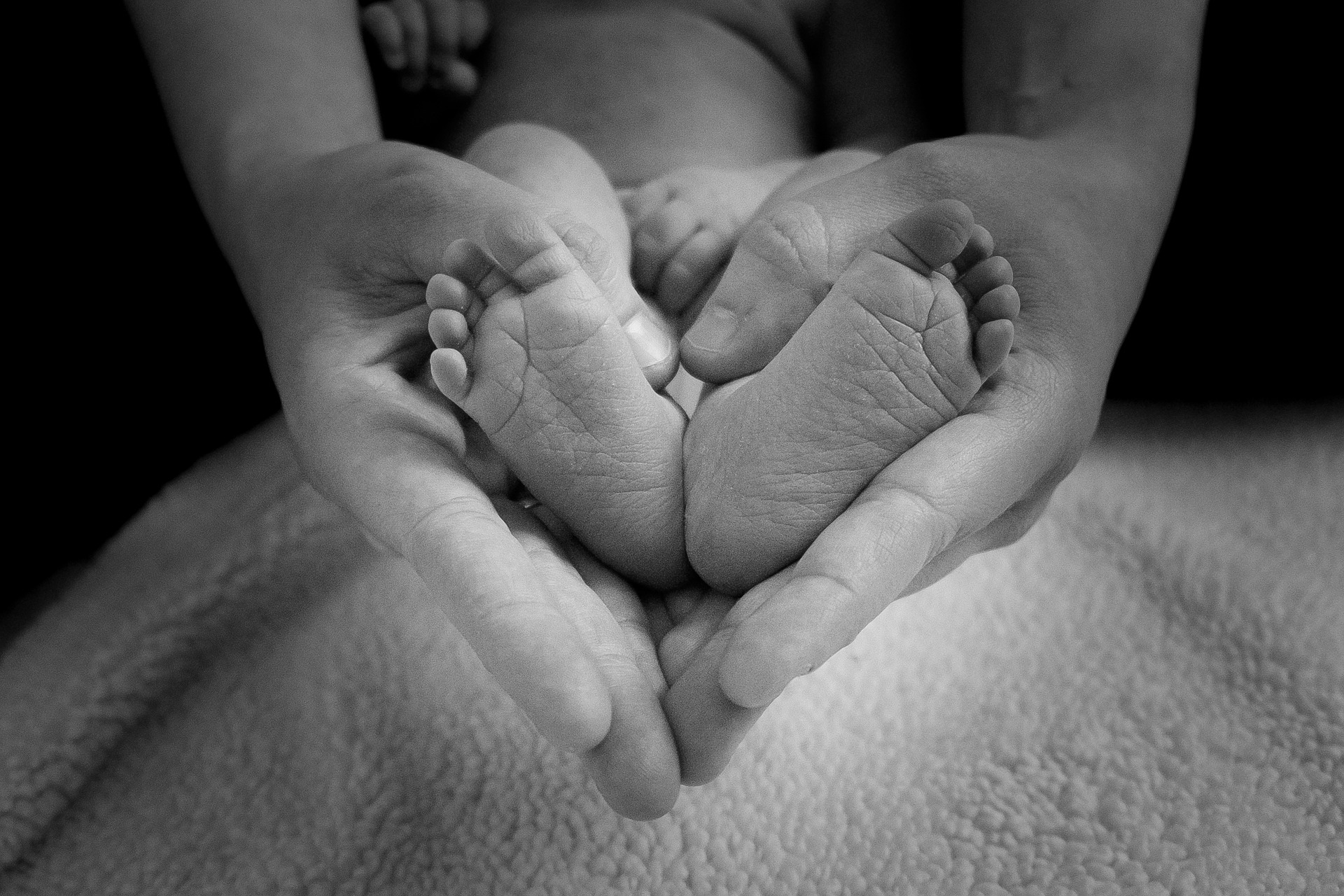
Image source: Pixabay, URL: https://pixabay.com/en/baby-feet-heart-love-mother-1527456/

Wiping the slate clean?

It was previously thought that chemical changes to the genome were accumulated over an individual’s lifetime, but that they would be removed in the process of reproduction. It is now believed that this is not the case, as changes to the epigenome seem to be able to jump the generational barrier.

A widely used example of transgenerational epigenetics is the study of the Dutch Hunger Winter (1944-45), a terrible period of starvation for the people of The Netherlands. Based on well-kept medical records, pregnant women and their offspring were studied to understand the health impact of the unique conditions they were subjected to.

The interesting observation was that differences in the timing of malnutrition during pregnancy went on to affect not only the children’s weight at birth, but their health in adulthood too. Some babies (those only affected by malnutrition in early pregnancy) went on to have above-average weight in adulthood, and even to be more prone to obesity and cardiovascular disease. Those born underweight due to malnutrition in later pregnancy remained smaller in adulthood, with lower than average obesity rates. Records even suggested that the grandchildren of those malnourished women were affected similarly. A follow up study indicated that the children – many decades after initial malnutrition in the womb – had less DNA methylation of the IGF2 (insulin-like growth factor) gene than their unaffected siblings. This gene codes for an important protein in growth, thus the results suggest that an epigenetic change had taken place and could have contributed to the growth patterns of those affected children.

This gives us a small insight into how one environmental condition might cause a chemical imprint on the epigenome of a foetus that remains for their entire life and is passed on to their children.

What does this mean for us?

This does not mean to say it is certain that every little thing we do results in a genetic imprint that we pass on to our children and subsequent generations. We don’t know yet whether smoking or eating 5 fruits and vegetables everyday will be detrimental to the health of our unborn children. However, it is now clear that some aspects of our lifestyle will cause an imprint on our genome, and that imprint might not be wiped clean when we reproduce. All this means is that we can decide to take more care of ourselves, knowing that our actions may not only affect our own bodies, but those of our offspring. That being said, the field of epigenetics is a relatively new one and there is much, much more to be understood about modes of inheritance.

Interested in learning more? This blog post was based on:
Nessa Carey – The Epigenetics Revolution
Tim Spector – Identically Different
Epigenetic inheritance and the missing heritability
Transgenerational Epigenetic Inheritance: myths and mechanisms

Categories
Uncategorised

Categories
Leonie Schittenhelm

Just keep watching: the science behind the common TV binge

by Leonie Schittenhelm

Who doesn’t know this situation: you had the longest day, so all you want to do is go home, plop down your bag and cuddle up for an episode of your favourite TV show before an early night. Doesn’t sound too exciting, does it? But after your first episode, you decide to watch one more, and then – the plot quickens and you just really want to make sure that one character survived the gnarly explosion – just one more. Suddenly, it’s 2am on a weeknight and you are about to assure Netflix, that yes, you are still here, and for the love of god, would they please just continue with the next episode before that latest cliff-hanger makes you die of curiosity. Those my friend, are the classic signs of a TV binge.

Just as other binges involving alcohol or food, the TV binge has moved into the focus of modern research. While the negative side effects of excessive drinking might be more immediately obvious, a team of researchers from Newcastle University, the University of Stirling and Ottawa University are arguing for the importance of investigating TV binges in their paper, ‘‘‘Just one more episode’: Frequency and theoretical correlates of television binge watching”. Not for nothing is lack of physical activity number four on the list of mortality risks worldwide, and TV watching is the most popular sedentary activity during people’s free time. But what even constitutes a binge? And how do people feel about them?

These are just some of the questions the paper tried to answer by asking 110 people about their TV watching habits. They defined a TV ‘binge’ as watching more than two consecutive episodes of the same TV show in one sitting. While this seems quite a low threshold – and embarrassingly ups my TV binges per week to above the average of 1.47 that was reported by the participants – the reason that you move from the second into the third episode is that you are likely to have switched from a conscious decision to watch TV to a zombie-like ‘keep playing’-mode. This automaticity of pressing the ‘next episode’ button was reported to be especially frustrating for the study participants: most connected their excessive TV watching with feelings of regret and indicated that it interfered with pursuing other goals important to them. While a lot more research has to be done, TV binges are a cultural phenomenon that are not going away. Until we know more, I’d better get working on my personal impulse control.

Want to know more about this study? Give it a read yourself: Walton-Pattison, Emily, Stephan U. Dombrowski, and Justin Presseau. “‘Just one more episode’: Frequency and theoretical correlates of television binge watching.” Journal of health psychology 23, no. 1 (2018): 17-24.

Categories
Georgia Collins

Going for a Plastic-Free July!

Image from http://i.imgur.com/alT1hhO.jpg

by Georgia Collins

You may have already heard of the campaign, started in Australia in 2011 by an environmental group based in Perth, called Plastic Free July. This year the project has more than 2 million people from over 150 countries pledging to minimise their use of plastic for the month of July. There are three levels of challenge, the simplest being to eliminate all single-use non-recyclable plastic in your daily life, such as that from takeaway coffees and plastic bags. I was introduced to it by a friend, and we have both decided to take on the full challenge; we will not use any non-recyclable plastic or single use plastic for the whole of July.

To get started with Plastic Free July, we signed up with the website, http://www.plasticfreejuly.org/ and took the ‘Pesky Plastics Quiz’. This was really interesting for me as I thought I was quite aware of plastic and was already avoiding excessive packaging. However, this quiz really showed me how much single-use, non-recyclable plastic I use and, scarily, how little I had noticed.

As well as avoiding anything with plastic wrapping or single-use plastic, we’re also finding alternatives for common everyday things. For example, bin bags can be replaced with compostable or newspaper liners (although thus far we’ve managed to recycle, compost or reuse all of our “waste”). We’re also ditching yoghurt pots… did you know that making your own yoghurt is actually really easy? (Making soya yoghurt, though,… not so much!). We’re also making a concerted effort to buy from shops that sell items either unpackaged or in recyclable containers. Hopefully through such alternatives we will fix our bad-plastic-habits for good.

As I’ve never studied economics/ politics/ anything societally useful, I don’t really get why there just isn’t a ban on all plastic that cannot be reused, composted or recycled, especially when a really cool, environmentally-friendly alternative already exists! For example, take a look at Vegware. Totally amazing! I can’t get over the fact that takeaway boxes can be compostable! I recommend looking at stuff like this as a good break from the actual work you are supposed to be doing and to restore one’s faith in humanity and human innovation. It also makes a nice change from being depressed about our detrimental impact on the environment.

Currently, many privately-produced products are public-waste problems. We can all fantasize (well, maybe not ALL of us, but I do it) about companies having to adopt closed-loop systems for their packaging: can you imagine if Coca-Cola suddenly had to be responsible for their plastic bottles?! I mean ALL their plastic bottles… even all the really, really old ones currently in the sea. But Lush, a cosmetics company, have already taken the initiative and are responsible for all their packaging (just because you’re an environmentalist doesn’t mean you can’t look and smell fantastic). Although it is frustrating that most big companies aren’t responsible for the effect they have on our environment, we can’t afford to be complacent as we all have some responsibility for creating plastic waste. We need a collective change, a cultural makeover that will reach every single one of us, and that most definitely can begin at home. The Earth is all of our homes after all, and right now we are just messing it right up. We all can take some responsibility for this, and movements like Plastic Free July are such an eye-opening way of realising how little we do.

We all know what plastic does, where it ends up… everyone must have seen Blue Planet by now. We can’t say we don’t know. What we can say though is, “no thanks!” to any single-use plastic. We can bring our own take-away cups, cutlery, lunch boxes and bags, and avoid the ridiculous packaging at many shops. Rather than just shaking our heads with dismay at some ridiculously wrapped vegetable (like, shrink-wrapped coconut?!) or getting upset about whales dying from swallowing plastic bags, we can use these emotions to do something and to stop polluting with plastic. You are responsible for what you buy, so don’t buy stuff that ends up on our beaches, buried in a hole and outliving the entire human population, or getting stuck in some poor albatross.

Go on, and make a fish happy by going plastic free!

PS. As part of Plastic Free July, my friend and I are saving all the plastic that we have inadvertently obtained. The count so far is 2 pieces of plastic packaging tape, a plastic bag from some unavoidable packaging (from a new pair of goggles – the goggles were in a plastic case, then in a plastic bag, then in a padded envelope…), and a pot holding some olives bought back in June. And we are only in day 4!