Example: Simply Cracking Good Stories

SimplyCrackingGoodStories imageMartha Young-Scholten and Margaret Wilkinson (School of English Literature, Language and Linguistics) lead the Simply Cracking Good Stories project. 

In the undergraduate module Low-educated Second Language and Literacy Acquisition’ students write fiction books for adult immigrants and make these available to local ESOL students.  This addresses the Societal Challenge Theme of Social Renewal. 

Martha and Margaret’s flier and PowerPoint slides have more information about the project.

Students’ (cracking) finished books are available on their Blurb store.

Example: student intern project

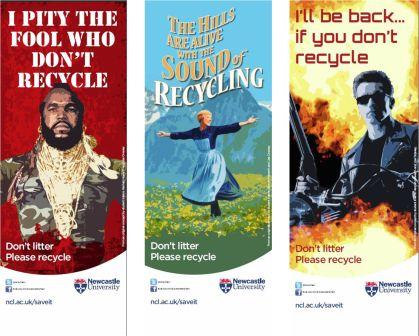
Hannah Munro spoke about engaging students with recycling through a Student Intern Project. This project was an example of embedding Sustainability into the University’s core function as an educator. It gave students experience of working in a professional environment and an opportunity to develop skills that boost their employability.

Here’s a PDF of her slides.

Hannah included Lisa and (another) Hannah’s positive quotes about what they learned during their internships:

“It was a great achievement to be part of the whole campaign and see the posters come to life and be implemented around campus”
“The campaign provided me with some great experience/skills to put on my C.V.”

Example: Enterprise, entrepreneurship, employability

Jane Nolan spoke about exploring enterprise, entrepreneurship and enhancing employability through addressing societal challenges, a new undergraduate module developed using the Societal Challenge Themes.

Here’s a PDF of her slides.

In the module, Changing Age, NIReS, Institute for Social Renewal will set the provocations and provide the background for students’ work. The SCTs’ links to human needs and stories generate compelling stories, which this module uses to build communities and networks across the university between students, schools, researchers, research institutes, external stakeholders and wider society.

Example: Street Law

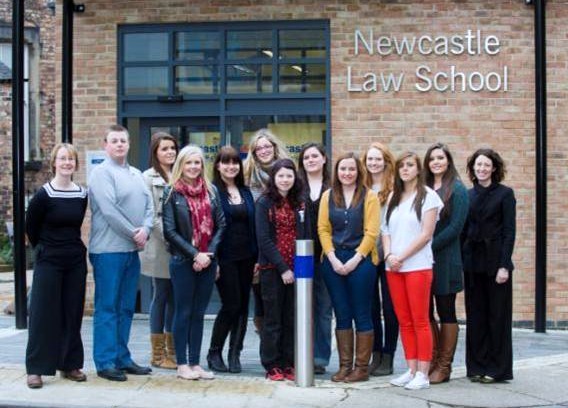
Kathryn Hollingsworth (Law School) and Katie Sheehan (Bachelor of Laws student) spoke about the Street Law project.

Here’s a PDF of their slides.

Kathryn and Katie spoke about how the Street Law project gives students opportunities to develop skills in legal research, communication, teamwork, and using their initiative. They use ePortfolio to help students log and reflect on these skills. Street Law is part of the Law School’s offer to students and also, as a pro bono project with a strong focus on social justice, part of what students and the Law School offer back to the local community.

Example: curriculum redesign

CEGS_Sustainability

Stephanie Glendinning and Jean Hall (School of Civil Engineering and Geosciences) spoke about how CEGS has redesigned its Programmes to deliver sustainability.

Here’s a PDF of their slides.

Students have said great things about the redesigned Programmes:

‘…the sustainability framework concepts were a useful approach…’
‘…the input from industry offered a much wider insight to employment opportunities available…’

as have external reviewers of the Programmes:

‘…it would become what defines a Newcastle graduate.’

Example: ACTION 2011

Elizabeth Scanlon spoke about ACTION 2011, a scheme that encouraged researchers to engage with enterprise training by using the Societal Challenge Theme of Sustainability.

Here’s a PDF of her slides.

ACTION 2011 participants said great things about the scheme, including this postgraduate student’s awareness of the skills they had not otherwise had the opportunity to develop:

“From ACTION 2011 I have experienced the business-side of scientific research, which is important for all scientists to understand and this is something I can apply to my Doctorate and in my future career.”

Example: Living Lab

LivingLab

Stephanie Glendinning (School of Civil Engineering and Geosciences) and Pete Manning (School of Biology) spoke about using the Living Lab model for engaged teaching. Here’s
a PDF of Stephanie and Pete’s slides.

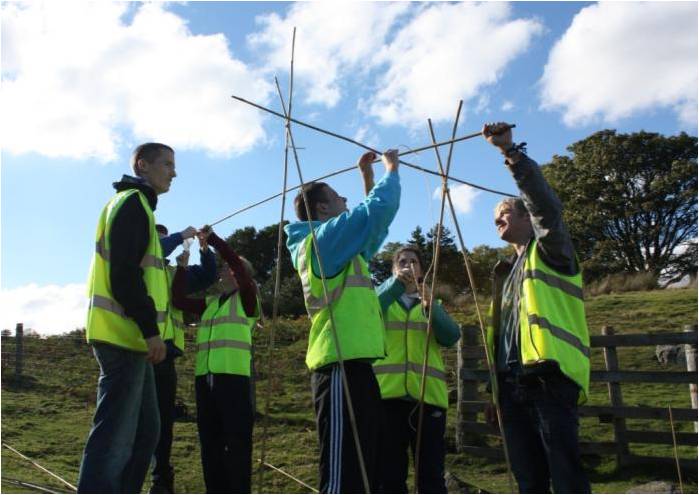
The presentation included an introduction to Living Lab as a philosophy; a way of going about our business in a different way and working collaboratively to co-produce projects that include learning opportunities for students.

Example: Ageing – Biology and Impact

Changing Age

Lynne Corner spoke about the Biology of Ageing module offered by the School of Biomedical Sciences.   Here’s a PDF of her PowerPoint slides.

The module examines the key biological mechanisms that effect ageing.  Students have enjoyed the module, giving evaluations including:

“I enjoyed the [Biology of Ageing] module as a whole.

It was very well put together and extremely well taught. It was obvious that the lecturers enjoyed teaching us and that helped us to understand the content.”