Tag Archives: Get Involved

🌊 Newcastle against nurdles!
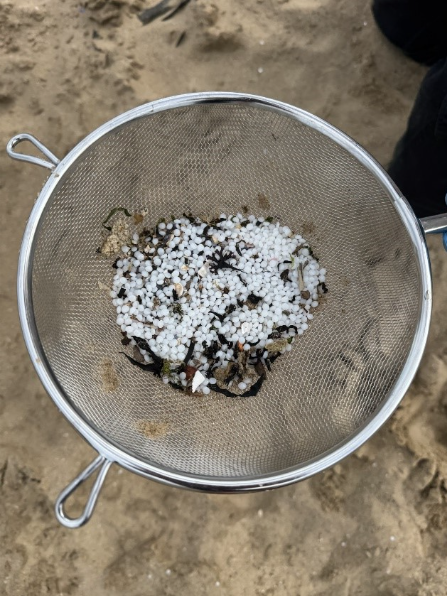
You may have heard about the nurdle (plastic pellet) spill that is currently affecting the River Tyne and surrounding coastline.

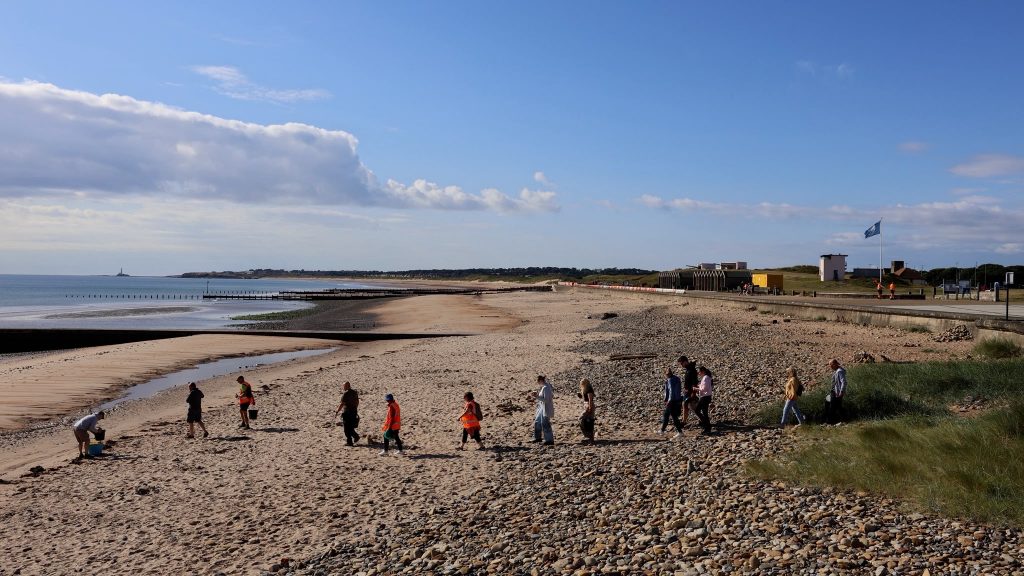
The incident occurred at the Port of Tyne on 19 July, releasing an estimated 25 tonnes of nurdles, equivalent to around one billion pellets, into the environment. Since then, nurdles have washed up on beaches across the North East coast, prompting a significant community-led clean-up effort involving local residents, volunteers and environmental groups. 

What are nurdles, and why are they a problem? 

Nurdles are small (typically 1-5mm) plastic pellets that are used as the raw material for manufacturing most of our plastic products. When released into the environment, they can persist for many years, contributing to microplastic pollution and posing a significant threat to wildlife. 

Marine animals, such as seabirds and fish 🐟, can easily mistake nurdles for food, due to their resemblance to fish eggs. Once ingested, nurdles can cause digestive blockages and starvation. They can also absorb toxins, which can bioaccumulate in the food chain, having larger impacts down the line. Research has shown that more than 220 marine species have been recorded ingesting microplastic debris.  

📰 Dr Geoff Abbott, Reader in Organic Geochemistry at Newcastle University, has commented on this nurdle spill and the wider issue of microplastic in this BBC article

How can you help – volunteering? 

Thousands of volunteers have mobilised to support the clean-up, working alongside councils and specialist contractors to clean up beaches along our coastline. 

For anyone interested in volunteering more information can be found on the community volunteer website, including important information on tide times, collection methods etc. The North Tyneside Council website also has some useful health and safety guidelines.

Colleagues at Newcastle University can take volunteer hours to help under the “Colleague Volunteering Policy”. More information on this is available through NUConnect.   

If you have any questions relating to nurdle collections feel free to contact 📧Lindsey.Forman@newcastle.ac.uk or sustainable-campus@newcastle.ac.uk.

Environmental Considerations:  

  • 🪸 Remove as little seaweed as possible. Shaking seaweed into a bucket to catch nurdles, removing any from underneath and returning it to the same place is the recommended method from Nurdle UK).  
  • 🪏 Don’t dig on wet sand. This intertidal band is the most biologically productive part of the beach, leaving this part of the beach will help the ecosystem recover.  


 How can you help – additional steps?  

Even if you’re not able to volunteer, there are still things you can do to help: 

  • 🔍 You can also log finds at www.nurdelhunt.org.uk to help to help raise awareness and document evidence of nurdle pollution around the UK and beyond.  
  • 👣 Avoid walking on nurdles so that you do not trample them into the sand – this can make them difficult to remove 
  • 🐶 Keep dogs under control in affected areas so they cannot ingest them 
  • 🔊 Help spread awareness of the spill with friends and family who use the local beaches 

This blog was co-written by Megan Fairweather (a member of the Newcastle University Sustainable Campus blog writing community)

🦔 Helping hedgehogs

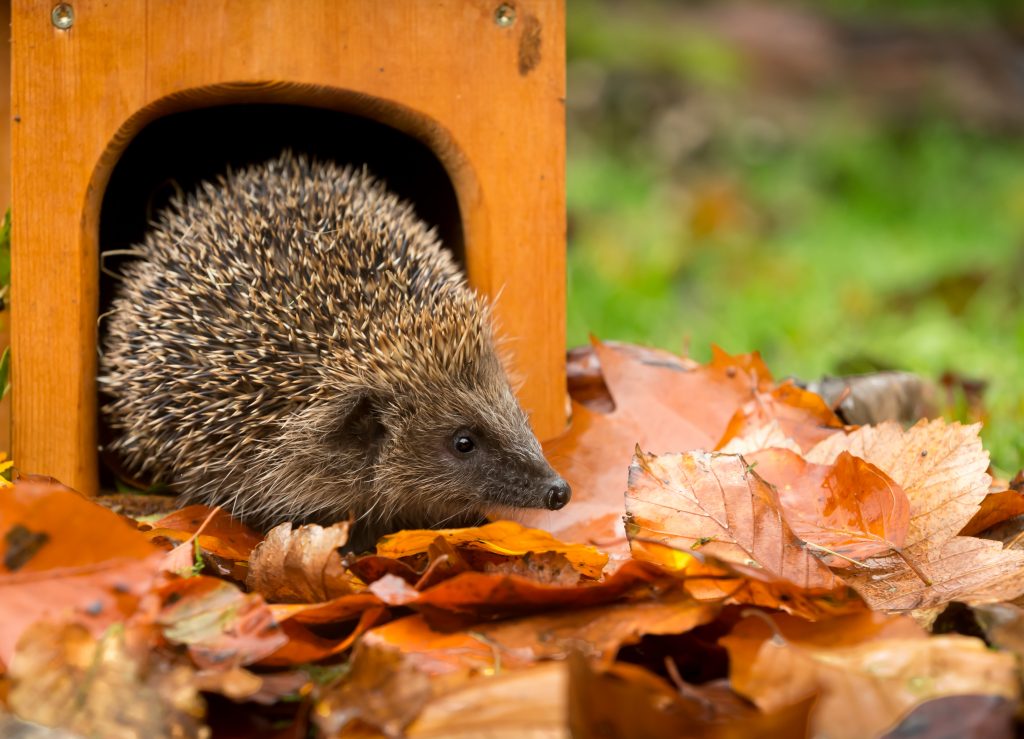
Hedgehog numbers in rural areas have been dropping for many years and, according to the State of Britain’s Hedgehogs 2022 report, have declined by 30-75% since 2000, depending on the area of the UK. Some of the challenges they face include: 

  • Road casualties due to high volumes of traffic 
  • Habitat loss and fragmentation  
  • Increased use of pesticides in gardening  

What action is the University taking? 

Biodiversity is one of the Sustainability Teams areas of work and the University is committed to preserving and enhancing biodiversity on campus. You can find more of our environmental commitments listed in the Environmental Sustainability Policy.  

Some of the work we conduct to create a safer environment for hedgehogs on campus include: 

  • We conduct monitoring surveys annually (using footprint tracking tunnels) to update records about where hedgehogs are present on campus and log the findings on the Big Hedgehog Map 
  • We work with the Grounds Team to ensure: 
  • Leaf piles will be left where safe to do so and they will be checked for mammals if they need to be swept 
  • Create small natural habitats for mammals and insects where possible 
  • Grass cutting regimes are minimised and when necessary, cuts are scheduled so sword length varies  
  • Netting (garden and sport) is secured to prevent animals from getting stuck when it is not in use 
  • We annually partake in hedgehog awareness week to educate colleagues and students about the dangers hedgehogs face and raise money for the British Hedgehog Preservation Society via a bake sale 

How you can help?

  • Make ponds safe with a wildlife escape route 
  • Build a hedgehog house
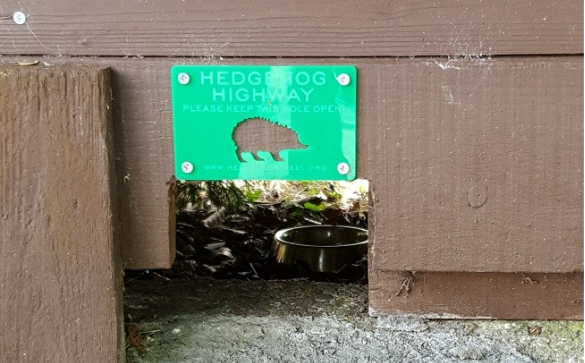
  • Create a hedgehog highway in your garden. Hedgehogs are struggling in Britain because our gardens are becoming more secure with fences, reducing the amount of land available to them 
  • Put out hedgehog friendly food and water. Hedgehog Street recommend any combination of meat-based wet dog or cat foods, or dry cat/kitten food (not ones that contain milk) 
  • Create leaf and log piles, wildflower patches, or overgrown ‘wild’ corners  
  • Talk to your neighbours and encourage them to take action too 
Hedgehog highways. Photo from www.hedgehogstreet.org

Thank you for reading this blog, and let us know in the comments what hedgehog friendly action you are taking this summer!

Meet the Sustainability Team!

The Sustainability Team, based within Estates and Facilities, lead on environmental management and operational sustainability initiatives at Newcastle University. 

Established in 2006, our team’s remit has grown significantly over time, reaching across university activity and working with a range of colleagues to embed positive change. Key areas of work in our day to day include: 

  • Leading projects and initiatives to advance sustainability 
  • Evaluating compliance with environmental legislation 
  • Monitoring and reporting on progress towards objectives and targets 
  • Development and implementation of operational control procedures 
  • Collaborating with internal and external stakeholders to work on areas of improvement 

The teams’ work focuses on eight key themes including: waste, travel, biodiversity, and carbon.  

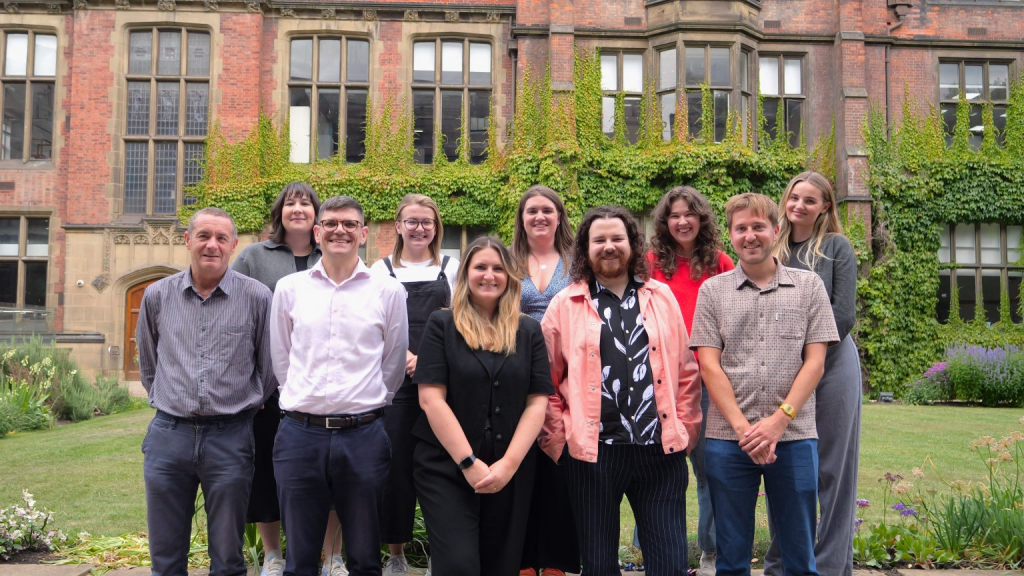
So, who’s behind this work? Meet our team and learn more about how we are working to build a more sustainable future for our university. 

As the Head of Sustainability, Hannah has oversight across operational sustainability, ensuring compliance with ISO14001 standards. She works with colleagues to develop and implement sustainability plans and initiatives, driving continual improvement and embedding more sustainable decision making within the University. 

Matt leads on the University’s progress towards Net Zero carbon dioxide emissions, working with a range of stakeholders to fund and deliver major projects, such as our rooftop solar PV and heat network programmes, to reduce the carbon footprint of the University’s estate and operations. 

Luke oversees implementation of the University’s ISO50001 certified Energy Management System and utilises a range of tools (including the Building Management System) to manage and reduce energy consumption and carbon emissions.    

Paul provides engineering support to operation of the University’s Building Management System (BMS), including investigation of faults and recording of BMS assets. 

Melissa is our Waste Manager. Her role involves ensuring the University disposes of waste in a safe, legally compliant and sustainable manner, and aims to move waste up the Waste Hierarchy, minimising its environmental impact. 

For our Sustainability Officers, no two days are the same! 

  • Jordan works with Luke on energy and carbon management and co-leads our Green Impact programme for colleagues. All things communications and engagement are co-ordinated by Olivia, contributing to in-person events and our network newsletter and LinkedIn
  • Charlotte works on sustainable travel initiatives and has also been working with our Grounds Team to promote and protect campus biodiversity.  
  • Phoebe focuses on water reduction, supports waste initiatives and manages the LEAF programme for wet labs.  

Together, all our Sustainability Officers support implementation of the University’s Environmental and Energy Management system through conducting internal audits, fostering continuous improvement and making sustainability a part of everyday life at Newcastle. 

Charlotte joined the team as a communications placement, and is now working as our Assistant Sustainability Officer. She works closely with the social media and internal communications team to promote our sustainability initiatives and events. Some of her other responsibilities include editing our webpages, managing the Sustainable Campus inbox, and assisting with electricity and gas invoicing.

If you would like to get in contact with the Sustainability Team, you can reach us at Sustainable-Campus@ncl.ac.uk  

Big Campus Birdwatch: What We Saw

On the last Friday in January, Newcastle University joined in with households, schools, and parks for the UK’s biggest citizen science survey, the RSPB Big Garden Birdwatch.

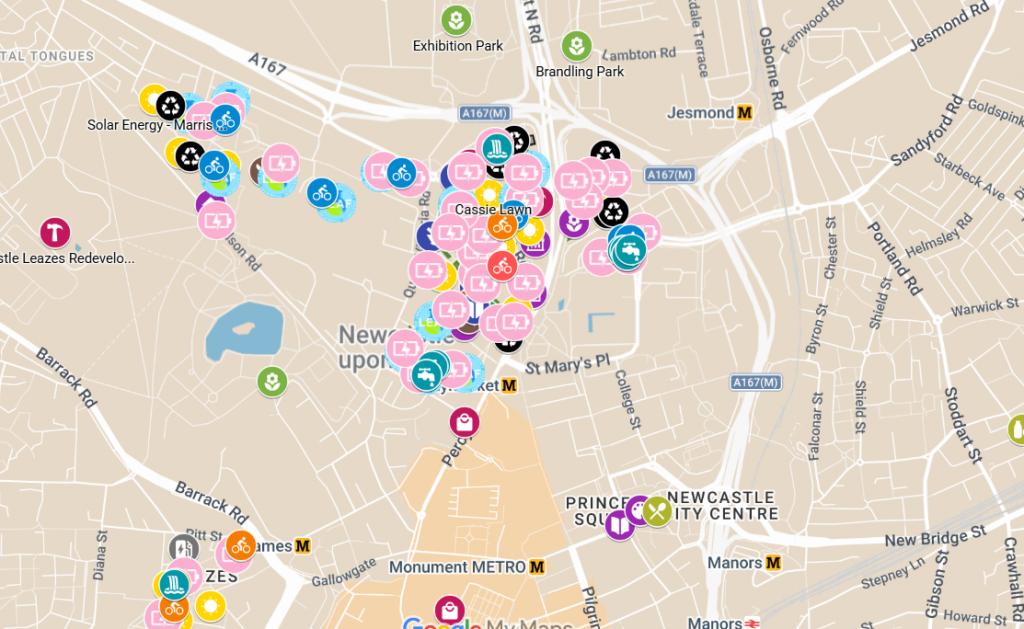
Despite the wind, cold and the threat of rain, participants met in Drummond Quad. We were armed with layers, binoculars, bird ID sheets and patience. The Quad is one of our beloved green spaces on campus, the area is home to some of our biggest trees, some little saplings and even a small pond! Check out our Sustainable Campus map for the location of all our Green spaces.

So what did we see? Here’s a rundown of events:

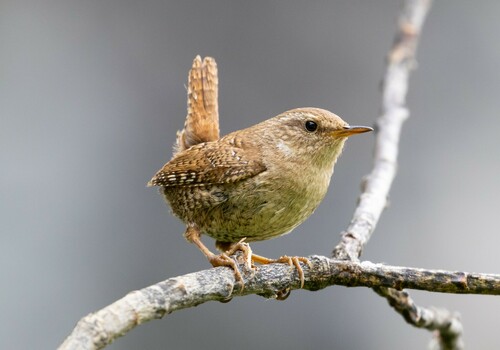
Eurasion Wren

In the first 60 seconds of arriving in Drummond Quad we spotted a Wren! It was hopping around the pond and surrounding bushes and, unbothered by our presence, continued to do so for the remainder of our watch. We made sure to check it was the same Wren throughout, as not to over or under count.

Carrion Crows and Common Gulls

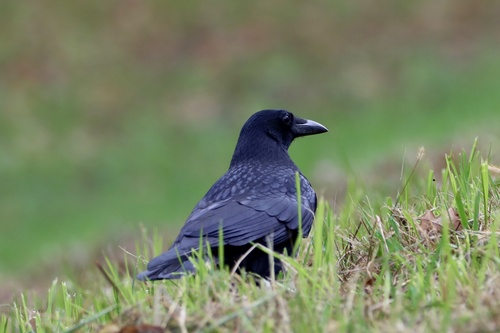
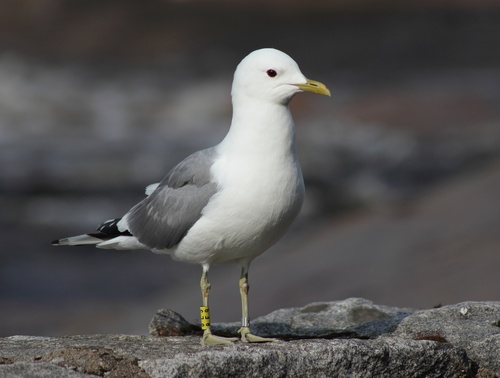
For nearly the entire time crows and seagulls flew and squabbled overhead and sometimes landed in the treetops of the Quad. When they landed, they got counted. Carrion Crow was our most spotted bird, counting 6 landing in the branches.

A Eurasion Blackbird and a Eurasion Magpie

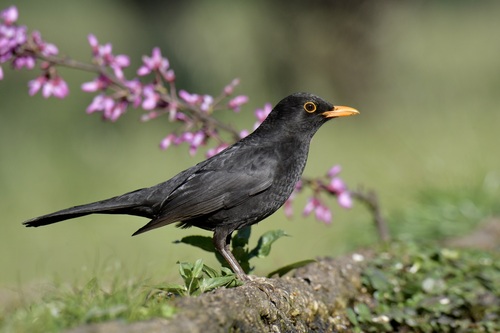
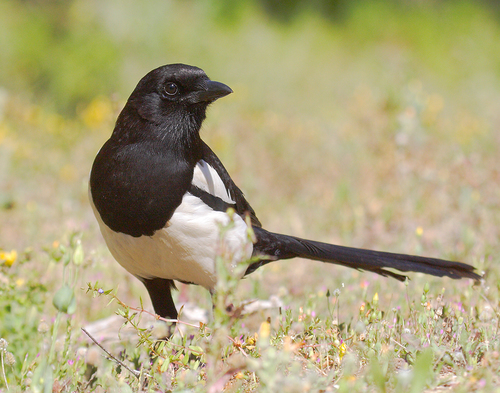
Amidst the noise from the crows and seagulls we were paid a visit by one Magpie and one Blackbird. The Blackbird was the 6th most spotted bird of the 2026 Birdwatch and 5th most spotted in 2025. So it seemed only right to add one to our count.

Great Tit

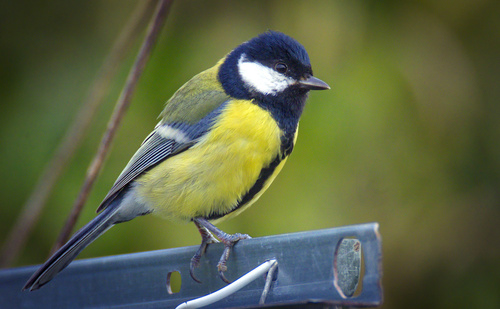
Lastly, one of the highlights of the watch was finding two Great Tits. They were spotted darting between the trees near Drummond Building. They are the 2nd most commonly spotted bird of the 2026 Birdwatch!


Overall, despite the weather, it was a success! Thank you to all who came along and helped us organise.

And even though the birdwatch is over, looking after our Biodiversity on campus definitely isn’t! If you ever see a bird, or some wildlife on campus feel free to record it on the INaturalist App. Make sure to join our Newcastle Project page too. If you’re new to the app, our beginners guide blog may be a useful starting point.

P.S. Check our events page to check a look out for more information coming up around our City Nature Challenge this April/ May.

Gold Cycle Friendly Employer Accreditation

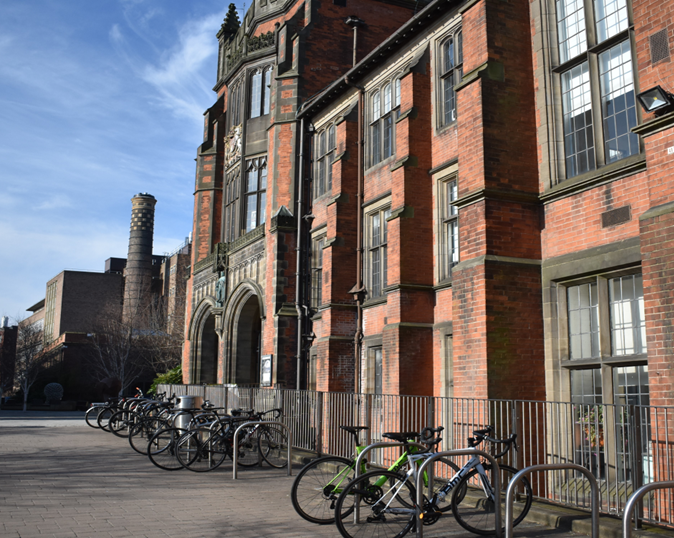
We are pleased to share that Newcastle University has been awarded a Gold Cycle Friendly Employer Accreditation from Cycling UK.

The Cycle Friendly Employer (CFE) accreditation is an internationally recognised standard for promoting active travel in the workplace. Organisations are assessed and can achieve a Bronze, Silver or Gold accreditation – and we are proud to have achieved gold!

The assessment looks at everything from an organisation’s cycling facilities and infrastructure to workplace culture and policies, all focused on making it easier for colleagues to cycle to and from work.  

Professor Jane Robinson, PVC of Business, Partnerships & Place and the Executive Board lead for sustainability said: “The Gold Cycle Friendly Employer accreditation recognises the progress we have made to date in enabling active travel at Newcastle University and supports our commitment to be sustainable in all that we do. As someone who regularly cycles to work, I know the difference this initiative has made and hope it will encourage more people to travel sustainably in the future.” 

Some of our key initiatives that contributed to the gold accreditation include: 

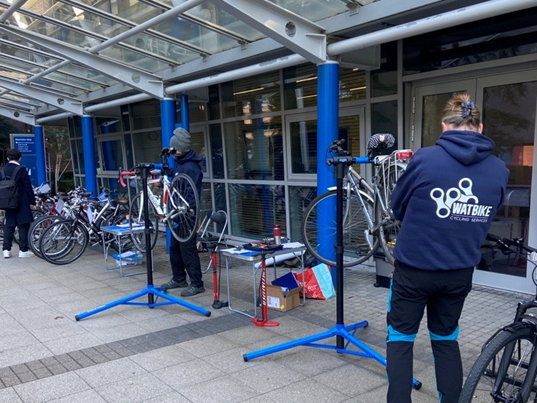
  • Our bi-weekly Dr Bike sessions 
  • Our bike repair stands on the city and Helix campuses 
  • Our extensive network of Sheffield stands and secure stores 
  • Provision of the Cycle Scheme 
  • Our partnerships with local charities and organisations that support cycle commuting in Newcastle, including WATBike and Cycling UK 
  • Our active Bicycle Users Group on Microsoft Teams (you can join today) 

Dr Alistair Ford, Senior Lecturer in the School of Engineering and member of the University’s Sustainability Committee and Bicycle User Group, said: “The Gold Cycle Friendly Employer accreditation is a recognition of the hard work that the University is doing to enable staff and students to travel sustainably to campus. The accreditation demonstrates great progress but importantly it also requires continual improvement to ensure more colleagues feel able to cycle in the future. We will continue to work on our own campus, and in partnership with the City Council and with organisations in Newcastle, to enable more people to get to work, study, or visit by bike.” 

Find out more!

If you would like to learn more about sustainable travel at Newcastle University, you can have a read of the Sustainable Campus website, email us or give our brand new LinkedIn a follow at NCL_SustainableCampus

We look forward to continuing to work with Cycle Friendly Employer so we can learn from the organisation and expand our support for active travel commuters!

SpudFest 2025!

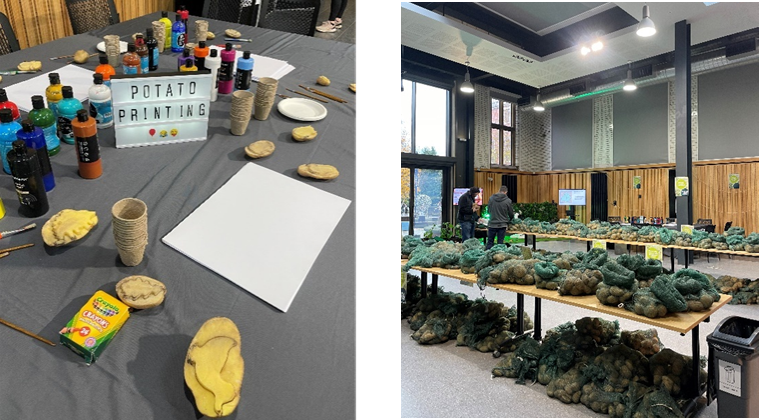
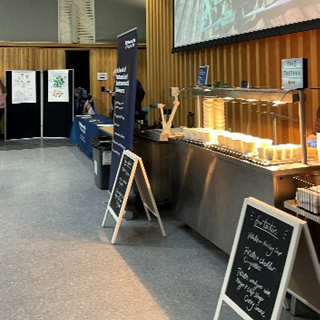
On Thursday 28th November the School of Natural and Environmental Sciences (SNES) hosted SpudFest, transforming the Boiler House into potato heaven. From research posters and company stalls to a potato-printing art station, the event brought together students, colleagues and local partners for a fun and informative day.

Why?

As part of their research, SNES has collaborated with NU Farms to drive innovation in plant and crop science. Every year, University farms Cockle Park Farm and Nafferton Farm grow tonnes of potatoes for research. When harvest season ends, rather than letting the produce go to waste, SNES shares the potatoes with the University community through SpudFest.

Over 1000 people attended the event this year, and over two tonnes of potatoes were given away!

Eat@Newcastle

One of the highlights of the day was the complimentary food samples, courtesy of Eat@Newcastle. The wedges and potato soup were fan favourites, drawing long queues of students and colleagues throughout the day.

Sustainability

Our team had a stand at the event to talk all things sustainability. Alongside us, Annita from Biffa highlighted the environmental impact of food waste with some eye-opening statistics:

  • Food waste contributes to 8% of the UK’s total greenhouse gas emissions.
  • UK households throw away 4.4 million fresh potatoes every day.
  • Every day, 20 million slices of bread are thrown away. This is equivalent to a million loaves wasted daily!

Top Tips:
To keep your potatoes fresher for longer, store them somewhere cool, dry, dark – and away from onions. If they’re starting to look a little old, boil them for five minutes and freeze them. They’re perfect for roasting later! Also:

Men’s Pie Club

North east charity Men’s Pie Club joined the event to raise awareness of their mission to bring local men together over good food and friendly conversation.

‘It’s all about making pies, having a laugh, and getting to know a great bunch of lads in a relaxed, no-fuss environment.’ – Men’s Pie Club

Find out more about the club, here.

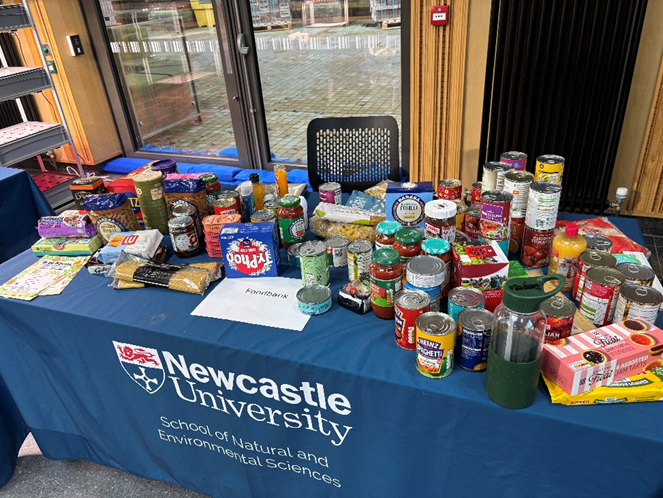
There was also a table to donate food items to the local foodbank! A great way to give back to the community.

SpudFest 2025 brought together research, sustainability, wellbeing and community spirit in one brilliant event. Huge thanks to SNES and Katy Sawyer for organising the event.

We are already looking forward to next year’s celebration of all thing’s potato!

The Great Big Student Beach Clean

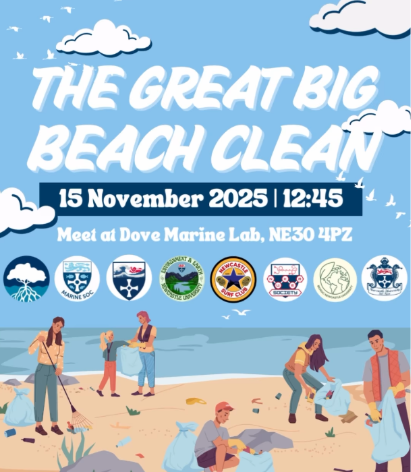
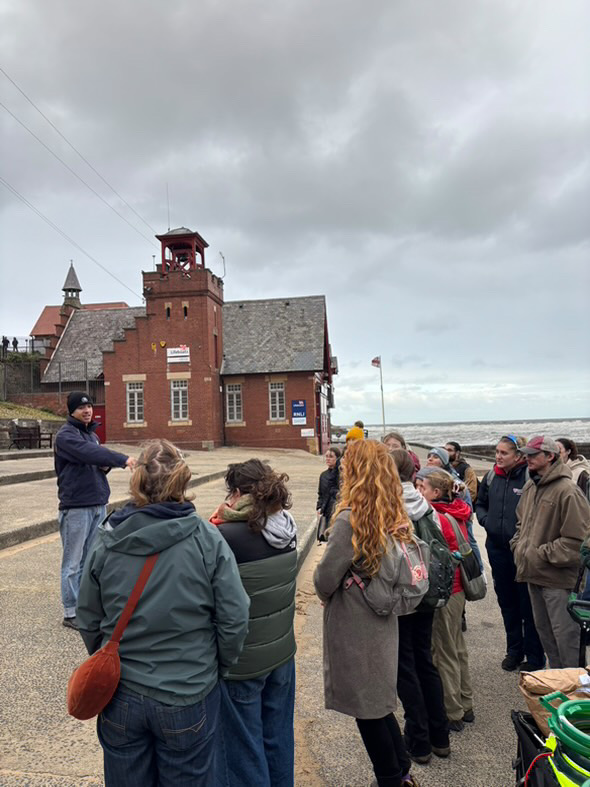
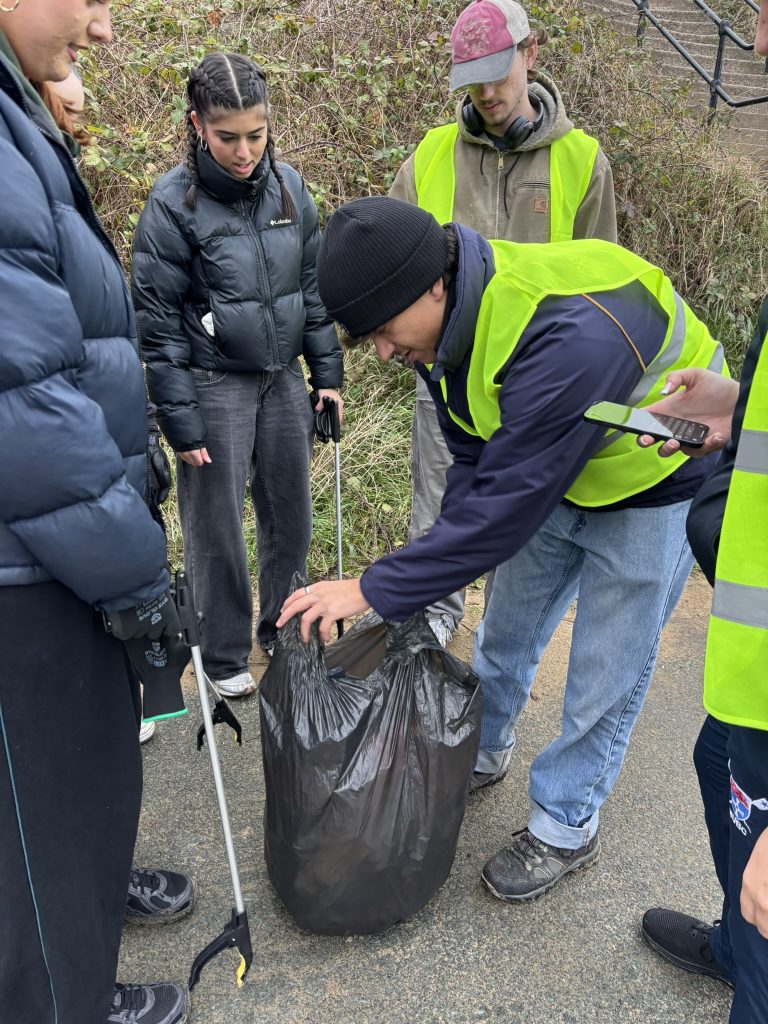
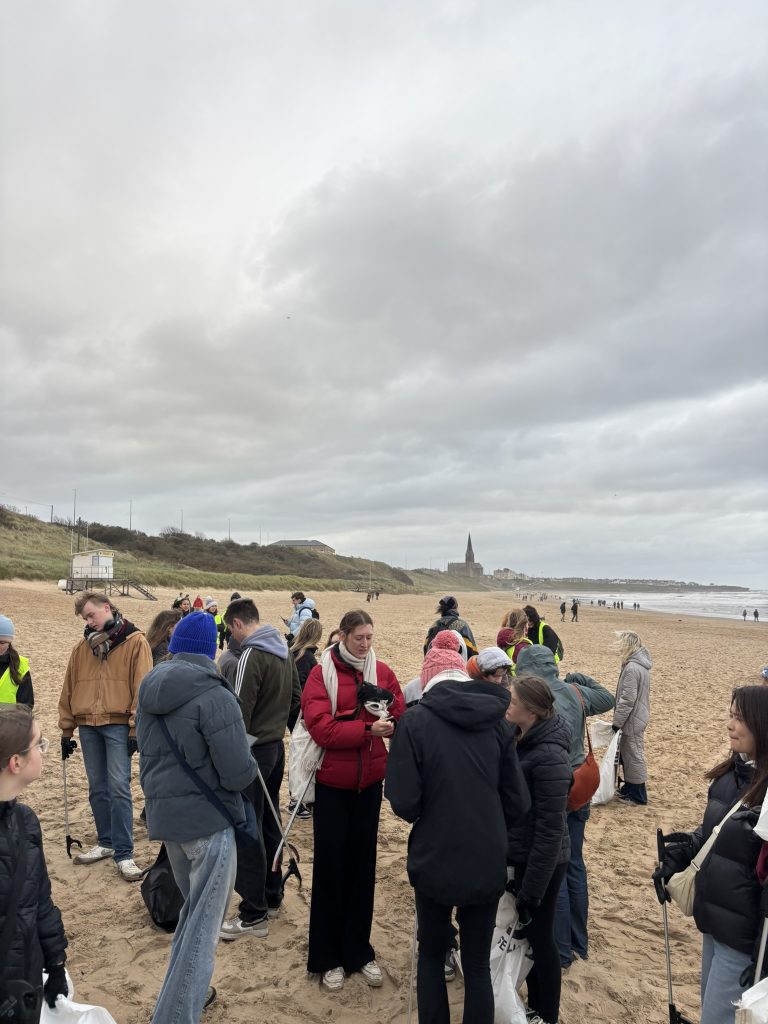
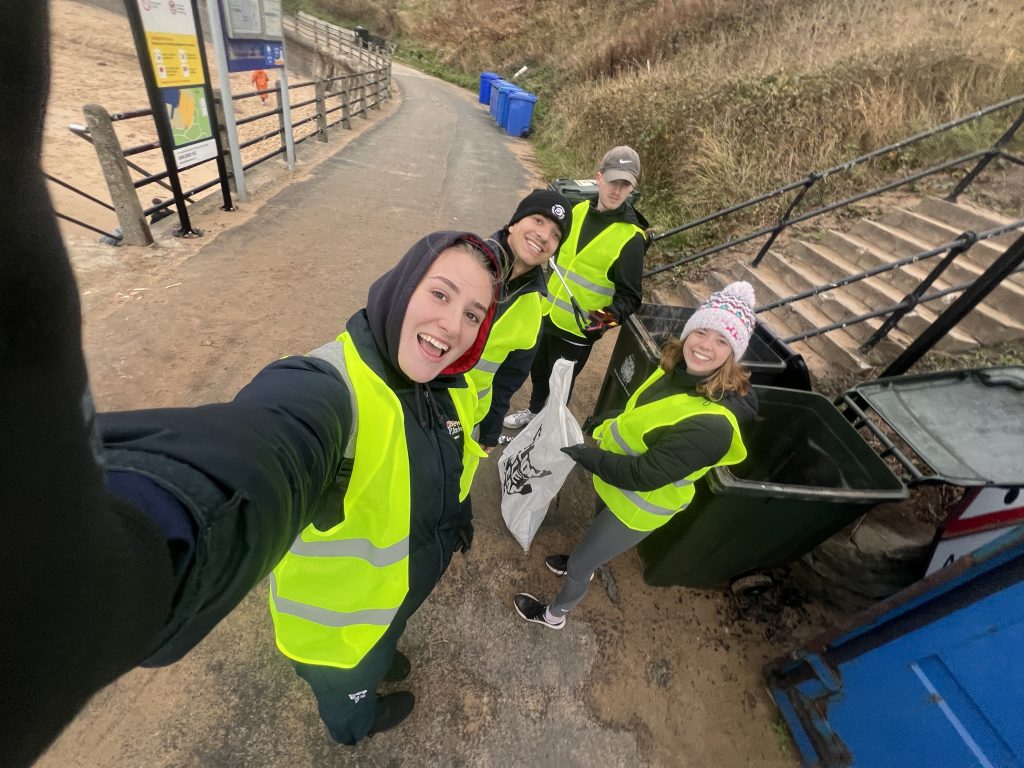
On the 15th of November 2025, a crowd of 68 Newcastle University students gathered by Dove Marine Laboratory, litter pickers and bin bags at the ready! 
 
This group represented an ambitious and momentous cross-club/ society event, with members from 8 different student groups contributing to the pick. 

The effort was also joined by some  Women in Ocean Science and Northumberland Wildlife Trust ambassadors. The collective broke the participants record for Newcastle University society’s litter pick history. 

Along the trail starting in Cullercoats at Dove Marine, across Longsands, and finishing at King Edwards Bay, Tynemouth these litter pickers collected a hefty 56kg of litter! The second to best for weight collected in the society’s history.  

Really good turn out and we got the beaches looking spotless! – Lucy and Freya (Newcastle University Marine Society) 

The Environment and Earth Society concurred the event was an undoubted success: 

“Very rewarding and a fun challenge to try and pick up the most litter” 

“A lovely afternoon spending time outdoors and doing something actively positive for nature” 

“Exciting to be with such a big group of likeminded people!”  
 

The Beach Cleaning Society were overwhelmed with the turnout and support: 

“It was a great way to contribute to keeping our local beaches clean, and collaborating across multiple societies gave everyone an opportunity to connect with likeminded people- was a very enjoyable afternoon despite the cold!”  

“It was an amazing event, and we were very proud with the turnout so a huge thank you to everyone who came to help clean our coastline!”  

 A huge congratulations and kudos to the students involved for the impressive positive impact created. Can’t wait to see what you do next! 

Trees Week Wildlife Wander: What we Found 

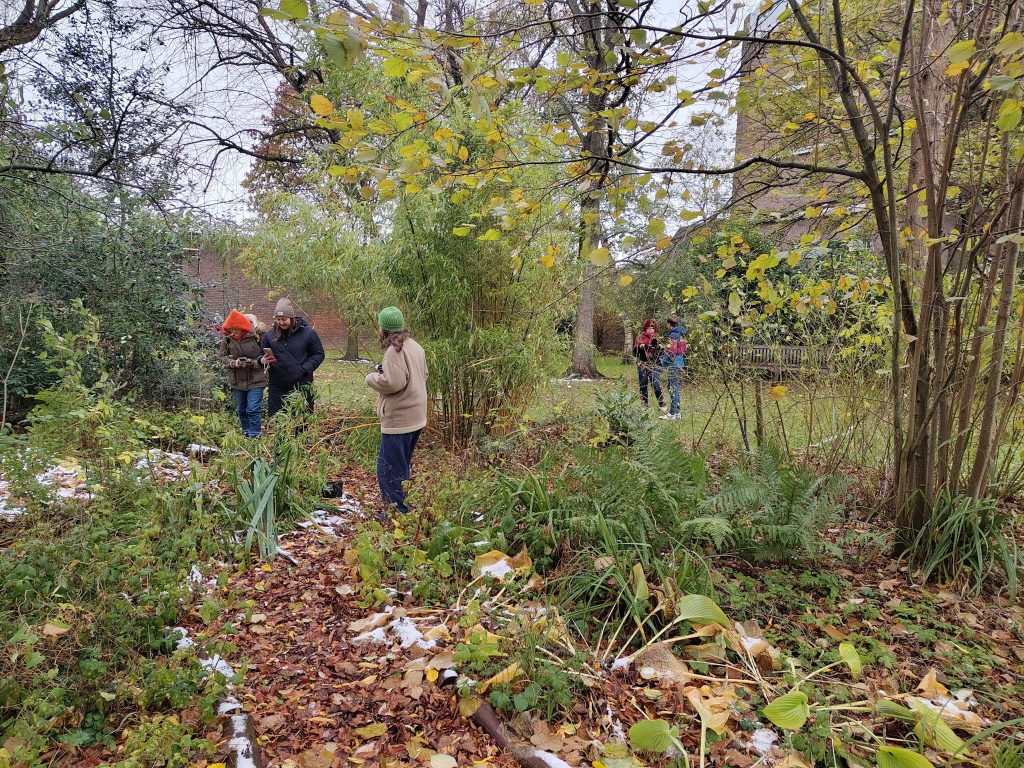
On a snowy November lunchtime, in icy air, colleagues from across the University joined the Sustainability team at Kings Gate stairs for a tour of the trees. Despite the unfavourable conditions the group remained undeterred, donning layers to shield the cold and a particularly brilliant array of hats. Once participants had a chance to download the iNaturalist app and join the Newcastle University Campus Biodiversity Network, we were off! 

Our loop around campus took us past the Arches, Quadrangle, entrance to the Courtyard Cafe, Claremont Quad and across Claremont Road into Drummond Quad before returning to Kings Gate. If you want to check out some of these Green Spaces have a look at our Sustainable Campus Map

In total 39 new observations were recorded on our Campus Project Page across the Winter Wander. This comprised of 32 different species: 1 bird, 1 insect, 2 fungi, and 28 different plants (of course plenty of trees).  

Here are some highlights (top 3 trees and 2 special mentions):  

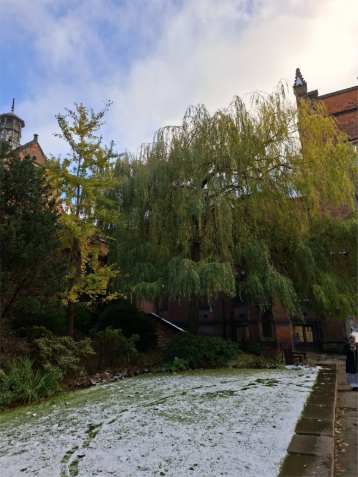
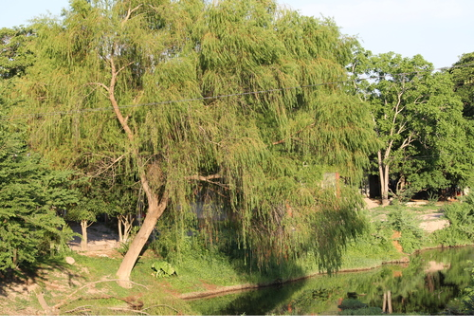
1. Weeping Willow (Salix babylonica)

Arguably one of the most iconic trees on campus, it’s the weeping willow that sways over the Fine Art entrance beside the Arches.

Captured on campus by
iNaturalist user smah1
Reference image from iNaturalist website

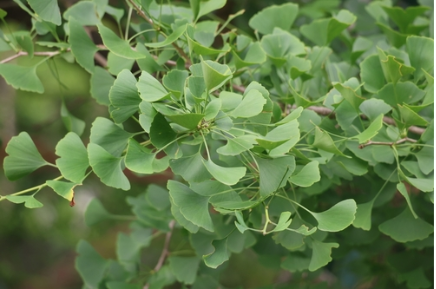
2. Ginkgo (Ginkgo biloba) 

Also known as the “maidenhair tree” it is found in the Quadrangle. Native to East-Asia it was historically known as “silver fruit” or “white fruit” in Chinese. Due to a centuries old transcription error, it got the name “Gingko”.  


Captured on campus by
iNaturalist user steph50665

Reference image from iNaturalist website

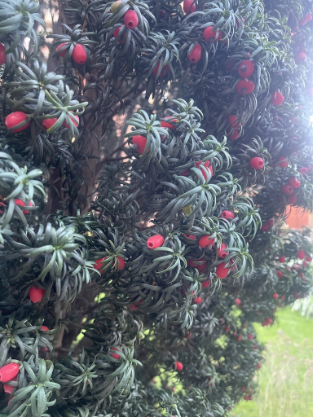
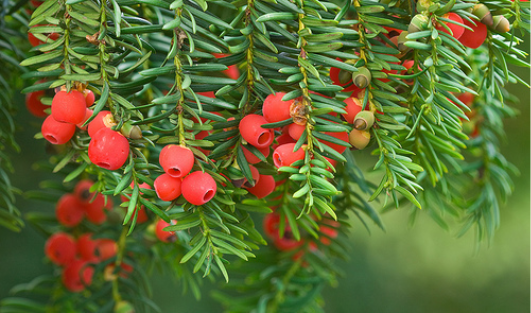
3. Common Yew (Taxus baccata)

This festive looking tree, adorned with striking red berries is not to be messed with. This old-world species of evergreen tree is completely poisonous, apart from the red flesh of the berries (although the seed inside is). 

Captured on campus by
iNaturalist user olivia_______ 
Reference image from iNaturalist website

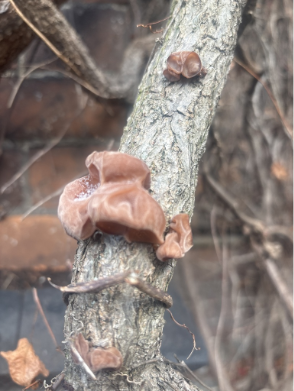
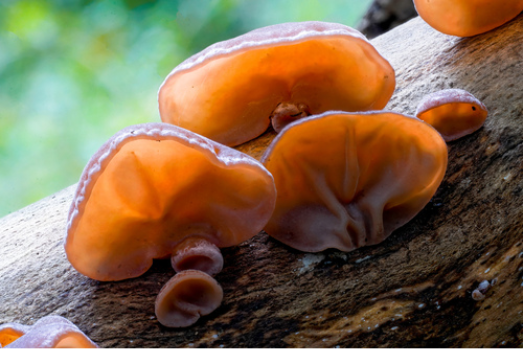
4. Jelly Ear Fungi (Auricularia auricula-judae) 

These gelatinous looking fungi were spotted on a branch in the Quadrangle.  

Captured on campus by
iNaturalist user carys2030
Reference image from iNaturalist website

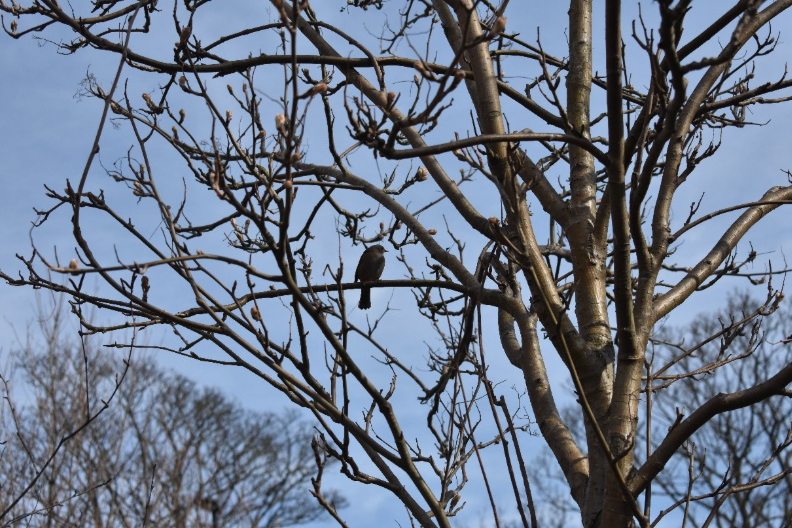
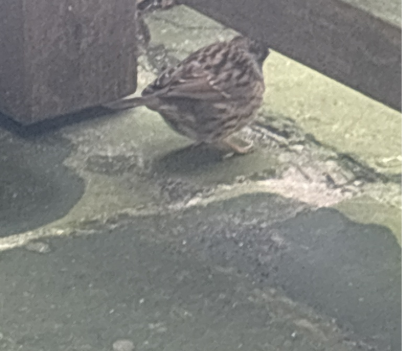
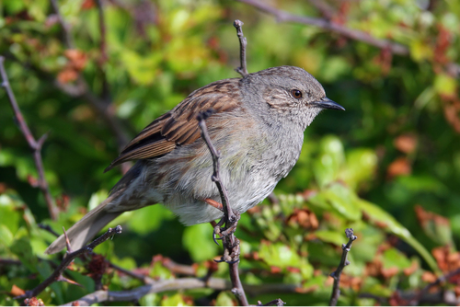
5. Dunnock (Prunella Modularis) – carys2030 

Photographing any bird is tricky! But one walker managed to snap a photo of this little Dunnock hiding out under the bench outside the Old Library.  

Captured on campus by
iNaturalist user carys2030

Reference image from iNaturalist website

Thank you to all who joined us and contributed to the observations, laughs and impromptu litter pick! We look forward to seeing more iNaturalist spots over the Winter months.  

Introducing your 25/26 NUSU Ethics & Environment Rep!

It’s a new academic year! And that means many things, including newly elected NUSU student representatives. I had the joy of catching up with the new Ethics and Environment student rep and asking all about the role and their hopes for the year ahead. Read on to listen into our conversation.

Hi Eleanor! Could you tell me a bit about who are and your experience at Newcastle University so far?
Hi, I’m Eleanor and I’m this year’s Ethics and Environment rep at NUSU! I’m a Stage 4 student studying for an Integrated Master’s in Earth Science. I’ve really enjoyed my course because it’s so varied, I can’t believe I’m in my Master’s year now. I’ve had a great few years in Newcastle and societies have been a huge part of my experience.

They’ve given me the chance to meet so many great people. I’ve joined various societies over the years including Environment and Earth, Model UN, Irish Dance and Latin and Ballroom. I’ve also been involved in the committees for some of these. I was Secretary and then President of Environment and Earth, and now I’m Secretary for Model UN.

Amazing, so good to hear how societies have shaped your uni experience. So how did you get interested and involved in the NUSU rep role?
Last year when I was President of the Environment and Earth Society I was asked by (now retired) Senior Lecturer Dr John Appleby if I wanted to get the society involved with ‘Hope not Heat’ a youth climate event he was organising. I reached out to other student groups like the Plant-Based Unis Campaign (PBU) and the Beach Cleaning Society. We put on events in addition to the organised public “Hope not Heat” events. John had mentioned the E&E rep role which I hadn’t heard of before and I became interested! At the end of the academic year, I attended Student Council to support a PBU motion. At that student council meeting. They were also electing the E&E rep and others encouraged me to go up for it. So that’s how I was elected! I’m very excited about the role given my passion for sustainability!

So now you’re elected, what’s the first thing you want to do? How can others get involved?
The first thing I’m doing is starting up the Student Environmental and Sustainability Committee (SESC). It will be attended by reps from sustainability linked student groups and Environment and Sustainability (E&S) course reps. It provides a link between students and staff as I also attend the University Sustainability Committee (USC) where I raise environmental concerns from students. I’d really recommend becoming an E&S rep if you want to get involved and attend SESC where you can pass on environmental issues you want to raise from your School. Also, I want to encourage students to reach out to me about ideas/concerns so I understand student opinions on sustainability and can use this to shape future initiatives!

Brilliant! Well, I’m looking forward to seeing the SESC come together and for all the work it will do for sustainable action on campus.

Sustainability Team Beach Clean 2025!

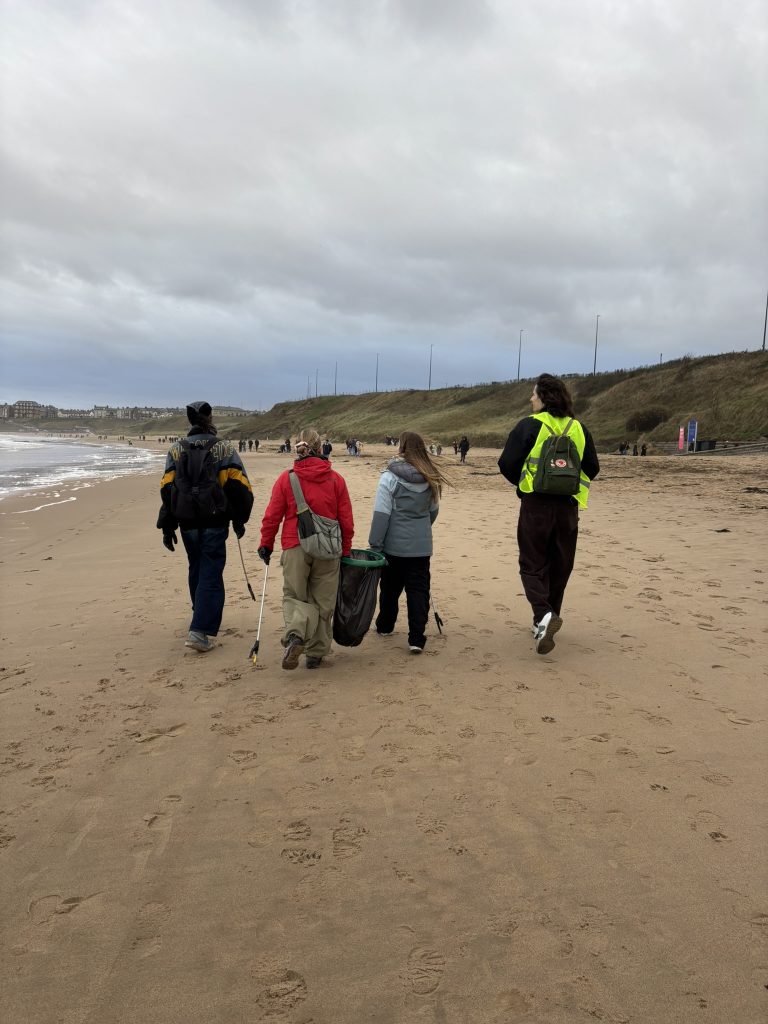
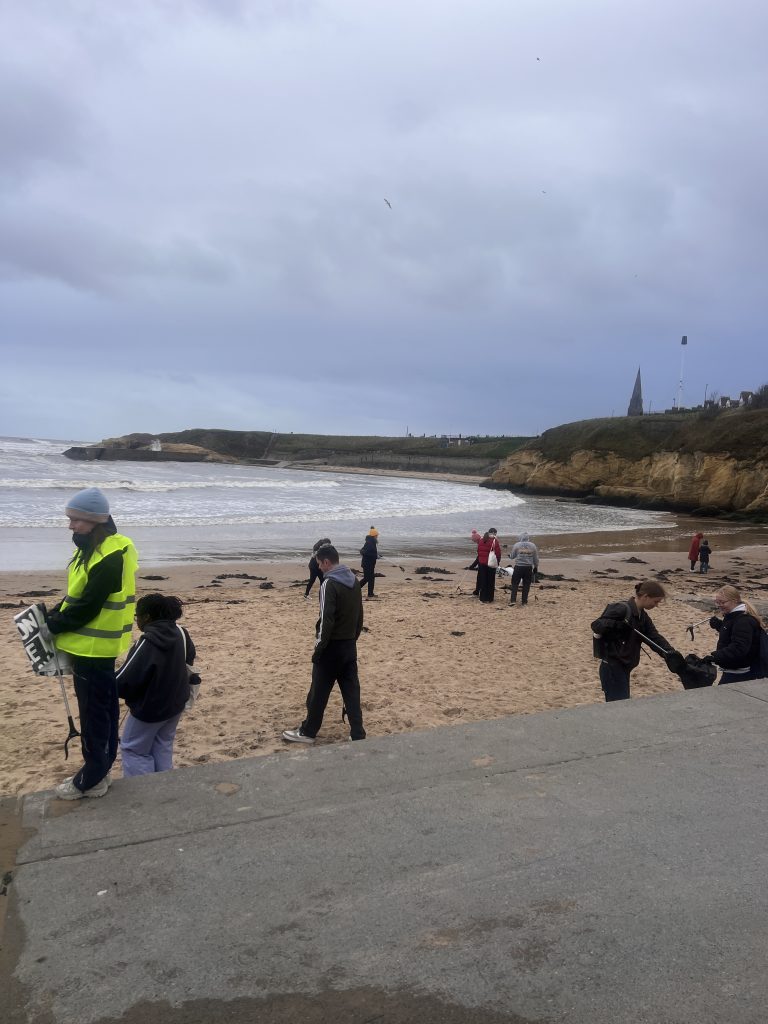
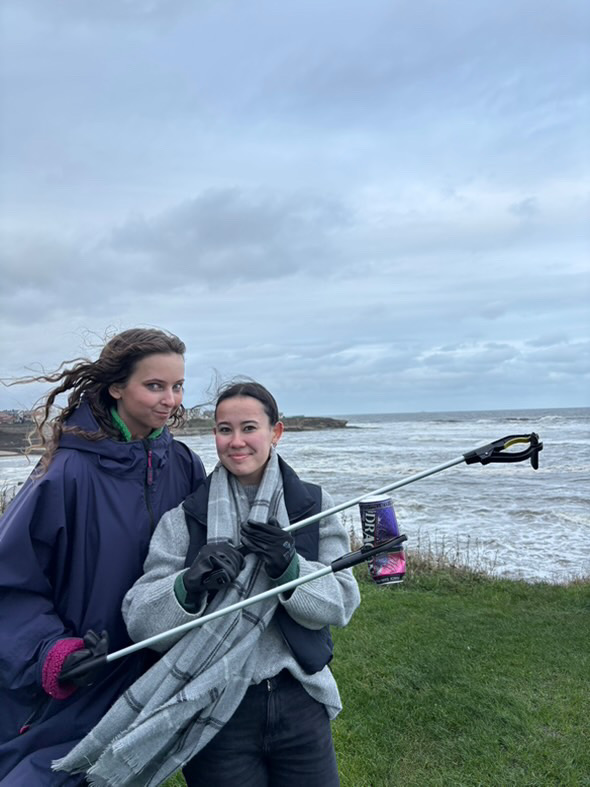
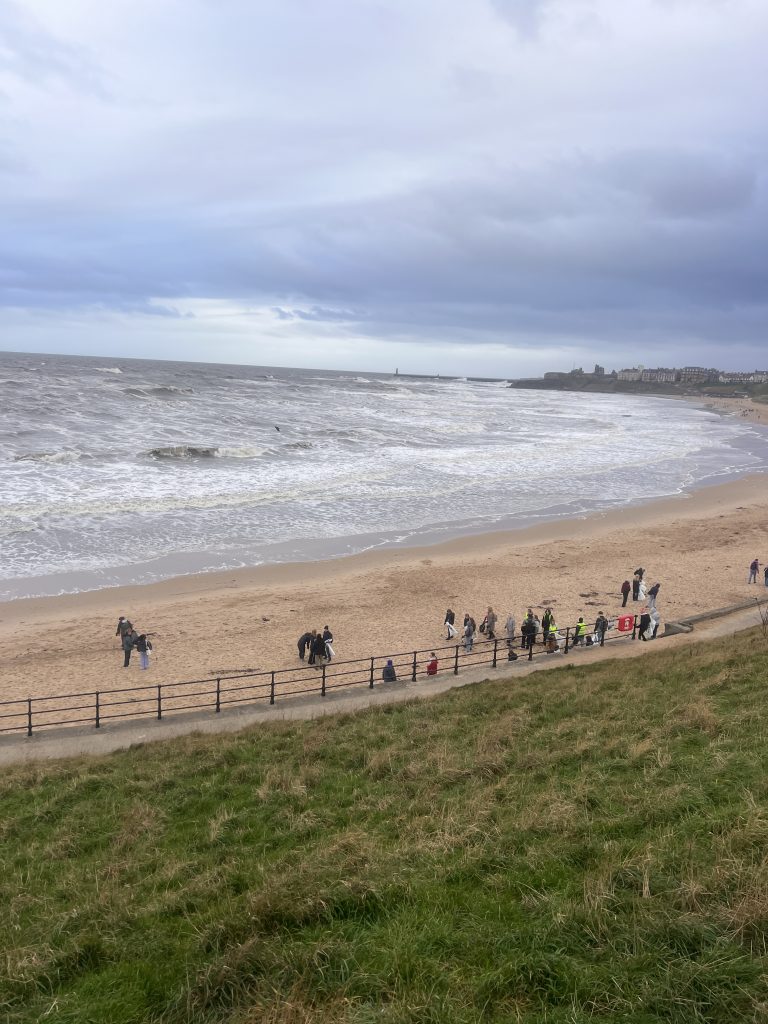
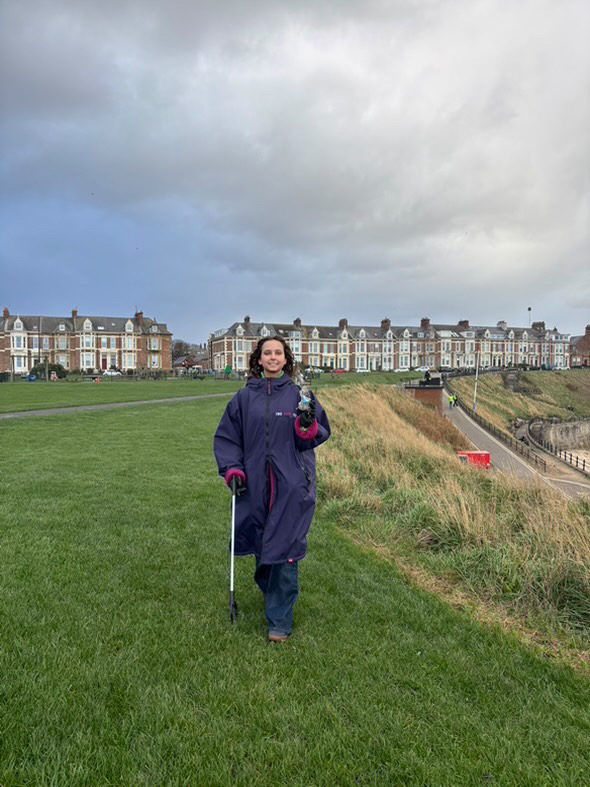
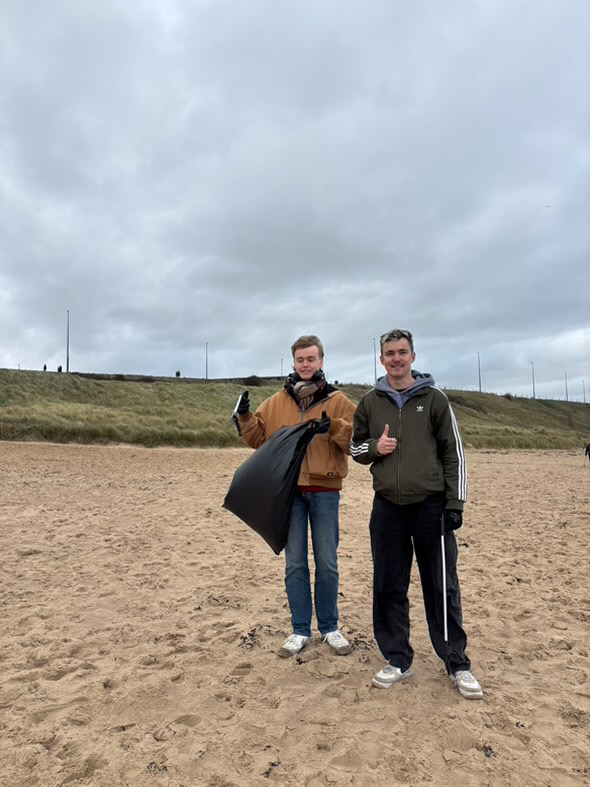
This week the Sustainability Team headed to Tynemouth Longsands Beach and Cullercoats for a beach litter pick in support of the Great British Beach Clean 2025.

Every September, thousands of people across the UK head to the coast to take part in this nationwide event, organised by the Marine Conservation Society (MCS). Last year volunteers across the UK removed over 764,000 litter items from our beaches, weighing more than 16,800kg. This year’s Great British Beach Clean is running from Friday 19th to Sunday 28th September, and we were proud to play our part in helping protect our local coastline.

Armed with litter pickers, gloves, and clipboards, we spent the afternoon collecting waste along the shoreline, aiming to improve the environment for people and wildlife.

We used the MCS litter survey forms to record the types and amounts of waste we found. These forms are an essential part of the Beach Clean, allowing the MCS to track pollution trends and build evidence to campaign for cleaner seas and stronger environmental policies.

Some of the most commonly found items included:

  • Small pieces of plastic
  • Bottle tops and lids
  • Cigarette butts
  • Fishing line and small netting fragments

The data we collected will now feed directly into the MCS’s national database, helping researchers and policymakers better understand the scale and sources of beach litter.

A huge thank you to everyone who took part! And we are happy to report there wasn’t an awful lot of litter at the beach, thanks to the local community who regularly litter pick.

Want to get involved?
The Great British Beach Clean is running until Sunday 28th September, and there are events happening all over the UK. Visit the Marine Conservation Society website to find out how you can take part and help protect our beaches.

Let’s keep our coastline clean!