Ballast Hills Burial Ground: The Place
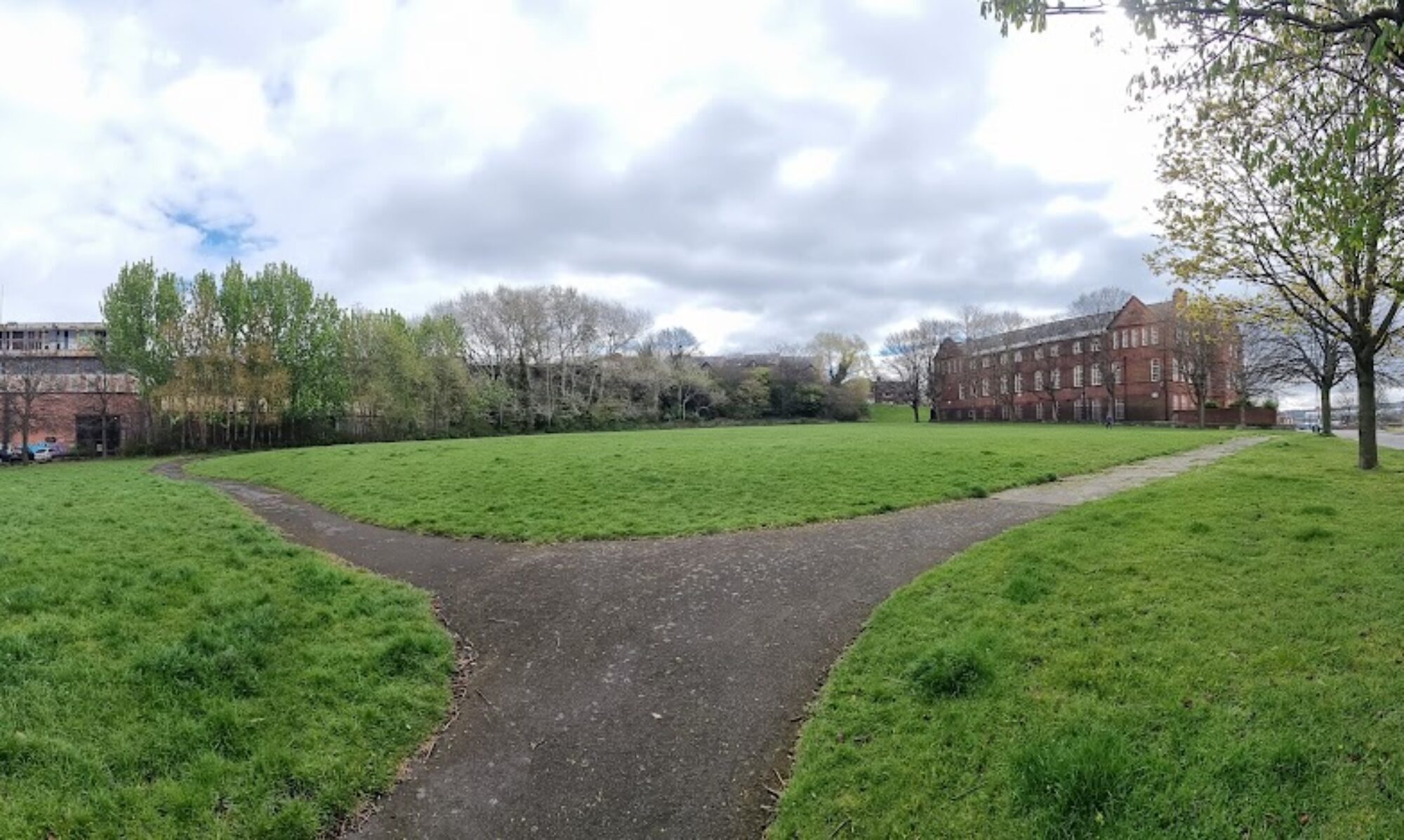
Ballast Hills Burial Ground occupies approximately three acres in the Ouseburn Valley, within Newcastle upon Tyne’s Byker Ward. It is one of the city’s oldest surviving unconsecrated burial grounds, used for more than 200 years and containing the remains of tens of thousands of people before its closure in 1853.
More than 40,000 people may have been buried here, making it one of Newcastle’s largest historic burial grounds. The site has strong Nonconformist origins, but it served people from a wide range of religious and social backgrounds. Many of those buried at Ballast Hills were working people and poorer residents, alongside tradespeople, merchants, ministers, migrants, children, and others connected with Newcastle and the wider region.
In the late 1920s, the surviving gravestones were moved and relaid to create the circular path that remains visible today. Hundreds of gravestone elements survive within the path, while most burials remain beneath the present open space.
Ballast Hills is significant for its scale, long history, surviving burial landscape, archaeological potential, and close association with Newcastle’s religious, social, working, and family histories. Its importance extends beyond the city because of its regional significance and potential national importance. The burial ground also remains an important green space and a place of memory within the Ouseburn Valley.
Ballast Hills Burial Ground: The Project
The Ballast Hills Burial Ground Project brings together work on the site, the archive, and the stories connected with Ballast Hills.
Its purpose is to curate, connect, and share everything relating to the burial ground. This includes the surviving landscape and gravestones, burial records and other archival sources, archaeological evidence, photographs, research, family histories, community knowledge, creative responses, and the stories of the people buried here.
The project works to make this material more accessible, support the appropriate care of the site, and build a fuller understanding of Ballast Hills. The burial ground is an important part of Newcastle’s history, while its scale, long period of use, Nonconformist associations, social reach, surviving records, and archaeological potential also give it regional significance and possible national importance.
Different strands of activity are supported through separate funding streams and partnerships, but all contribute to the wider project. Further information is available on our Funders page.
The project is led by Dr Myra Giesen, an anthropologist at Newcastle University. She began the work in response to the limited public recognition of a burial ground where more than 40,000 people may have been buried and for which an important body of surviving evidence remains. Her aim has been to bring the site, archive, and stories together, and to create a shared resource for researchers, descendants, local communities, volunteers, and visitors.
The wider project continues to evolve through research, conservation, public engagement, digital development, learning resources, events, volunteering, and long-term planning for the future of the burial ground.
Explore and follow the project
Explore the blog to discover research, stories, project updates, volunteering opportunities, and information about our funders and partners. You can also follow the project on Facebook and Instagram.
By working together, we can research, care for, curate, and share Ballast Hills Burial Ground, its archive, and its stories, while recognising the people buried here and strengthening understanding of the site’s local, regional, and wider significance.