About the Project
The Comfrey Almanac is an illustrated book produced through a collaborative partnership between Newcastle University and The Comfrey Project, a Gateshead-based charity supporting refugees and people seeking asylum through community gardening. I led the project as Principal Investigator, working in conversation with Comfrey’s director, Eleni Venaki and Comfrey’s community coordinator, Nicola Bushell, to shape the project, along with local artists and the wonderful Comfrey Project participants.
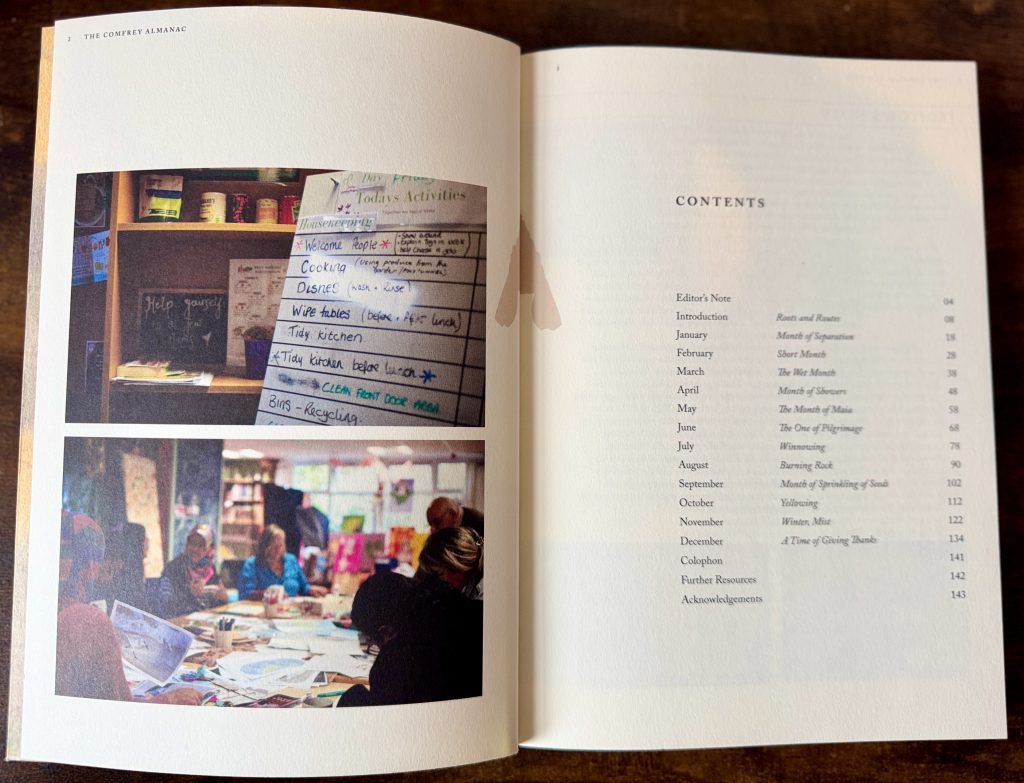
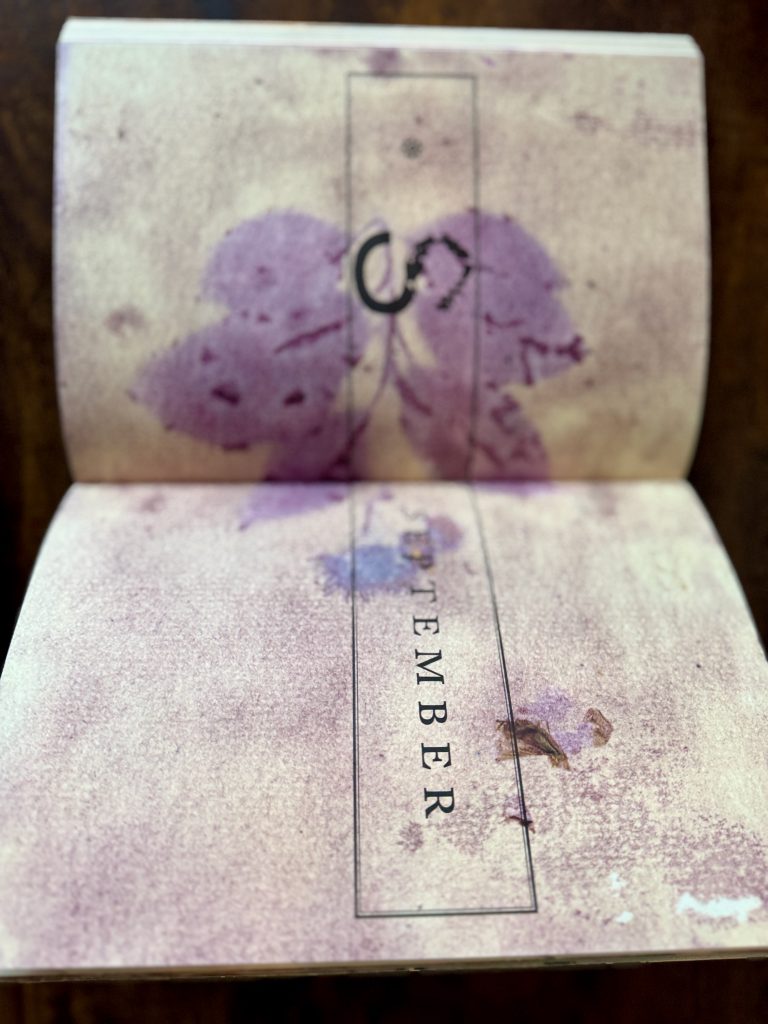
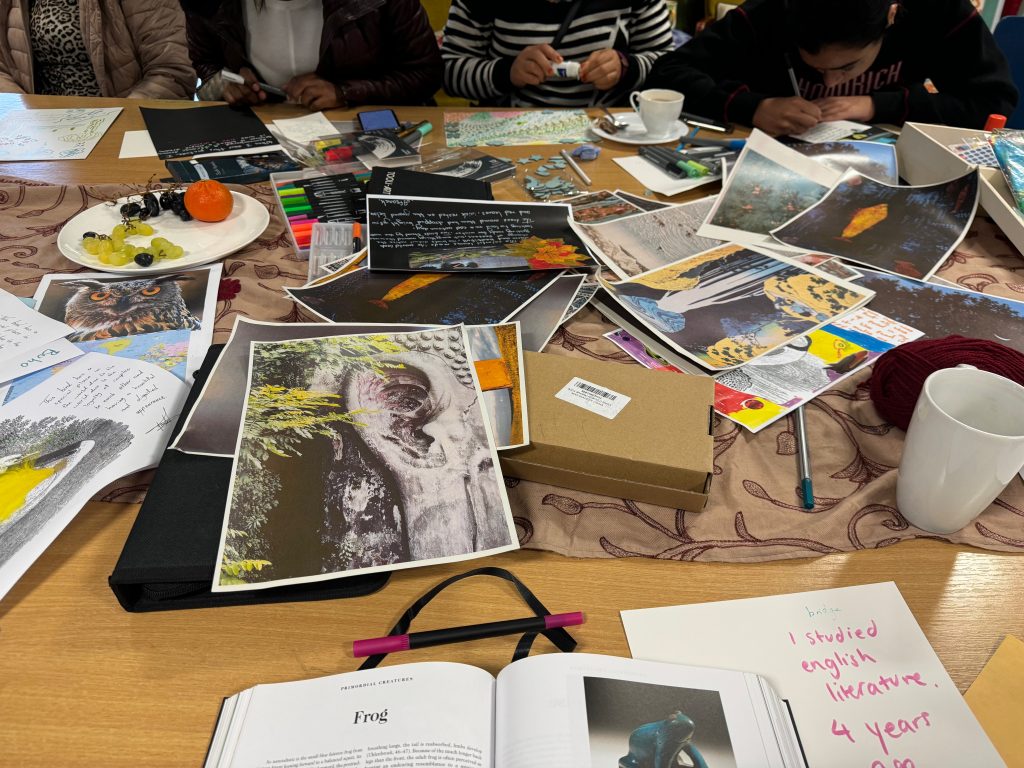
Developed between 2021 and 2024, the Almanac brings together stories, recipes, seasonal gardening knowledge, healing practices, cultural festivals and creative reflections from volunteers at The Comfrey Project. Its six-part monthly structure, Festivals and Important Dates, Voices, Gardening with the Month, Recipe, Garden Goodness, and Correspondences, captures both the cyclical rhythms of the garden and the diverse cultural calendars of the community. It is richly illustrated with artworks created by the volunteers during workshops with local artists, and is sustainably designed to be used across years, rather than being tied to a single calendar year.
The book can be purchased here via our online store and all proceeds from sales go to support the work of The Comfrey Project.
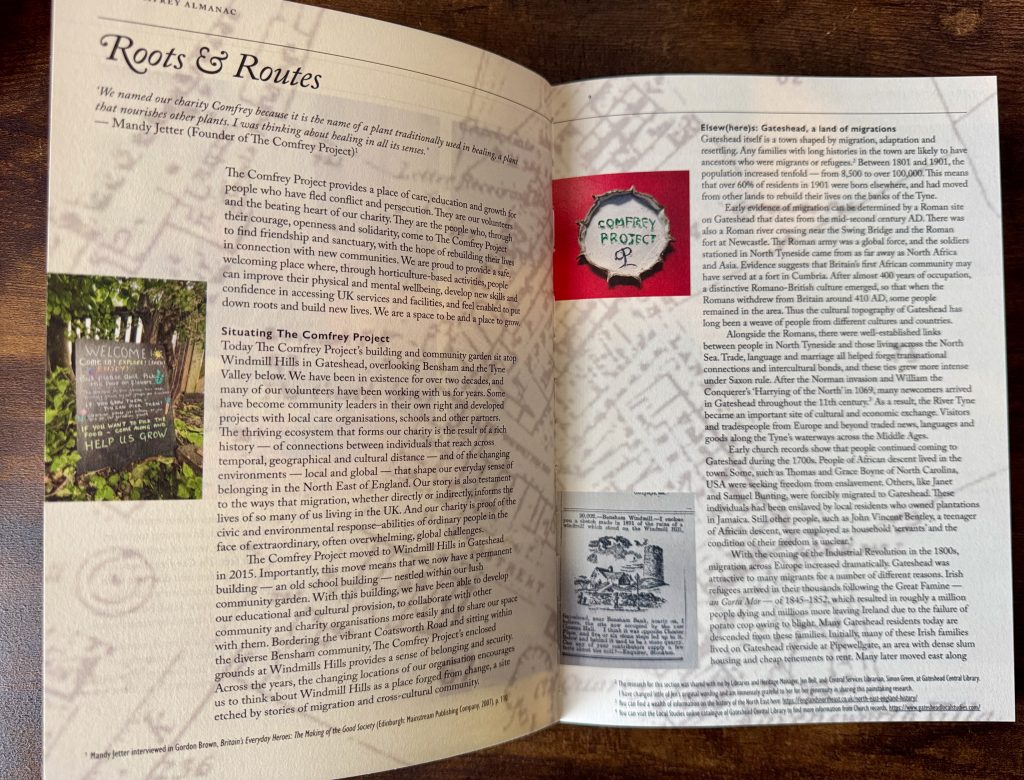
The project mobilises the almanac form both as a cultural archive and participatory research method. Rooted in the soils of Windmill Hills in Gateshead and Walkergate allotments in Newcastle yet trans-local in scope, The Comfrey Almanac interweaves ecological knowledge with the diasporic memories and practices of those who contribute. In so doing, it foregrounds alternative imaginaries of the transcultural, urban garden as a site where ecological attention, community resilience and social belonging intersect.
Cultivating Socio-Ecological Imaginaries for the City
Academically, The Comfrey Almanac contributes to cultural geography by demonstrating how participatory, artistic and ecological practices can generate new socio-ecological imaginaries of the city. It highlights how grassroots cultural production, attentive to multispecies life and migrant knowledges, can intervene in dominant narratives of urban ecology, refiguring the city as a space of care, diversity and ecological citizenship. By employing the almanac form, the project seeks to reconnect participants and readers to cycles of nature and cultural memory and to render discernible alternative urban futures grounded in inclusivity and ecological justice.
As a form of everyday engagement with urban nature, this project’s methods put cultural co-production at the heart of ecological practice. Curating the social and ecological perspectives of the volunteers, this book gathers together diverse imaginaries for the contemporary city.
Support and Future Plans
The project’s research, workshops and outputs were made possible with kind support from the Economic and Social Research Council (Impact Acceleration Account), the North East Combined Authority, Newcastle University’s Humanities Institute and the Centre for Researching Cities, as well as numerous individual donations. 750 copies of the book have been printed, with distribution and associated events planned in collaboration with cultural and civic partners from autumn 2025 onwards.
