You may think that bullying is confined to the playground and mainly impacts on school age children (and as a parent of a long-term bullied child I know all about this), but did you know that workplace bullying costs the UK economy around £18 billion in lost productivity each year? A staggering amount of money for sure but more important is the human cost, the misery it creates for victims and how they have to live with the negative consequences of bullying, not just at work or school but in all facets of their life.
Bullying in the workplace can happen to anyone and anyone can be guilty of bullying. If you are experiencing it, the consequences can be distressing and humiliating. Bullying can manifest itself in different ways and can be described as offensive, intimidating or insulting behaviour designed to undermine, denigrate or injure the victim. Bullying can never be justified, is nearly always wilful and something that no-one should put up with. There is some thoughtful insight into the human cost of workplace bullying, as well as advice on how to cope with it here.
 This week is National Anti-Bullying Week, the theme being ‘All Different, All Equal’. Now in its 12th year, Anti-Bullying Week allows people the chance to both think about bullying and to raise awareness of it. Although aimed primarily at preventing bullying in schools and among young people, Anti-Bullying Week encourages everyone to work together to highlight the issue and generate ideas to stop it.
As you may know, we have just reviewed and updated our Dignity & Respect policy and procedures. These take effect from December 1st and sets out the University’s position with regards to bullying and harassment and the practical steps we can take to resolve it both informally and through more formal methods.
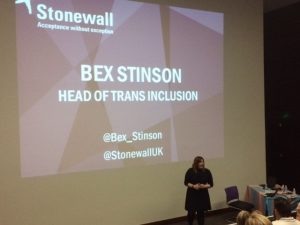
In the final analysis one thing stands out for me. It is that everyone has the right to be treated with dignity and respect at work, regardless of position or status. But it’s not just about the victim and perpetrator, it is also about doing the right thing if you witness such behaviour. Stonewall have a ‘No Bystanders’ campaign urging witnesses to homophobia and transphobia to call it out and report it. To my mind this applies to bullying and harassment every bit as much.
Leslie Platt, HR Adviser, Equality and Diversity
 they can explore their career options, discuss particular work-related challenges or simply have a sounding board outside of their line management structure. This is nothing new for the University – we’ve had successful mentoring schemes for many years but we want to make mentoring more widely available to staff at all levels.
 Since I started at the University in June this year, I’ve been encouraged to see that a number of strong equality and diversity initiatives have been put in place or are being planned. One such initiative is the


 ere along a very long spectrum? A dodgy back, a grumbly knee, poor co-ordination, and so on. In our attempts to demonstrate compliance with the law, we in HR are guilty of labelling people as ‘disabled’ but I’m really not sure it is that helpful a box to put people in.
 On a good day I am barely aware of having a disability – I have the right assistive technology to do my job, my colleagues remember to let me have those notes in advance so I can contribute effectively at our meeting, the bus driver is well trained in helping me get home, the pedestrian crossing works (find out about