
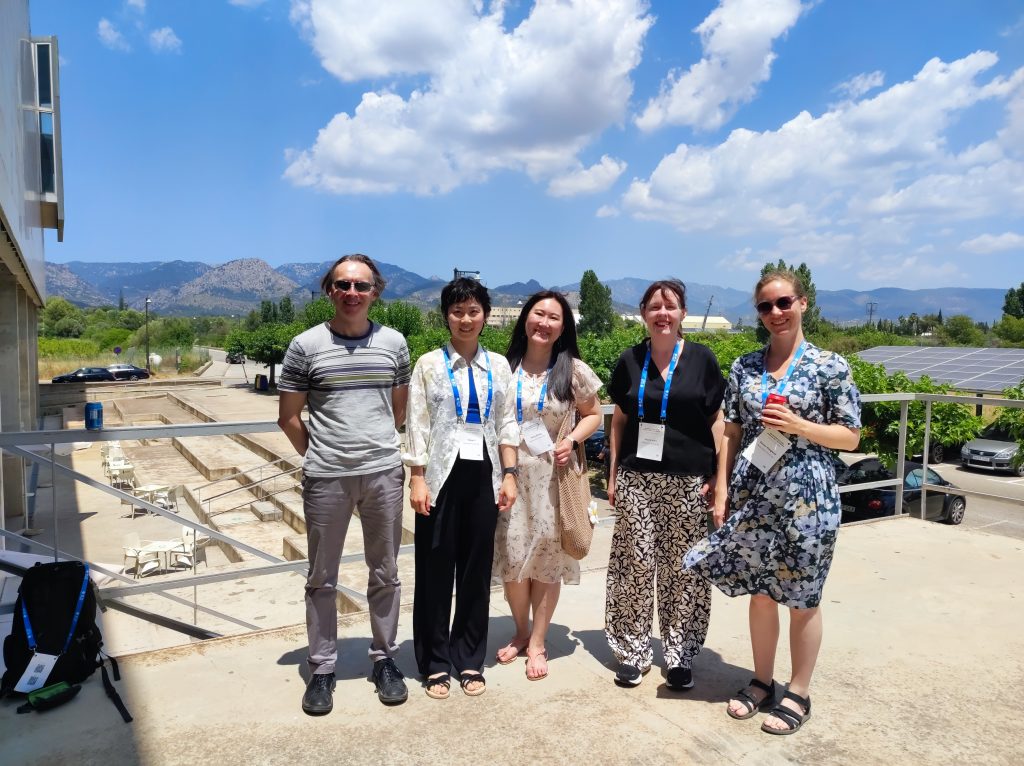
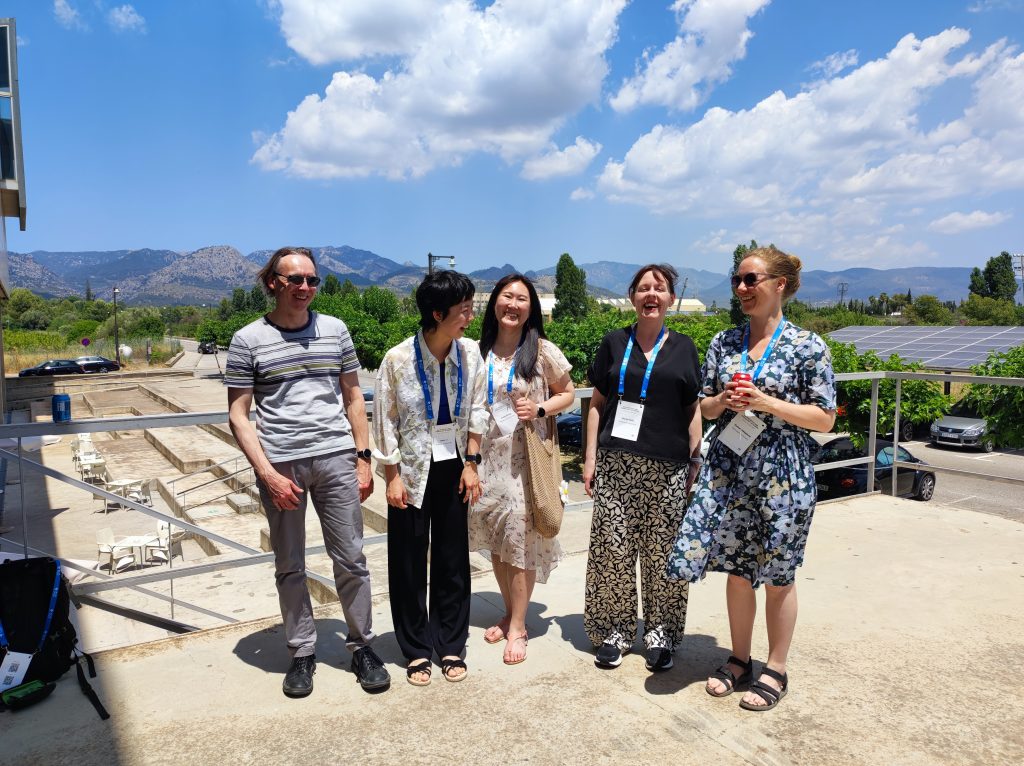
Members of our research group were delighted to participate in the 6th Phonetics and Phonology in Europe (PaPE) conference, held from 25–27 June 2025 in in the University of the Balearic Islands, Mallorca, Spain, Spain. PaPE is designed as an interdisciplinary forum for phonetics and phonology researchers, bringing together experimentalists, formal linguists, neurolinguists, psycholinguists, computational linguists, and speech technologists.
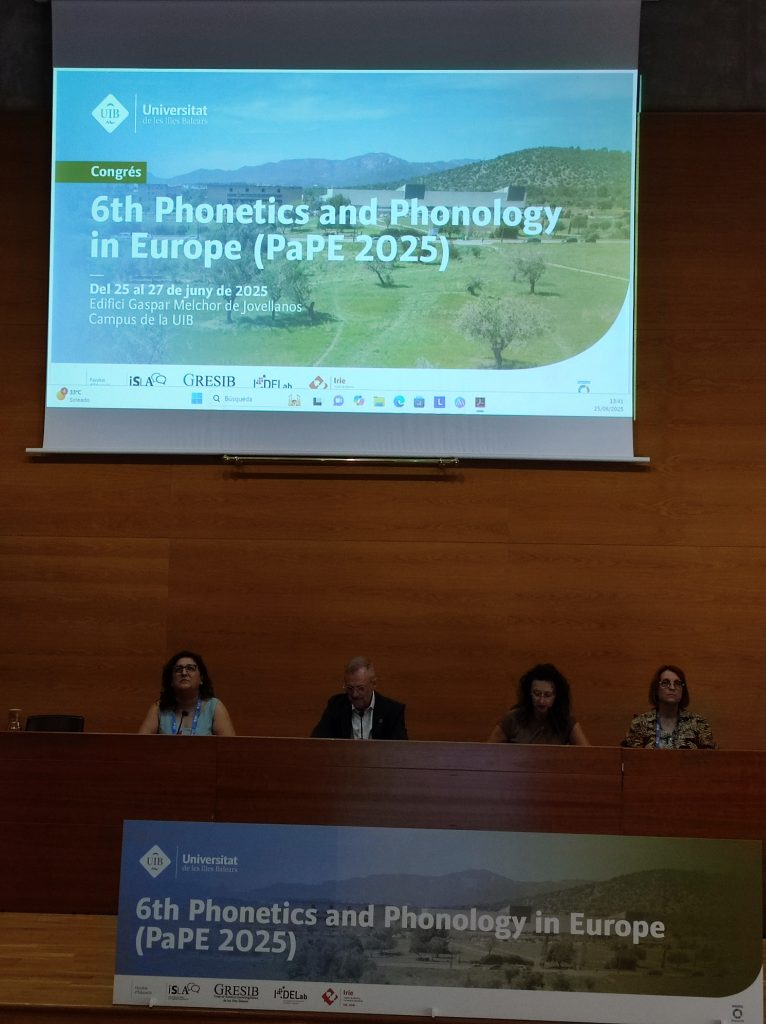
The theme this year—“Phonetics and Phonology in a Multilingual World”—encouraged exploration on speech in multilingual environments, spanning topics such as bilingual acquisition, language contact, variation, and speech technologies. While explicitly foregrounding multilingualism, the conference also welcomed broader contributions across main phonetic and phonological domains.
Our group contributed four presentations—two by doctoral researchers and two by academic staff—alongside a themed workshop.
Student Presentations:
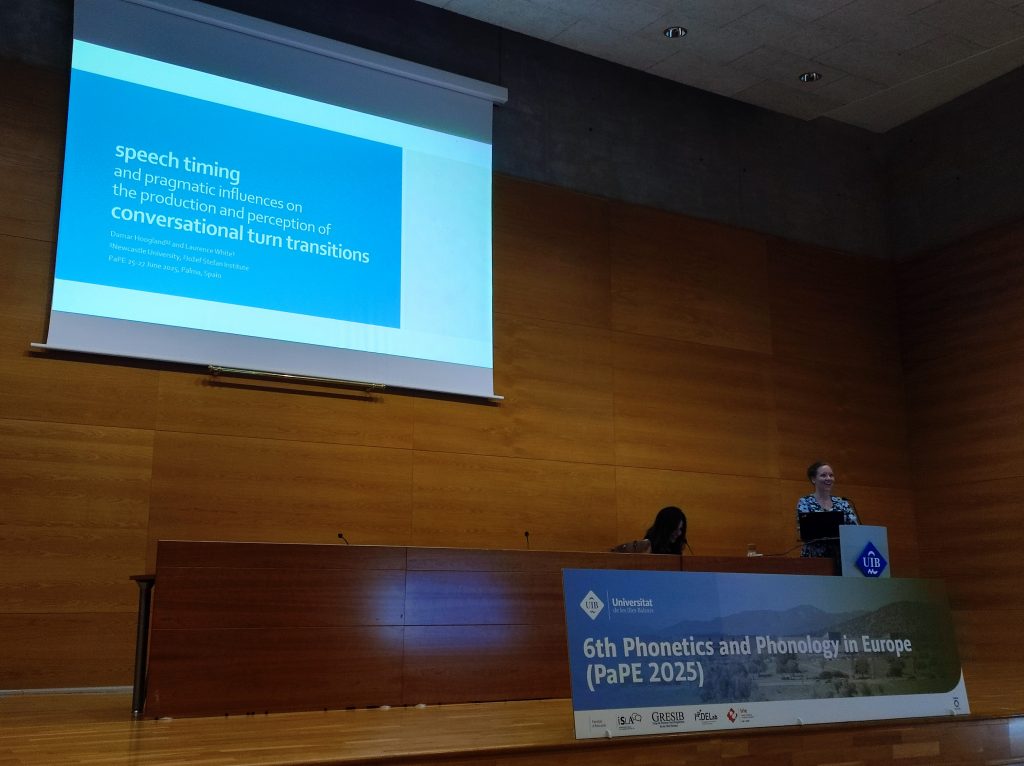
- Damar delivered an oral presentation titled “Speech timing and pragmatic influences on the production and perception of conversational turn transitions”. Her talk examined how conversational timing cues are used and interpreted during turn-taking, offering insights into the pragmatic and prosodic mechanisms that support smooth dialogue management.
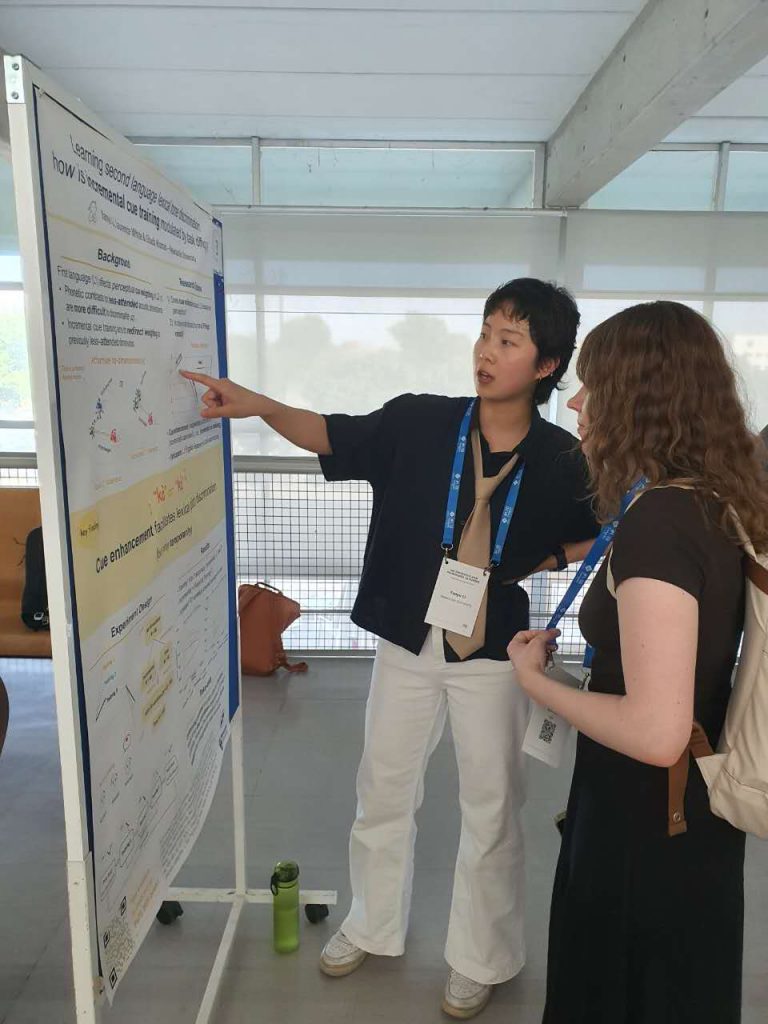
- Yanyu presented a poster on “Learning second language lexical tone discrimination: how is incremental cue training modulated by task difficulty?”. Her work investigated the degree to which Incremental cue training is affected by task difficulty, highlighting how perceptual learning of a linguistic feature absent in native language is influenced by cue weighting.
Staff Posters:
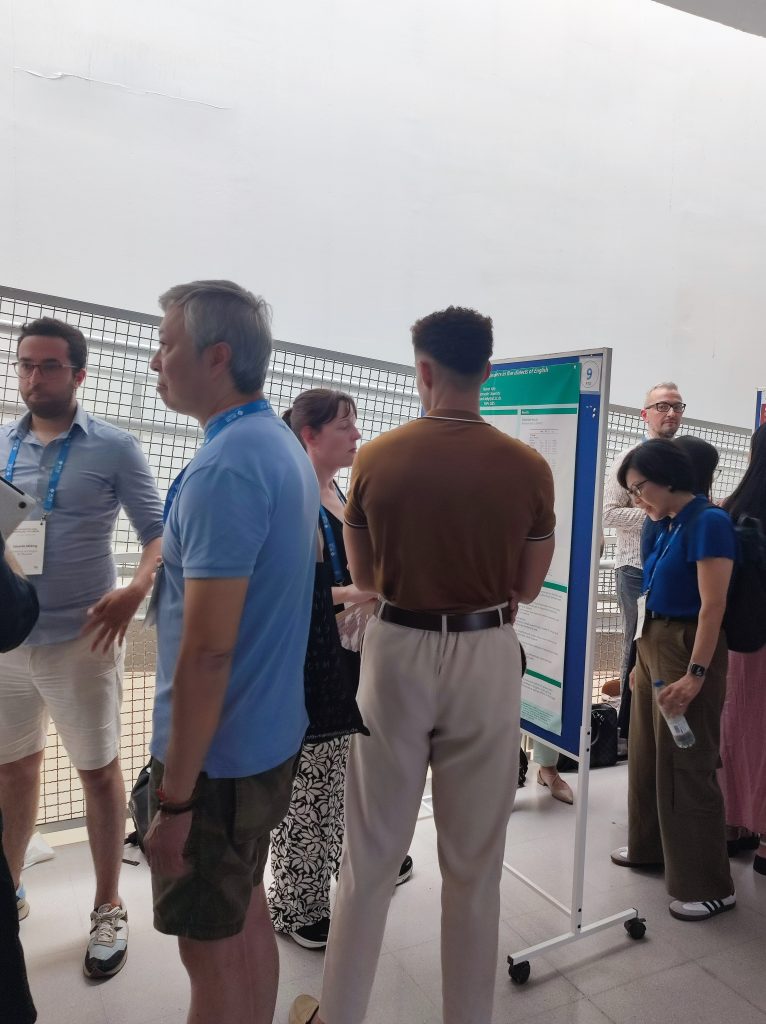
- Dr Niamh presented her research on “Pitch patterns among female speakers in three dialects of English: Newcastle, London and Dublin”. The study provided a comparative analysis of pitch use across regional varieties, contributing to our understanding of sociophonetic variation in prosody.
- Dr Laurence showcased his work on “Mechanisms of temporal prediction for speech segmentation: evidence from nonword detection”. His poster explored how listeners anticipate upcoming speech boundaries, drawing on experimental data to model predictive timing mechanisms in speech processing.
In addition, Dr Cong and Dr Niamh co-organised a highly attended workshop titled “Prosody in languages of the Middle East”. The session brought together scholars working on underrepresented languages and dialects in the region, aiming to broaden typological perspectives on prosodic systems and encourage future collaborations.
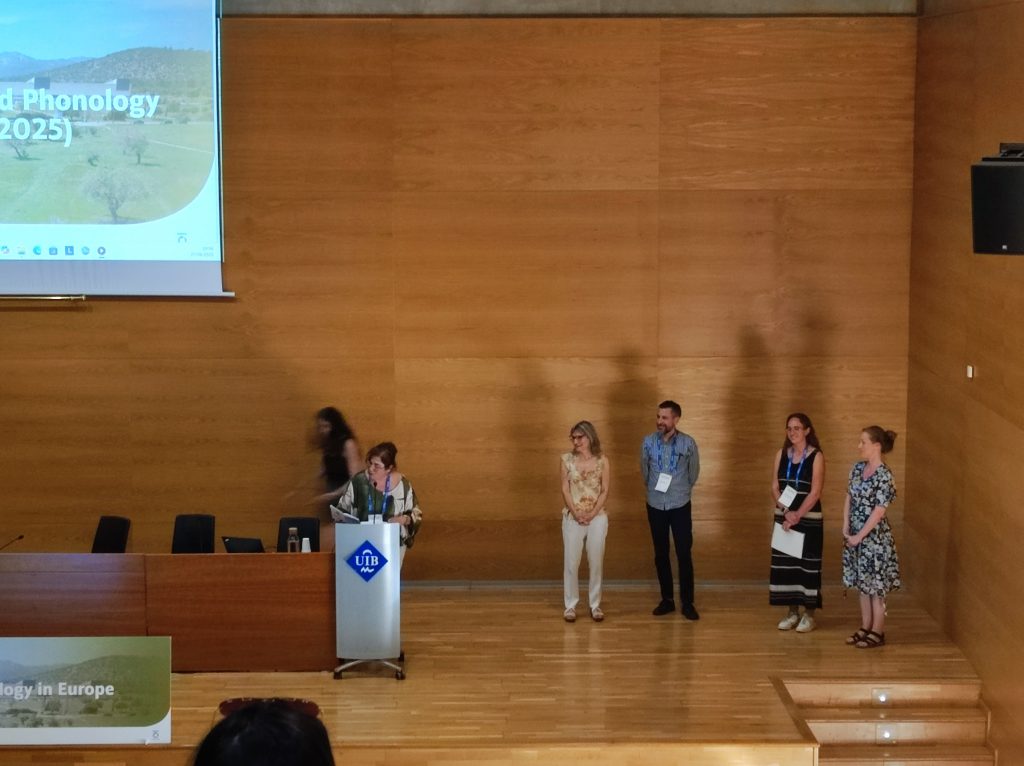
We are also pleased to share that Damar was awarded Best Student Presentation for her compelling and well-structured talk—an exciting and well-deserved recognition of her research contribution.
Overall, PaPE 2025 was a highly productive and enriching experience for our group, marked by stimulating discussions, constructive feedback, and valuable networking opportunities. We extend our thanks to the organisers and fellow attendees for a memorable and inspiring conference.