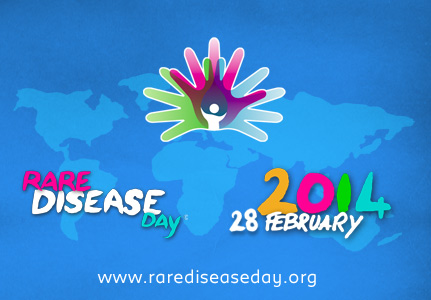
28th February 2014 – Rare Disease Day

rdd2014SYBIL EU-FP7 consortium members at the IGM embarked on a fun tour of Newcastle to raise awareness of rare disease research. The researchers from Prof Michael Briggs’s and Dr Kasia Pirog’s labs donned cartilage research themed T-shirts and went on a tour of the iconic monuments of Newcastle to chat to the public about the importance of rare disease research. This was complemented by a Twitter and social media campaign in order to reach a wider audience in Newcastle and in the UK.

rdd14agel-big

Role of CHOP and genetic background in chondrodysplasia – research paper

plos-one-chop

Abstract

Pseudoachondroplasia (PSACH) is an autosomal dominant skeletal dysplasia caused by mutations in cartilage oligomericmatrix protein (COMP) and characterised by short limbed dwarfism and early onset osteoarthritis. Mouse models of PSACH show variable retention of mutant COMP in the ER of chondrocytes, however, in each case a different stress pathway is activated and the underlying disease mechanisms remain largely unknown. T585M COMP mutant mice are a model ofmoderate PSACH and demonstrate a mild ER stress response. Although mutant COMP is not retained in significantquantities within the ER of chondrocytes, both BiP and the pro-apoptotic ER stress-related transcription factor CHOP aremildly elevated, whilst bcl-2 levels are decreased, resulting in increased and spatially dysregulated chondrocyte apoptosis. To determine whether the abnormal chondrocyte apoptosis observed in the growth plate of mutant mice is CHOP-mediated, we bred T585M COMP mutant mice with CHOP-null mice to homozygosity, and analysed the resulting phenotype. Although abnormal apoptosis was alleviated in the resting zone following CHOP deletion, the mutant growth plates were generally more disorganised. Furthermore, the bone lengths of COMP mutant CHOP null mice were significantly shorter at 9 weeks of age when compared to the COMP mutant mice, including a significant difference in the skull length. Overall, these data demonstrate that CHOP-mediated apoptosis is an early event in the pathobiology of PSACH and suggest that the lack of CHOP, in conjunction with a COMP mutation, may lead to aggravation of the skeletal phenotype via a potentially synergistic effect on endochondral ossification.
You can download the full paper here: CHOP paper

Mild myopathy in mouse models of skeletal diseases – research paper

paper myo

Abstract

Pseudoachondroplasia (PSACH) and multiple epiphyseal dysplasia (MED) are skeletal disorders resulting from mutations in COMP, matrilin-3 or collagen IX and are characterised by short-limbed dwarfism and premature osteoarthritis. Interestingly, recent reports suggest patients can also manifest with muscle weakness. Here we present a detailed analysis of two mouse models of the PSACH/MED disease spectrum; ΔD469 T3-COMP (PSACH) and V194D matrilin-3 (MED). In grip test experiments T3-COMP mice were weaker than wild-type littermates, whereas V194D mice behaved as controls, confirming that short-limbed dwarfism alone does not contribute to PSACH/MED-related muscle weakness. Muscles from T3-COMP mice showed an increase in centronuclear fibers at the myotendinous junction. T3-COMP tendons became more lax in cyclic testing and showed thicker collagen fibers when compared with wild-type tissue; matrilin-3 mutant tissues were indistinguishable from controls. This comprehensive study of the myopathy associated with PSACH/MED mutations enables a better understanding of the disease progression, confirms that it is genotype specific and that the limb weakness originates from muscle and tendon pathology rather than short-limbed dwarfism itself. Since some patients are primarily diagnosed with neuromuscular symptoms, this study will facilitate better awareness of the differential diagnoses that might be associated with the PSACH/MED spectrum and subsequent care of PSACH/MED patients.

The full paper can be seen here

Or downloaded here: myopathy paper

9th Pan Pacific Connective Tissues Symposium

pan pacific

We were attending the 9th Pan Pacific Connective Tissue Societies Symposium and presenting some exciting new work.

“The Xbp1 arm of the UPR is triggered by the expression of mutant matrilin-3 (Matn3) and type X collagen (Col10a1), but only has a pro-survival role in a mouse model of Matn3-MED and not Col10a1-MCDS” as a POSTER presentation.

1501144_10151839691425823_1915364530_o

The launch of the SYBIL project

sybil-logoSYBIL (Systems biology for the functional validation of genetic determinants of skeletal diseases) project, a five year project funded by the European Commission. The overall concept of this large-scale collaborative project is to functionally validate genetic determinants of common and rare skeletal diseases to gain a mechanistic understanding of disease processes and age-related changes and to deliver new and validated therapeutic targets. SYBIL brings together a complementary translational and transnational group of world-class scientists, systems biologists, disease modellers, information technologists and industrialists that will achieve critical mass to deliver the ambitious objectives of this programme of research.

 photo

Skeletal diseases range from a large and diverse group of rare monogenic diseases (such as chondrodysplasias) to highly prevalent but genetically complex diseases such as osteoarthritis (OA) and osteoporosis (OP). The overall concept of this FP7-funded project is to study the genetic causes of both rare and common skeletal diseases in order to gain a better understanding of the disease processes and age-related changes. This fundamental research will help to deliver new and validated therapeutic targets that will eventually stimulate new therapies for these debilitating diseases.

SYBIL brings together a complementary group of world-class scientists, disease modellers, information technologists and industrialists that will deliver the ambitious objectives of this programme of research.

Notes:

  • Rare skeletal diseases (RSDs) are an extremely diverse and complex group of diseases that primarily affect the development skeleton. There are more than 450 unique and well-characterised phenotypes that range in severity from relatively mild to severe and lethal forms. Although individually rare, as a group of related orphan diseases, RSDs have an overall prevalence of at least 1 per 4,000 children, which extrapolates to a minimum of 225,000 people in the 27 member states and candidate countries of the EU.
  • OA is the most common form of arthritis and the World Health Organisation estimates that 25% of adults aged over 65 years suffer from pain and/or disability from OA and it is ranked 12th for disease burden in the EU25 and 35-40 million people suffer from OA in Europe. OA is estimated to be 30-70% genetic with strong environmental risk factors of ageing, obesity and joint trauma.
  • OP is also a polygenic disease in which the quality and density of bones is reduced leading to weakness and increased risk of fractures. OP and its associated fractures are a major cause of morbidity and mortality since the lifetime risk for osteoporotic fractures in women is 30-50% and in men is 15-30%.
  • OA and OP have a rising prevalence with age and result in a loss of independence with a greatly reduced quality of life and represent a major healthcare burden of increasing scale in Europe with the projected expansion of the elderly population.