Fashion in 1866: The Englishwoman’s Domestic Magazine

The Englishwoman’s Domestic Magazine was a pioneering monthly publication aimed at young, middle-class women in the mid-Nineteenth Century. From 1852 to 1865, it had been edited by Isabella Mary Beeton and her husband, Samuel Orchart Beeton. When Isabella died, her friend Matilda Brown stepped in as co-editor and publication continued until 1879.

The periodical had sections including domestic management, embroidery, serialised fiction, translations of French novels, and unusually, it featured dress-making patterns. A boom in the sewing machine industry in the late 1850s and 1860s gave rise to the first ready-to-wear clothes, and the development of sewing machine models for the domestic market. In the 1860s, sewing machines were not uncommon in middle-class homes.

The Englishwoman’s Domestic Magazine was also ahead of its time because it solicited correspondence and contributions from its readers, which were responded to in a section called ‘The Englishwoman’s Conversazione’. Here, were laid out wide-ranging anxieties, from the “over-stocked” governess market to how to make a curry, and from romantic entanglements (reply to‘A Well-wisher’:“Marriage with a deceased husband’s brother is illegal.”, July 1866, p.224) to membership of The Society for Promoting the Employment of Women. Some of the women that wrote in gave their names; others gave only their initials; and yet others wrote under a pseudonym.

There is evidence in the conversazione of women taking an interest in textiles and fashion. A reply to ‘Queechy’ suggests ways in which scraps of material may be utilised:

“Your fragments might be made up into pincushions or similar articles for the toilet-table; they might serve as ribbons to boot-makers, etc. There are endless ways of using up such material into little articles saleable at a bazaar” (January 1866, p.32).

‘An Old Subscriber’ wanted to know why men complain about hoops and crinolines and verse from a newspaper was transcribed by way of a response (March 1866, p.96):

“When men deride the ladies’ dress
And say they’re like balloons,
But think not of their bearded selves,
Their likeness to baboons –
If I a lady might advise
(Although it should amaze her),
I’d say, ‘If we put down our hoops,
Will you take up the razor?’”

Jessamy Bride asked, “is it right for bridesmaids to go to church with bonnets on, as they did at Kew?” (August 1866, p.256). The editors thought it entirely appropriate, being “simpler and much more natural”. (On 12th June 1866, Princess Adelaide Hanover had married Francis Teck at St. Anne’s Church, Kew.) And in December 1866 (p.384), Clara sought advice on the best way to style her hair and clothe herself based on the description that she is “tall, having rather a round face, and not very good nose”.

From 1860, the Englishwoman’s Domestic Magazine featured high-quality hand-coloured fashion plates, imported from Paris, making it a valuable resource for fashionably dressed ladies. The purposes of the fashion plates then were the same as today: to communicate information about the current trends and to create a receptive audience for incoming styles. In The Englishwoman’s Domestic Magazine, elegant figures are presented in colour against simple black and white environments, such as a railway station or drawing room.
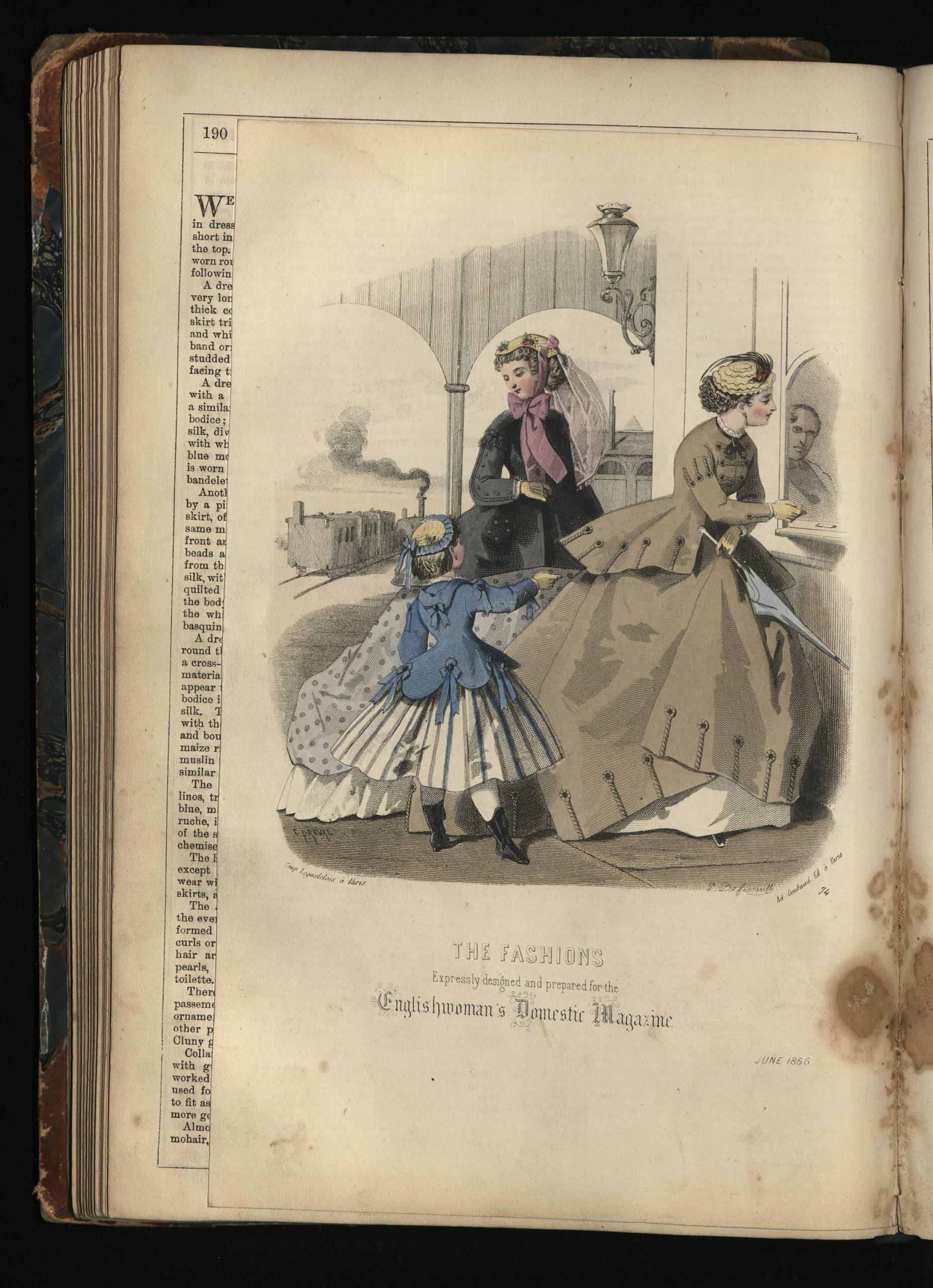
June 1866 women's fashion
June 1866 page from The Fashions, expressly designed and prepared for the Englishwoman’s Domestic Magazine (19th Century Collection, 19th C. Coll. 640.5 ENG)

Fashion is aspirational and symbolic of real or perceived status. The women depicted on these fashion plates attend balls, carry parasols, go to the beach for leisure, go riding or hunting, and wear silks and bonnets trimmed with ribbons and feathers. To paraphrase Doris Langley Moore, they inhabit a charmed world where neither human, beast or fowl suffers pain or cruelty for fashion. [i]

In 1866, crinolines were changing and would be phased out by the end of the year, being superseded by the bustle. Having ballooned beyond all practicality, the front became flatter whilst the back became more voluminous. The shape of the skirts can clearly be seen in the illustration below.
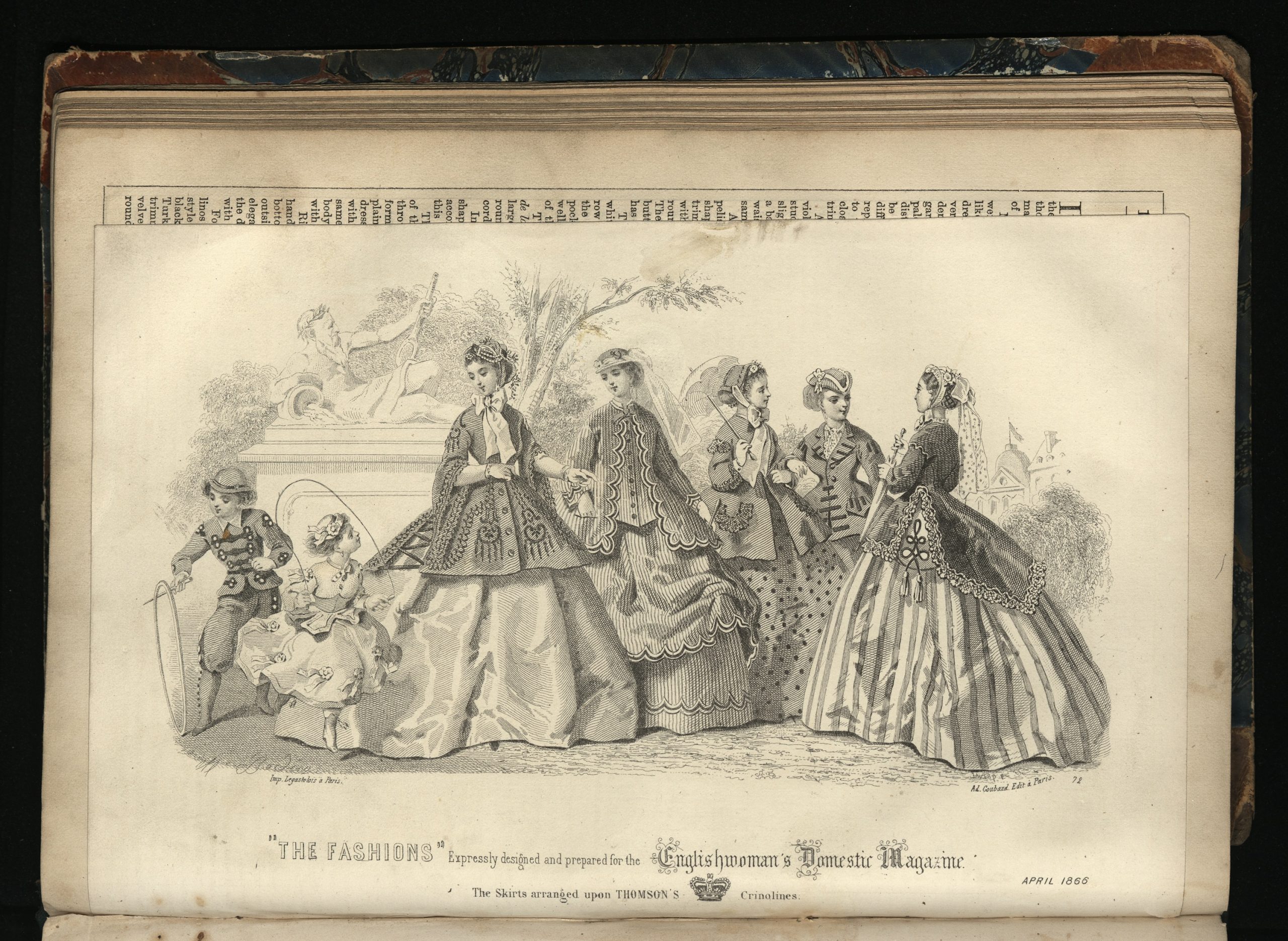
April 1866 women's fashion
April 1866 page from The Fashions, Expressly designed and prepared for the Englishwoman’s Domestic Magazine (19th Century Collection, 19th C. Coll. 640.5 ENG)

At the same time, there was a transition from pointed bodices to belted dresses. Dresses had double skirts and straight sleeves. Instead of floral decorations, there was a move towards ribbon trimmings.

World events influenced fashion too. The 1860s were a tumultuous decade during which nations and societies were reshaped by wars, including the American Civil War (1861-1865) and the Prussian-Austrian Seven Weeks’ War (1866). Fashion responded to these conflicts with military-style jackets. An example may be seen in the detailing of the girl’s costume in the fashion plate for May 1866: high boots and a silk jacket and skirt trimmed with braid.

The fashion plates sit within a regular section called ‘The Fashions’, which begins with a long description of the season and current looks. January is all about “wrapping oneself up in the soft warm materials suitable to the inclement season”: velvets, silks, and furs. Come February, “glitter is the fureur of the day”: on bonnets, coiffures [i.e. hairstyles], walking and evening dresses, “glitter on every part of a lady’s toilet, from the head-gear to the slipper”. Lingerie is the focus for March for “details often tell more in the tout ensemble of a dress than the dress itself”.

Heading into Spring, the fashionable lady of 1866 was wearing linos [flax] or mohair dresses in grey, dun and fawn. In May, the editors turned attention to the “numerous modifications” that bonnets were subjected to:

“Some of the patterns exhibited this spring in the windows of some of our first modistes are so strange that crowds of curious persons of both sexes are continually seen stopping to examine them”.

Fashion being cyclical, there is then a return to “the fashions of the time of the Empress Josephine” [ii]: a plain, gored [flared, flowing] skirt with low, short-waisted bodice, square neckline and a wide sash tied around the waist and finished in a large bow at the side – what we know as an empire line dress.

The expansion of rail travel affected fashion as people could holiday at the coast, thus thoughts turned to travelling and seaside costumes in July and the colours to be seen in, whether they were suited to the wearer’s complexion or not, were yellow and bright rose. There was little change in Summer but hemlines rose and crinolines were “altogether given up” in favour of “short scant dresses” that didn’t reach beyond the ankle, as seen in the ‘seaside toilet’ worn by the figure on the left in the plate below.
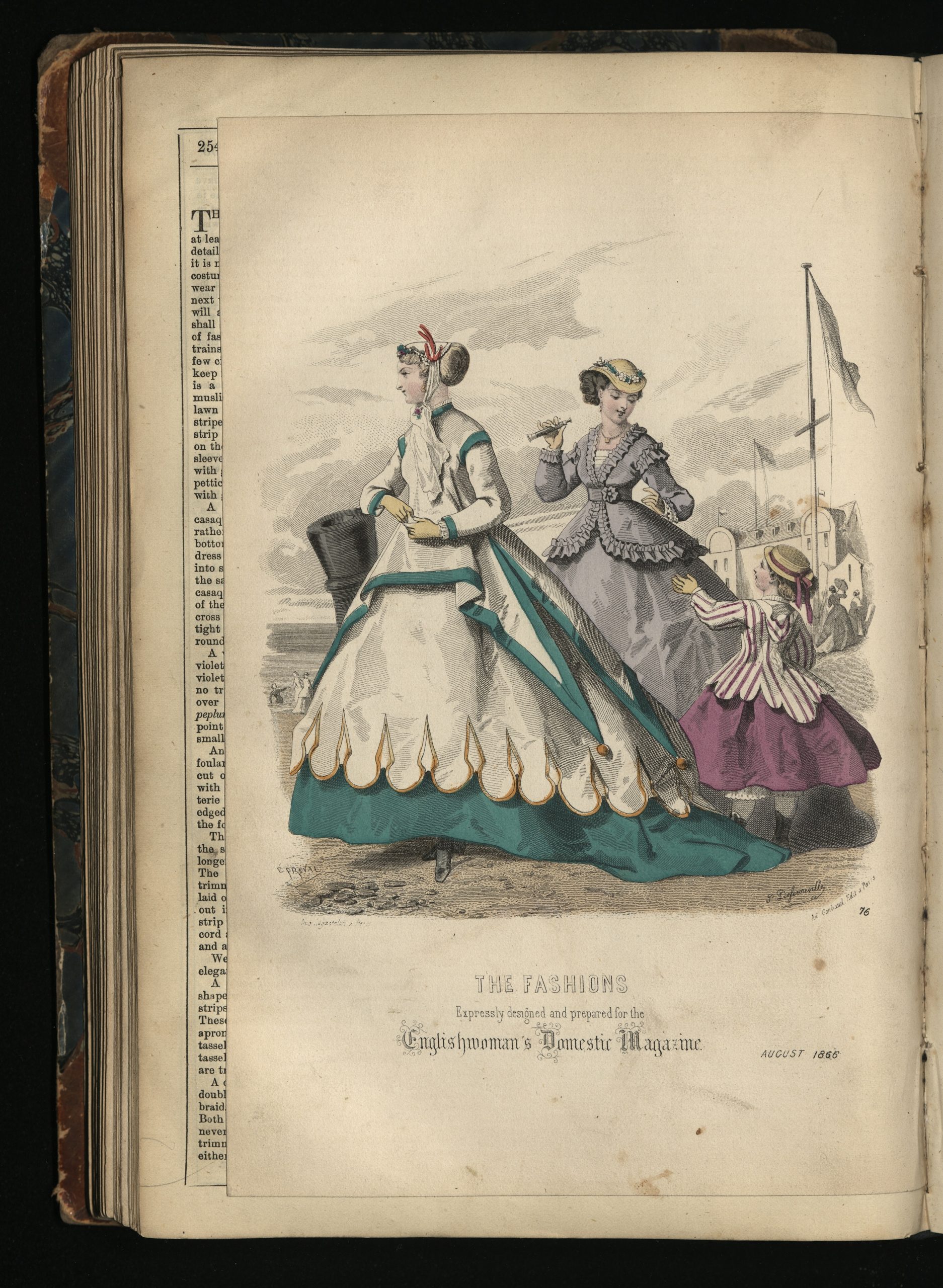
August 1866 women's fashion
August 1866 page from The Fashions. Expressly designed and prepared for the Englishwoman’s Domestic Magazine (19th Century Collection, 19th C. Coll. 640.5 ENG)

The rise of train travel had also contributed to an increase of environment-specific clothing, for example the shooting season having begun, all concerns in October were for “pretty country costumes, fanciful hats and demi-toilettes for the evening”. Velvet and satin were “profusely employed” by couturiers and “a great deal of taste” was required when it came to matching colours in November. December’s fashion section was dedicated to children.

Included in ‘The Fashions’ was a short sub-section headed ‘India and the colonies’ which spoke to the magazine’s subscribers in India, Canada and other occupied parts of the world. The text is reprinted without any changes each month and is essentially an advertisement for the services of Madame Goubaud who seems to have been based in Europe and able to fulfil requests for dresses, bonnets, hats trimmings and more. Through the column, we learn that the English colonisers continued to be consumers of Parisian and London fashion. Advice given in later issues of The Englishwoman’s Domestic Magazine and other ladies’ periodicals was to adapt fabrics to the climate, and to favour taking haberdashery items rather than fully made-up clothes when relocating abroad.[iii]


[i] Moore, Doris Langley. Fashion through fashion plates 1771-1970 (New York: Clarkson N. Potter, 1971), p.9.

[ii] Josephine Bonaparte (1763-1814) was the first wife of Napoleon.

[iii] Bhamburkar, Tarini. ‘”Crushed Flounces and Broken Feathers”: British Women’s Fashions and their Indian Servants in Victorian India’ in Journal of Victorian Culture Online (November 18, 2021) https://jvc.oup.com/2021/11/18/british-womens-fashions-and-their-indian-servants/, accessed 22/12/2025.
Pioneers: Photographs from the Spence Watson/Weiss Archive (SW 11) – January 2009

The Spence Watson/Weiss Archive consists, for the most part, of letters they received, which are evidence of their involvement in both local and national matters of politics, education and society. They were visited by politicians, reformers, artists, writers and diplomats.

Included amongst the papers are a box of photographs of well-known figures such as William Morris, David Lloyd George and Myles Birket Foster. The images featured below are part of that collection and have been selected as representing some of the pioneers of the Nineteenth Century.

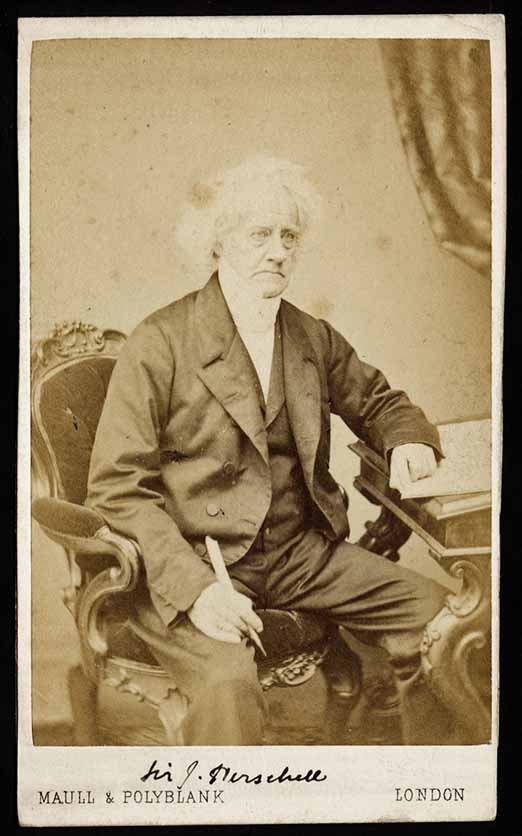
Sir John Herschel (1792-1871)

Photograph of Sir John Herschel
Sir John Herschel [English Mathematician and Astronomer] (Spence Watson/Weiss Archive, SW/11/18)

Herschel began his career as a distinguished mathematician who also worked in the fields of chemistry, botany and, like his father Sir William Herschel, he applied himself in the field of astronomy. In 1834, surveying the sky from the Cape of Good Hope, he mapped and catalogued the southern skies, discovered thousands of new celestial objects, discovered 525 nebulae and clusters and named seven of Saturn’s satellites (MimasEnceladusTethysDioneRheaTitan and Iapetus) and four moons of Uranus (ArielUmbrielTitania and Oberon).

Furthermore, he wrote many papers on such subjects as meteorology and physical geography. However, he actually made a large impact in the field of photography: one of the original researchers of celestial photography not only did he make significant improvements to photographic processes, discovering the cyanotype (blueprint) process in 1842, but he went on to research photo-active chemicals and the wave theory of light. He coined the term photography and was the first to apply negative and positive to it.

His son, Alexander, would become Professor of Physics at Armstrong College (now Newcastle University) in 1871 where he continued pioneering work in meteor spectroscopy.

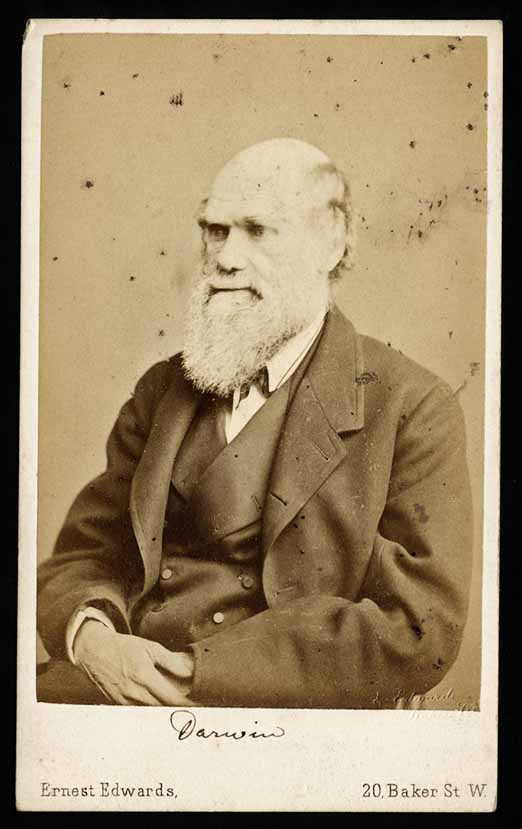
Charles Darwin (1809-1882)

Photograph of Charles Darwin
Charles Darwin [English Naturalist] (Spence Watson/Weiss Archive, SW/11/6)

Darwin’s is, even today, a household name – made famous by his theory of evolution which completely revolutionised our approach to the natural world. Against the tide of belief in the biblical description of a world created by God, Darwin turned instead to Charles Lyell’s Principles of Geology (1830) which argued that the Earth’s geological history and the progressive development of life could be explained as gradual changes and that fossils were evidence that animals had lived millions of years ago.

Darwin’s scientific expedition on board the HMS Beagle (1831-35) impressed upon him the rich variety of animal life and geological features and he spent the next twenty years solving the question of how animals evolve. In 1859 he published his ground-breaking On the Origin of Species by Means of Natural Selection, a first edition of which is held in the Pybus Collection. The Church, seeing the prevailing orthodoxy threatened, attacked Darwin and the idea that homo sapiens could have evolved from apes caused a backlash with satirists of the day lampooning Darwin in simian caricatures.

Dr. Fridtjof Nansen (1861-1930)

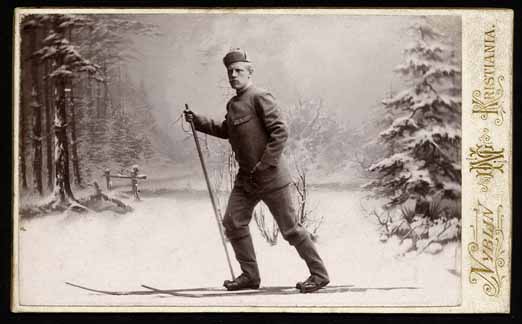
Photograph of Dr Fridtjof Nansen on skiis
Dr Fridtjof Nansen [Norwegian Polar Explorer] (Spence Watson/Weiss Archive, SW/11/33)

Nansen was a Nobel Peace Prize Laureate whose devotion to humanitarian causes such as refugees, prisoners of war and famine victims had saved many lives after World War I. First and foremost he was a scientist and explorer. In 1888 he crossed the Greenland icecap by ski and man-hauled sledge during which expedition he and his team of six collected scientific and meteorological data.

However, he became one of the pioneers of oceanography after sailing from Christiania (Oslo) to the New Siberian Islands on board the Fram in 1893. The boat froze into the ice and drifted until it was able to sail south in August 1897, following a strong east-west current that Nansen had argued must flow from Siberia towards the North Pole and Greenland. Although Nansen had not stayed with the boat, having instead made an unsuccessful bid for the Pole, his team collected information about currents, winds and temperatures and proved that there was no land near the Pole on the Eurasian side, but an ice-covered ocean. From this point, Nansen focused his research on oceanography, specifically compiling data from the Norwegian Sea and Atlantic Ocean.

The Spence Watson/Weiss Archive contains several letters from Nansen to Robert Spence Watson, and the extract given below complements the photograph of him on skis.

“… now I am again back in my dear country and am happy, one of the first days my wife and I will take to our ‘ski’ and go up in the mountains to live their [sic] for some time I must get some pure Norwegian mountain-air into my lungs again. It is a charming life to be in the mountains in the winter to feel oneself like a bird as one rushes over the snowfields undisturbed by human foot and then when the night comes to sleep in the snow with the sky as a tent. Oh you are so free, we both enjoy it immensely.”

Letter to Robert Spence Watson: Lysaker, 7 March 1892 (SW/1/13/3)

Professor Richard Owen (1804-1892)

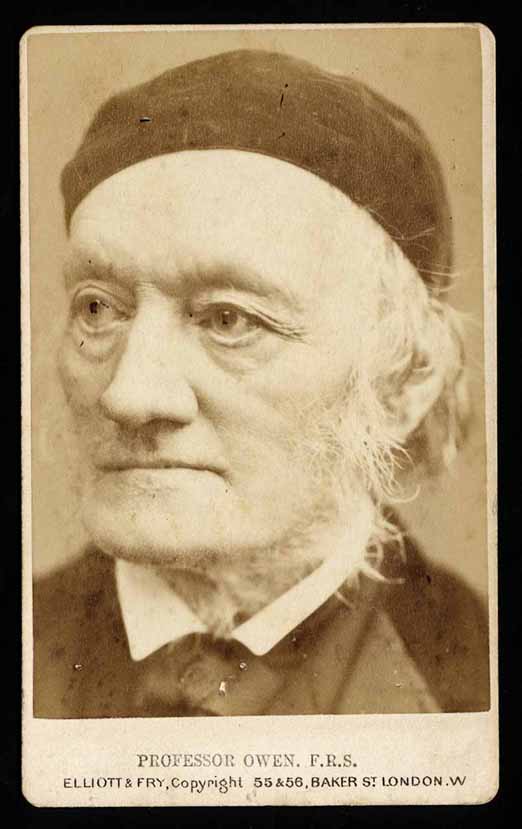
Photograph of Sir Richard Owen
Sir Richard Owen [Biologist and Palaeontologist] (Spence Watson/Weiss Archive, SW/11/35)

Owen, an anatomist and palaeontologist, had a long and distinguished career in museums and created a name for himself as a controversial but brilliant scientist. He was a Fellow of the Royal Society, designed the life-sized dinosaur exhibits for the Great Exhibition (1851) and his Hunterian Lectures were well-attended but his successful campaign for a dedicated natural history museum, thereby founding the Natural History Museum in South Kensington, was one of his greatest achievements.

Furthermore, although Owen rejected Darwin’s theory of evolution, being convinced of the immutability of species, he nevertheless published notable works on fossils and it was he who, building on the work of others, first classified dinosaurs and coined the term. (Owen came to revise his ideas on transmutation but maintained his belief in a divinely-created species model.)

Goldwin Smith (1823-1910)

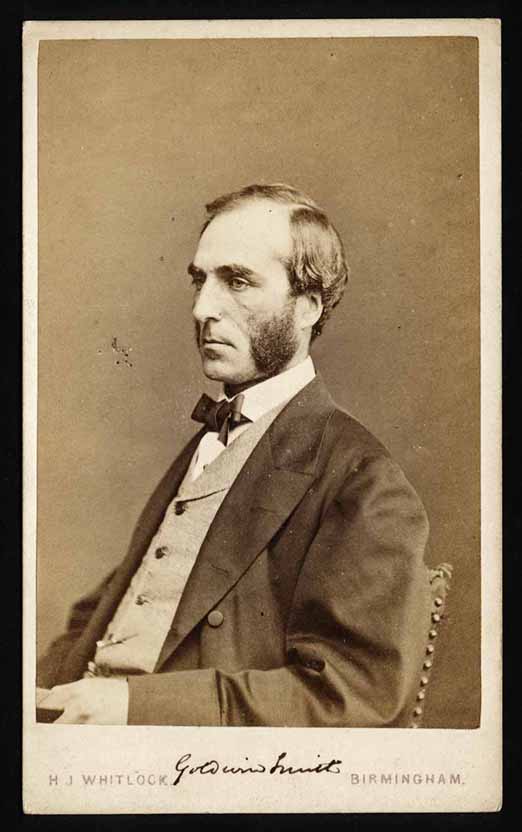
Photograph of Goldwin Smith
Goldwin Smith [Historian and Journalist] (Spence Watson/Weiss Archive, SW/11/45)

Smith’s roles were many and varied: historian, journalist, poet and translator to list a few. He was well-known as a writer on religious and political issues and was an early advocate of colonial emancipation, House of Lords reform and the separation of Church and State.

However, it is his work as a university reformer which stands out. Smith had demanded a Royal Commission of inquiry into the administration of Oxford University and its report (1852) suggested that religious tests should be relaxed, and that a teaching professoriate should be created. He also sat on the Popular Education Commission of 1858, chaired by the Duke of Newcastle. In his pamphlet, The Reorganization of the University of Oxford (1868), his recommendations included the abolition of celibacy as a condition of the tenure of fellowships and that the individual colleges merge for lecturing.

That same year, he left England for the professorship of English and Constitutional History at Cornell University – the institution to which he would later gift his private library and a $14, 000 endowment. He moved to Toronto in 1871 (where he lived out his remaining years). Here he sat on the Council of Public Instruction and wrote about the place and function of universities in Canada.

Throughout his life he argued that men of all classes should be afforded the opportunity of university education, that universities should be free from political domination and called for the raising of standards and the establishment of provincial universities.