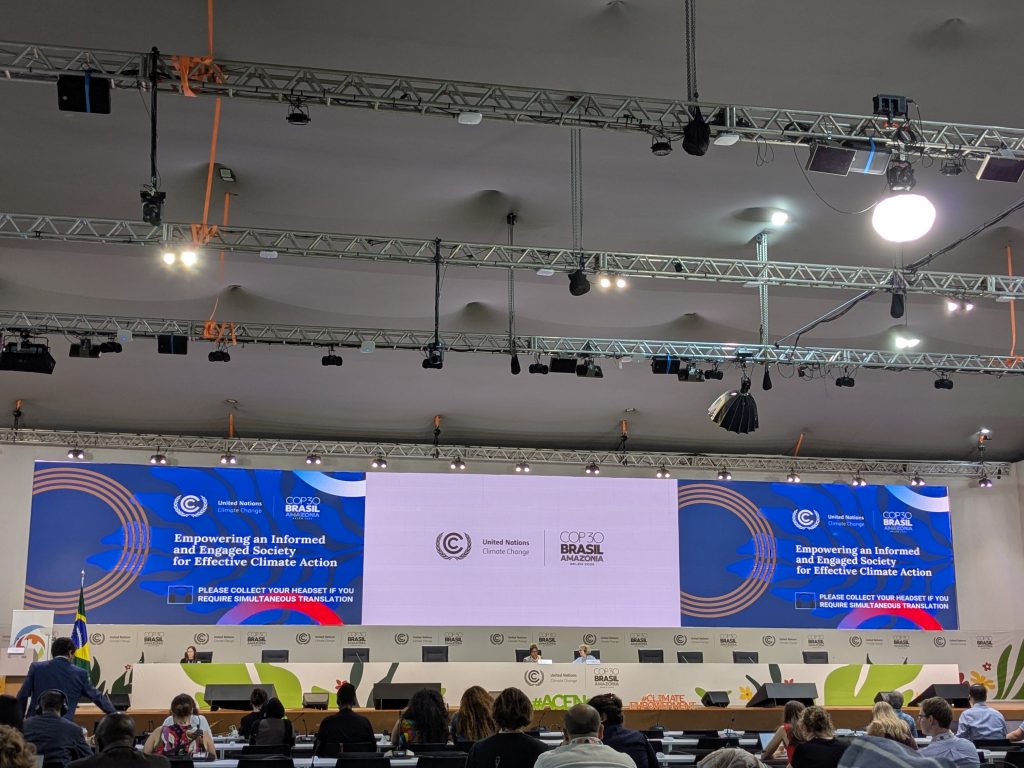
I don’t know how much you’ve heard about COP30. The annual Conference of the Parties is the birthplace of many landmark climate treaties. And on the 10-year anniversary of the Paris Agreement this year’s negotiations were set to take place in the city of Belém, coined the “The Gateway to the Amazon River”. The location alone has commanded a lot of media attention. It’s hard to miss the symbolic nature of negotiations occurring in the same region as the world’s largest rainforest.
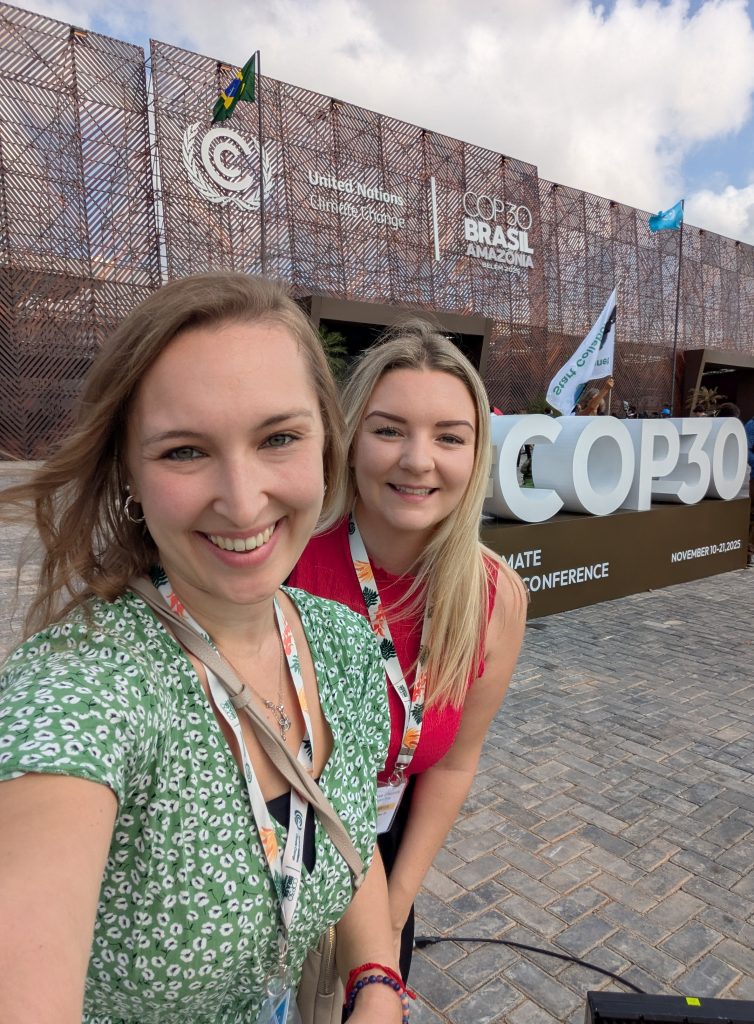
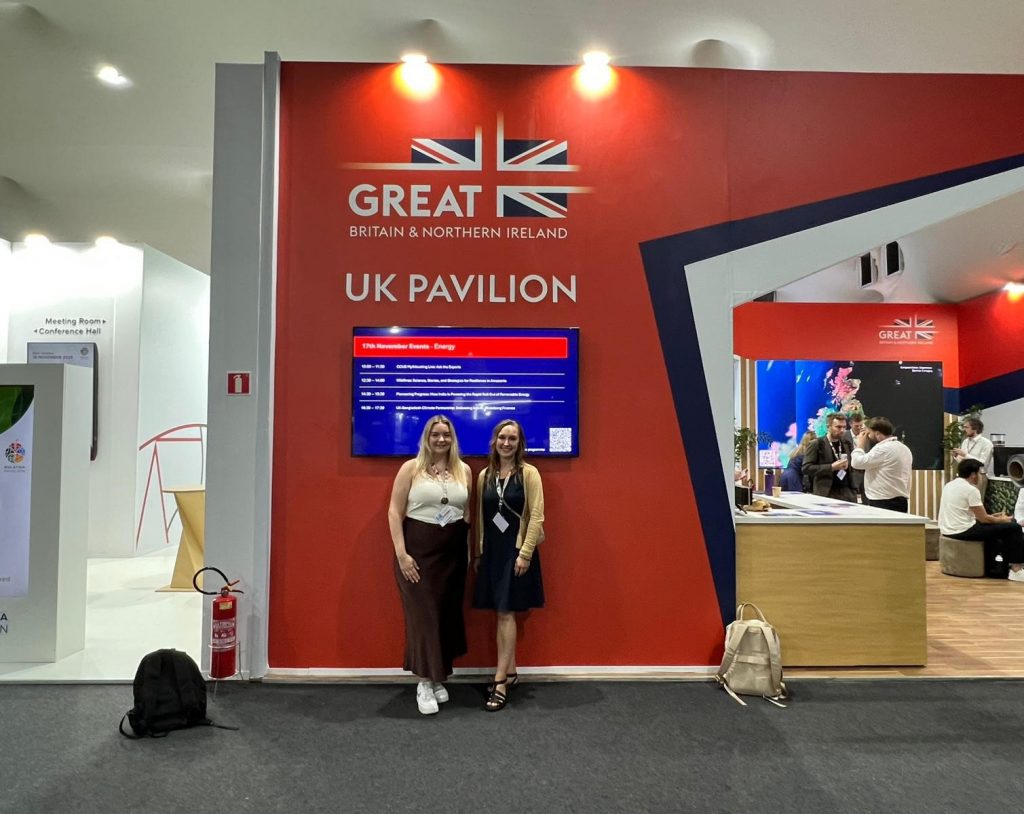
However, trying to keep track of 2 weeks of negotiations, across 78 pavilions, involving over 50,000 delegates is no easy task. Thankfully, 3 of those delegates were representatives from Newcastle University. I had the privilege of hearing the first-hand experiences and contemplations of Amy Neild, Professor David Manning and Dr Kristina Wolf. A priceless window into understanding what really happened at the COP of implementation” and “truth”.
What was Belém like?
None of our delegates had previously visited Belém, and it was immediately clear they were worlds away from a Newcastle November. Amy and Kistina were greeted by the kind of hot humid weather you could only expect from the “City of Mango Trees”. David even experienced a longer flight as the plane circled, waiting for a gap in the heavy rainfall. Heavy rain that was soon understood as a feature (not exception) of the afternoons.
The city, as expected, was alive with activity. Visits to the traditional Ver-O-Peso Market, historic centre, and the riverside restaurants and live music of the Ilha do Combú were standouts. With the aid of translation apps, local guidance and kindness were the beautiful backdrop to the city’s warm welcome.
The genuine care of the host city was clearly exemplified in the “Green Zone”. This part of the Conference was open to all and packed with participants. The space was bustling with stalls representing the interests of indigenous peoples and selling souvenirs.
What were your initial impressions of your first COP?
“I was immediately struck by the sheer size of the conference centre” Amy shared, 500,000 square metres of Blue and Green Pavillion truly made it the “Glastonbury of Conferences”. Kristina noted the overwhelming nature of stepping into a “conversation already in full flow, conducted in a new language of acronyms, abbreviations and technical terms”. “Resources like “Decoding UNFCC language” were extremely
helpful”. It was also the first time a COP had featured dedicated respective “Transport” and “Planetary Science” Pavilions.
Did you attend any formal negotiations, and could you contribute as an observer?
The resounding response was a mixed one. You could attend negotiation sessions but access for observers varied Kristina explained. “Some sessions were completely closed… others had only a handful of observer seats… as few as nine.” “Observers sit in the backrows and primarily listen”. This access to negotiation meetings became more limited the longer the conference went on. Long queues formed outside popular agenda item sessions, sometimes even surpassing the person limit of the overflow room. Amy described it as “eye-opening” to witness the COP presidency cut off the speeches of “delegations that overran their allotted time”, an abrupt but necessary tactic to ensure “all voices had a chance to be heard”. David came the closest to attending a negotiating meeting up close. His host had a status that permitted him to bring David into a typically non-observer space, as even Blue Zone security clearance wasn’t an “access all areas” card. Unfortunately, this entry point into a negotiation space was cut off by the Pavillion fire that made the headlines. Thankfully evacuations were well executed by the organisers, and our observers made it safely outside.
What about the many side events?
Each observer opted for the side events most relevant to their area of expertise. These sessions were noted as far more interactive, taking the form of panel discussions, presentations, storytelling and even some informal consultations. David spent a lot of time in the CDR30 pavilion. He “spoke at a panel in this pavilion, on the challenge of scaling CO2 removal by enhancing rock weathering”. Kristina noted the recurring theme of data challenges and the necessity of multi-level stakeholder engagement that empowers communities that were present in many of the events attended.
With over 50,000 participants, how was the networking?
In many ways the gold of the conference seemed to be found in the networking. “It was one of the most vibrant networking spaces I have ever experienced” Amy shared, recounting how networking opportunities kicked off in Rio de Janeiro before boarding the flight to Belém! David stated “I was able to meet people I wanted to meet, and many others by accident” the random nature of the networking seems to be part and parcel of a meeting that size. Nevertheless, it was a chance to start conversations with Makerere University in Uganda, alongside new contacts in Malawi and the USA as well as Brazil. Kristina noted the Higher Education Pavillion, lunch tables, queuing lines, WhatsApp groups, LinkedIn networks and informal discussions after side events all became
particularly useful meeting points for networking. “These conversations allowed me to share Newcastle’s work, including the DARe project and the data resources available through the Urban Observatory”.
After 3 decades of COP’s, some commentators have noted the conference may no longer be fit for purpose. What do you think having seen it up close? What needs changed?
There’s a “lively debate” around this Kristina agreed. “A lot depends on the chair or facilitator” they can “significantly shape the tone of the session and the way countries interact”. Amy added, “at times, negotiations were deliberately slowed down by delegations using strategic tactics”. David noted “processes are slow… frustrating given the urgency of the need to make change happen.” The president had to “navigate a difficult path to achieve a consensus”. Even a consensus that disappointed many due to the “inability to agree a roadmap leading to the end of fossil fuels”.
However, our observers unanimously agreed there was still much value in the conference. Kristina explained “COP remains unique: there is no other forum where almost every nation, plus observers, scientists and civil society, meet under one roof and negotiate climate action. That alone is enormously valuable”. David reiterated “if we didn’t have it, we’d go backwards”.
In terms of practical change, Kristina cited the need to improve inclusion and balance for smaller delegations, indigenous peoples and frontline communities to participate meaningfully, not just symbolically. Strengthening the role of science through regular and structured briefings would help negotiators navigate policy pathways. And lastly conflicts of interest need to be addressed, namely the influx of influence from fossil-fuel lobbyists.
Knowing what you know now is there anything you’d do differently?
David was in no doubt, “do more homework in advance!”. Amy agreed “I would plan my entire week ahead of the conference”. She noted “some last-minute searching will still be necessary” for those events released only the day before. Kristina found the best way to accommodate these last-minute event announcements and forward plan was to build in flexibility. “Sessions may run over time, speakers may arrive late, power cuts may occur, and room changes may happen unexpectedly… the walking distance between meeting rooms may be long”. Keeping an eye on the real-time updates and leaving space to be adaptable to the host country seemed like sage advice.
How can the University best utilise its status as a UNFCCC observer organisation?
“Early planning, strong coordination and visible engagement” shared Kristina. Early planning was the consensus of all our observers. This would enable the University to coordinate with other universities, observer groups, NGOs, and other sizeable UK institution delegations. It was noted that early engagement with the Higher Education for Climate Action Pavilion may create the path to co-host sessions, contribute speakers and/ or shape thematic events.
Amy also noted hosted pre and post COP events for students, colleagues and delegates would create a space to prepare for the specific language and processes of the negotiations and to share that knowledge and first-hand insight on return.
Post COP, how optimistic are you?
“50:50” David decided. “If it is left up to our governments the chances are zero… the burden falls on communities of committed individuals and organisations”. Amy landed on “More hopeful”. Of course there were concerns raised, many of them focused on climate finance, but the hearing about initiatives across the globe was a brilliant way to be encouraged by the action that is happening. Kristina surmised her view as “a mixture of cautious optimism and realism”. “I met an extraordinary number of committed people”, she shared. But “many delegates asked the same question: if science has been unambiguous for so long, why has action been so slow?”. Strengthening collective responsibility would aid this conditional optimism. David concluded: “universities have a vital role to play in helping our students to learn about climate change, about COP, and about how they can play their part in challenging the status quo and secure our global future”.