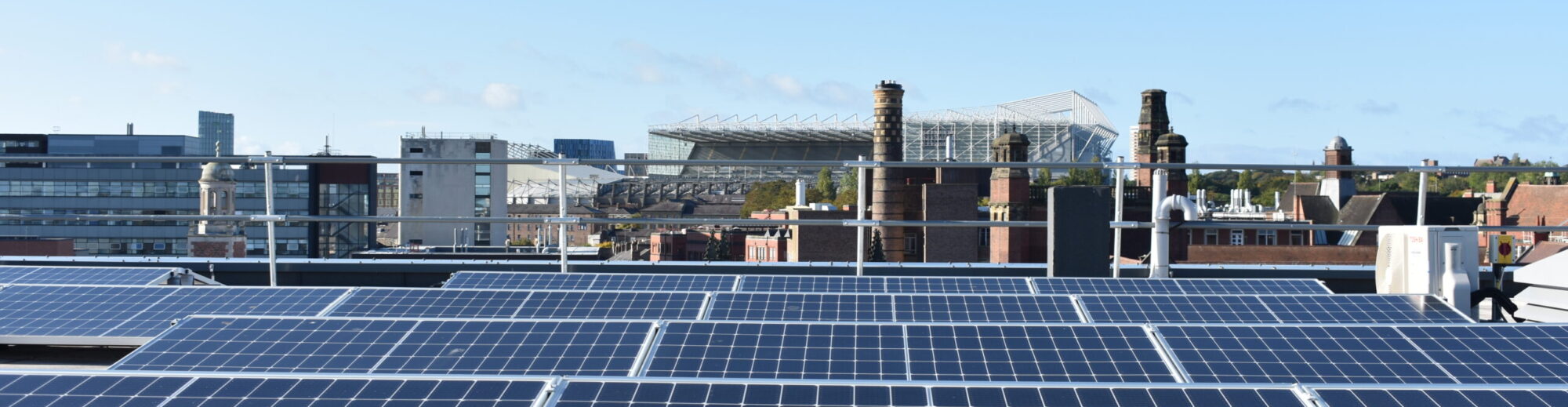
You may have heard about the nurdle (plastic pellet) spill that is currently affecting the River Tyne and surrounding coastline.
The incident occurred at the Port of Tyne on 19 July, releasing an estimated 25 tonnes of nurdles, equivalent to around one billion pellets, into the environment. Since then, nurdles have washed up on beaches across the North East coast, prompting a significant community-led clean-up effort involving local residents, volunteers and environmental groups.
What are nurdles, and why are they a problem?
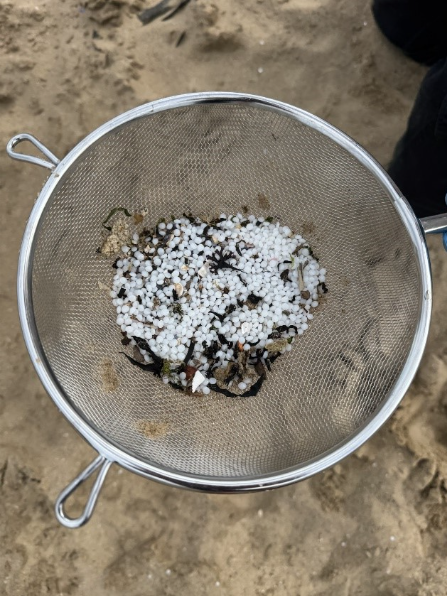
Nurdles are small (typically 1-5mm) plastic pellets that are used as the raw material for manufacturing most of our plastic products. When released into the environment, they can persist for many years, contributing to microplastic pollution and posing a significant threat to wildlife.
Marine animals, such as seabirds and fish 🐟, can easily mistake nurdles for food, due to their resemblance to fish eggs. Once ingested, nurdles can cause digestive blockages and starvation. They can also absorb toxins, which can bioaccumulate in the food chain, having larger impacts down the line. Research has shown that more than 220 marine species have been recorded ingesting microplastic debris.
📰 Dr Geoff Abbott, Reader in Organic Geochemistry at Newcastle University, has commented on this nurdle spill and the wider issue of microplastic in this BBC article.
How can you help – volunteering?
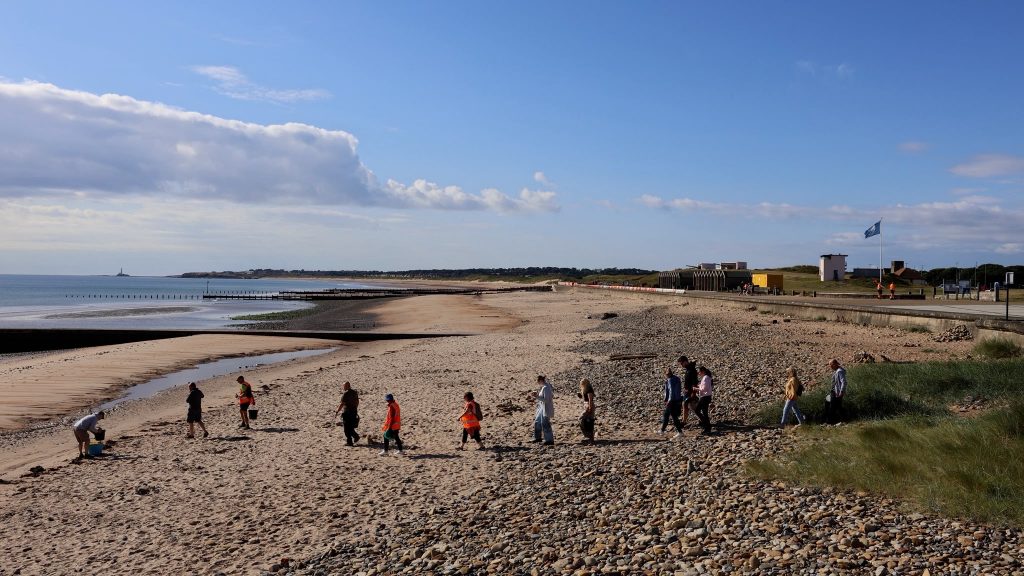
Thousands of volunteers have mobilised to support the clean-up, working alongside councils and specialist contractors to clean up beaches along our coastline.
For anyone interested in volunteering more information can be found on the community volunteer website, including important information on tide times, collection methods etc. The North Tyneside Council website also has some useful health and safety guidelines.
Colleagues at Newcastle University can take volunteer hours to help under the “Colleague Volunteering Policy”. More information on this is available through NUConnect.
If you have any questions relating to nurdle collections feel free to contact 📧Lindsey.Forman@newcastle.ac.uk or sustainable-campus@newcastle.ac.uk.
Environmental Considerations:
- 🪸 Remove as little seaweed as possible. Shaking seaweed into a bucket to catch nurdles, removing any from underneath and returning it to the same place is the recommended method from Nurdle UK).
- Don’t dig on wet sand. This intertidal band is the most biologically productive part of the beach, leaving this part of the beach will help the ecosystem recover.
How can you help – additional steps?
Even if you’re not able to volunteer, there are still things you can do to help:
- 🚨 If you spot nurdles on a beach or along the river, report them to the relevant authorities (e.g. nurdles@southtyneside.gov.uk, https://www.sunderland.gov.uk/plastic-pellets )
- 🔍 You can also log finds at www.nurdelhunt.org.uk to help to help raise awareness and document evidence of nurdle pollution around the UK and beyond.
- 👣 Avoid walking on nurdles so that you do not trample them into the sand – this can make them difficult to remove
- 🐶 Keep dogs under control in affected areas so they cannot ingest them
- 🔊 Help spread awareness of the spill with friends and family who use the local beaches
This blog was co-written by Megan Fairweather (a member of the Newcastle University Sustainable Campus blog writing community)