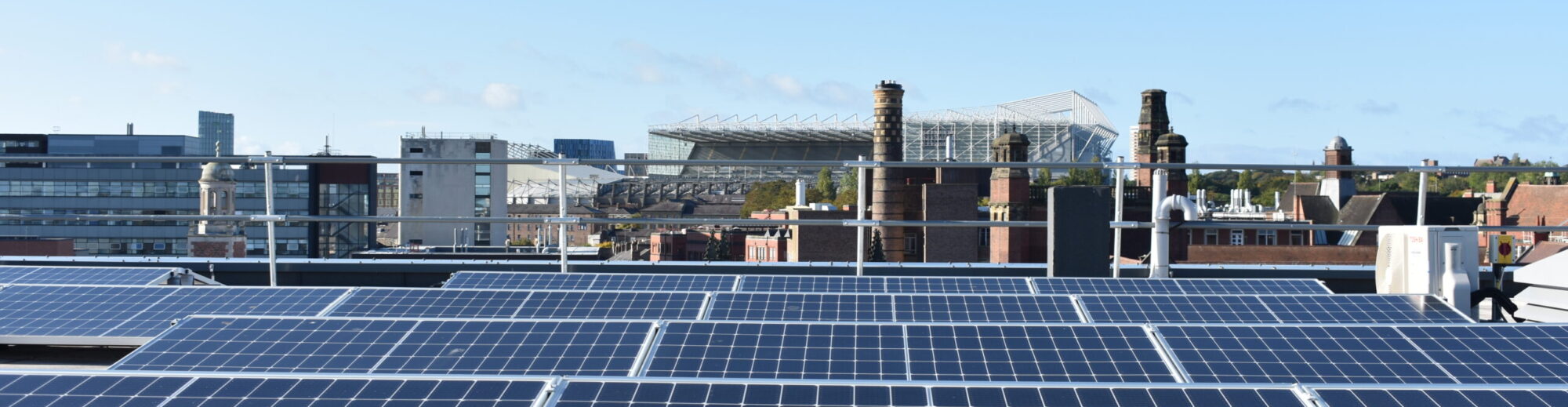
Every year, around 400 million tonnes of paper and paperboard are produced, with numbers predicted to double by 2050. The paper industry is among the top five most energy-intensive industries globally and production requires significant amounts of water.
Printing may seem like a small, everyday activity, but its environmental impact can add up quickly. Adopting more sustainable printing practices can help us to reduce waste, energy use, and carbon emissions across campus.

Print less
Before printing, take a moment to think about the necessity of printing. Could a digital version of the document serve the same purpose?
Print better
Sometimes printing is necessary. When there is a need to print, there are steps we can take to be more sustainable and efficient.
- Print double-sided to reduce paper usage
- Choose black and white instead of colour
- Print multiple slides per page for lecture notes
- Always preview documents before printing to avoid reprints
Recycle!
When printing can’t be avoided, it’s important that all paper waste is correctly disposed of in one of our designated paper recycling bins (blue bin).
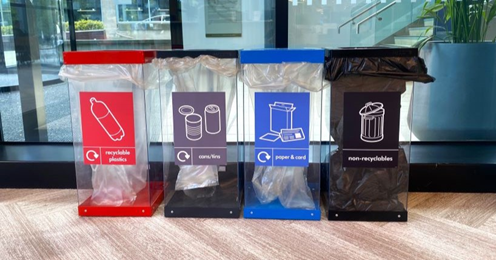
If clean, you can recycle all types of paper in the paper recycling bins, including:
- any white or coloured paper
- shredded paper
- photocopier and computer paper
- leaflets, magazines, journals, newspapers and catalogues
- envelopes, including those with brown paper and/ or windows
- thin card such as cereal packaging and microwave meal sleeves
- Books
Please do not put paper coffee cups, waxed paper or sandwich wrappers in the paper bins.
Thank you for reading this blog. Make sure you rethink next time you print!