This report reflects on recent research which brought together community and academic partners to explore issues of neighbourhood play and of play and youth sufficiency in Jarrow. The research started as a collaboration between Professor Alison Stenning and Paula Turner, a community artist, at Dunn St Primary School, with the active support of then executive head Alison Burden and other school staff. As the project developed, it drew in additional team members: Michelle Trotter (Dunn St Primary), Gemma Lockyer Turnbull (NE Youth), Gerard New (Tyneside Outdoors), and Jackie Boldon (independent play consultant and campaigner).
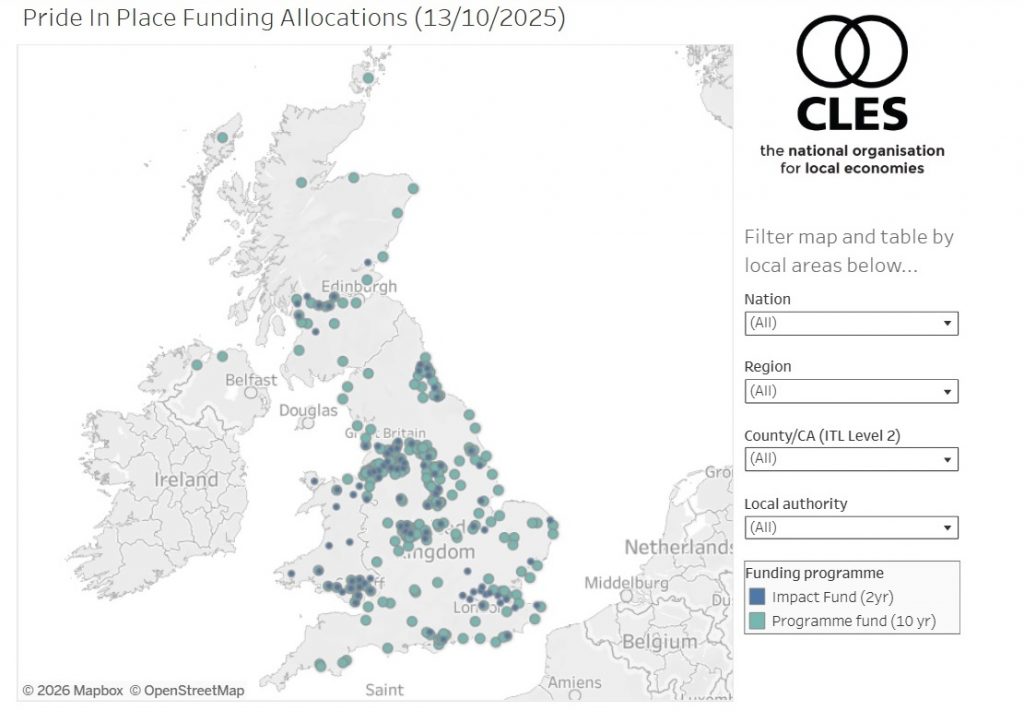
Jarrow was recently allocated £20m over 10 years from the Pride in Place programme (initially as part of the Long-Term Plan for Towns in October 2023). Jarrow Forward, the ‘Town Board’ established to manage this programme, highlighted the need for better youth and recreational provision in its earliest documents. This created an opportunity to engage decision-makers and connect provision for play and youth to wider policy debates, including poverty, inequality, health and wellbeing, physical activity, and care.
Most Play Sufficiency Assessments (PSAs) are carried out by local authorities. Such assessments generally involve a holistic review of local authority services and provision, in the context of research focused on children’s and families’ experiences of space to play.
This project was undertaken by academic and independent researchers and practitioners. Apart from as interviewees and interlocutors, local authority officers were not involved in devising or carrying out this research. As a result, this report is not a standard Play Sufficiency Assessment, but reflects detailed, rigorous research into key aspects of landscapes for play and hanging out in Jarrow, focused on qualitative, ethnographic, participatory, and observational work. It could form the foundation of, or sit alongside, a fuller Play Sufficiency Assessment.
In September 2025, the Starmer government launched the “Pride in Place” programme, focused on investing in and accelerating change in urban communities and developed out of two previous programmes, the “Long-Term Plan for Towns”, established by the Sunak government in 2023, and the “Plan for Neighbourhoods”, Labour’s June 2025 renaming of that scheme.
The growth and development of these programmes mean that the final roster includes around 400 UK communities. These communities are identified as some of the country’s most marginalised, “doubly-disadvantaged” by high levels of economic and social need.
Within these objectives, the programme emphasises local relationships, sense of belonging, community cohesion, pride and safety, neighbourhood vibrancy, high-quality infrastructures, and a say in community futures.
There are lots of questions that can be asked of the initiative (and early critiques are now emerging) but this blog focuses on why play (and not just playgrounds) should be at the heart of every Pride in Place programme.
In September 2025, Play England called for these programmes to deliver on play and “to allocate a fair and proportionate share — ideally at least 20 per cent — to children’s play spaces, reflecting the proportion of children in their local population”. Play England argued for plans for play to extend beyond playgrounds, to include play sufficiency assessments that take into account “all the spaces and places where children play: formal and informal play areas, parks and open spaces, school grounds, streets, neighbourhoods, natural areas, active travel routes, supervised play settings (such as adventure playgrounds), and community recreation facilities”.
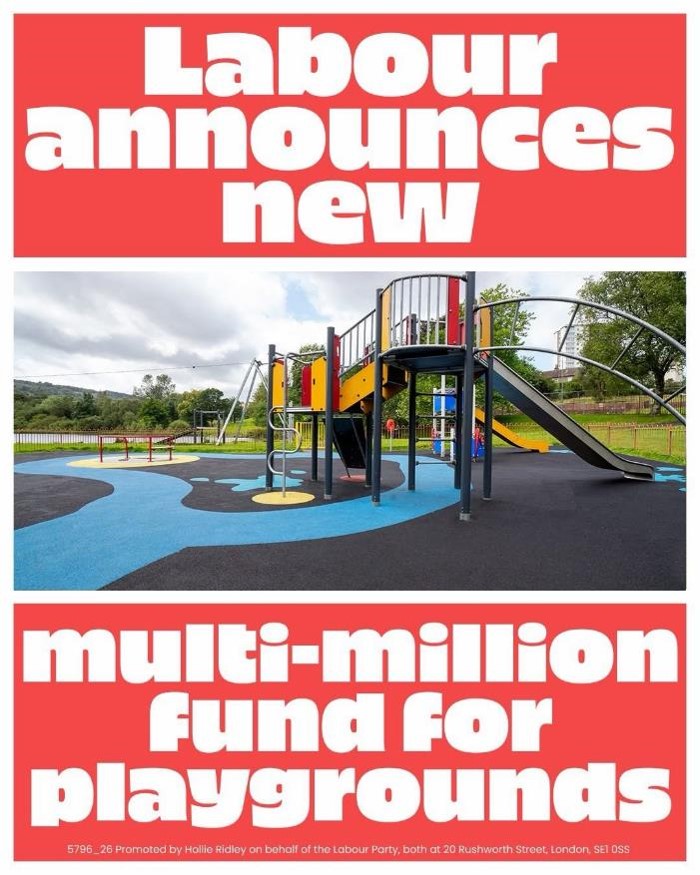
The focus on play was reinforced by the £18 million Playgrounds Fund, announced at the 2025 budget and with details shared in March 2026, “ensuring children in 66 of the most deprived communities have quality play spaces, with cash earmarked to buy new or upgrade playgrounds across the country from Tyneside to Torquay”. This fund not only coincides temporally with Pride in Place, but is also narratively connected with it; as Tom Hayes, MP for Bournemouth and chair of the relatively new All Party Parliamentary Group for Play, underlined:
“This investment is a downpayment not only on better playgrounds, but on brighter, stronger communities.”
So, why is play so important for Pride in Place work?
Here I argue that a substantive and broad play lens – reflected in approaches such as play sufficiency – matches the aims of Pride in Place extremely well, but also has the potential to push Pride in Place programmes further, in terms of centring questions of social, spatial and environmental justice.
Much of this reflects not only my research and advocacy on play on streets and in neighbourhoods over the last decade or so, but particularly on collaborative ongoing play and play sufficiency research in Jarrow since autumn 2023, before and during the town’s engagement with the Long-Term Plan for Towns (announced in late 2023) and Pride in Place.
Decades of research into play, especially neighbourhood play, underlines the power of play in revealing and tackling injustice.
Uneven geographies of play can be seen as a good indicator of neighbourhood need. Access to playgrounds, the quality and maintenance of playgrounds, the comfort and security of doorstep spaces, safe mobility around neighbourhoods between spaces for play, pollution in and around play space and associated health risks, for example, all reflect wider patterns of inequality.
Play is community development. Play supports family life and connections within communities. Research and activism around play holds “that children and their play are not separate from other aspects of community life” and that “more people playing out more of the time in more places can improve community cohesion and strengthen intergenerational relationships”. The value of play can’t be reduced to community development, but there is little doubt that play’s effects (and affects) can support the rich and healthy development of communities.
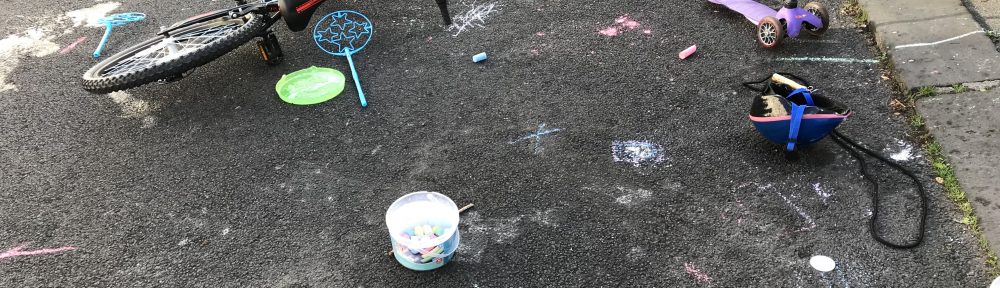
Play animates communities. It often quite literally colours them, transforming sometimes grey urban environments into spaces full of playfulness, mark-making, and the traces of play (toys, chalk, etc.), but play also makes space for emotion and care. Children’s everyday play can animate streets as they occupy pavements, gardens and driveways, alleyways, and small green spaces. Children playing out can draw adults out, as they watch, talk to, and care for their children. Where children play, adults meet.
A play-friendly neighbourhood is a neighbourhood that’s better for everyone. Policies and practices that support play – creating safe and accessible public spaces, enabling safe journeys around neighbourhoods, tackling criminal and antisocial behaviour, making space for connection, for example – also support a wider sense of accessibility, safety and community. It’s often noted that child-friendly environments are also positive for older people and for those with compromised health and mobility.
Play opens our eyes to the spaces and qualities of our streets and neighbourhoods. The very act of trying to play in our neighbourhoods enables us to see our places in detail and forces us to notice and document, implicitly and explicitly, the injustices we encounter – whether that’s about the dominance of motor vehicles, the poverty of street cleaning and maintenance, or the everyday juggling of those living on the street.
Play enables public conversations. The inherent playfulness of play enables an openness or a sense of potential that creates moments for different, perhaps more innovative kinds of thinking, opening up new ways of thinking about our public spaces and how we might use them, but also just making space for neighbours – of all ages – to share information, concerns, perspectives. Play can also enable creative ways to engage communities, that are more inviting and more accessible than meetings with council staff in community centres and online surveys. Play sufficiency approaches offer rich and valuable ways to engage substantively with children and young people about what they need from their communities.
Space for play is social infrastructure. Social infrastructures are “networks of spaces, facilities, institutions, and groups that create affordances for social connection”, and we can see how play spaces can function in this way. Play spaces – formal and informal – are sites of sociality, for children and their carers, and can facilitate encounter and care, often between generations. Playgrounds can be meeting points not only for children, but also for parents and grandparents, ball courts (MUGAs) are spaces for teenagers to meet, chat, share and have fun, and playful streets engender multiple, diverse, loose moments for connection.
Play is prefigurative – it literally plays around with ideas and with environments, and opens up possibilities for reimagining what streets and neighbourhoods might look like or might be for, it can prefigure a different kind of urban world, reflecting the needs and desires of children, and their families and wider communities.
In all these ways, we can see play supporting – directly and indirectly – the overarching aims of Pride in Place to build stronger communities, to create thriving places, and to empower people to take back control, but also to connect to more specific intentions around skills and learning, tackling crime and anti-social behaviour, supporting a stronger sense of social safety, enabling physical activity, offering opportunities for volunteering, improving local access and mobility, and reducing the impacts of child poverty.
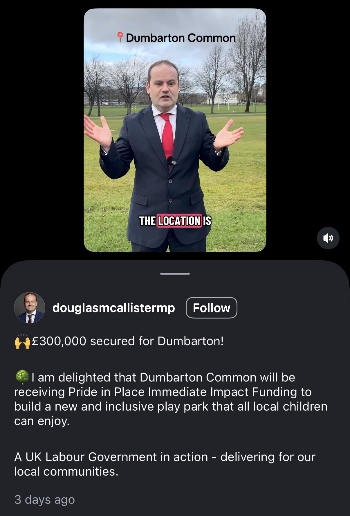
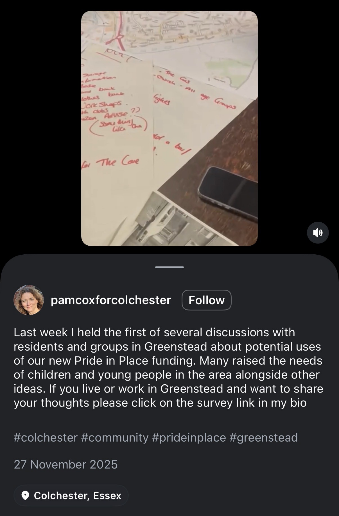
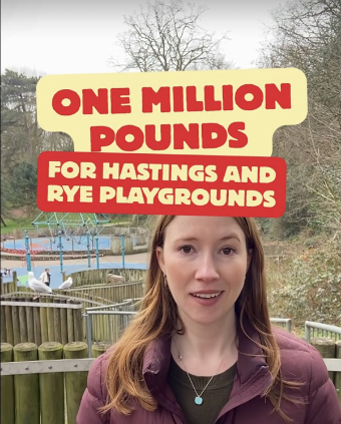
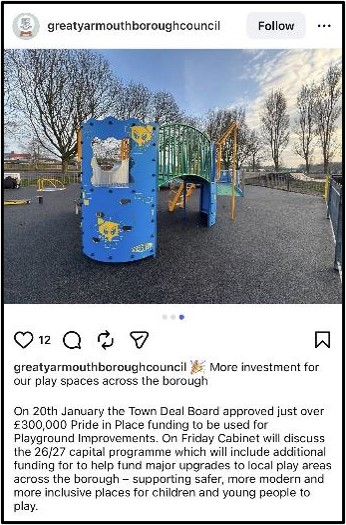
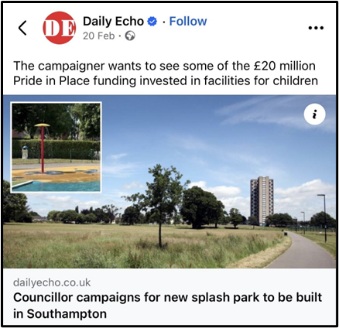
Some “first phase” Pride in Place programmes are already beginning to identify play as an important aspect of their work, and key actors – such as councillors and MPs – in other communities (including those in receipt of Pride in Place Impact Funds) are both championing the need for investment in play and noticing how often play arises in community conversations.
But, in many of these, the focus is on playgrounds, either investing in the redevelopment of existing, rundown playgrounds, or calling for the creation of new playgrounds where there is community need, a focus reinforced by the £18 million playgrounds fund.
Playgrounds are important, but they can never be the only spaces for play in a neighbourhood, especially one where the hope is to build stronger, thriving, connected, empowered communities.
So, what broader approaches to play might a Pride in Place programme engage with to achieve more? These suggestions emerged from our Jarrow work, and offer a combination of both ideas for engaging with play to explore the foundations of Pride in Place and possibilities for thinking more expansively about play and community.
Use play as lens to pay attention to the quality and safety of neighbourhood public spaces, from doorsteps, to paths, parks and town centres
Create neighbourhood public spaces that are safe and comfortable in all weathers and seasons, enabling them to be used in bad weather and in the dark
Enable safe and accessible routes between playable spaces, in turn creating good routes throughout the neighbourhood
Demonstrate a concern for the quality of public space by repairing and maintaining the playgrounds, benches, paths, etc. used by playing children
Fund playworkers and youthworkers to create more opportunities for public play and support the animation of public space by play
Build adventure playgrounds
Recognise the value of community play spaces (such as adventure playgrounds) as hubs for wider social action (safeguarding, food banks, family support, etc.)
Develop a play streets programme, allowing ordinary residential space to be safely reclaimed for play
Improve facilities such as toilets and access to drinking water to enable children and young people to play for longer more comfortably
Integrate play into child poverty strategies to support families, financially and in other ways, to facilitate their children’s play
Remove No Ball Games signs and address resident concerns about the possible negative impacts of play in other ways, including by championing the critical value of play
Develop a pro-play policy at neighbourhood board or council level to underline the premise that play should be permitted
Adopt a play sufficiency approach to map play and develop a strategy for more, better play
Ensure that more children with additional needs, children from migrant and refugee families, and others with protected characteristics are equally able to access space to play.
As the first Pride in Place neighbourhoods have not long submitted their plans, and the newest cohort begins the process of engagement – and each programme lasts 10 years – it’s far too early to say what might happen with play and Pride in Place, but it’s clear that there is much that could happen in this space – and I’ll be watching closely.
For more on our Jarrow work, have a look at our presentation to Jarrow Forward, the Jarrow neighbourhood board. This work was carried out with Paula Turner, Michelle Trotter, Jackie Boldon, Gemma Lockyer Turnbull, and Gerard New, with the support of various small grants from Newcastle University.
A version of the arguments I explore here was presented to the Journal of Youth Studies conference at Durham University. You can view the slides here.