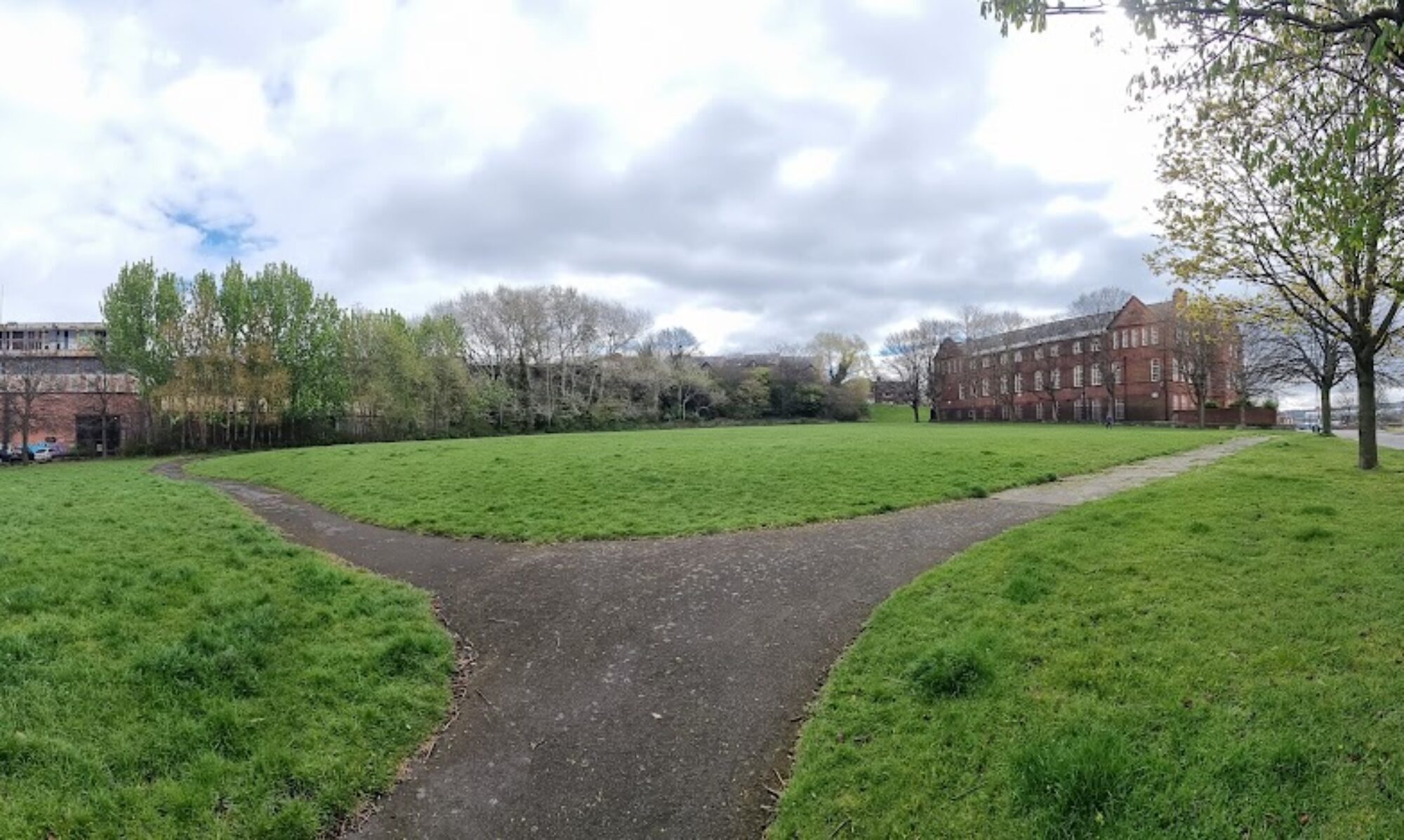

The circular pathway at Ballast Hills Burial Ground is made from gravestones that were removed from their original positions and reused when the site was redesigned as a public open space. The pathway now forms one of the most visible surviving features of the burial ground and preserves evidence for many of the people once buried there.
All 273 pathway segments were recorded in full during summer 2025. Volunteers documented the location, measurements, condition, visible inscriptions, and other features of each segment. As many people contributed to the survey, the project also planned a validation exercise to check the consistency and accuracy of the completed records.
Myra Giesen and Gary Taylorson recorded a random sample of 35 pathway segments for a second time, with additional help from Lynn Taylor. This represents just over 10% of the total. The repeat recording allowed the project to compare independently completed forms and assess the consistency and accuracy of the original survey, including locations, measurements, condition descriptions, and inscription details.
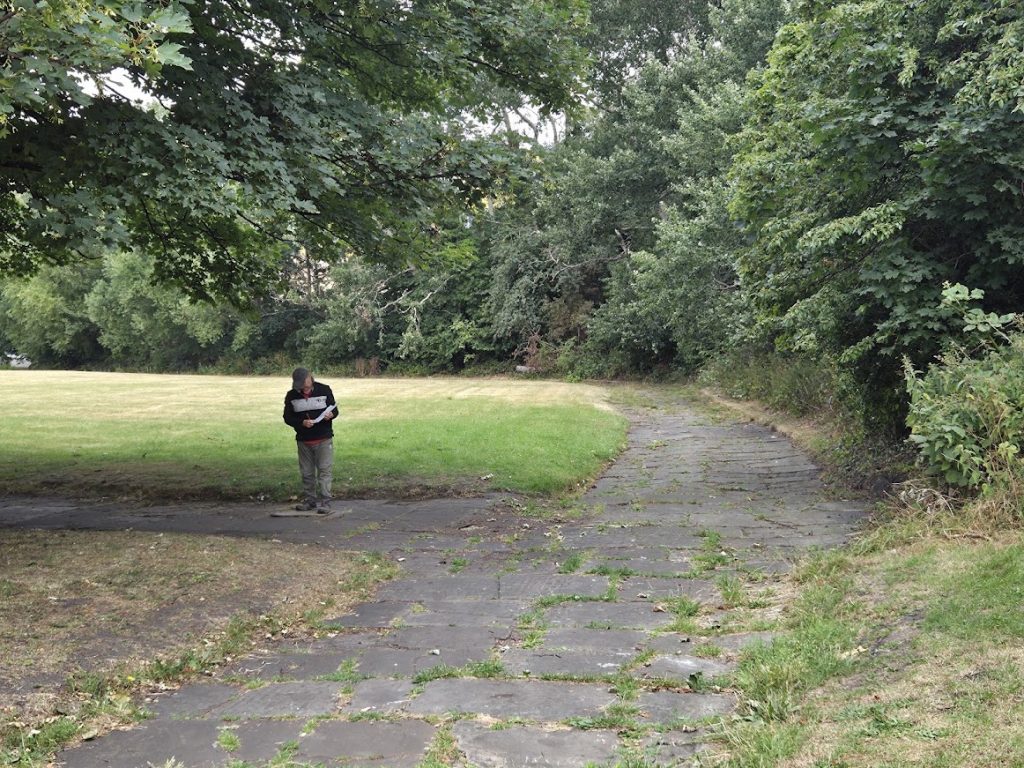
The completed survey provides an important baseline condition assessment of the gravestones that survive today. Many stones are worn, damaged, incomplete, or difficult to read. A reliable record of their present condition will support future monitoring, conservation planning, and research.
The survey will also allow comparisons with earlier inscription lists from 1817, 1904, and 1929. These records capture the gravestones at different points in the burial ground’s history. Comparing them with the current survey may help us to trace changes in condition, identify stones that have been moved or lost, and recover information from inscriptions that can no longer be read.
We are now ready to begin transcribing all 273 recording forms. This next stage will turn the handwritten field records into structured digital data that can be searched, checked, and compared with the historic inscription lists.
No specialist knowledge is required, and guidance will be provided. Anyone interested in helping with the transcription can contact Myra at ballast.hills@newcastle.ac.uk.