
Michael returned to the environmental chamber again this year after a successful heat preparation last season prior to the Club World Cup, to prepare for the 2026 FIFA World Cup held across Canada, Mexico and the United States.
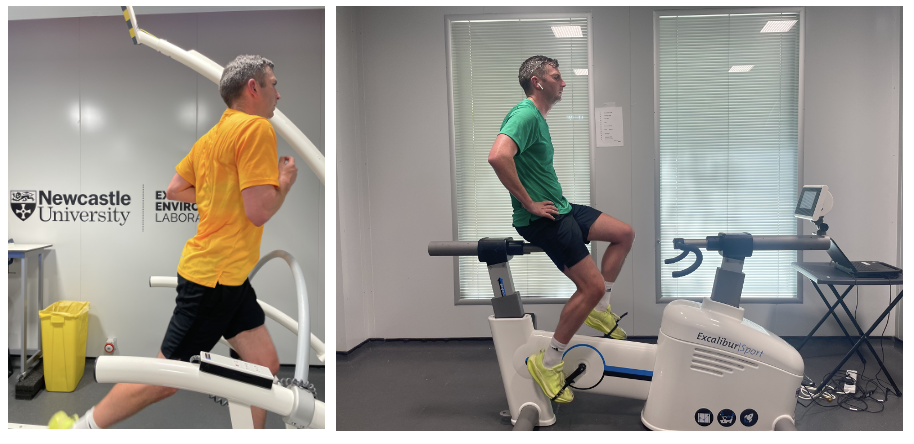
Blog focussing on research from the NCL extreme environments laboratory. Run by Dr Owen Jeffries
Michael returned to the environmental chamber again this year after a successful heat preparation last season prior to the Club World Cup, to prepare for the 2026 FIFA World Cup held across Canada, Mexico and the United States.
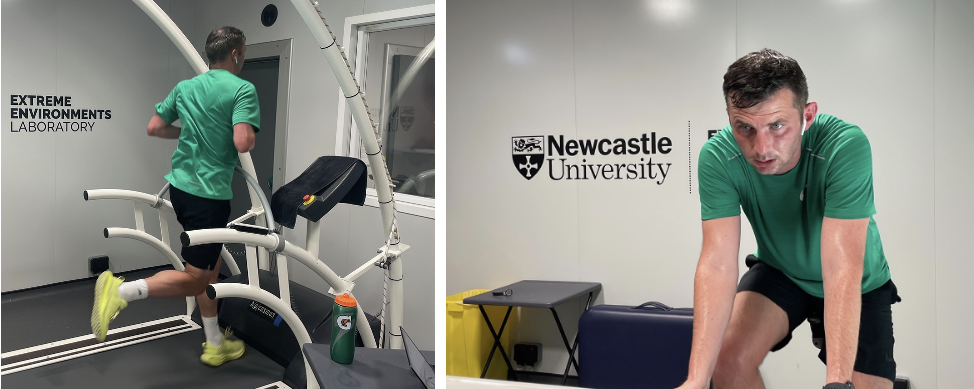
Michael attended our Laboratory at Newcastle University over a 4 week period scheduling in 7 heat sessions. The block was in preparation for refereeing games at the forthcoming FIFA Club World Cup football tournament in USA.
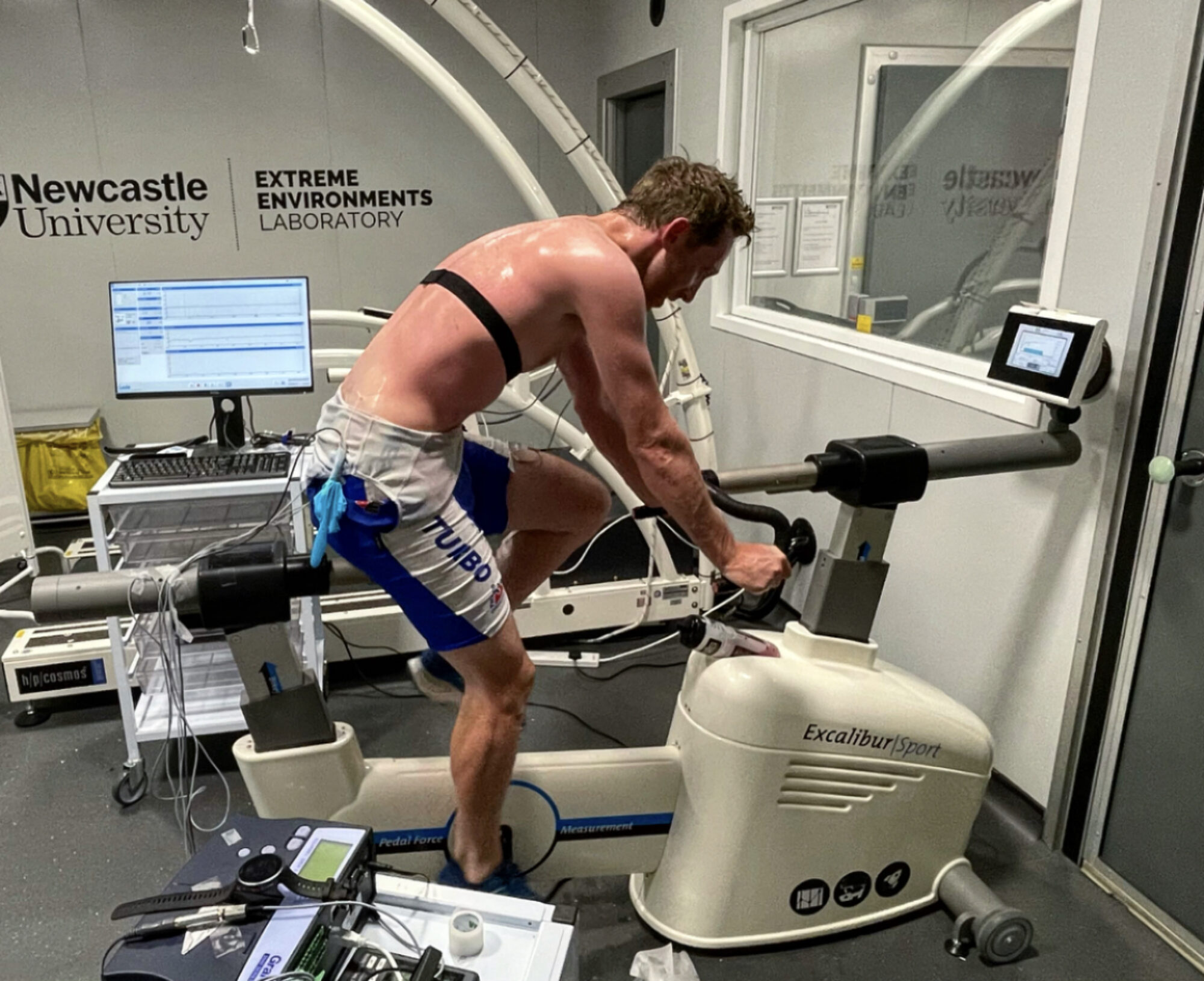
Michael pictured training in the Environmental Chamber during a series of heat acclimation sessions for the upcoming Club World Cup.
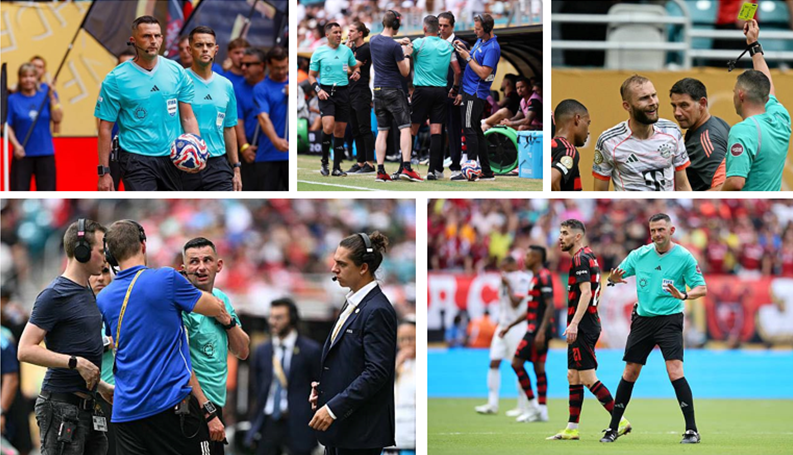
English referee Michael Oliver in action during the FIFA Club World Cup 2025, round of 16 match between Flamengo and Bayer Munich, at the Hard Rock Stadium in Miami where temperatures were reported as highs of 33oC and humidity was 60%RH (Heat stress index = 40oC).
Read more about the heat acclimation protocol he used to prepare for the tournament………
Jarlath, recently came in for a chat about how to prepare for the hot conditions in the World Championship 100km running race*. This was held in India in a town named Bengaluru which is at 920 metres in altitude. The combination of altitude and that the race took place in December meant that temperatures were not as extreme as they can be in India, however peak temperatures reached around 27oC which is still a considerable heat stress over a long period of time. In a field of over 250 athletes from 40 countries, Jarlath (GBR) finished 9th overall (in a time of 6:51:20h) and second GBR male, helping the men’s team claim bronze medals. In this question & answer we will ask him how he got on and what strategies he used to help him in the environment.
*2024 IAU (International Association of Ultrarunners) and WMA (World Masters Championships) 100km World Championships in Bengaluru India.
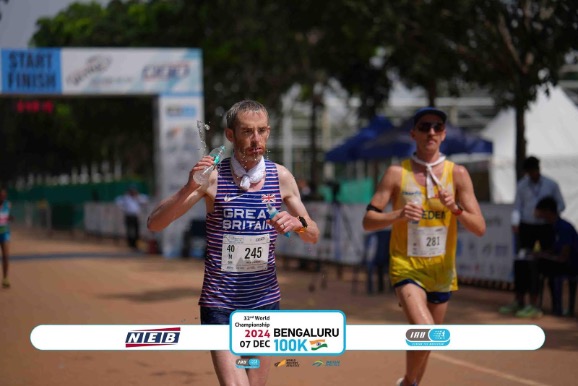
Jarlath pictured during the event wearing his own neck cooling system and dousing himself in water.
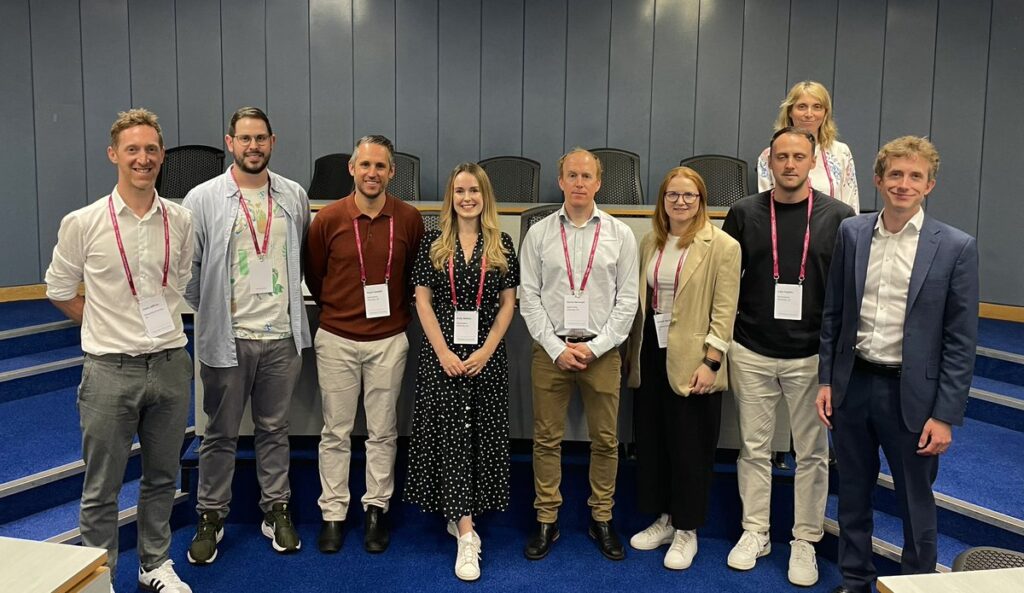
Dr Owen Jeffries chaired a session with Dr Irene Di Gulio (Kings College London) on Human exercise and environmental physiology at the recent joint Physiological Society and Scandinavian Physiological Society joint conference at Northumbria University in July 2024. A great session with some great speakers and interesting discussion exploring the recent Physiological Society’s report on Heat Resilience strategy.
Pictured below are the speakers and organising team for our small special interest group.
We offer consultancy services to facilitate athletes to prepare for extreme climates including extremes in heat, cold and altitude. We recently worked with an athlete preparing for the Marathon Des Sables, called the toughest footrace on earth. MDS is an event that takes place each year in the Sahara Dessert where temperatures can reach up to 50 oC. Carried out over 6 days athletes must complete +250 kms, a massive challenge in some of the most extreme environmental conditions on earth, so much so that in 2021 during extreme heat less than half the 753 athletes that started the race finished and sadly one athlete died.
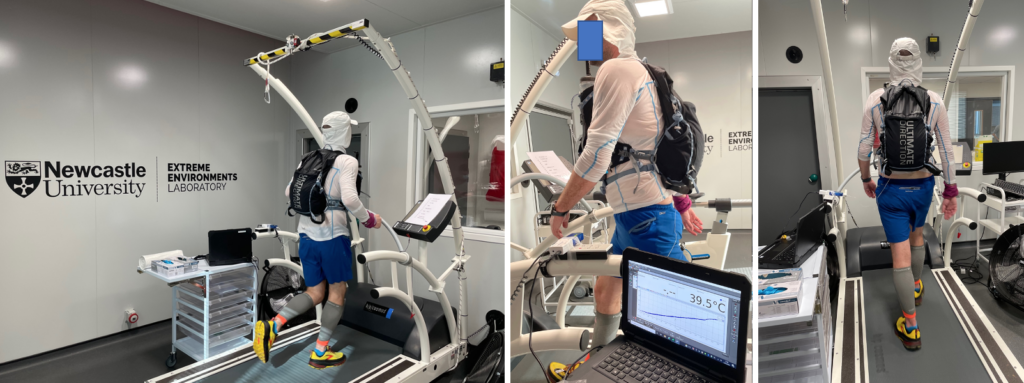
If you are interested in consultancy in extreme environments contact: Dr Owen Jeffries [owen.jeffries@newcastle.ac.uk]
You can find the full range of services we offer at this link: https://www.ncl.ac.uk/sport/sport-and-fitness/hub/testing/