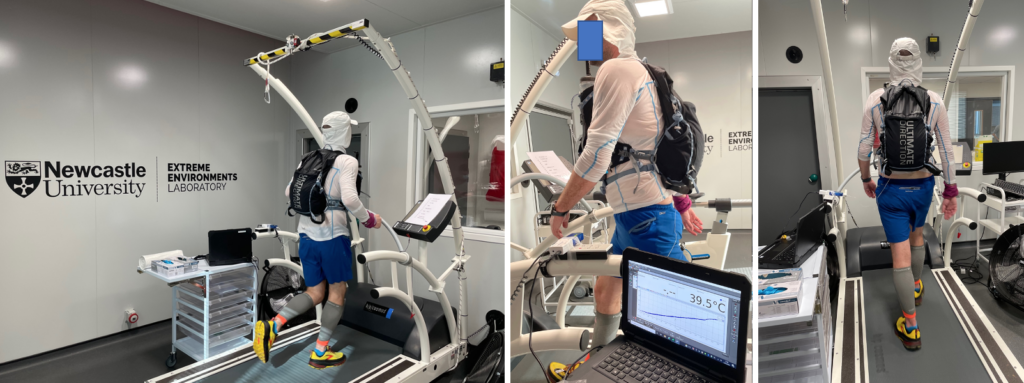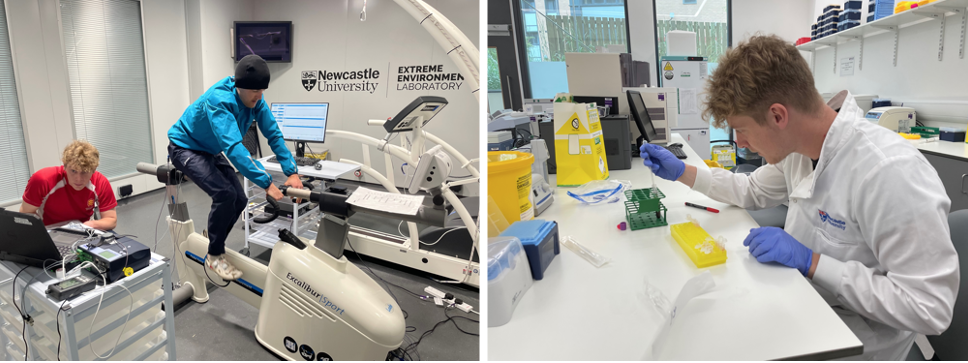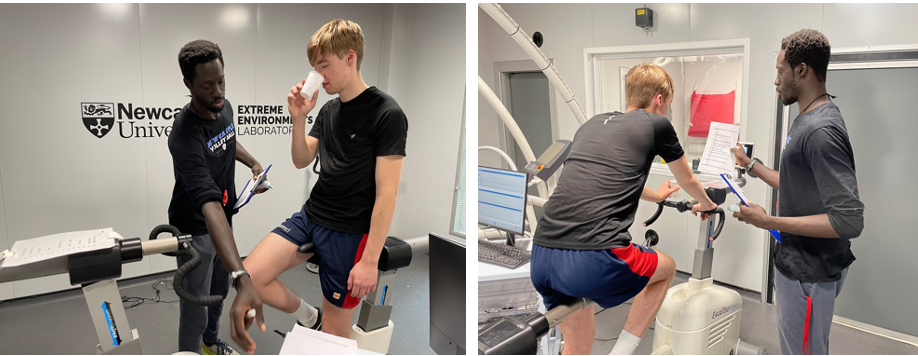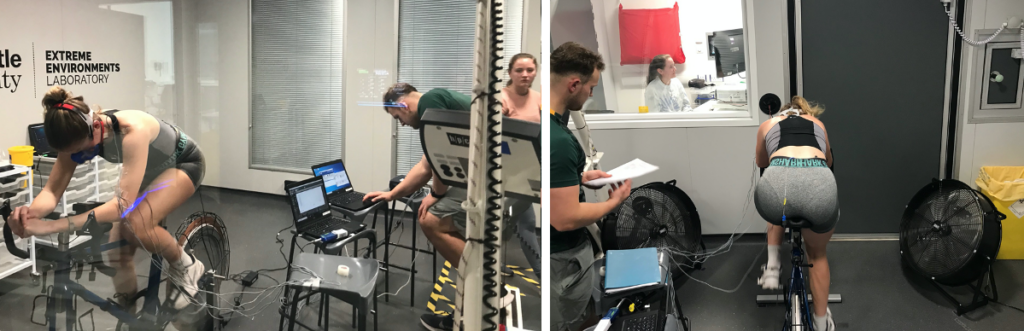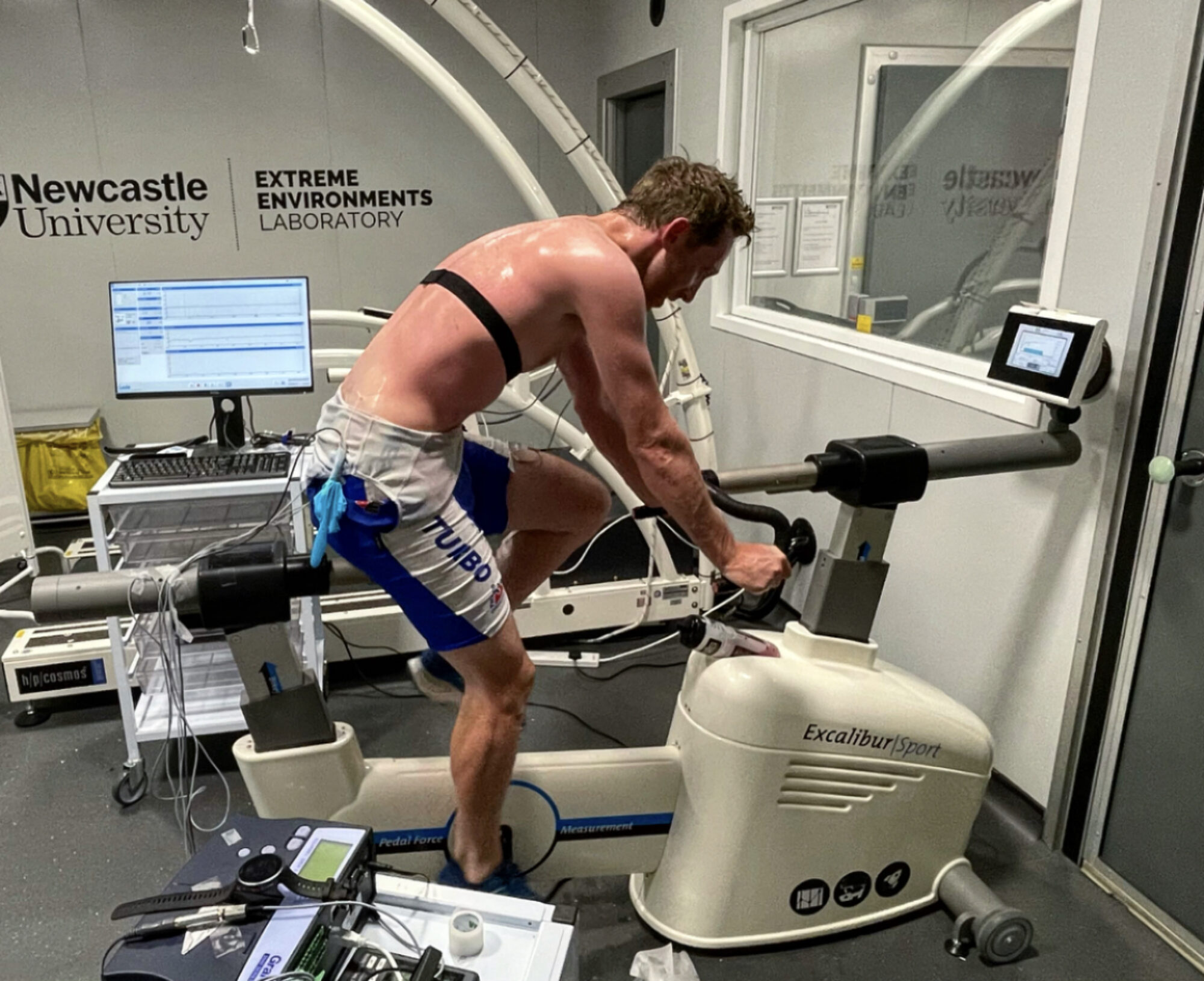
MRes medical student George Barton joined the laboratory in the beginning of 2022 as an intercalating medical student to explore the biochemical responses to uncompensatable heat stress, with support from PhD student Lee Ager.


Blog focussing on research from the NCL extreme environments laboratory. Run by Dr Owen Jeffries
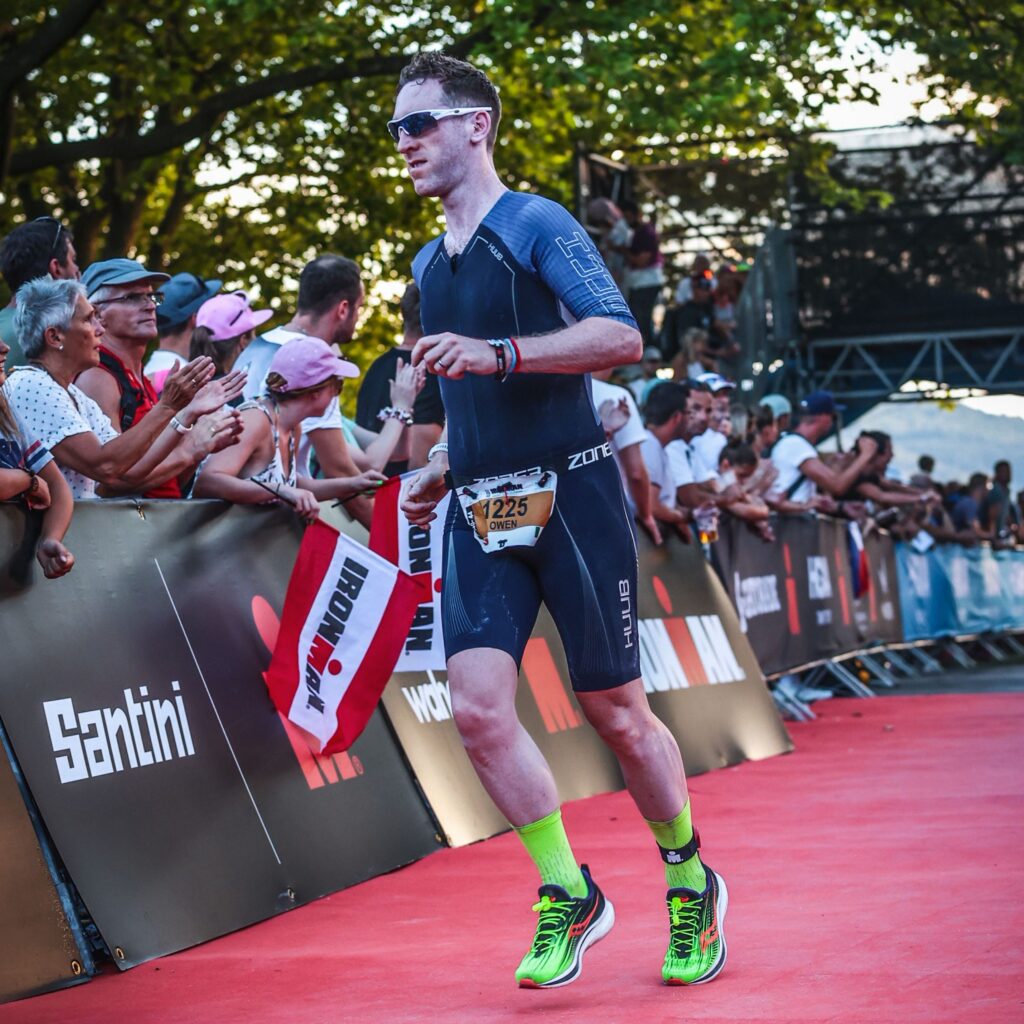
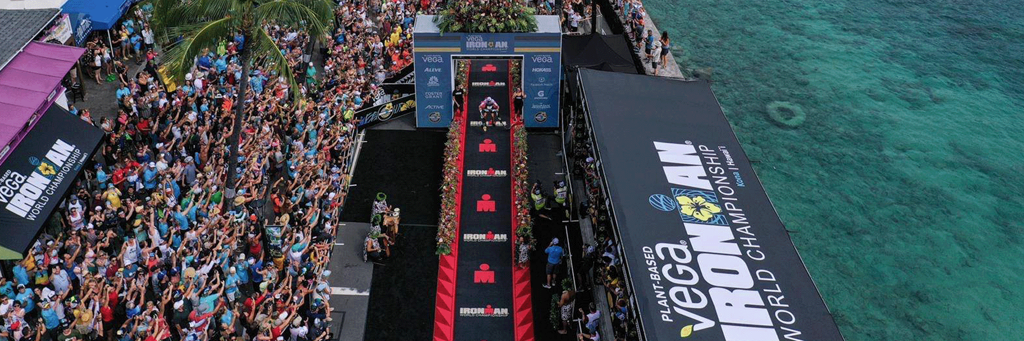
Dr Owen Jeffries spoke with a reporter from insider.com online news outlet following his recent Ironman triathlon competition in Austria which occurred during the European heat wave with temperatures reportedly reaching close to 38 oC.

In the article he discussed 5 tips when preparing or exercising in extreme heat. This included a consideration of mechanisms of adaptation, optimisation of hydration, sodium supplementation, cooling strategies and carbohydrate gut training.
The full article can be found here: https://www.insider.com/ironman-sport-scientist-tips-hydration-extreme-heat-2022-7
Dr Owen Jeffries (Newcastle University) and Professor George Havenith (Loughborough University) spoke with a reporter from businessinsider.com online news outlet during the extreme heat waves being experienced across America and Europe during the summer 2022.

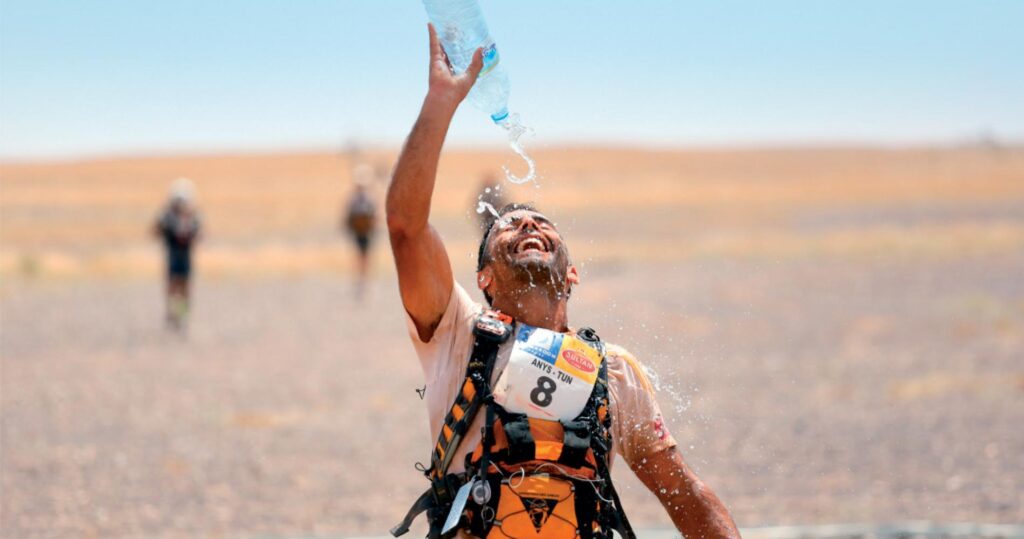
In the article they explored strategies on how to cool during hot periods of weather implementing simple tasks such as: cooling hands and feet, cold water immersion, spraying clothing with water, eating lighter meals, using electric fans, optimal hydration, and exercising in the heat.
The full article can be found here: https://www.businessinsider.com/how-to-stay-cool-extreme-heat-scientists-2022-7
Dr Owen Jeffries spoke to a BBC reporter along with Professor Ron Maughan (St Andrews University) Dr Sophie Killer (Performance nutrition consultant), Dr Gabriella Montenegro (CeSSIAM) about the best way to rehydrate on a hot day.
You can read the full article here: https://www.bbc.com/future/article/20210802-is-water-always-the-best-choice-on-a-hot-day
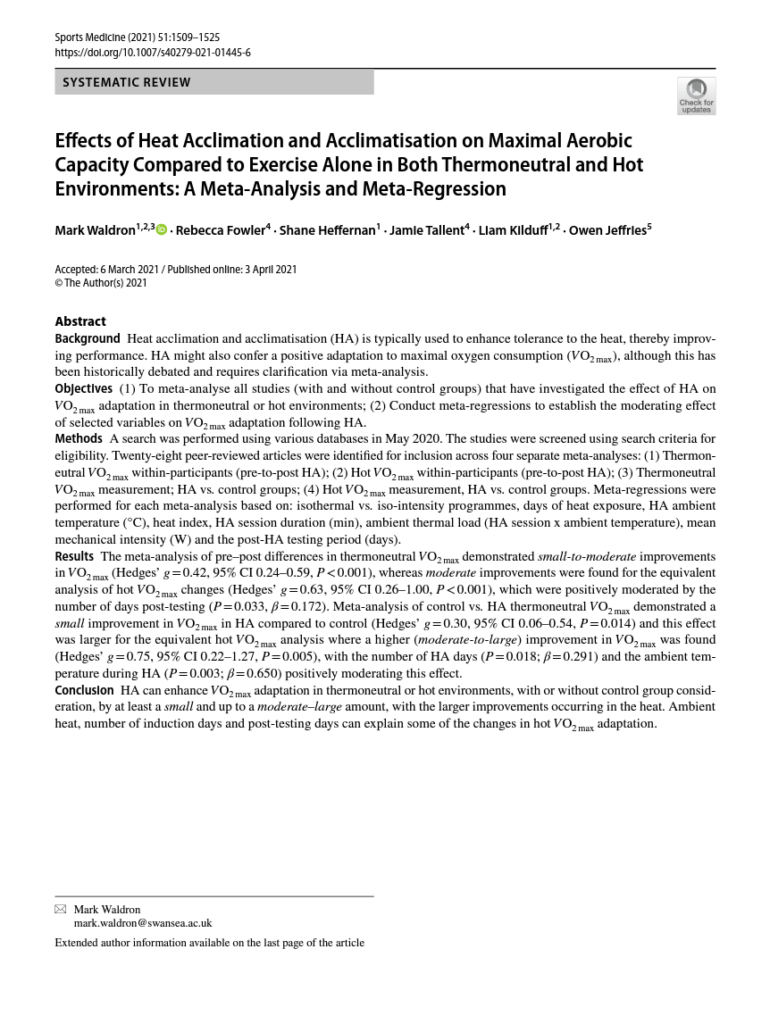
In our latest study published in Sports Medicine on the 3rd April 2021 led by Dr Mark Waldron (Swansea University), we meta-analysed 28 studies to explore how heat acclimation or acclimatisation can modify maximal oxygen consumption. This is an area of some heated discussion in the literature (see for example the point-counterpoint in J.Physiol here).

To summarise our findings, we found that heat acclimation can enhance VO2max adaptation in thermoneutral or hot environments by at least a small and up to a moderate–large amounts, with larger improvements occurring in the heat.
The article can be found here: 10.1007/s40279-021-01445-6
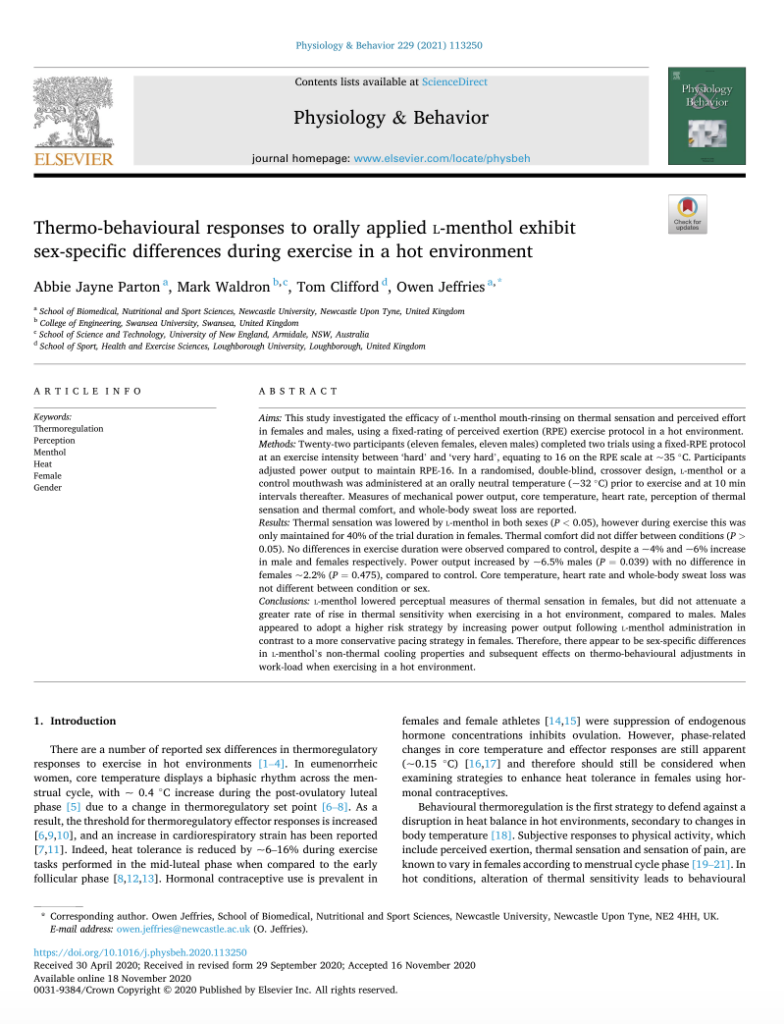
Our latest study has been accepted for publication in the journal Physiology & Behaviour on 1st February 2021. The project was led by a student in our laboratory Miss Abbie Parton.

The work expanded on some of our early work first characterising the effect of non-thermal cooling strategies by applying L-menthol (which is perceived as a cooling flavour) mouthrinse and recording beneficial effects in exercise regulation in hot environments (Flood et al. 2017). In this new study we report a sex-specific difference in how females perceive the application of this “non-thermally” cooling L-menthol rinse during exercise in a hot environment. The impact of such findings are crucial for the exploration of ergogenic supplements for use in hot climates particularly when considering the differences between male and female populations.
The article can be found here: 10.1016/j.physbeh.2020.113250
In our latest study published in the Journal of Thermal Biology on 8th September 2020, we report that 5 days of heat acclimation with or without ischemic preconditioning can enhance markers of endurance performance and vascular blood flow in ambient conditions.

The article can be found here: 10.1016/j.jtherbio.2020.102724