Archive

Yearly Archives: 2013

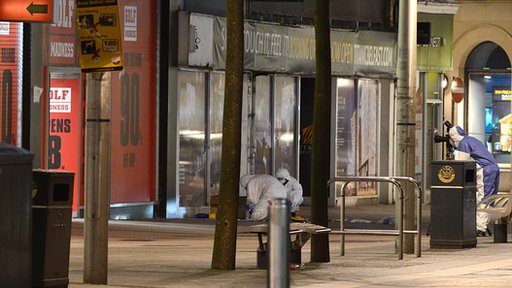
_71785449_firebombforensics

Image Source: http://www.bbc.co.uk/news/uk-northern-ireland-25412487

Colin Murray (Senior Lecturer, Newcastle Law School) colin.murray@newcastle.ac.uk

This post was first published on Human Rights in Ireland

The Troubles just won’t slip conveniently into history. In recent weeks anyone confident that Northern Ireland has “moved on” will have received multiple jolts to such complacency. A car bomb (and last night a fire bomb, pictured left) and Loyalist protests have disrupted shopping in Belfast’s city centre in the run up to Christmas. And as for the Troubles themselves, they have been a prominent part of the news headlines. Revelations UK army units operating beyond the standard rules of engagement in the 1970s. Outcry over the fate of the “disappeared” and over the strenuous denials by Gerry Adams over his own involvement. Shock over the detail of collusion between members of the Garda and the Provisional IRA in the findings of the Smithwick Tribunal. The risk of more bloodshed today running hand-in-hand with blood continuing to seep under the door marked “the Troubles” with every new revelation.

This barrage of stories has wrong footed many. Most obviously, Sinn Féin has seriously miscalculated in its response to the Smithwick Report’s findings, the Disappeared documentary and the conviction of Liam Adams. The dogmatic adherence to the line that Provisional IRA volunteers were “only doing their duty” in a dirty war has never washed for the UK Government in accounting for the actions of members of the UK security forces, and indeed, in responses to events such as the Saville Report, has now largely given way to outright apologies rather than attempted justifications.

Perhaps, in this atmosphere, Northern Ireland Attorney-General John Larkin misread the auguries when he put his head above the parapet and raised the possibility of calling a halt to investigations of Troubles-era political violence, finding himself alone in the face of a barrage of criticism. Maybe Larkin thought that a stultified debate over what to do about the past could be advanced by someone saying the unthinkable. At the very least he did prove that there are certain things that can unite politicians from all political perspectives in the Province. Victims must never be forgotten went the rallying cry, all the more galling when the Northern Ireland Executive has steadfastly failed to move any proposals to address victims’ issues since the Assembly was restored in 2007.

Still, the furore is nonetheless surprising. Few commentators can predict with any degree of accuracy what reports or comments will catch the attention of Northern Ireland’s politicians. October saw the Northern Ireland Policing Board published its extensive Thematic Review on the use of police powers to stop and search and stop and question under the Terrorism Act 2000 and the Justice and Security (NI) Act 2007. Maybe the title put people off, for the Review (despite being trailed by David Anderson QC, the UK Independent Reviewer of Counter-Terrorism legislation) generated almost no attention, despite the high levels of public concern over stop and search. Just this May the Northern Ireland Court of Appeal ruled that the stop and search under section 21 of the Justice and Security (NI) Act 2007 of a former IRA hunger striker and a brother-in-law of Martin McGuinness were unlawful (the Fox and McNulty Case). The Court concluded (at [45]):

A power vested in the police to openly stop and question a person is not the exercise of a covert surveillance power but it partakes some of the characteristics of surveillance.  The fact that it can lead to open stopping and questioning in circumstances which do not ensure even privacy between the police and the individual adds to the potential for invasions of the article 8 right.  It is a power which does require justification and which provides effective guarantees and safeguards against abuse.

As the Thematic Review found, working with both the Fox and McNulty decision and the jurisprudence of the European Court (ECtHR) on the right to privacy (p.27):

The case law of the ECtHR clearly establishes that covert and secret surveillance by state agencies constitutes a particular threat to democracy and freedom which requires strict justification in the interest of national security or for the prevention of crime. The system itself must provide adequate and effective guarantees against abuse.

It ultimately restated the importance of the ECHR in policing and security operations (p.110):

The debate about the police use of powers to stop and search and stop and question can become clouded by many false assumptions, which it is hoped are challenged in this thematic review, but what is abundantly clear is that the Human Rights Act 1998 does not value individual rights at the expense of the community. Rather, it provides a model for a functioning society within which certain rights can be limited while protecting the human rights of all members of society. The Committee has stressed many times, but wishes to restate its central message that there is no conflict between human rights and policing because policing is the protection of human rights.

Such conclusions should resonate not just through Northern Ireland, but into debates over treatment of individuals such as David Miranda as well. So why did the report get ignored? It must have been the title. Or are we, as a community, better disposed to looking back to the time of the Troubles, rather than considering how its legal framework continues to affect our lives?
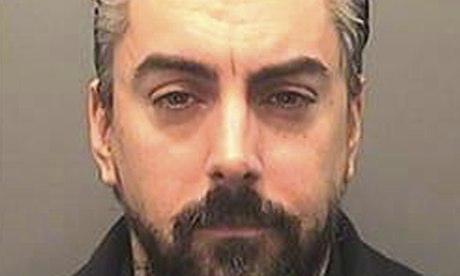

Ian Watkins royalties

Image Source: http://www.theguardian.com/uk-news/2013/dec/18/ian-watkins-transcript

Jessica Randell (LLB Law, Newcastle University) j.m.randell@ncl.ac.uk

In September 2013 I wrote a blog post entitled, ‘Guilty Until Proven Innocent: The Anonymity of Celebrity Defendants in Sexual Abuse Cases’. This served to evaluate the recent, highly publicised sexual offence trials concerning celebrity defendants including Jimmy Saville, Stuart Hall and Michael Le Vell.* These trials have grabbed the public’s attention and opinions are widely varied with respect to the media attention they receive during the criminal law process. Conversely, the aim of this post is to evaluate what happens after a guilty verdict has been reached with a focus on the newly introduced sentencing guidelines for sexual offences.

These guidelines, as issued by the Sentencing Council on the 12th December 2013, will affect over fifty sexual offences including rape, child sex offences and human trafficking. The focus is now on the impact these offences have had, and will have, on the victim(s) and shall generally result in harsher sentences as lengthened by aggravating factors. These changes have come about after consultation with victim groups, medical professionals and those involved in the legal system. It replaces the former guidelines which were issued almost a decade ago after the introduction of the Sexual Offences Act 2003.

This new system, coming into force in April 2014, will introduce higher starting sentences for crimes such as rape which, for top category sentences, will now begin at fifteen years. This had only previously been afforded to those who had committed multiple rapes. There is also a focus on the impact technology has had on sexual offences including, for example, the filming and photographing of the victim during an offence. This will constitute an aggravating factor available to the judiciary when deciding an individual’s sentence. Further, the concept of ‘ostensible consent’ has been removed; meaning a child over the age of thirteen’s consent cannot constitute a limiting factor on a defendant’s sentence. This has occurred because “children do not consent to their own abuse”.

Two of these definitive aggravating factors will, arguably, have a greater impact on the celebrity defendant. These include when there has been an abuse of trust arising from the exploitation of one’s status or image and, additionally, when a defendant’s ‘good character’ has been used to facilitate an offence. There are several questions which arise from this; is it right that a guilty celebrity’s fame should be used against them? Was this change invoked due to the recently publicised celebrity trials? And is this a move in the right direction?

Firstly, it must be emphasised that celebrity status or ‘good character’ will have no direct impact on the decision of the case itself. This is a factor to be brought into play when deciding the sentence of the guilty party who should have previously endured a just, open and fair trial in front of a jury. Thus what is being focussed upon is how these factors have been used to facilitate the offence in the first place; trust, status and ‘good character’ having been exploited to bring about the crime and deter victims from coming forward due to the fear of not being believed. It is submitted that if such factors are found to be present in a case then it is surely correct that they must be recognised in the sentencing process. Generally, these new guidelines have brought about a positive response. Whilst the objections to such measures remain unknown, it is submitted that those who will object to the measures will do so through the claim of miscarriage of justice in the trial process. If this is the case, then there are provisions to deal with this in our legal system which are available by the very nature of our appellate system. Further, it is arguable that it is not just celebrities who will be affected by these changes as, according to defence lawyer Nick Freeman, this may extend to MPs, church leaders and high profile businessmen. Nonetheless, for those who have used their public image to commit abuse, it is essential that this is recognised, whether the guilty party is a traditional ‘celebrity’ or not.

The new guidelines are said to focus on the effect the crime has had on the victim(s) involved, however, arguably, it may be suggested that the guidelines may be unduly harsh on certain sexual offence victims. The argument would run as follows; why should the ‘ordinary’ defendant (of ‘bad’ character?’) receive a lesser sentence than someone exploiting their public image? However, this argument would be a misunderstanding of the guidelines. Instead, all starting sentences, which are much higher than they ever used to be, are the same for all defendants. What the guidelines serve to present are several new aggravating factors which will be applied, or not, dependent on the circumstances of each individual case. This case-by-case basis approach to sexual offence cases is the best way to secure individual justice thus protecting the victim in accordance with the context of the crime that has been committed. This must be recognised as an undeniable positive advancement, particularly in that these aggravating factors will only ever make sentences longer, which is undoubtedly a Good Thing.

It has been argued by the Sentencing Council that these changes have not been invoked because of the recent celebrity trials due to the fact that investigations into sentencing guidelines have been on-going for some time. Can it really be said, however, that such trials have had no impact on these significant changes? There has been a public outrage in the wake of these guilty celebrity sexual offenders. Indeed, it is submitted that this outrage has arisen from the inconceivable notion that sexual predators have been able to use their influential background, and the platform provided to them by ever-supportive fans, to take advantage in the most despicable ways. It is hard to imagine that these views have not been taken into account and, if they have indeed been influential, then that is something to shout about not deny. Occurring in the media of late are graphic, disturbing and highly emotive accounts of these cases, including what, to whom and where, and the list of guilty, celebrity sex offenders is ever increasing. It is submitted that the law must reflect this and that these changes will enable that to happen.

If anything, it is a shame that these strict guidelines have not been invoked sooner and that they will only apply to those sentenced on or after 1st April 2014. This sad fact is evidenced by the recent case involving Ian Watkins, the Lostprophets front man. Watkins admitted, in November 2013, to a string of sex offences including the attempted rape of a baby, sexually assaulting a child under 13 and aiding and abetting a female co-defendant to sexually assault a child under 13. This was in conjunction with the finding of 90 images of child abuse on his computer alongside 22 images of bestiality.  Watkins was recently sentenced, on 18th December 2013, for 35 years. Broken down, this constitutes a 29 year prison sentence, of which he will be expected to serve two thirds before being reassessed, alongside spending 6 years on license. The judge in the case, Mr Justice Royce QC, stated the following:

“You, Watkins, achieved fame and success as the lead singer of Lostprophets. You had many fawning fans. That gave you power. You knew you could use that power to induce young female fans to help satisfy your insatiable lust and take part in the sexual abuse of their own children.”

It can, therefore, be seen how the aggravating factors discussed above regarding ‘good character’ and status could have been used against Watkins, resulting in the increase of his sentence. His influence as a famous singer, and the power that came with that position, has been emphasised as instrumental in the crimes he has committed and, ultimately, this is exactly the kind of behaviour which the guidance serves to punish. However, whilst it can be argued that these changes should have been made sooner, they clearly represent a step in the right direction. If, as further investigations into Watkins continue, future convictions arise then one can only hope that the sentencing will occur on or after 1st April 2014. Indeed, it may even mean that the door is thrown open to encourage legitimate claims against this individual, and many others, which is essentially a part of the bigger picture when discussing issues regarding sexual offences convictions. The inciting of non-vexatious claims against sexual perpetrators must be encouraged and if the prospect of an impending, harsher prison sentence creates a world in which that becomes more feasible then these changes deserve to be greatly celebrated.

*Please note that Michael Le Vell was found not guilty On 10th September 2013


New_House_High_Street_Chatteris_-_geograph.org.uk_-_82859

(Image Source: http://www.geograph.org.uk/photo/82859)

Jade Rigby (LLB Law, Newcastle University) j.k.rigby@newcastle.ac.uk

“For a man’s house is his castle, et domus sua cuique est tutissimum refugium [and each man’s home is his safest refuge].” – Sir Edward Coke

Of course, in today’s modern society, a homeowner does not have to be male, but Sir Coke does make a poignant point. As a society, we aim to own our own property – whether it be a cosy flat or a large house with a sprawling garden, the pressure is on for everyone to move out of the parental nest and create their own home. This seems to be a view which has survived the economic crash in 2008, but it has been affected by the spiralling financial crisis. There are over 2 million unemployed people in the UK, but the average house price between April and June 2013 was just under £250,000. Rising tension between the ideals of society and fiscal reality has led the Government to unveil the Help To Buy scheme this year in order to help people get on to the first rung of the property ladder.

So what exactly is the Government offering? Well, the scheme has four separate branches, which encompass different areas of the property market; Help to Buy equity loans, a shared ownership scheme, the NewBuy scheme, and the Help to Buy mortgage guarantee.  The mortgage guarantee is arguably the most controversial branch because it enables people to purchase a property with a deposit of just 5% of the purchase price. The Government provide a five-year interest free loan for up to 15% of the purchase price, which guarantees the mortgage with the lender. Interest is only charged on the loan after the sixth year. Traditionally, most mortgage lenders have asked for deposits between 10-20%, so the Help to Buy scheme is a radical step for many of those who have been unable to meet these requirements. To qualify for a mortgage guarantee, the home you want to buy must not be a second home, or be subject to shared ownership or shared equity, and you cannot plan to rent it out after purchase. Finally, the home must not sell for more than £600,000.

The mortgage guarantee does have many procedural advantages. Although there is a financial cap, the guarantee, unlike the NewBuy scheme, is not limited to particular new builds. This gives the public a wide choice of homes from across the property spectrum. For those hoping to climb further up the property ladder, this is also a great opportunity. Older builds often increase in value, whereas new builds may simply hold their price. Furthermore, potential candidates for the scheme can directly apply to some banks such as NatWest, RBS, Bank of Scotland, HSBC or Halifax. Approaching a mortgage lender can be an intimidating task, so it is particularly advantageous that popular banks are involved with the scheme because a large proportion of the public will already be familiar with their local branch. Significantly, this is a positive step forward in tough economic times for those who want to move without the hassle of saving up a larger deposit amount, or for people trying to get on the property ladder for the first time. There is a hope that the scheme will kick start the construction industry, and fill the lack of affordable homes.

The question is, is this the correct step for the Government to take? Granted, the scheme may be rooted in good intentions, but the practicalities of the mortgage guarantee are causes of concern. 95% mortgages are a huge financial burden in an unstable time. Although there has been a fall in unemployment rates recently, this does not mean that the financial world has time to fall back and relax. Borrowing more than what can a person can afford was an underlying cause of the financial crisis, and there may be an argument that a 95% mortgage is setting the vulnerable up for a fall. Although there will be meticulous checks before a mortgage guarantee is granted, the public perception of banking does not project a trustworthy image.  It may be a case of ‘only fools rush in’ as, at the limit, a 95% mortgage could form up to £570,000 worth of debt. This of course affects the accessibility of the mortgage guarantee; those with a poor credit score, who are arguably the most vulnerable to the property shortage, will be excluded. It is very concerning that the shortage of affordable homes is being met through mortgage schemes. This approach seems to skim over the real issues; inflation, job stability, and the housing shortage.

Indeed, the reaction to the Help to Buy mortgage guarantee has been very mixed. PricedOut – a campaign for affordable house prices – slams the scheme as ‘Help to Sell’ instead of Help to Buy. The low deposit rate fuels concerns that the scheme will create a new housing bubble, which will allow homeowners to sell at inflated rates. Rising house prices and overwhelming levels of debt may prove to discourage the public from participating. This would completely undermine the entire point of the scheme – to help the vulnerable get on, and stay on, the property ladder. Legal mortgages, it must be remembered, include equitable rights for the mortgagor. The equitable right to redeem, and the right to possess, for example, may be considered as powerful tools in the event of someone falling short on their mortgage repayments. The mortgagor always remains the true owner of the property because, historically, mortgages were used for exploitation and extortion. The mortgagee also has duties to fulfil; they must act in good faith, and to attain true market value for the property if a sale is on the cards. These obligations and rights provide a substantial stronghold against potential exploitation stemming from the Help to Buy scheme. The mortgage guarantee has not overridden these equitable rights in any way, so it is possible that fears surrounding the expansion of the scheme are largely overstated.

Ultimately, we will have to wait for further analysis. The Government will make available up to £12 billion of guarantees to support the scheme during its three-year life, so there is huge potential for many people to take their first tentative steps on to, or up, the property ladder. The doom and gloom of the economic crisis is lifting slightly at the end of 2013, but only time will tell how the scheme will fare amongst the wider public and the mortgage lenders.


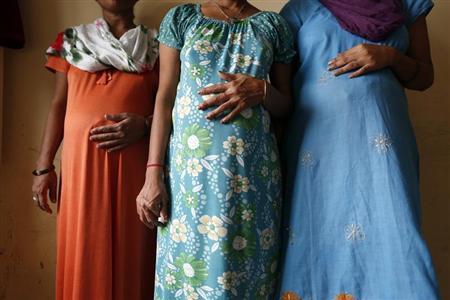
Surrogate mothers pose for a photograph inside a temporary home for surrogates provided by Akanksha IVF centre in Anand town

Surrogate mothers (L-R) Daksha, 37, Renuka, 23, and Rajia, 39, pose for a photograph inside a temporary home for surrogates provided by Akanksha IVF centre in Anand town, about 70 km (44 miles) south of the western Indian city of Ahmedabad August 27, 2013. Credit: Reuters/Mansi Thapliyal (source: http://www.reuters.com/article/2013/11/14/us-india-girls-idUSBRE9AD0UZ20131114)

– Kirsty McCurdy (LLB Law, Newcastle University) kirstymccurdy@live.co.uk

This post was first published on Inherently Human: Critical Perspectives on Law Gender and Sexuality

Recently, the United Nations has created its first ever study into measuring the gender inequality and women’s environmental arena around the world. The index known as EGI – the Environment and Gender Index – ranks 72 counties in terms of how the countries actually make gender and environment mandates into national policy.  India has one of the worst gender differentials in child mortality of any country, ranking 132 out of 148 nations.

It is not surprising, given worldwide attention to the fatal rape case in Delhi that India is among one of the weakest performers on this index. Indeed, gender bias is seemingly rife in certain areas, as the British medical journal Lancet reported that estimated 12million female foetuses were aborted in the past three decades. The practice happens for a number of reasons: boys are seen as being good luck, and many families find that bearing a girl will impose a financial burden upon the family. This is due to the tradition of dowry, a tradition that is actually illegal but is still widely practiced acrossIndia. In dowry, when a woman has an arranged marriage, monetarial assets or property from the bride’s family are given to the groom as a kind of ‘bridal gift.’ This is why some families believe it is financially advantageous to bear a boy instead.

There still exists a law in Goathat allows men to marry a second wife if there is no son from the first marriage.  Indeed, Kirti Singh, a lawyer and author of the UN study entitled ‘The Law and Son Preference in India: A Reality Check’, stated that a lack of political will mean many progressive laws are not enforced. Other laws are even blatantly discriminatory and encourage the view that a male child is more valuable.

However, there have been initiatives that have sought to change attitudes towards woman and female babies. In regard to women, in the Southern State of Kerala, “She-Taxi’s” have been set up, to allow women only to conduct their own taxi businesses, to make it safer for women to travel around as well. It is a commendable scheme, hoping to empower woman and promote entrepreneurship. Perhaps this will slowly change society’s view that women are not as valuable as men, as this scheme shows they are capable of working equally as hard as men in society.

Lastly, there has also been a charity that has endeavoured to change negative attitudes towards having female babies. The initiative involves compiling boxes with various presents for a new-born baby, visiting families in hospitals where the mother has just given birth to a new-born baby girl and giving these gifts to the family and congratulating them on their new-born baby girl. This is a really charming idea of how to spread the love for newly-born girls. Hopefully, this attitude to love girls just as equally as boys will spread throughoutIndiaand gender bias will no longer be an issue. Here is a video of the charity in action: –

http://www.bestadsontv.com/ad/52982/The-Barn-Project-A-BBH-India-Initiative-The-Girl-Gift-Basket


Dear All Readers!

The North East Law Review’s Editorial Board would like to announce the launch of their:

“Current Legal Issues  Blog Competition”

All blog submissions accepted from students of Newcastle University on to our Current Legal Issues Blog between the 6th December 2013 and the 28th February 2014 will be entered into the competition. The prize for the winner is:

– £150 Sweet and Maxwell Book Vouchers
– A Mini-Pupillage at Parklane Plowden Chambers

The maximum word count for submissions is 1,500 words and all submissions must be sent to: submissions.nelr@ncl.ac.uk

NB. Only students from Newcastle University are eligible for the competition – Members of the NELR Editorial Board and University Staff are excluded from the competition.

From everyone at NELR – Good Luck!