
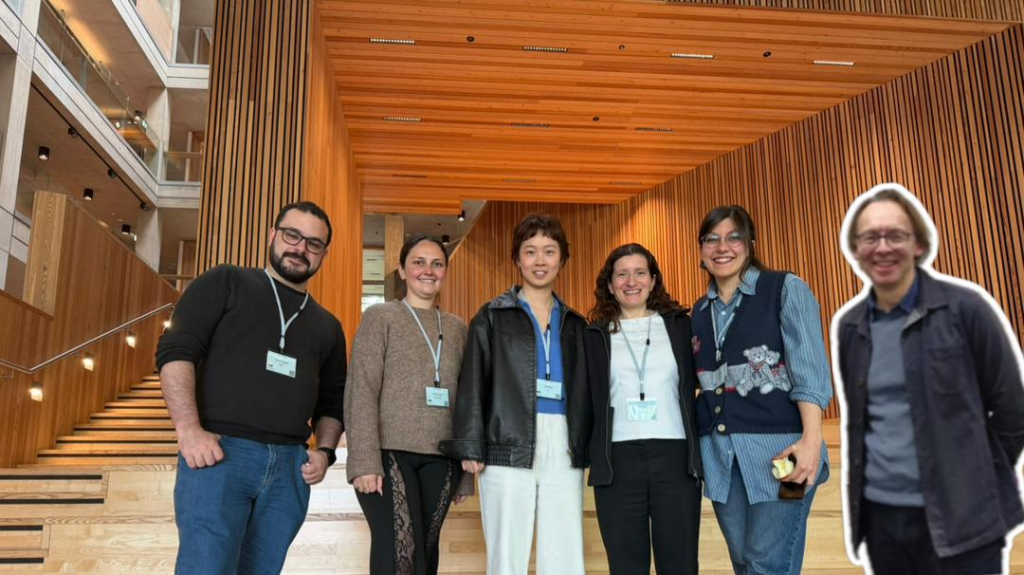
Six members of our team recently attended the conference of the British Association of Academic Phoneticians (BAAP) <https://www.baap.ac.uk/>, a key forum for sharing current research in phonetics and speech science. It was a valuable event for engaging with new work in the field, exchanging ideas with colleagues, and representing our research group across a range of topics. More on the conference programme: https://warwick.ac.uk/fac/soc/al/research/baap2026/programme/
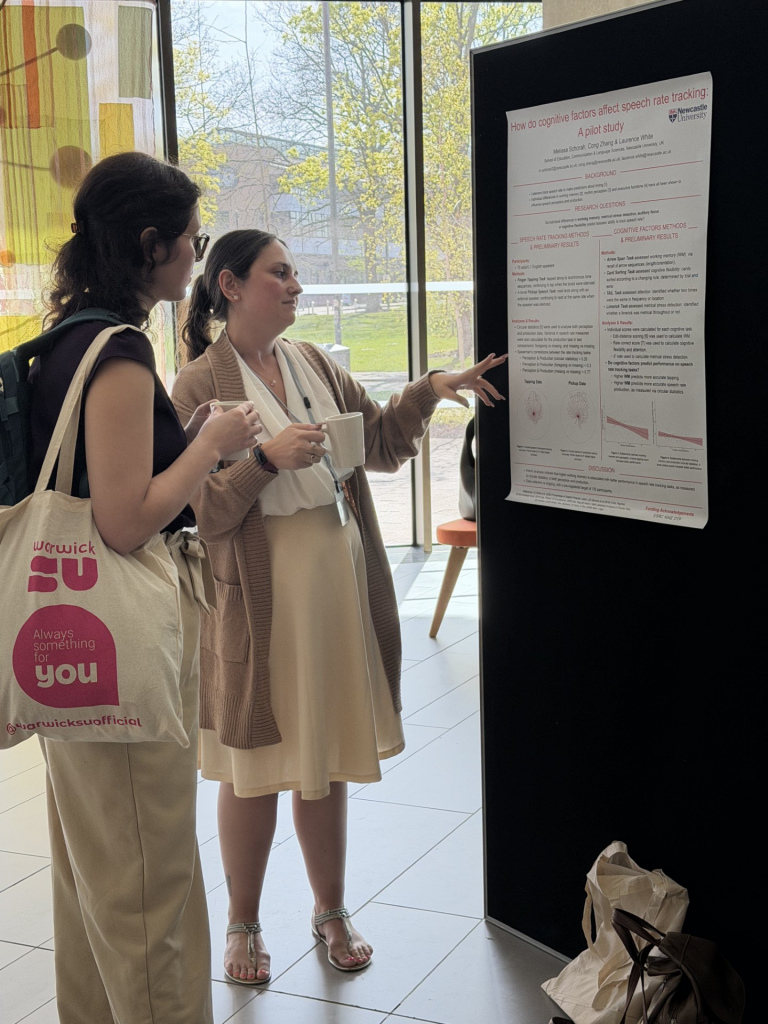
Four members of the team presented their research. Melissa Schorah presented a poster titled Individual cognitive factors in speech rate tracking: A pilot study. Her study explored how individual differences in cognitive abilities may influence listeners’ capacity to track changes in speech rate, offering early insights into the relationship between cognition and speech perception.
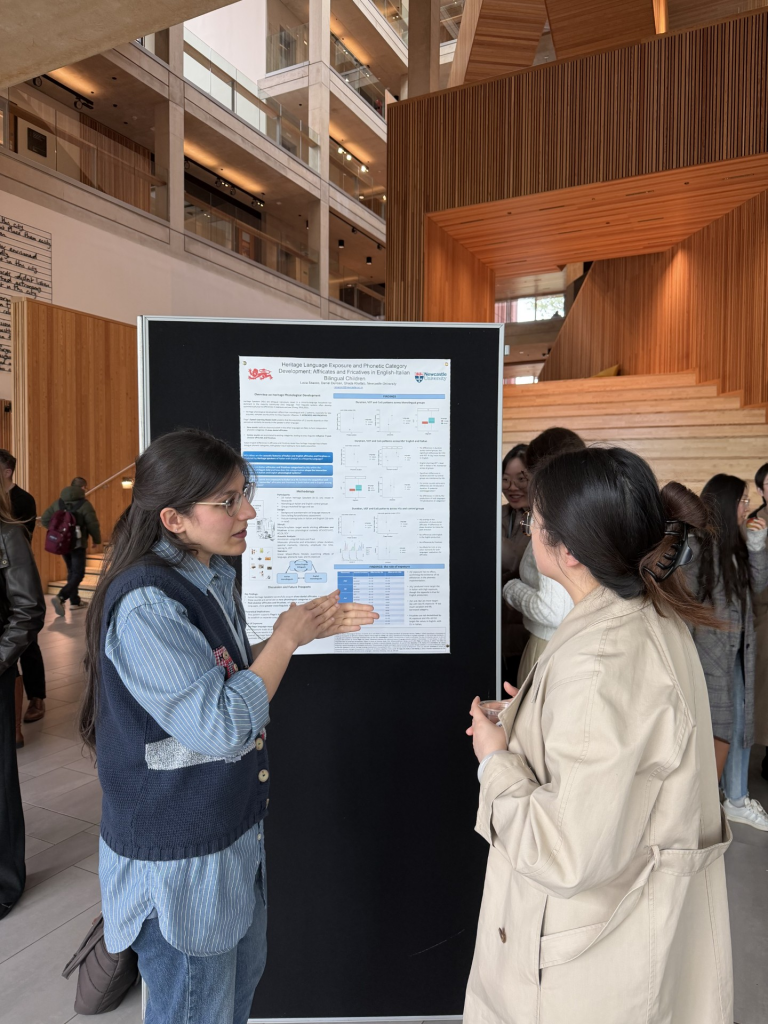
Lucia Sbacco presented a poster on Heritage language exposure and phonetic category development: Affricate and fricative production by pre-adolescent English-Italian bilinguals. Her work examined how exposure to a heritage language (Italian) may shape the development of phonetic categories, with a focus on how bilingual children produce affricate and fricative sounds across English and Italian.
The team also contributed two oral presentations. Laurence White gave a talk titled Evidence for timing prediction from a novel nonword segmentation task. His presentation introduced evidence that listeners use timing cues to make predictions during speech segmentation, helping to clarify how temporal information supports spoken language processing.
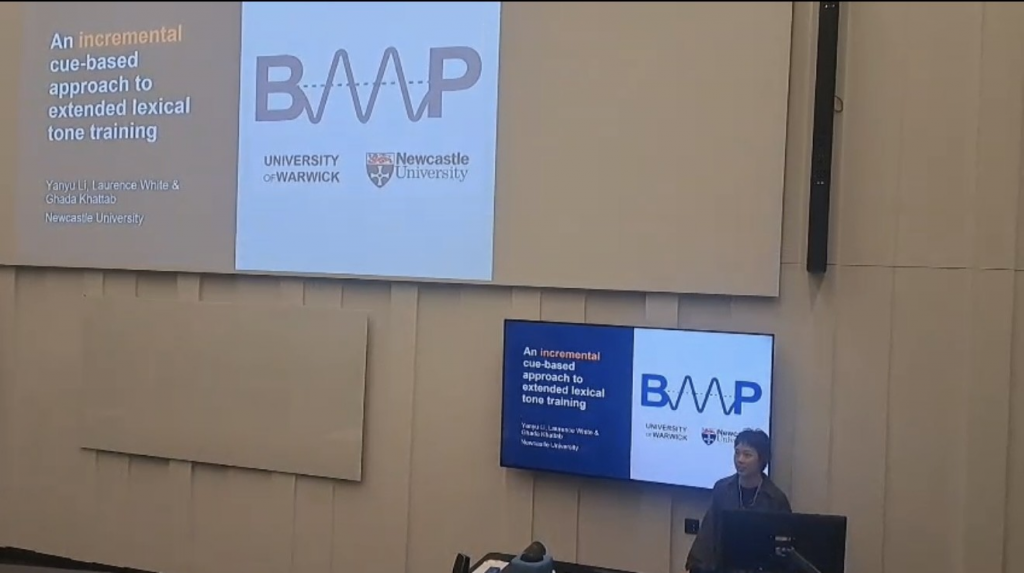
Yanyu Li presented An incremental cue-weighting approach to extended lexical tone training. This work investigated the effect of a cue-weighting-approach intervention in the perceptual learning of non-native lexical tones based on selective attention theories. Findings showed that although cue exaggeration temporarily boosted perception, the effect did not sustain on unexaggerated stimuli.
Overall, the conference provided an excellent opportunity to showcase the group’s work, receive feedback from the wider phonetics community, and build connections with researchers working on speech perception, bilingual phonetic development, timing, and language learning.