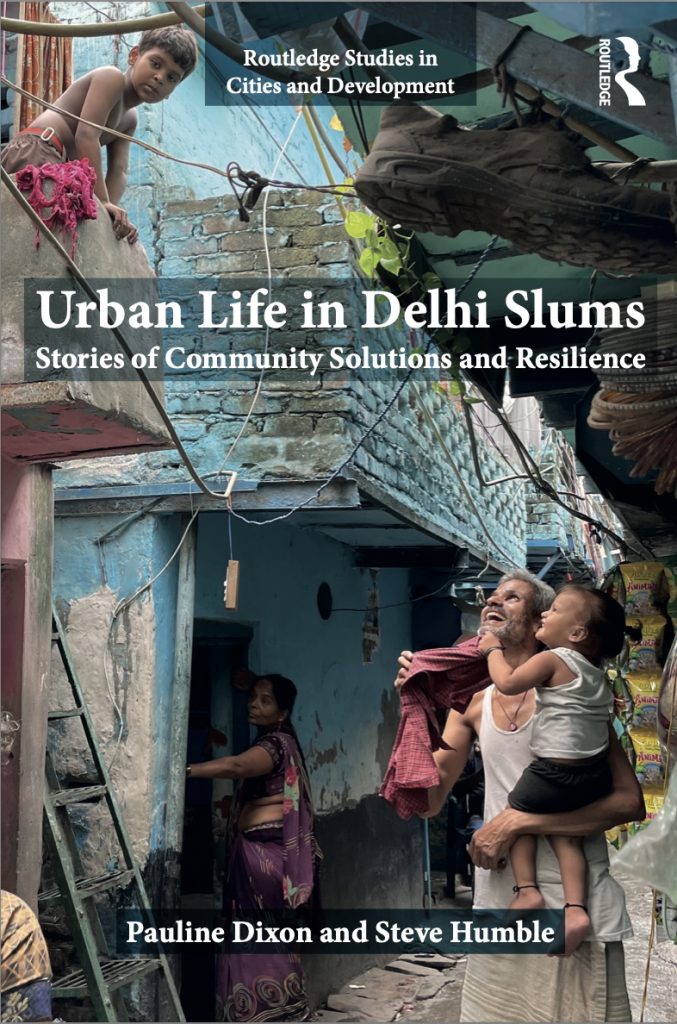
Around one-quarter of the world’s urban population live in informal, slum and squatter settlements, representing a significant economic and cultural force. Despite this, settlements are often perceived as marginal, homogenous places, overlooking the resilience and agency of the diverse actors, networks and social groups working collectively within them. This book draws on extensive qualitative and quantitative data from squatter and resettlement colonies in and around Delhi, foregrounding the voices of residents to build a bottom-up picture of place and urban development. The book analyses the contexts in which households operate within their communities and the adaptiveness of individuals living in different slum types, with differing levels of governance. In doing so, the book demonstrates the effect which different institutional agreements and governance systems have on enterprise, empowerment, resilience, trust, dignity and engaging in life that has purpose and meaning.
Our new book is now available on open access from Routledge. Download the whole book as a pdf or as individual chapters. This book investigates urban life in the slums of Delhi, demonstrating how individuals and communities self-organise to solve problems that arise in their neighbourhoods. The book sets out some of the research undertaken during our Rising Tide Foundation project and the chapters include:
Chapter One: The draw of the city; Chapter Two: Resilient cities; Chapter Three: Community action solving problems through polycentric systems; Chapter Four: Leading the slums, governance, politics and brokers; Chapter Five: Stories from the street: An intricate sidewalk ballet; Chapter Six: Is there a doctor in the house?; Chapter Seven: The draw of the city looking ahead.